
Basic Math Skills Normal Geometry Worksheets for Ages 3-6
5 filtered results
Difficulty Level
Grade
Age
-
From - To
Subject
Activity
Standards
Introduce your child to the world of geometry with our "Basic Math Skills Normal Geometry Worksheets" designed for ages 3-6. These engaging, age-appropriate worksheets help young learners grasp fundamental concepts such as shapes, sizes, and spatial relationships. By incorporating fun activities and colorful illustrations, we make learning geometry an enjoyable and interactive experience. Perfect for building a strong mathematical foundation, our worksheets not only enhance cognitive development but also improve fine motor skills. Empower your little mathematician and watch their confidence grow as they master the basics of geometry with these expertly crafted resources.
Favorites
With answer key
Interactive
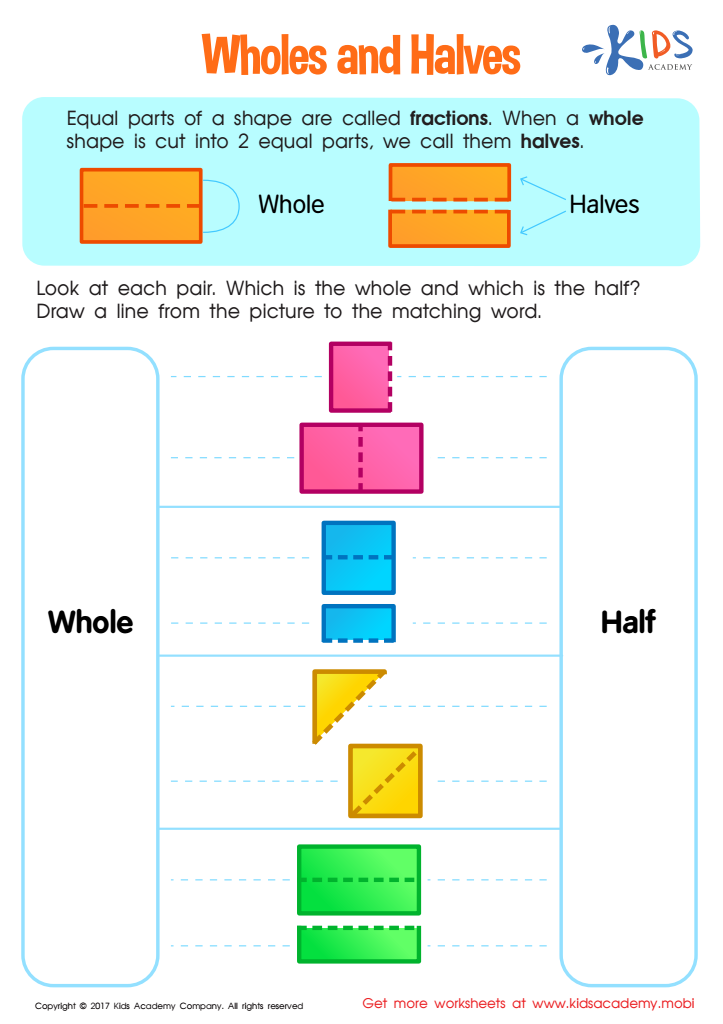
Wholes and Halves Worksheet
Students can feel overwhelmed with fractions. Help take the stress off by using a colorful worksheet to explain whole shapes and how to find halves. Ask them to identify the whole and point to the matching word for the half. A free printout can help guide them.
 Assign to My Students
Wholes and Halves Worksheet
Worksheet











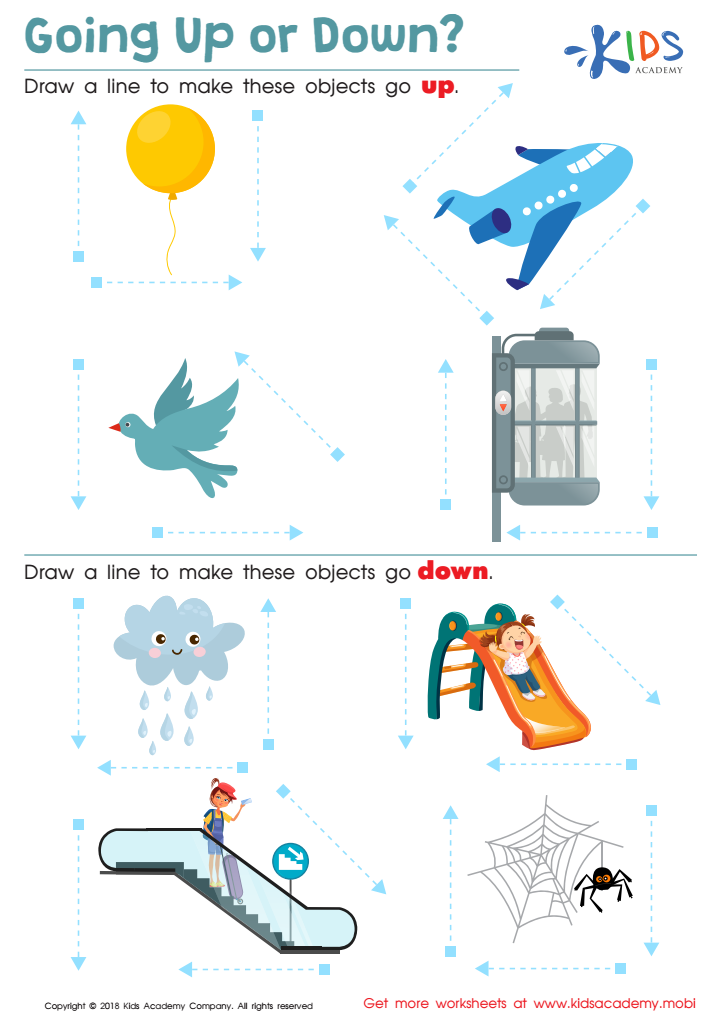
Going up or Down? Worksheet
Young students learn the concept of up and down with this geometry worksheet. They trace lines to identify relative positioning as an object travels. Kids can use position words to describe an object's movement, enhancing their spatial relationship skills - an important geometry foundation.
Going up or Down? Worksheet
Worksheet
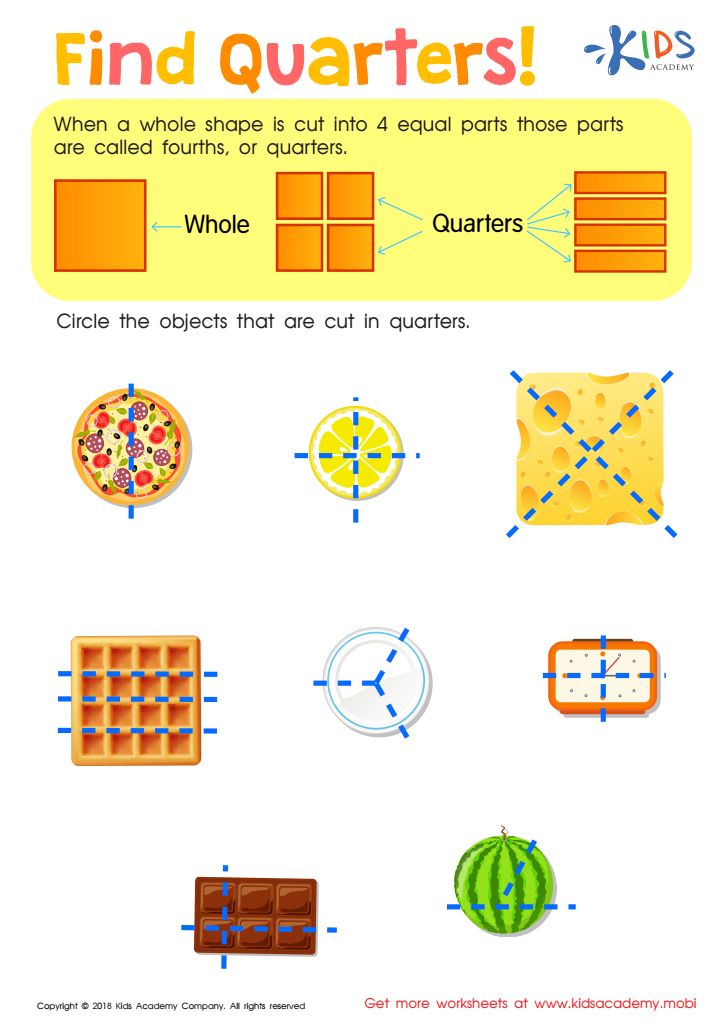
Find Quarters Worksheet
Ask your child if they know what it is called when a shape is cut into two equal parts. If yes, introduce them to quarters. Tell them that when a shape is cut into 4 equal parts, each part is called a quarter. Have them do this exercise by finding and circling objects split into quarters.
Find Quarters Worksheet
Worksheet
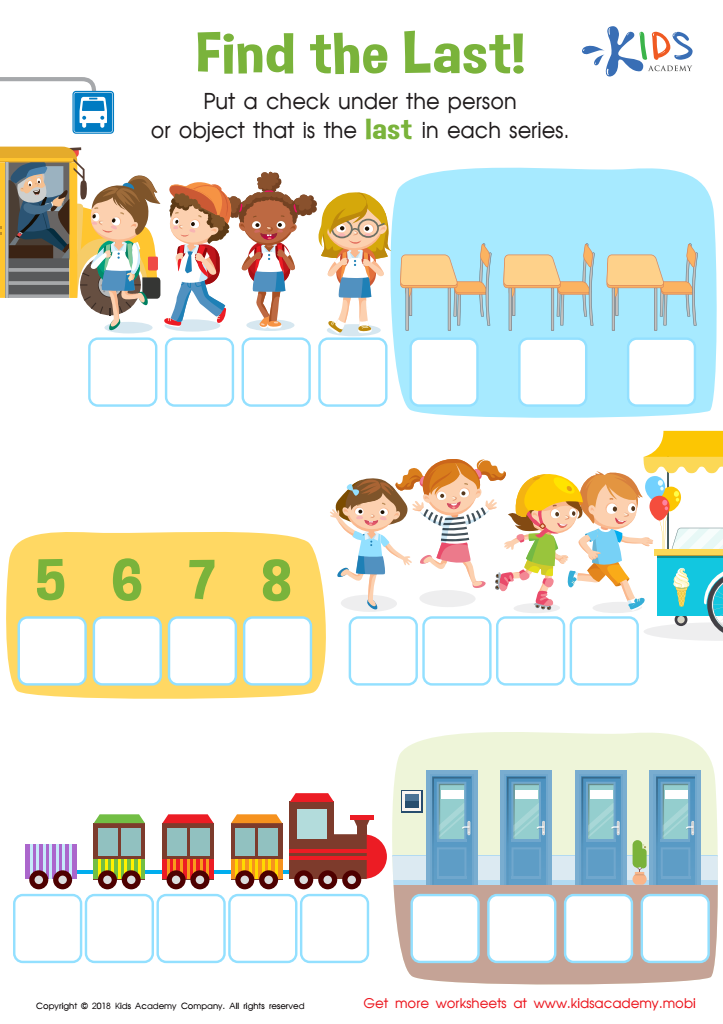
Find the Last! Worksheet
Teach young students about sequence words with this free worksheet. Have them look at sets of people or objects and choose the one that is last. Engage them further by having them describe or act out their day, and what happens last? Enjoy this printout and have fun!
Find the Last! Worksheet
Worksheet
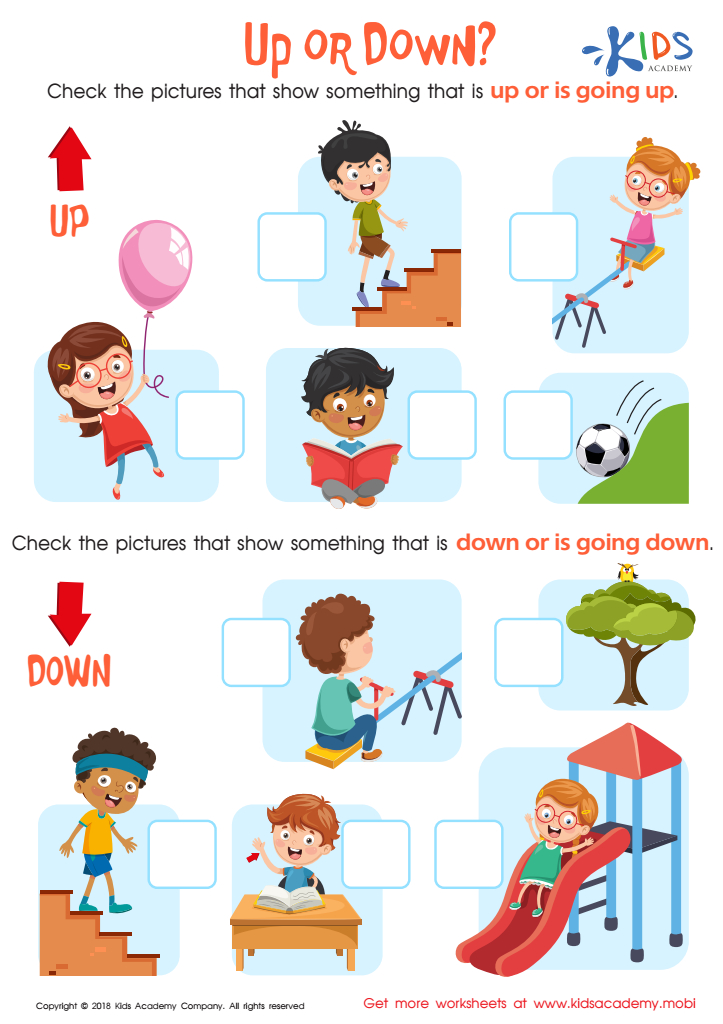
Up or Down Worksheet
Teach your toddlers the concepts of up and down with Kids Academy's vivid worksheet! Use the seesaw analogy to reinforce this language with them and build a strong foundation for future learning. Show them how a balloon can float up but must come back down too.
Up or Down Worksheet
Worksheet
Join Kids Academy for Free
Who is primarily going to use this learning content?








Early exposure to basic math skills and introductory geometry is crucial for children aged 3-6 as it lays the foundation for future academic success and cognitive development. Parents and teachers should prioritize these skills because early math proficiency is strongly correlated with later academic achievements in a variety of subjects, not just math. Introducing basic concepts like counting, shapes, and spatial awareness helps children develop critical thinking, problem-solving, and logical reasoning abilities.
Moreover, engaging with basic geometry at an early age enhances a child's spatial skills, which are essential not only in math but also in everyday activities and complex fields like engineering and architecture. Understanding shapes and their properties can also foster fine motor skills through activities like drawing and puzzles, reinforcing hand-eye coordination.
Parents and teachers can incorporate these concepts through playful, hands-on activities that make learning engaging and enjoyable. Simple tasks like identifying shapes in the environment, playing counting games, or solving age-appropriate puzzles can be both fun and educational. This early start doesn't just prepare children for school; it posits them as curious, confident learners prepared to tackle challenges. In essence, caring about early math skills isn't just about improving test scores; it's about holistic developmental benefits that build a solid grounding for lifelong learning.








