
Categorization skills Normal Math Worksheets for Ages 3-6
10 filtered results
Difficulty Level
Grade
Age
-
From - To
Subject
Activity
Standards
Enhance your child's learning experience with our Categorization Skills Normal Math Worksheets, designed specifically for ages 3-6. These engaging worksheets help young learners identify, sort, and classify objects based on various attributes like color, shape, and size. By practicing these essential categorization skills, children develop critical thinking, boost problem-solving abilities, and gain a solid foundation for future math concepts. Our user-friendly, printable worksheets are perfect for both classroom and home use, making learning fun and interactive. Foster your child’s cognitive growth and boost their confidence in math with our expertly crafted activities that promote early learning and exploration.
Favorites
With answer key
Interactive
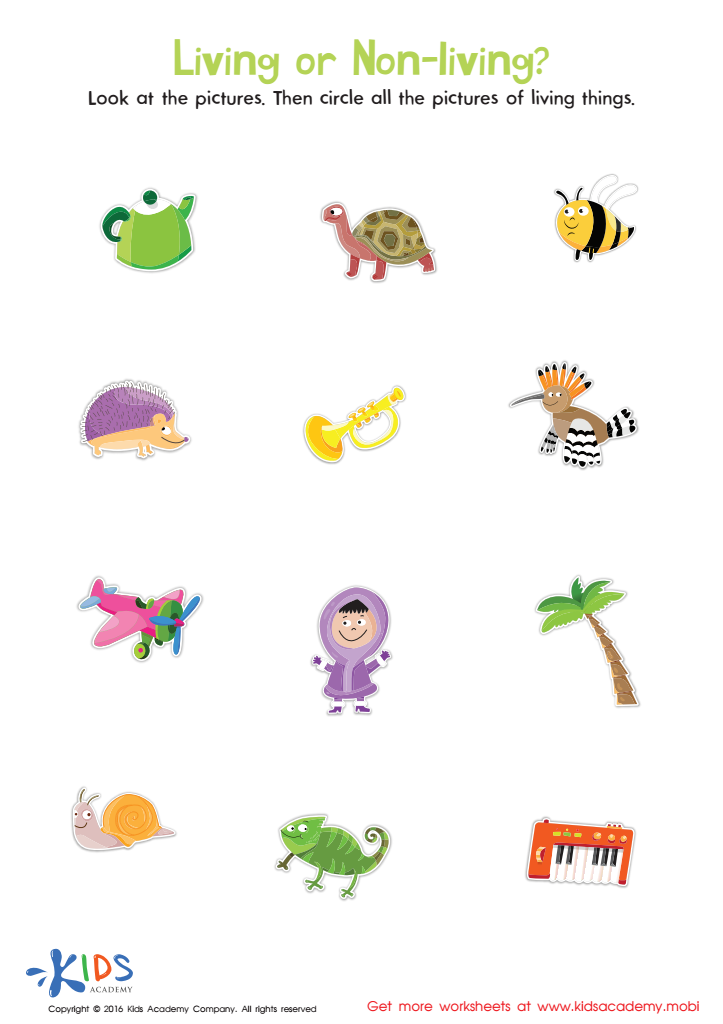
Identifying Living and Non–living Things Sorting Worksheet
Help your child sort living and non-living objects with this cute worksheet. Kids will use problem-solving skills to recognize and categorize the images they see. Matching worksheets available to help their skills soar.
 Assign to My Students
Identifying Living and Non–living Things Sorting Worksheet
Worksheet
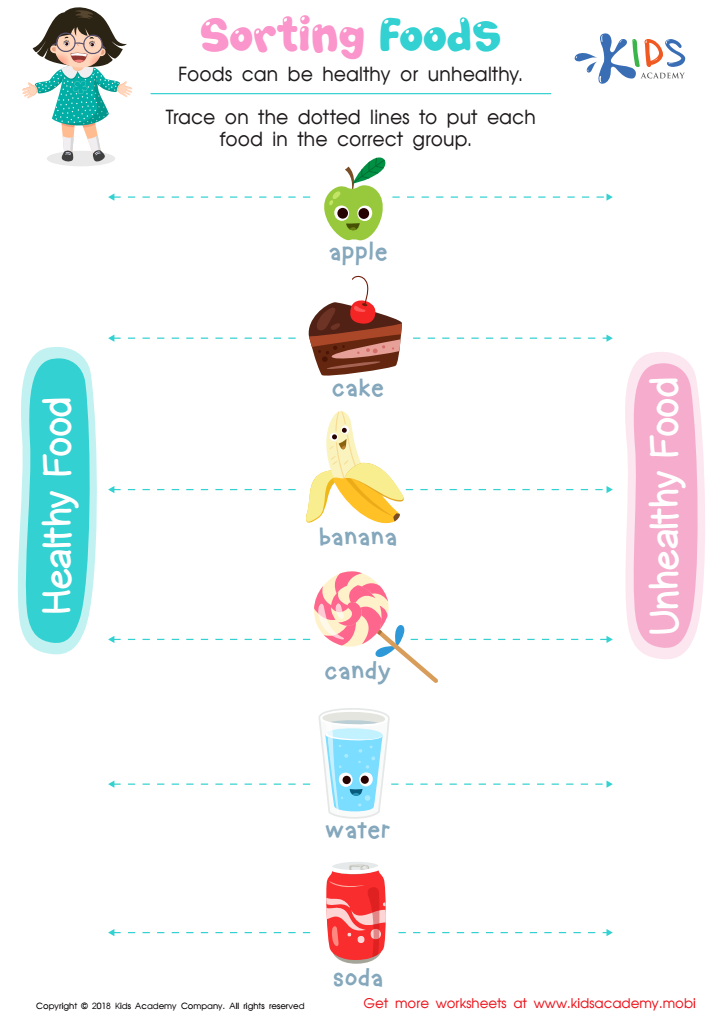
Sorting Food Worksheet
This delightful worksheet boosts critical thinking and fine motor skills. Kids use prior knowledge and pictures to sort foods into healthy and unhealthy groups. Tracing lines support accurate sorting and matching. Enjoy fun and free learning!
Sorting Food Worksheet
Worksheet
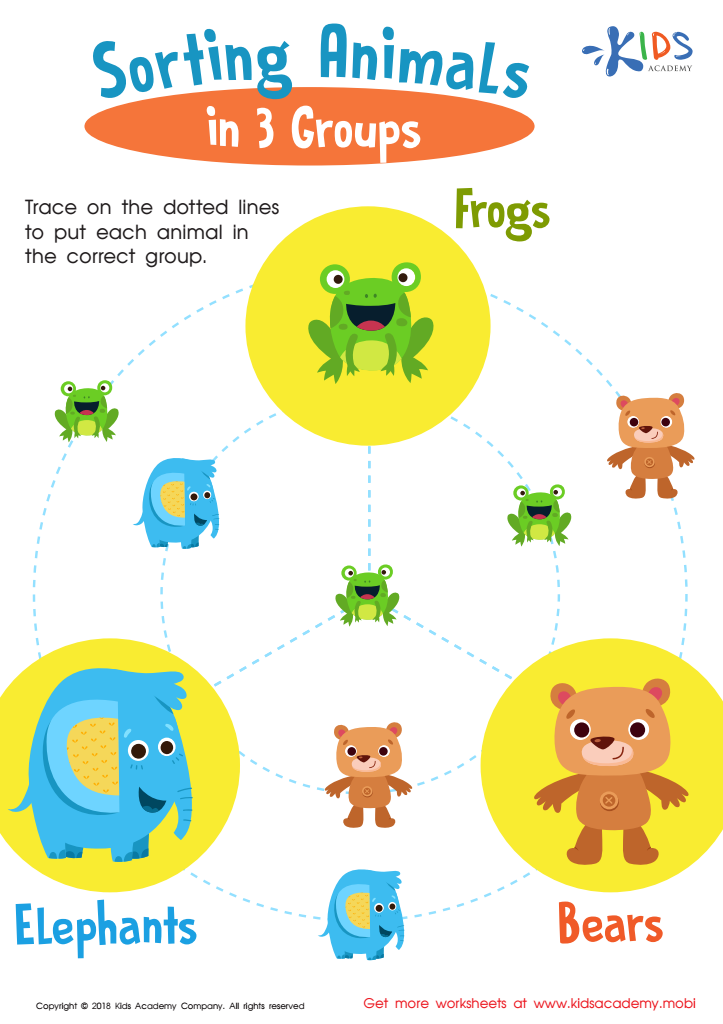
Sorting Animals in 3 Groups Worksheet
Let your kids practice and build skills for future Venn Diagrams with this PDF worksheet. They'll trace lines to match and group animals, and learn the differences and similarities of animals by categorizing with pictures and words. Plus, it's a great way to develop fine motor skills.
Sorting Animals in 3 Groups Worksheet
Worksheet
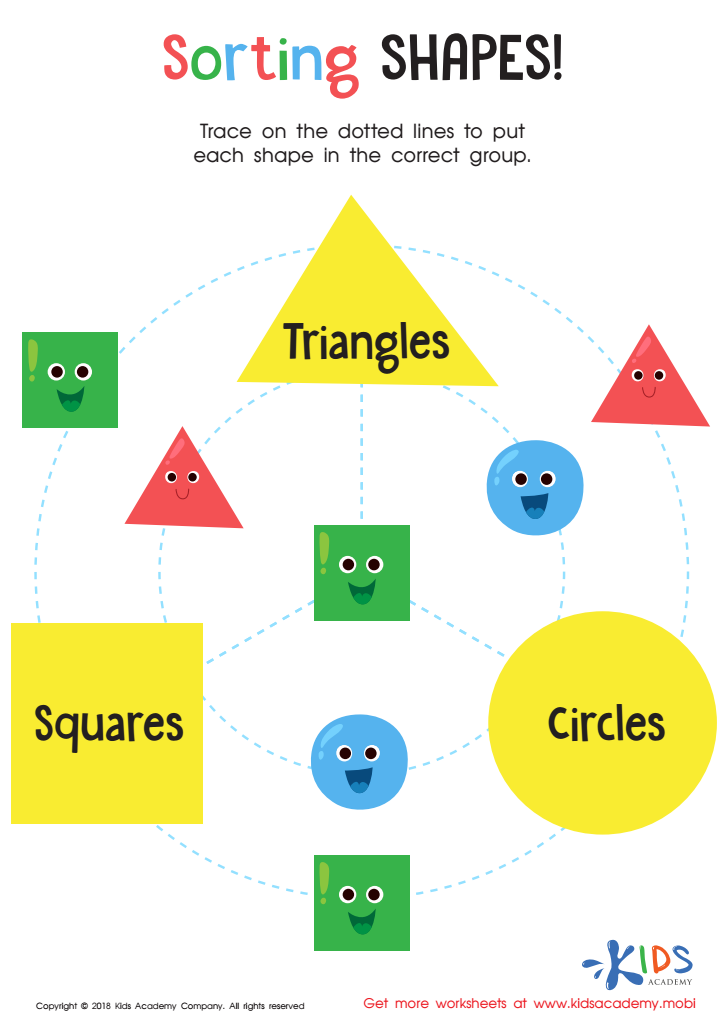
Sorting Shapes - Part 3 Worksheet
Download this fun PDF to help your kiddos recognize basic shapes like circles, squares, and triangles. It'll sharpen their fine motor skills as they trace and sort shapes by color, size, and sides. Your kids won't even realize they're learning with these cheery shapes!
Sorting Shapes - Part 3 Worksheet
Worksheet
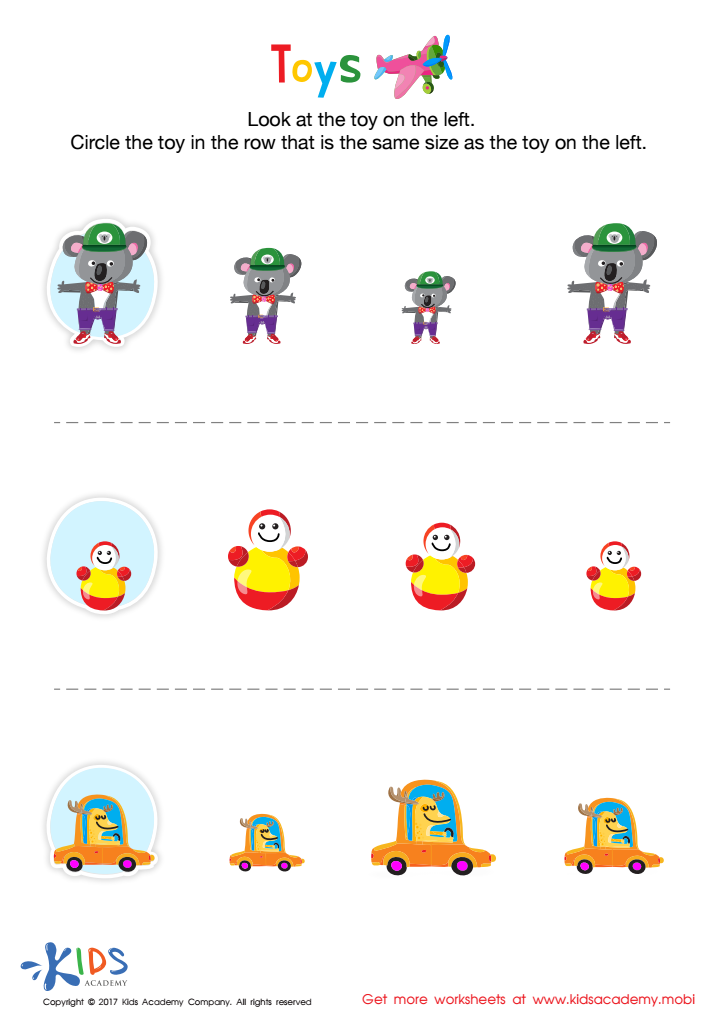
Matching: Classifying Toys by Size Worksheet
Sorting worksheets are an effective way to help your preschooler learn life and educational skills. Spatial awareness, direction recognition, and reading directions all help build a strong foundation for future educational success.
Matching: Classifying Toys by Size Worksheet
Worksheet
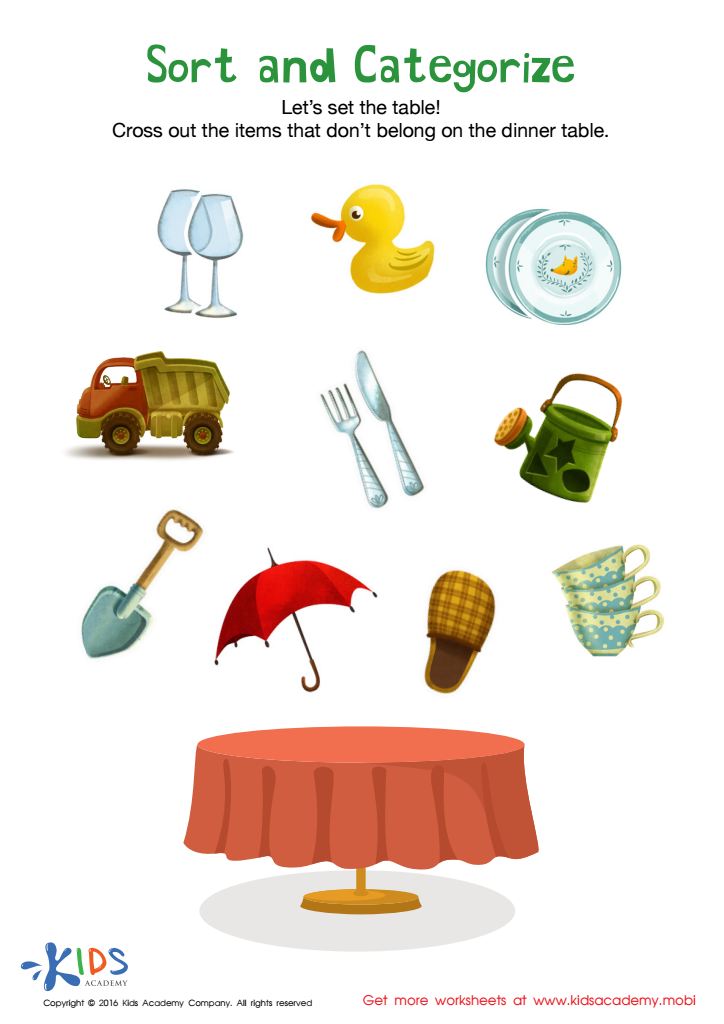
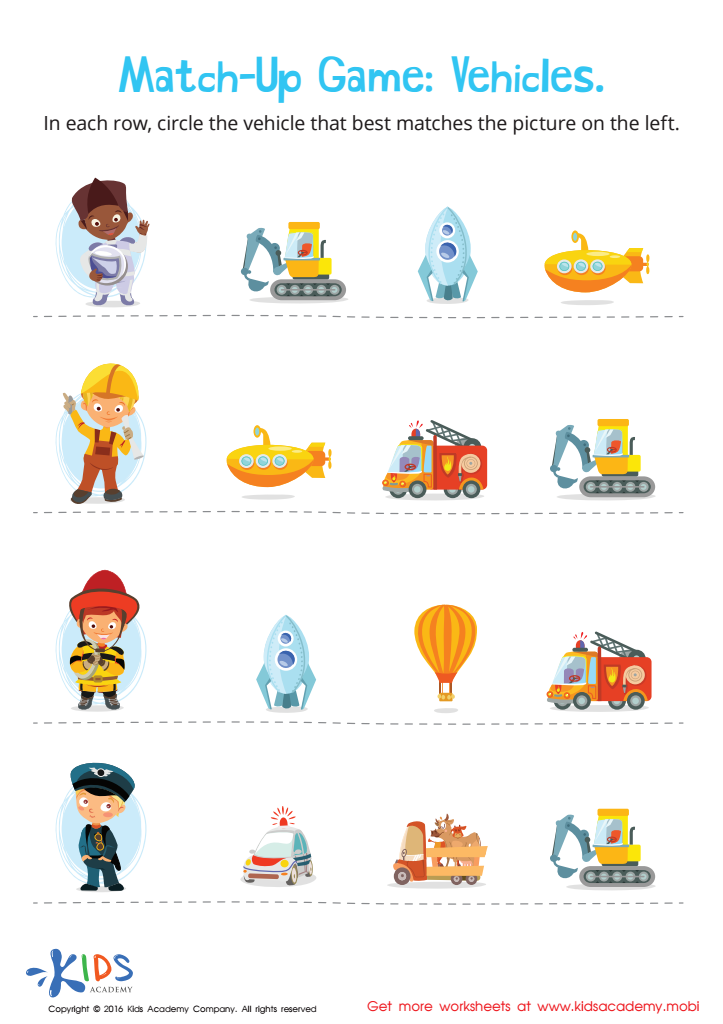
Vehicles Worksheet
Beep, beep! Your little driver will love this matching game! Matching vehicles with their drivers can help your child discover new jobs and practice problem-solving skills. It can even start a conversation about different careers. Don’t be surprised if they start playing with more cars and trucks! Use this and other sorting activities to practice with colors, shapes and patterns.
Vehicles Worksheet
Worksheet
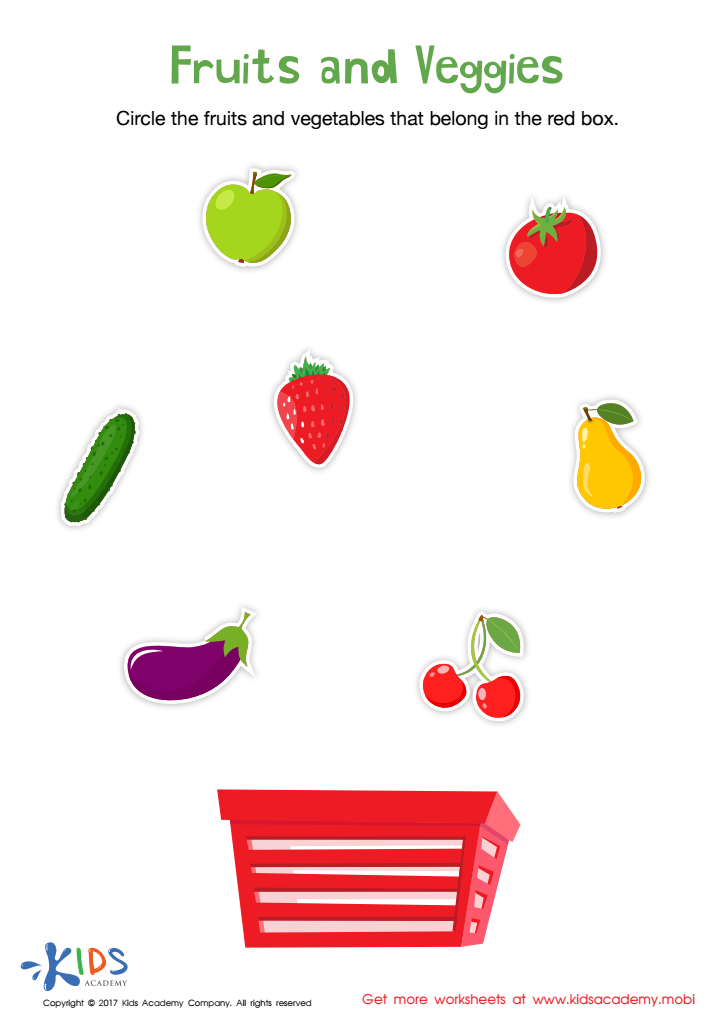
Classifying Fruits and Veggies by Color Sorting Worksheet
Worksheet
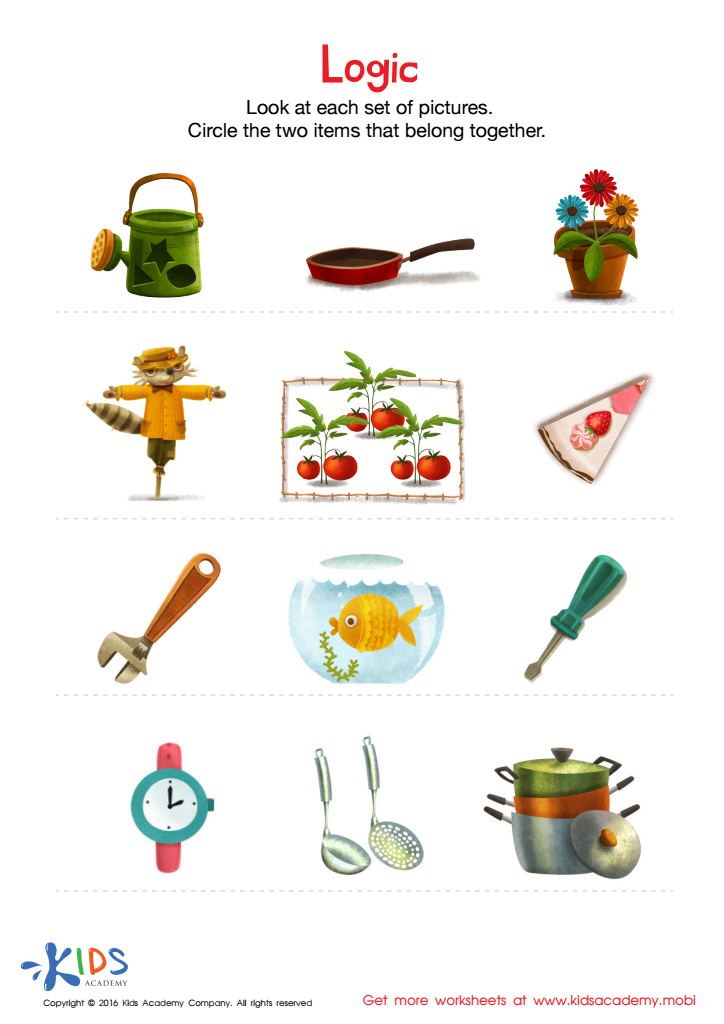
Logic Game Sorting Worksheet
Start your child's logic and reasoning development early with this fun matching worksheet! Through cute images and simple conversations, your little one can learn problem-solving, categorization, and matching skills. Plus, it's a great way for children to explore how items are used in real life. Try it and watch them boost skills with ease and fun!
Logic Game Sorting Worksheet
Worksheet
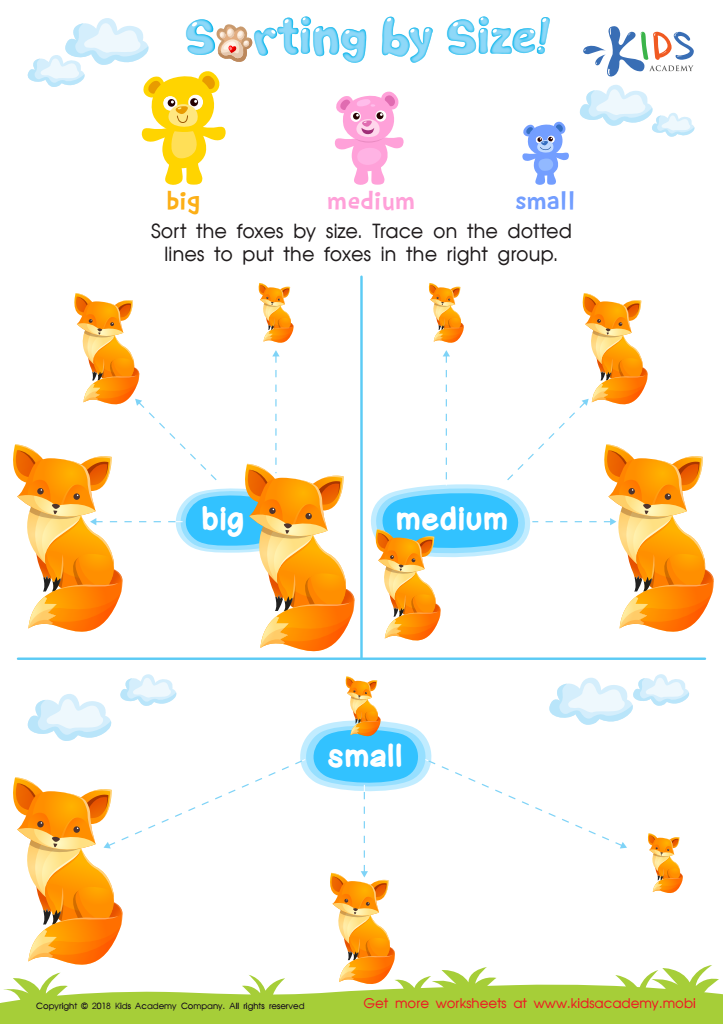
Sorting by Size Worksheet
This bright printout lets your students sort the foxes by size. Ask them to identify objects, then trace the dotted lines to put the foxes in the right group. Clear and easy instructions make this a fun and colorful exercise for your young ones.
Sorting by Size Worksheet
Worksheet
Join Kids Academy for Free
Who is primarily going to use this learning content?




.jpg)

.jpg)

Categorization skills are essential for young children's cognitive development, particularly in the foundational years of ages 3-6. During this stage, children engage in active learning through play and exploration, and developing categorization skills helps them make sense of the world around them. By sorting and grouping objects based on attributes such as size, color, shape, or function, children sharpen their observation skills and enhance their critical thinking abilities.
For parents and teachers, nurturing these skills has far-reaching benefits. Firstly, categorization forms the basis of mathematical understanding, as children will encounter sorting and classifying in future math concepts. Recognizing patterns and relationships among items also supports early problem-solving skills. Additionally, categorization promotes language development, as children learn to describe their categories and communicate their ideas effectively.
Furthermore, by engaging in categorization activities, children build social skills through collaborative sorting games, encouraging teamwork and sharing. By fostering an environment that emphasizes these skills, parents and teachers not only equip children for academic success but also enrich their overall development, laying the groundwork for enhanced learning outcomes in the years ahead. Ultimately, valuing categorization is integral to building a well-rounded foundation for a child’s future.








