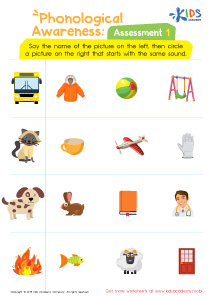
Word Recognition Normal Consonants Worksheets for Ages 3-7
7 filtered results
-
From - To
Discover our engaging "Word Recognition Normal Consonants Worksheets" designed for children ages 3-7! These worksheets provide a fun and interactive way for young learners to enhance their word recognition skills while familiarizing themselves with consonants. Each activity is tailored to promote phonemic awareness and reinforce vocabulary through colorful illustrations and age-appropriate exercises. Children will love practicing their reading as they match words to pictures, trace letters, and identify consonants in various contexts. Promote literacy development and build confidence in early readers with our expertly crafted worksheets. Perfect for home or classroom use, these resource materials ignite a love for reading from a young age!
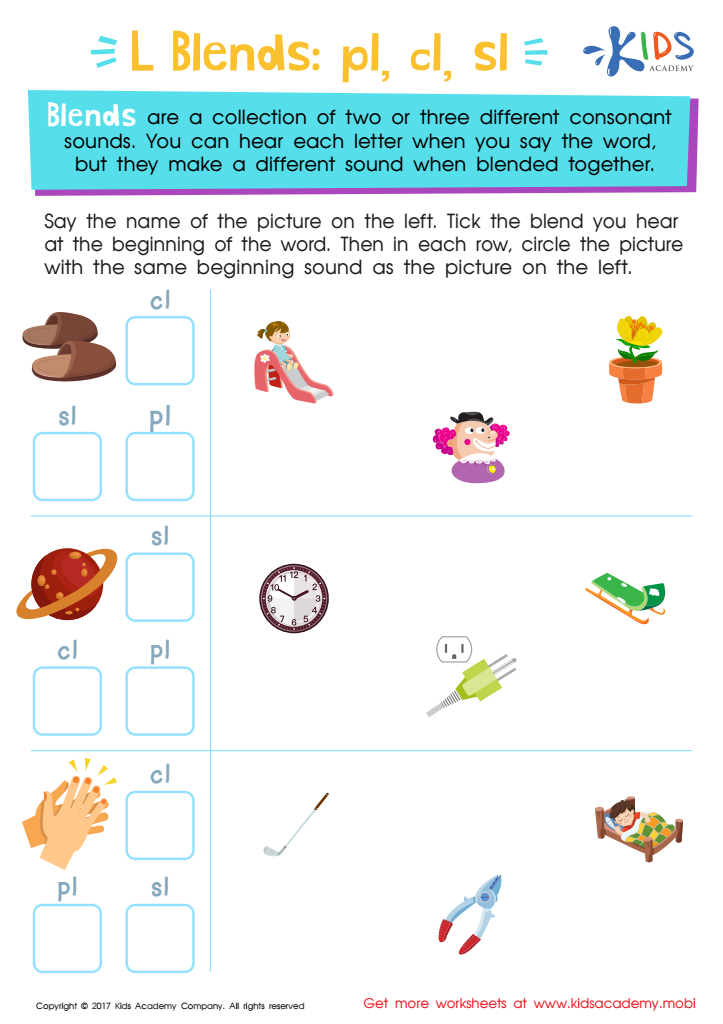
L Blends: "Pl", "Cl" and "Sl" Printable
 Assign to My Students
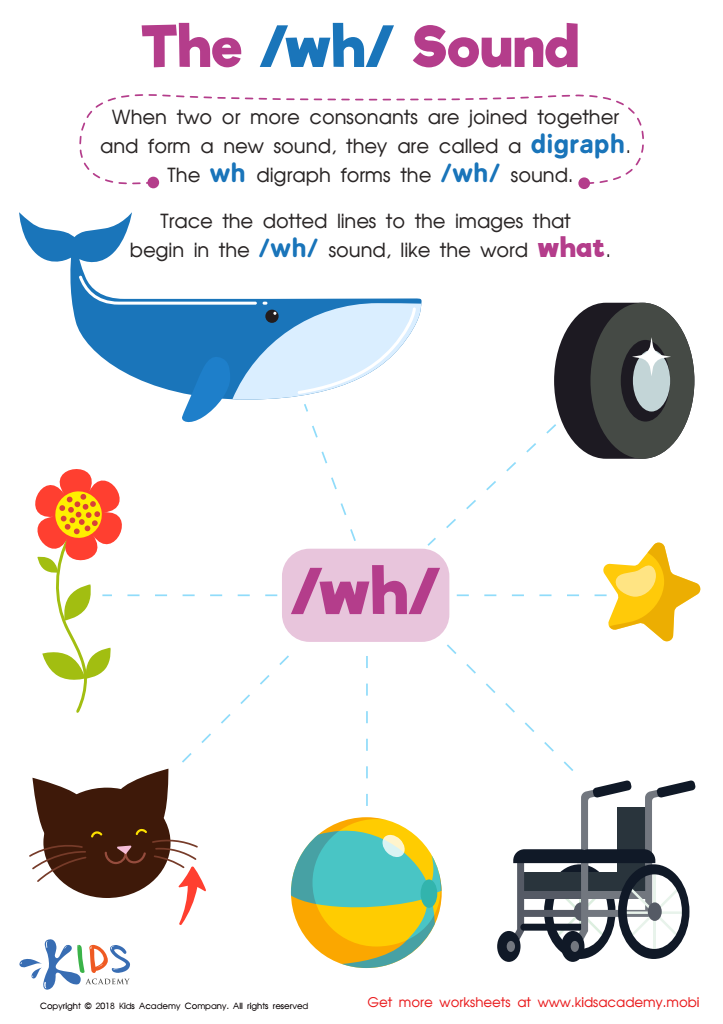
The /wh/ Sound Worksheet
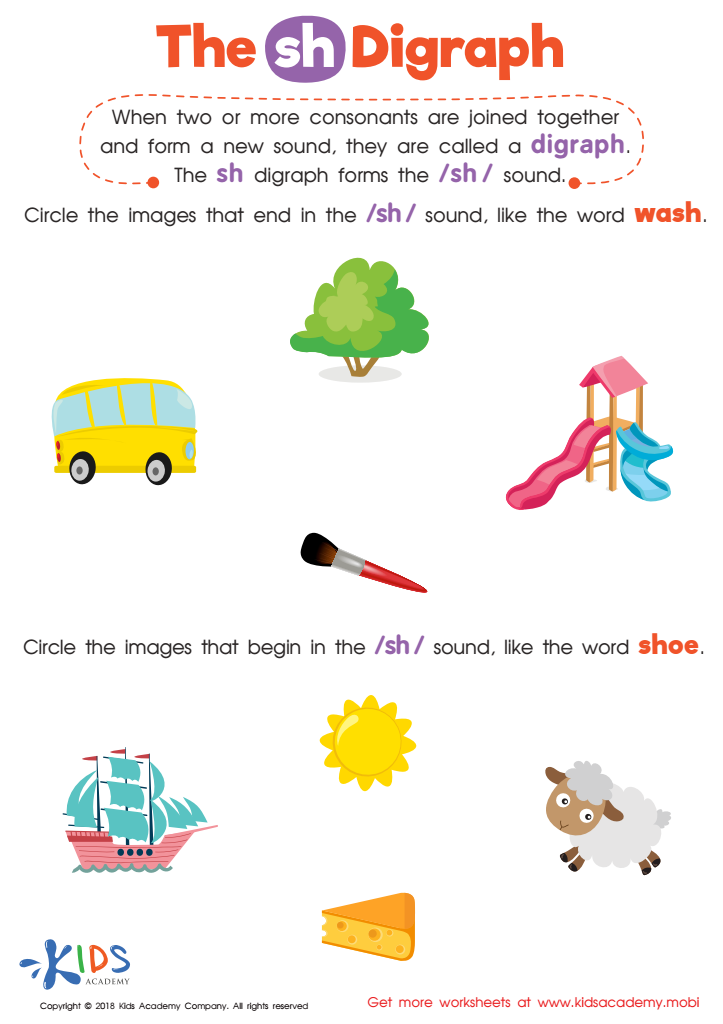
The SH Digraph Worksheet
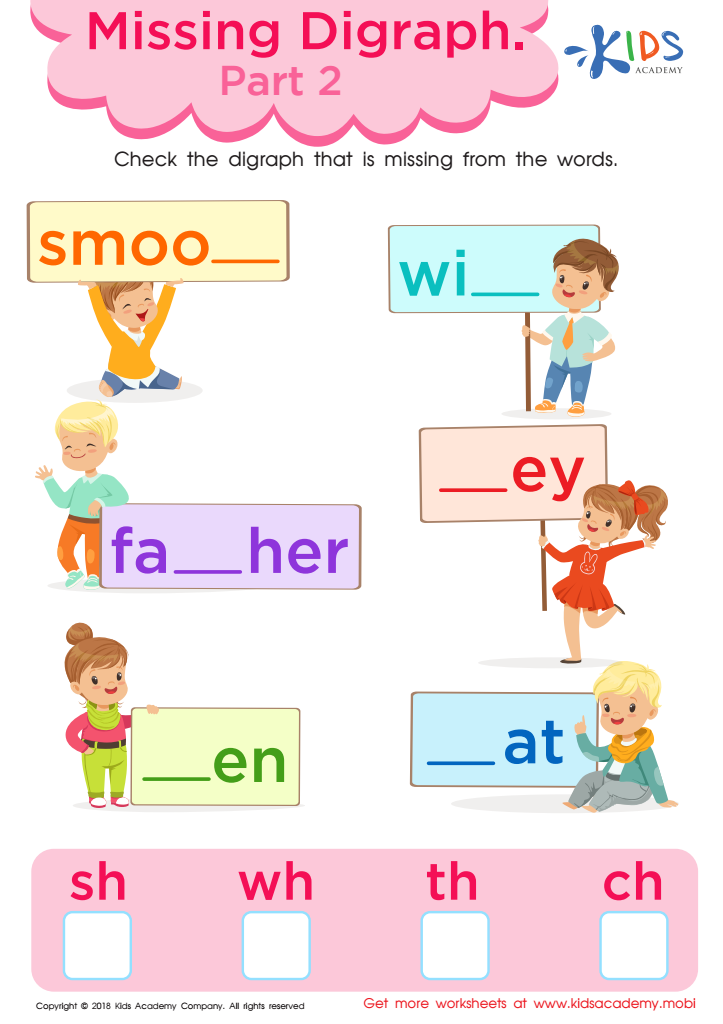
Missing Digraph: Part 2 Worksheet
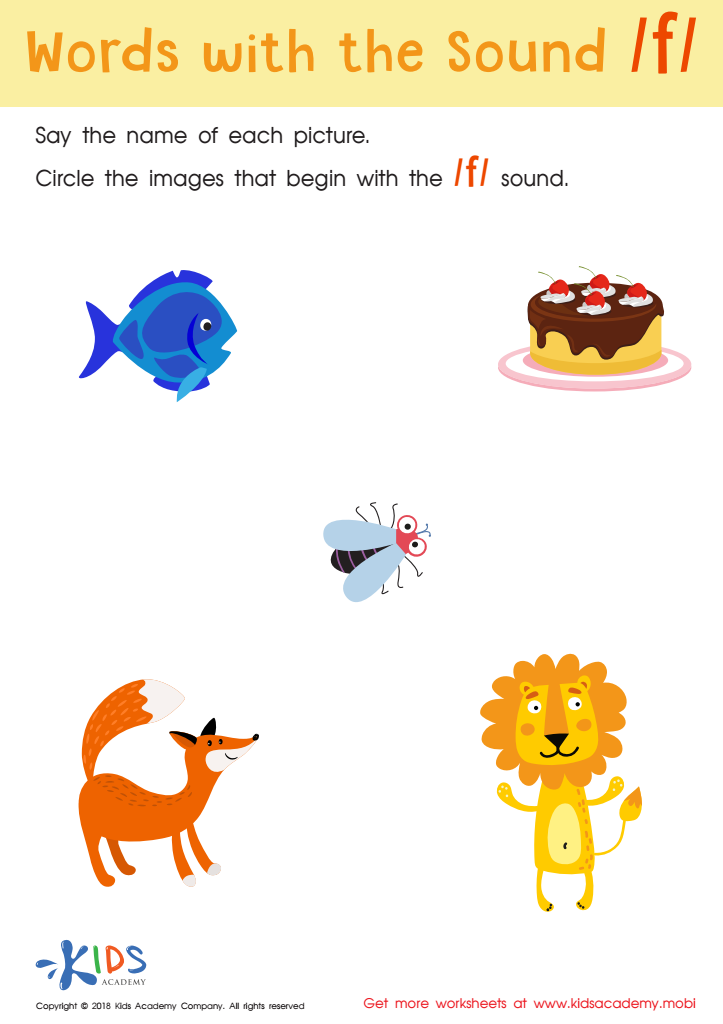
Words with sound f Reading Worksheet
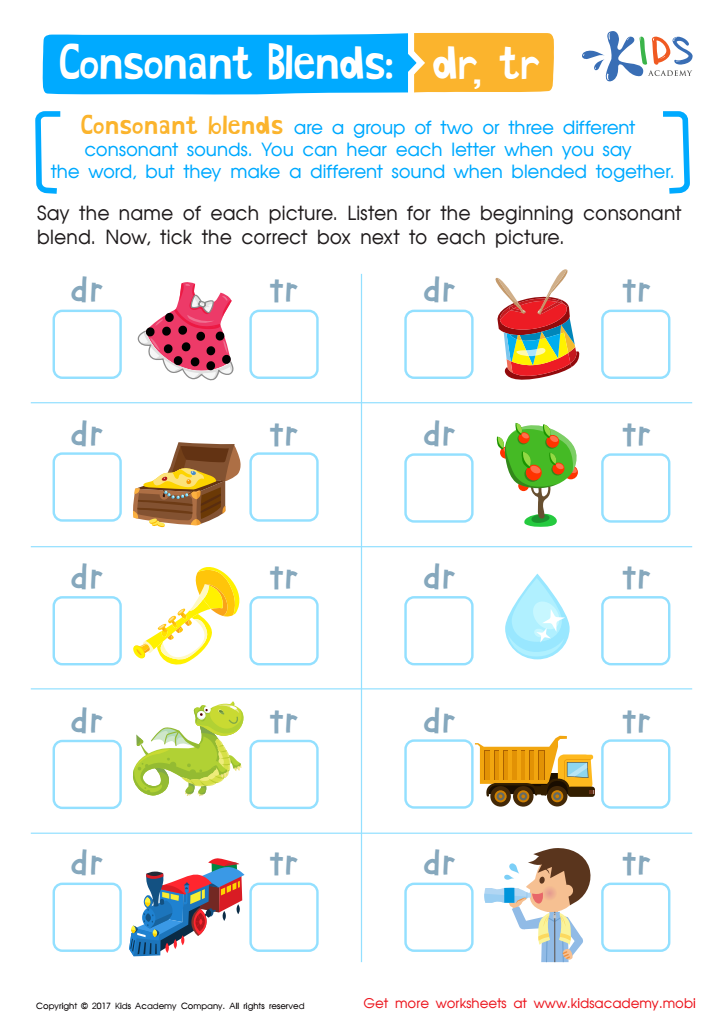
Consonant Blends: "Dr" and "Tr" Printable
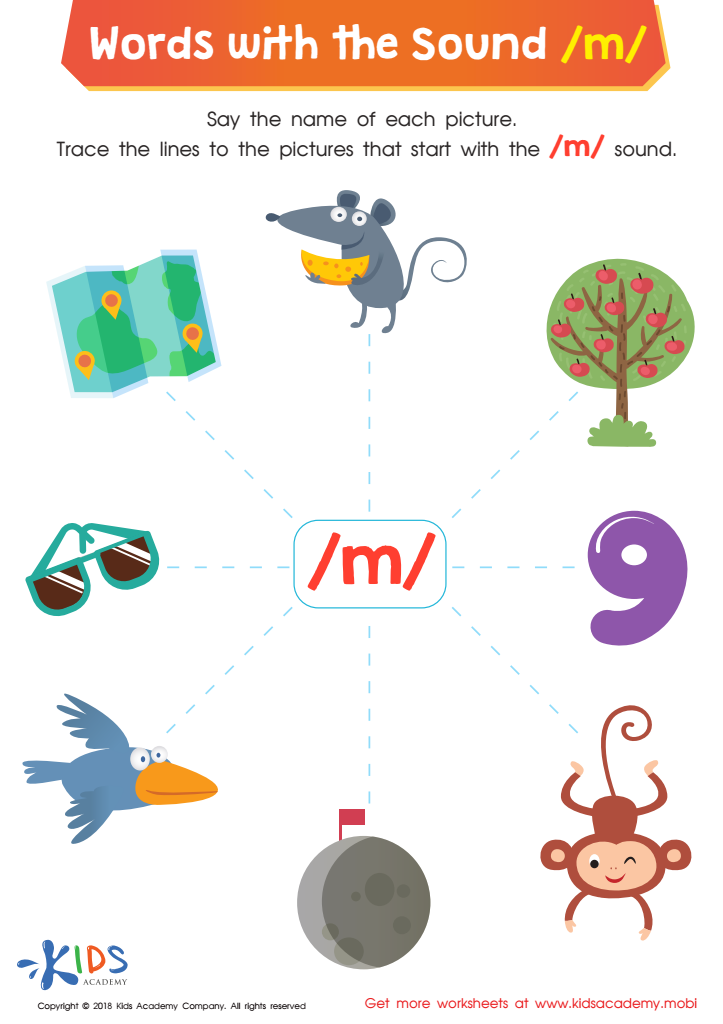
Words with Sound M Reading Worksheet



Word recognition of normal consonants is crucial for young children's reading development from ages 3 to 7. This foundational skill enables children to decode words effectively, enhancing their literacy and overall academic success. At this age, children's brains are highly receptive to language inputs, and early exposure to consonant sounds facilitates stronger phonemic awareness. When parents and teachers prioritize teaching these sounds, they equip children with the tools necessary to sound out words, leading to improved vocabulary and comprehension skills.
Additionally, mastering normal consonants supports children's confidence in reading. As they learn to recognize and pronounce words, they participate more actively in learning activities, fostering a love for reading. This love can translate to a lifelong passion for learning and exploration.
Moreover, focusing on consonant recognition aligns with early childhood education standards and helps in preparing children for more advanced literacy skills as they progress through school. Partnerships between parents and teachers in reinforcing these skills at home and in the classroom promote consistent practice and growth. Ultimately, by emphasizing word recognition of normal consonants, adults play a vital role in shaping proficient, enthusiastic readers who are ready to tackle the complexities of language and literacy.