Normal Chess Worksheets for Ages 3-7 - Page 3
54 filtered results
-
From - To
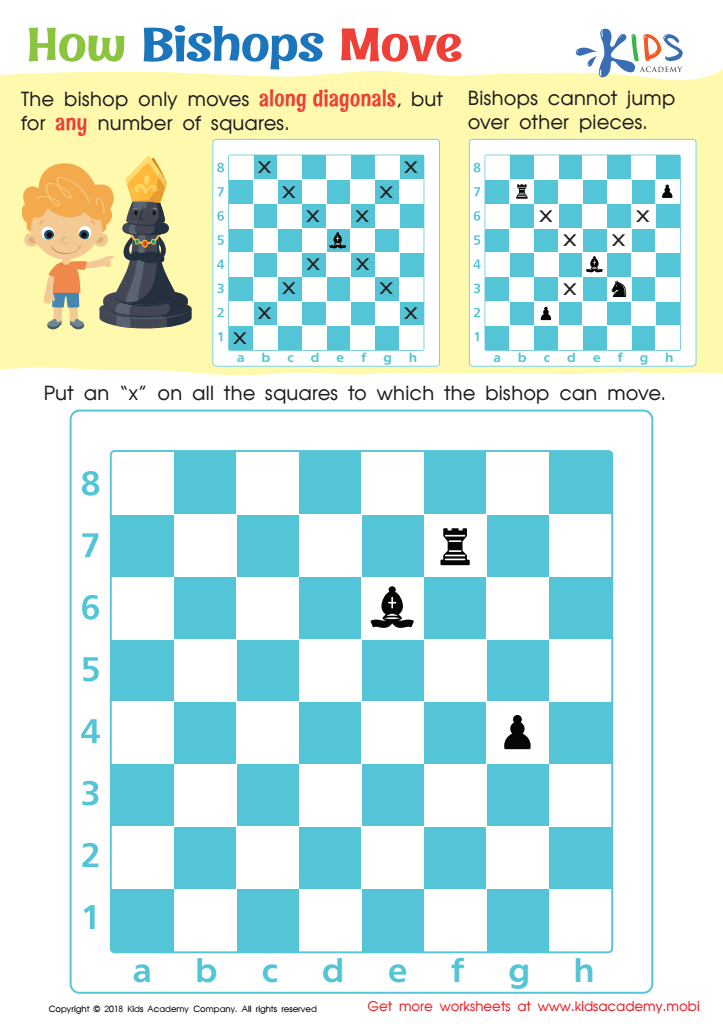
How Bishops Move Worksheet
 Assign to My Students
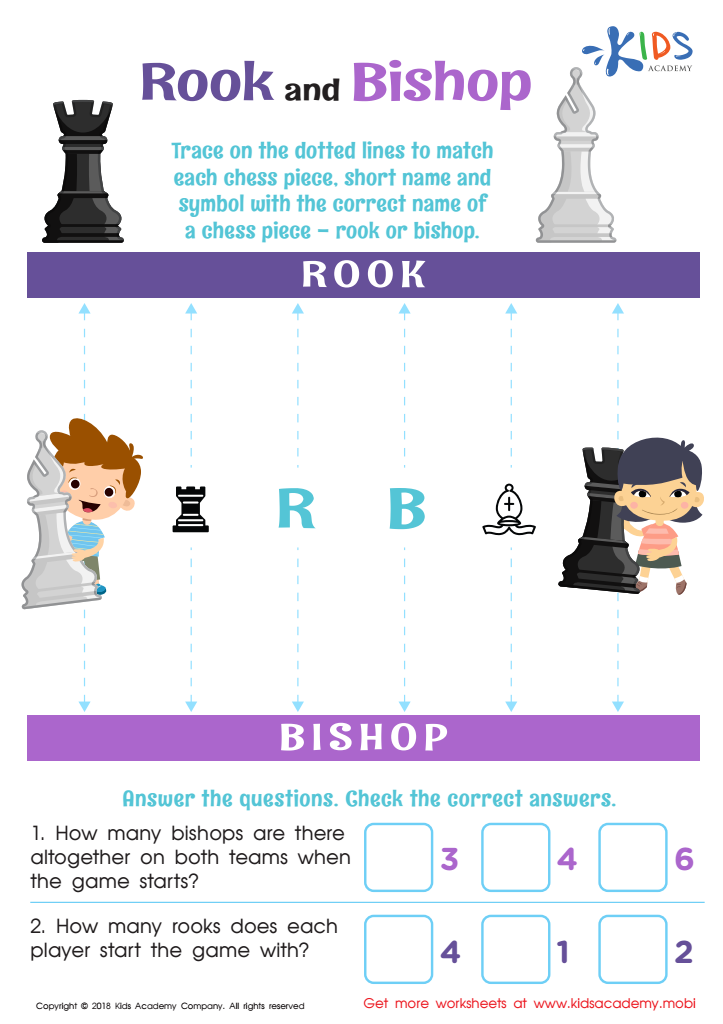
Rook and Bishop Worksheet
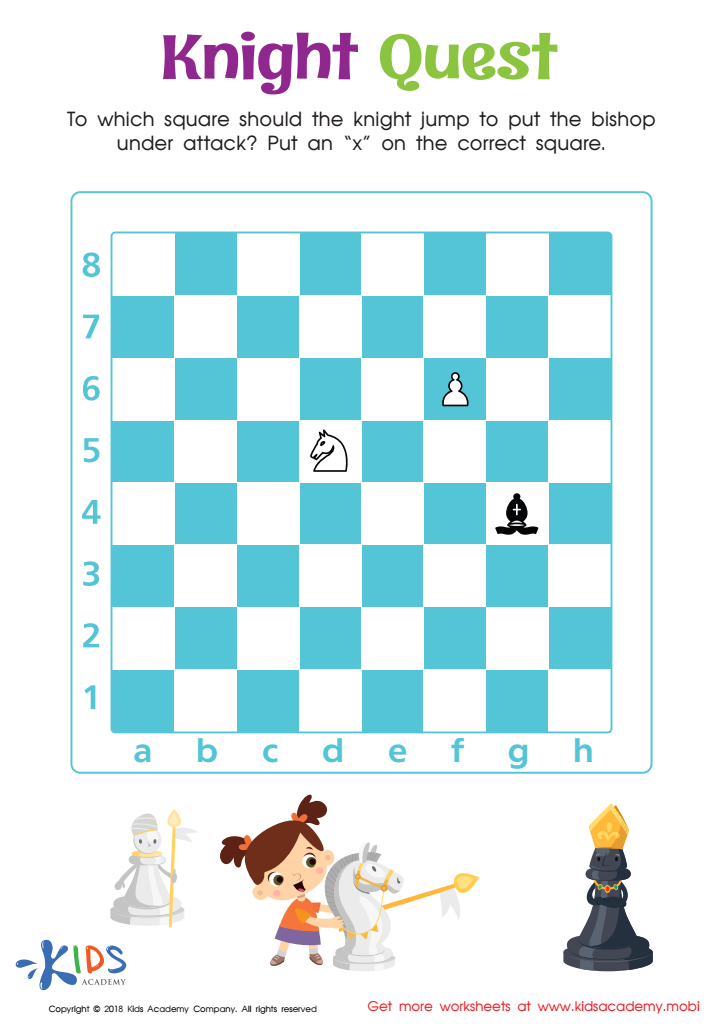
Knight Quest Worksheet
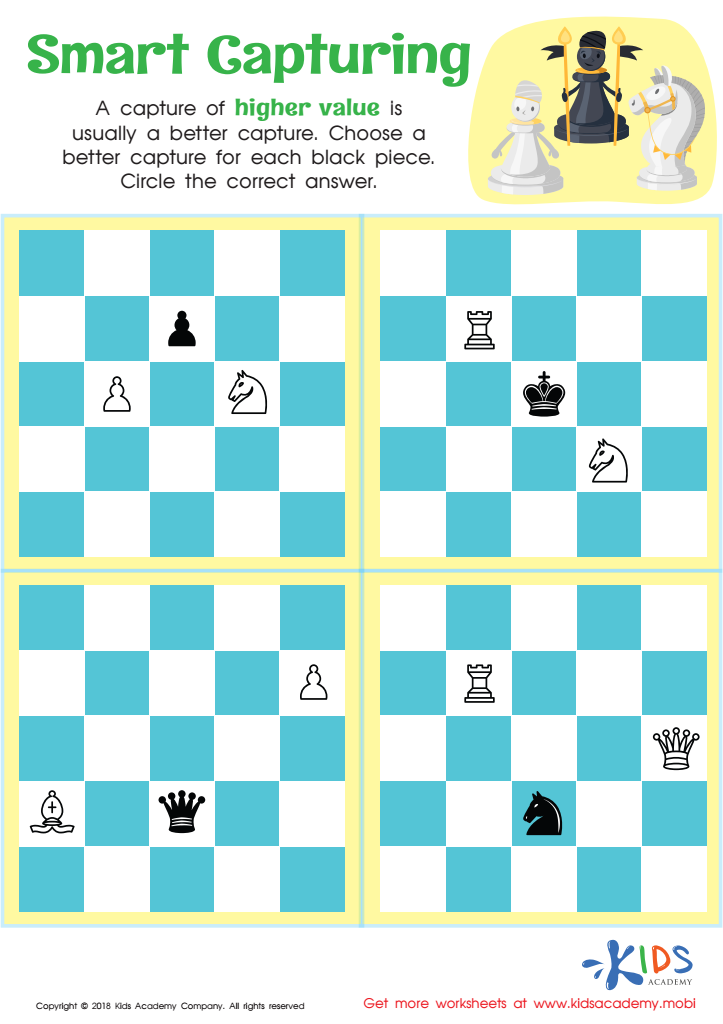
Smart Capturing Worksheet
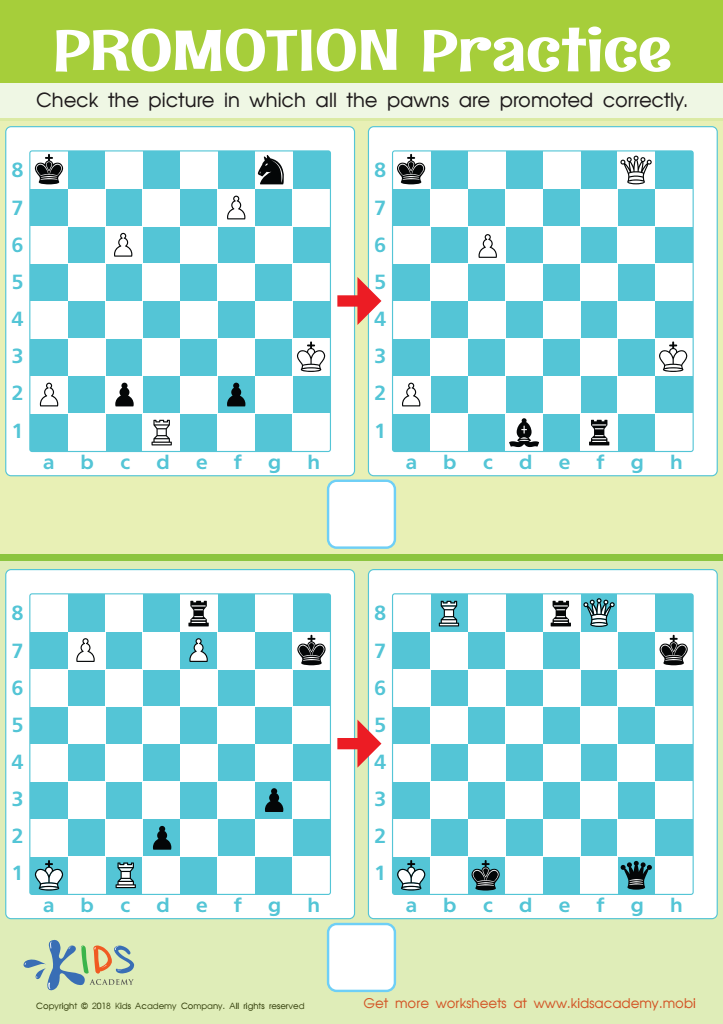
Promotion Practice Worksheet
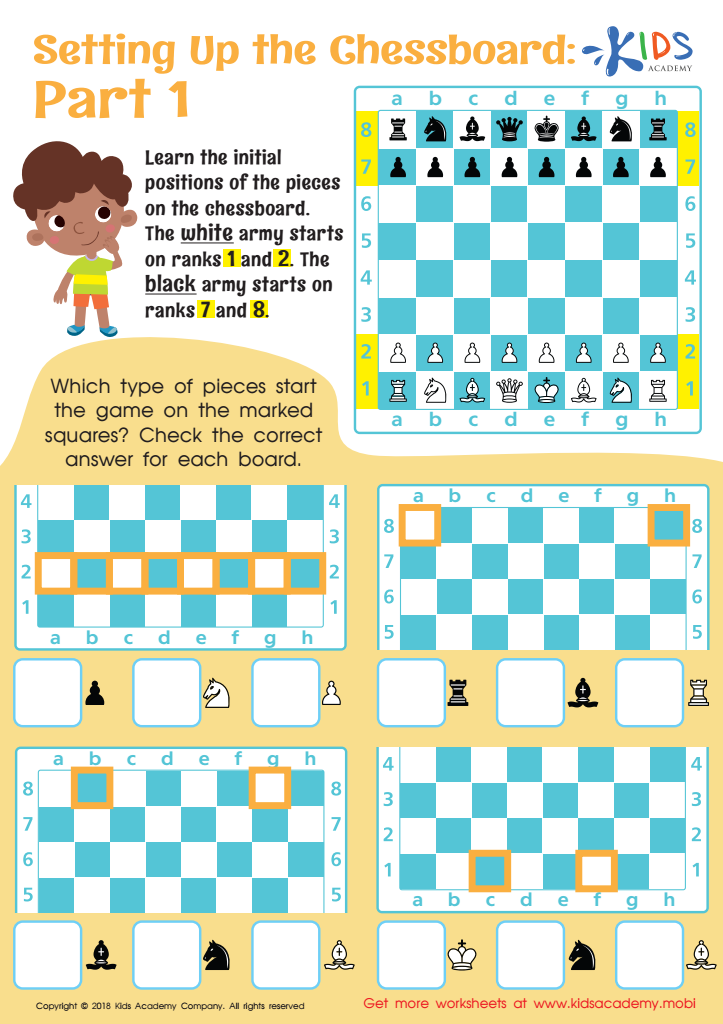
Setting up the Chessboard: Part 1 Worksheet








Introducing normal chess to children ages 3-7 can provide numerous benefits that support their cognitive, social, and emotional development. At this impressionable age, engaging young minds in chess offers a fun yet challenging way to build critical thinking and problem-solving skills. Chess encourages kids to consider outcomes and plan several moves ahead, fostering the development of strategic thinking and foresight.
Moreover, chess enhances concentration and attention span, as children learn to focus on the board and anticipate their opponent’s moves. This newly honed concentration can then be applied to academic pursuits and everyday tasks, aiding overall educational development. Chess also promotes memory skills, as remembering rules and recognizing patterns are fundamental components of the game.
Beyond cognitive benefits, chess can improve social skills. Playing with peers or adults teaches children important values such as patience, sportsmanship, and respect for others. Through both wins and losses, they can practice managing emotions, dealing with frustration positively, and celebrating others’ successes.
Lastly, the complexity and creativity inherent in chess make it particularly engaging and enjoyable. In an era where screen time is a significant concern, chess presents a valuable alternative that encourages thinking without the direct usage of digital interfaces. Embracing chess early on can set a foundation for lifelong intellectual engagement and personal growth.