Categorizing objects Normal Worksheets for Ages 3-7
4 filtered results
-
From - To
Enhance your child's cognitive skills with our "Categorizing Objects Normal Worksheets" designed for ages 3 to 7. These engaging worksheets help young learners develop their ability to classify and sort items based on various attributes such as color, shape, and size. By participating in fun and interactive activities, children will strengthen their critical thinking and observational skills. Ideal for home or classroom use, these printables provide a perfect opportunity for parents and educators to support children's learning while making it enjoyable. Encourage creativity and learning through play with our categorized worksheets and watch your child's abilities flourish!
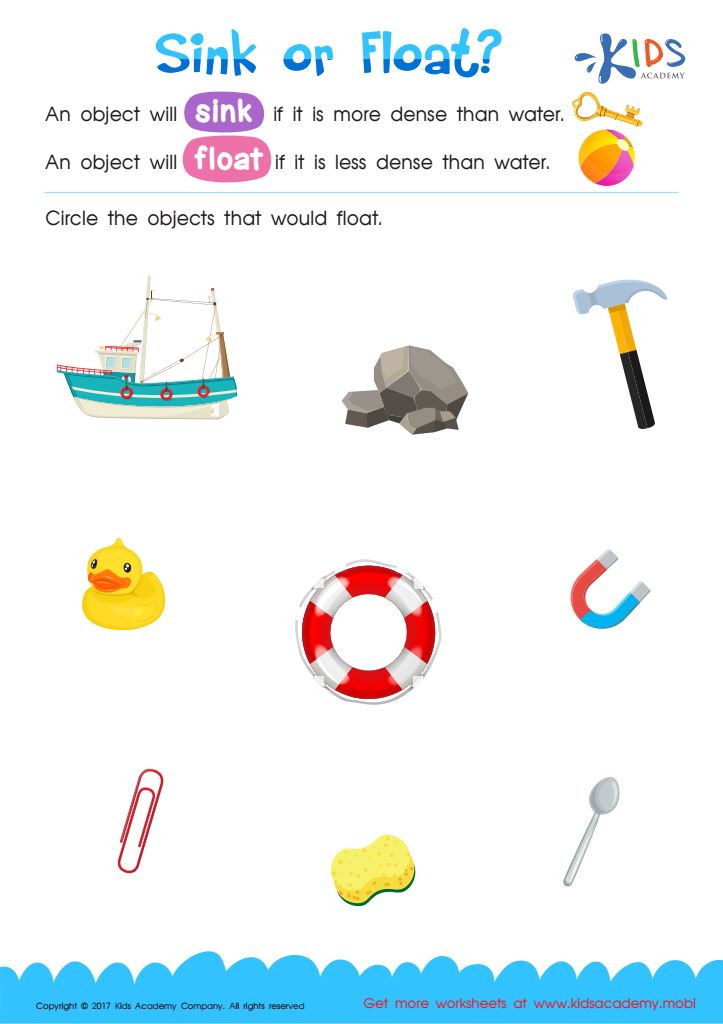
Sink or Float Printable
 Assign to My Students
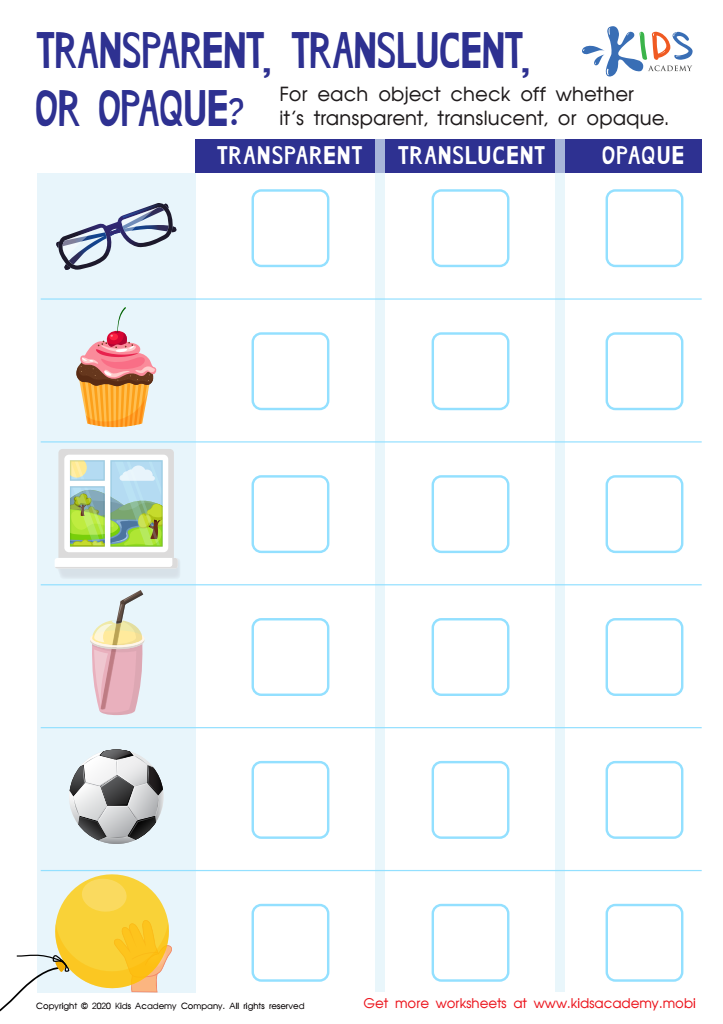
Transparent, Translucent, or Opaque Worksheet
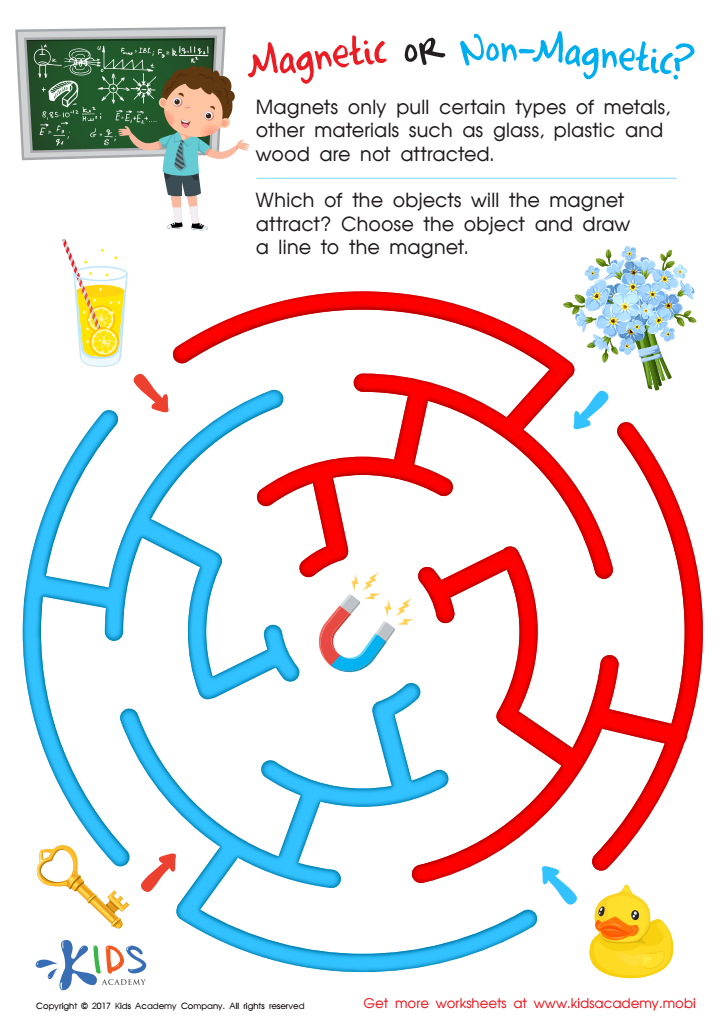
Magnetic or Non–Magnetic Worksheet
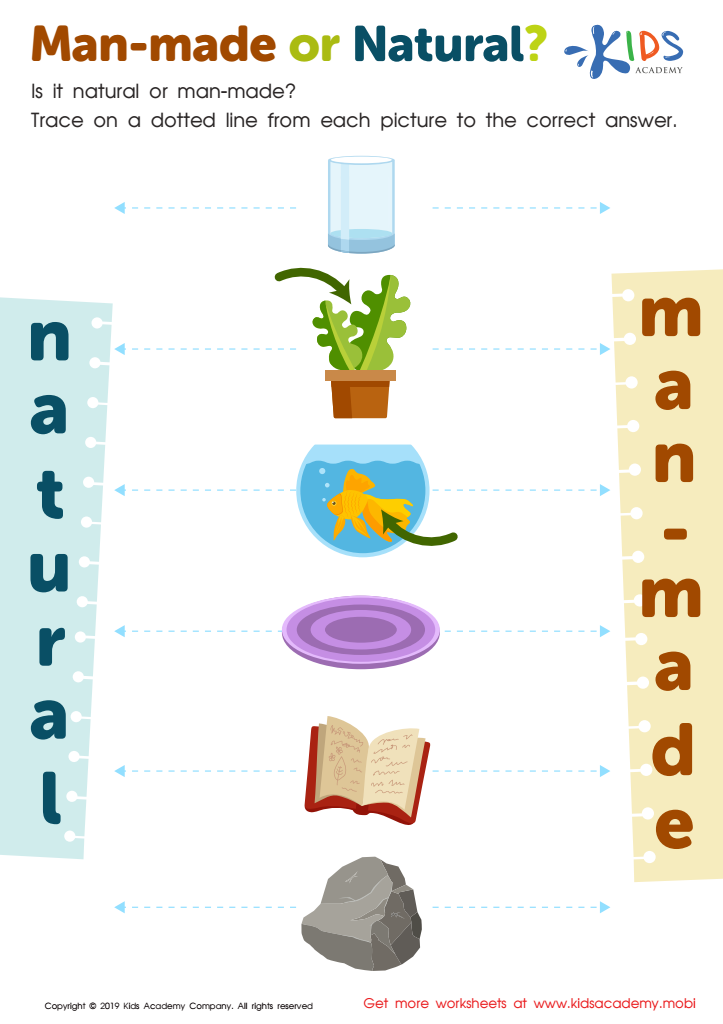
Man-Made or Natural? Worksheet







Categorizing objects is a fundamental skill that plays a crucial role in the cognitive development of children aged 3 to 7. During this developmental stage, children are naturally curious and eager to make sense of the world around them. By engaging in categorization, they enhance their critical thinking and problem-solving abilities. Sorting objects into groups based on shared characteristics—like shape, color, or size—encourages not only observation skills but also language development as children learn to articulate their reasoning.
For parents and teachers, fostering this skill is essential as it lays the groundwork for more complex concepts in mathematics and science later on, such as grouping, classification, and attribute identification. Additionally, these activities promote social skills, allowing children to work collaboratively, share ideas, and discuss their thought processes.
Moreover, categorization aids in emotional and social development. It helps children understand differences and similarities among people, fostering empathy and inclusivity. Overall, prioritizing categorization activities allows for a richer, more engaged learning environment, ensuring children develop the intellectual and social foundations necessary for lifelong learning and growth. Investing time in these activities at an early age enriches their educational experience and supports their holistic development.








