Comparing lengths Normal Worksheets for Ages 3-7
4 filtered results
-
From - To
Explore our "Comparing Lengths" worksheets designed specifically for children aged 3 to 7. These engaging and interactive resources help young learners grasp the concept of length through fun activities. With colorful visuals and age-appropriate tasks, children will compare different objects by size, enhancing their observational skills and understanding of measurements. Worksheets promote both independent and guided learning, making them perfect for classroom or home use. Each activity supports early math skills, encouraging problem-solving and critical thinking. Download the free worksheets today and watch your children develop confidence in comparing lengths while having a great time learning!
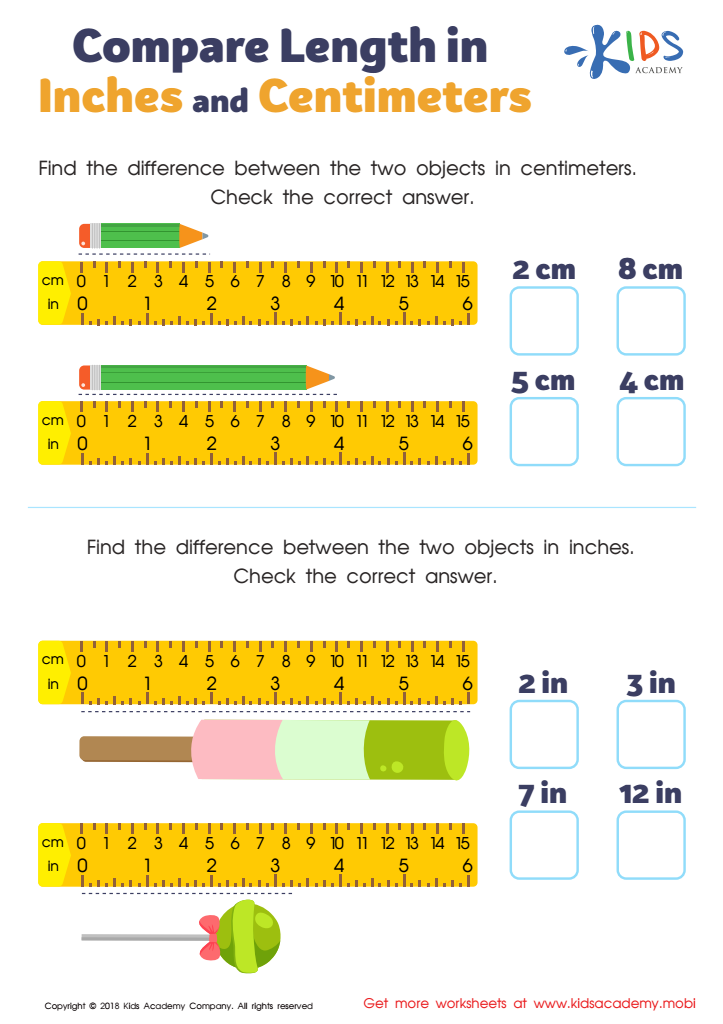
Compare Length in Inches and Centimeters Worksheet
 Assign to My Students
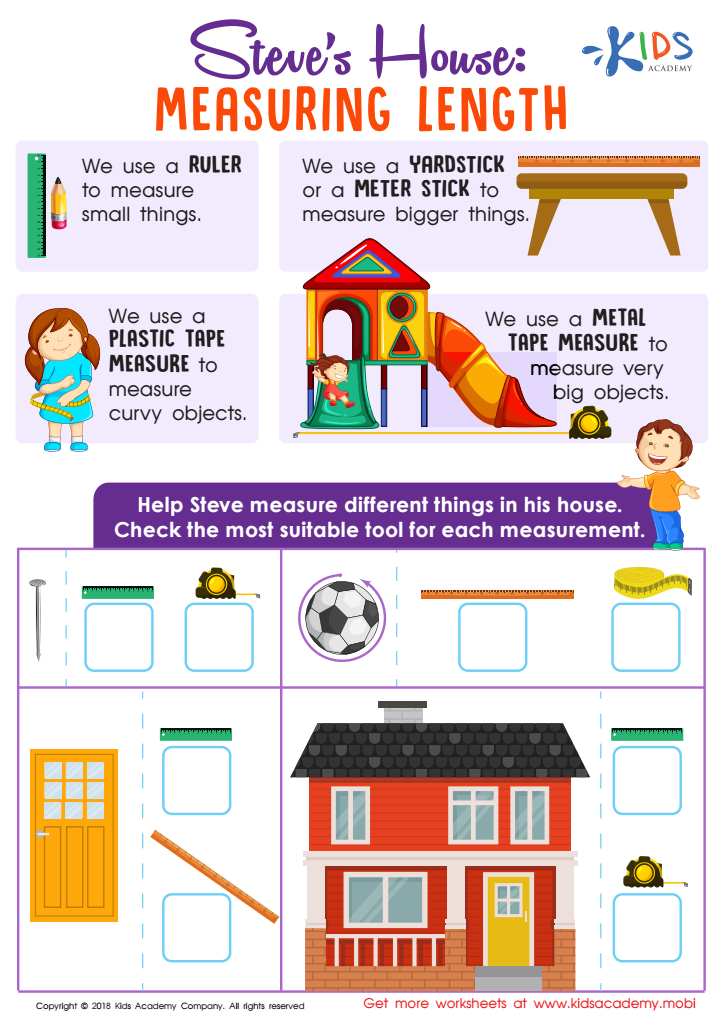
Steve's House: Measuring Length Worksheet
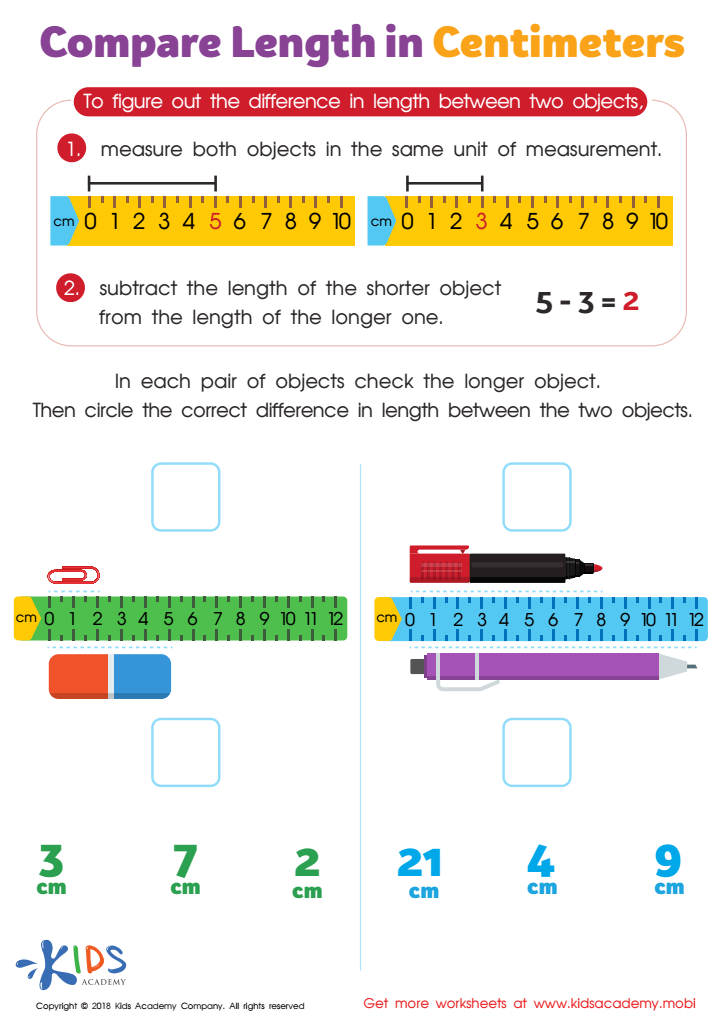
Compare Length in Centimeters Worksheet
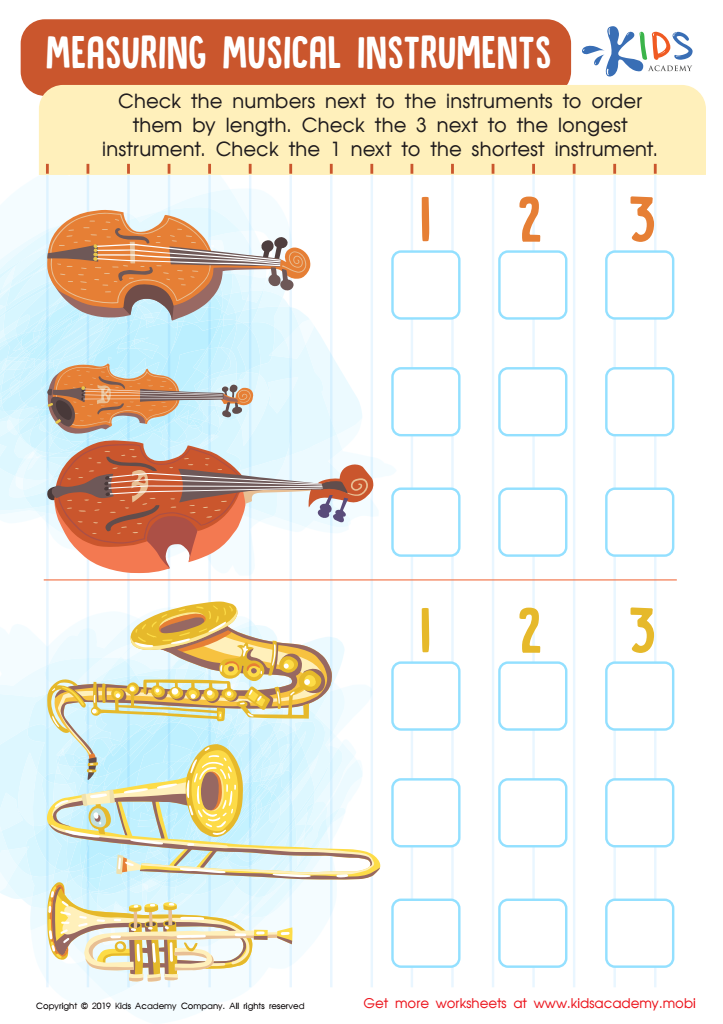
Measuring Musical Instruments Worksheet






Comparing lengths is a fundamental skill that plays a crucial role in the cognitive development of children aged 3-7 years. At this age, children are naturally curious and eager to explore their environment, making it the perfect time to introduce concepts of measurement. Understanding lengths helps children develop critical thinking and problem-solving skills, as they learn to analyze and differentiate objects based on size.
For parents and teachers, facilitating activities that involve comparing lengths can enhance children's mathematical understanding and vocabulary. This foundational concept lays the groundwork for more advanced topics like addition, subtraction, and later, geometry, making it essential for future academic success. Additionally, comparing lengths promotes fine motor skills through hands-on activities, encouraging engagement and active learning.
Moreover, when parents and teachers emphasize these comparisons, they nurture children’s ability to observe and articulate differences, fostering communication skills and boosting self-confidence as they share their findings. Integrating such simple yet effective measurement activities into daily routines—such as measuring household items or using natural objects outdoors—can make learning fun and relevant, ultimately supporting early childhood development holistically. By prioritizing comparing lengths, adults can help set children on a path toward lifelong learning and curiosity about the world around them.








