
Improving categorization skills Normal Worksheets for Ages 3-7
3 filtered results
Difficulty Level
Grade
Age
-
From - To
Subject
Activity
Standards
Enhance your child's ability to classify and categorize with our engaging Normal Worksheets, designed specifically for ages 3-7. These worksheets provide a fun and interactive way for young learners to develop crucial cognitive skills by sorting and grouping objects based on common characteristics. Through vibrant illustrations and age-appropriate activities, children will learn to identify similarities and differences, fostering their analytical thinking and problem-solving abilities. Our user-friendly worksheets also encourage independent learning, making them an excellent resource for home and classroom settings. Dive into a world of discovery and help your child strengthen their categorization skills today!
Favorites
With answer key
Interactive
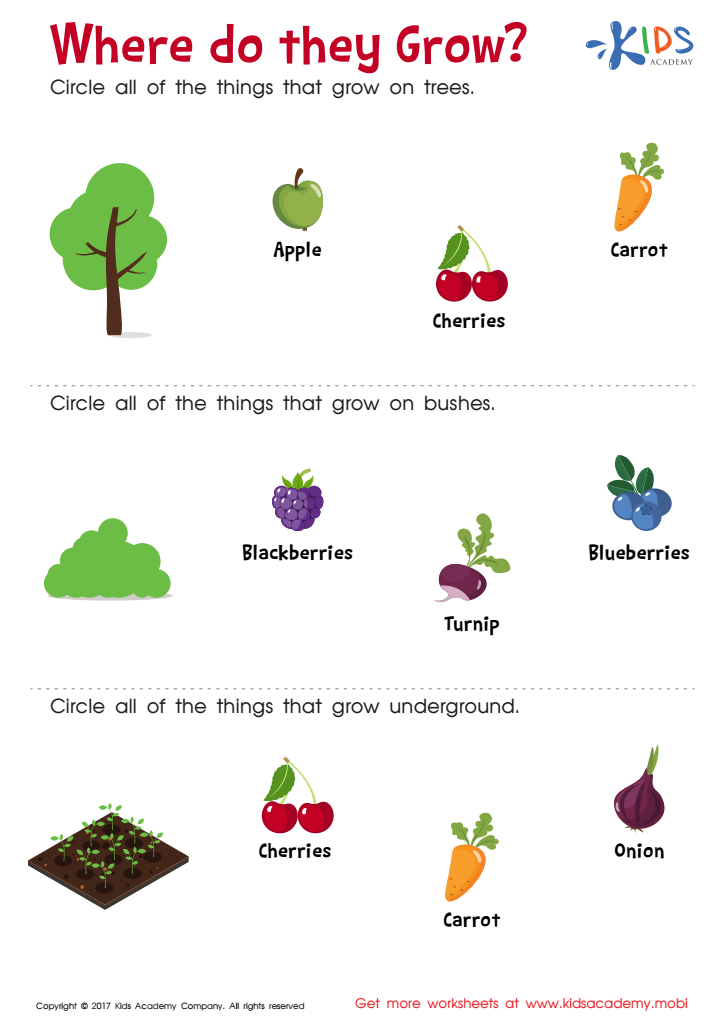
Where Do They Grow Worksheet
With this worksheet, your child can learn about apples, cherries, and blueberries and gain important science skills.
 Assign to My Students
Where Do They Grow Worksheet
Worksheet
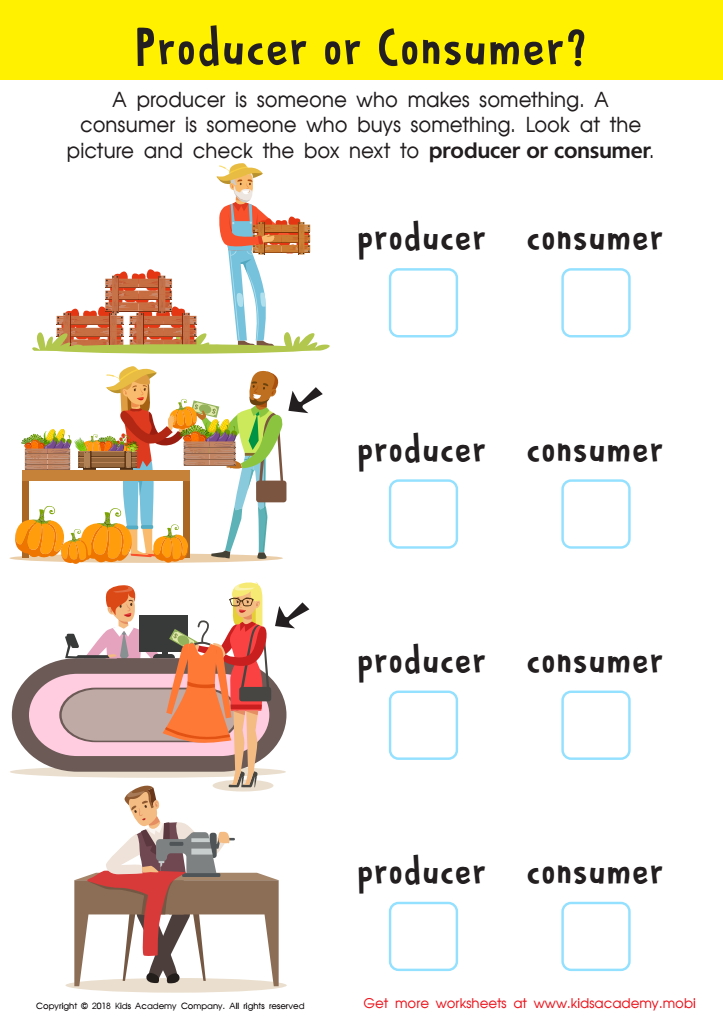
Producer or Consumer? Worksheet
Test your child's knowledge by asking who's a producer and consumer. Explain producer makes things and consumer buys them. Use a snack example. Look at the picture with your kids and help them check the box next to producer or consumer.
Producer or Consumer? Worksheet
Worksheet
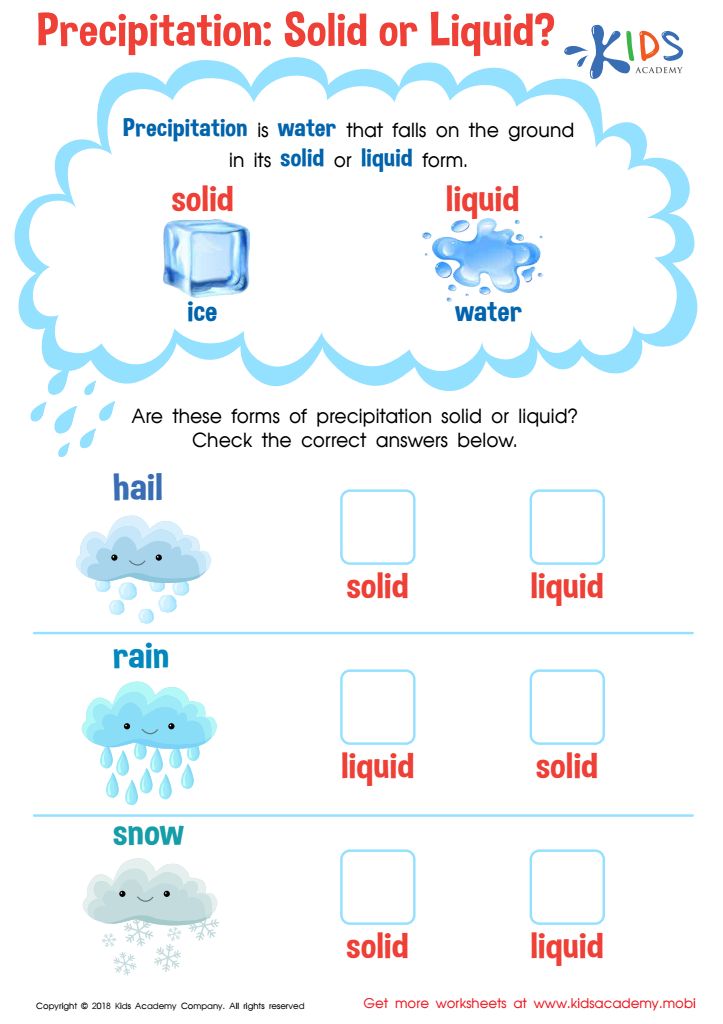
Precipitation: Solid or Liquid? Worksheet
Teach students that precipitation is water from the clouds/sky in either solid or liquid form, e.g. rain is liquid and snow is frozen. Use the worksheet with them to check if the forms of precipitation pictured are solid or liquid.
Precipitation: Solid or Liquid? Worksheet
Worksheet
Learning Skills
Join Kids Academy for Free
Who is primarily going to use this learning content?







Improving categorization skills in children aged 3-7 is crucial for several reasons. At this developmental stage, children are honing their cognitive abilities and learning to make sense of the world around them. Effective categorization skills help them to group objects, ideas, and experiences based on shared characteristics, which is foundational for critical thinking and problem-solving.
Developing these skills enhances a child's language acquisition, as they learn the vocabulary associated with different categories, such as colors, shapes, or animals. Moreover, strong categorization aids in literacy; children can comprehend stories and relate content to their own experiences by recognizing themes and similarities.
From a social perspective, enhancing these skills can foster better interaction and collaboration among peers, as children learn to understand differences and similarities within their environment. This understanding is vital for developing empathy and effective communication.
Parents and teachers play a vital role in nurturing these skills through targeted activities like sorting games, categorizing objects, or nature activities. By prioritizing categorization, they support not only academic development but also social and emotional growth, thereby laying a strong foundation for lifelong learning and interpersonal skills. Ultimately, investing in categorization skills yields lifelong benefits for children as they navigate and engage with the world.








