Sequence Understanding Normal Worksheets for Ages 3-7
3 filtered results
-
From - To
Unlock your child's potential with our Sequence Understanding Normal Worksheets for ages 3-7! Designed to enhance critical thinking and comprehension, these engaging worksheets help young learners grasp the concepts of sequencing through fun and interactive activities. Children will explore everyday scenarios, improving their ability to organize events and understand relationships between actions. Perfect for educators and parents alike, our worksheets align with early learning standards to support cognitive development. Whether at home or in the classroom, these resources are an excellent way for kids to practice essential skills while enjoying the learning process. Start your child's educational journey today!
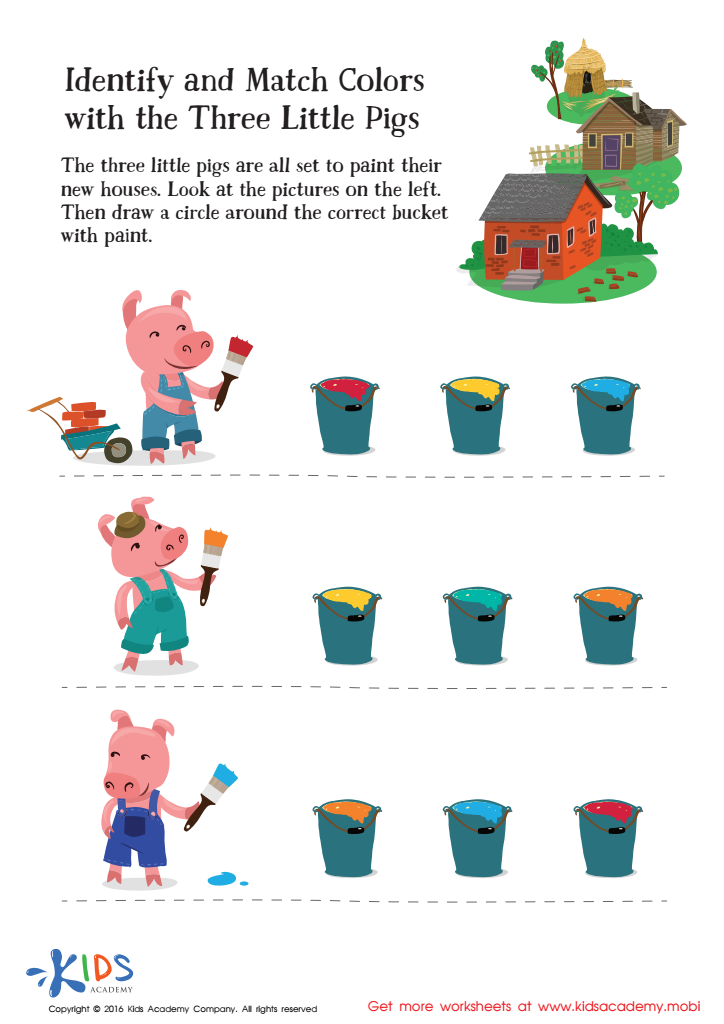
Fairy Tale Worksheet: Identify and Match Colors with Three Little Pigs
 Assign to My Students
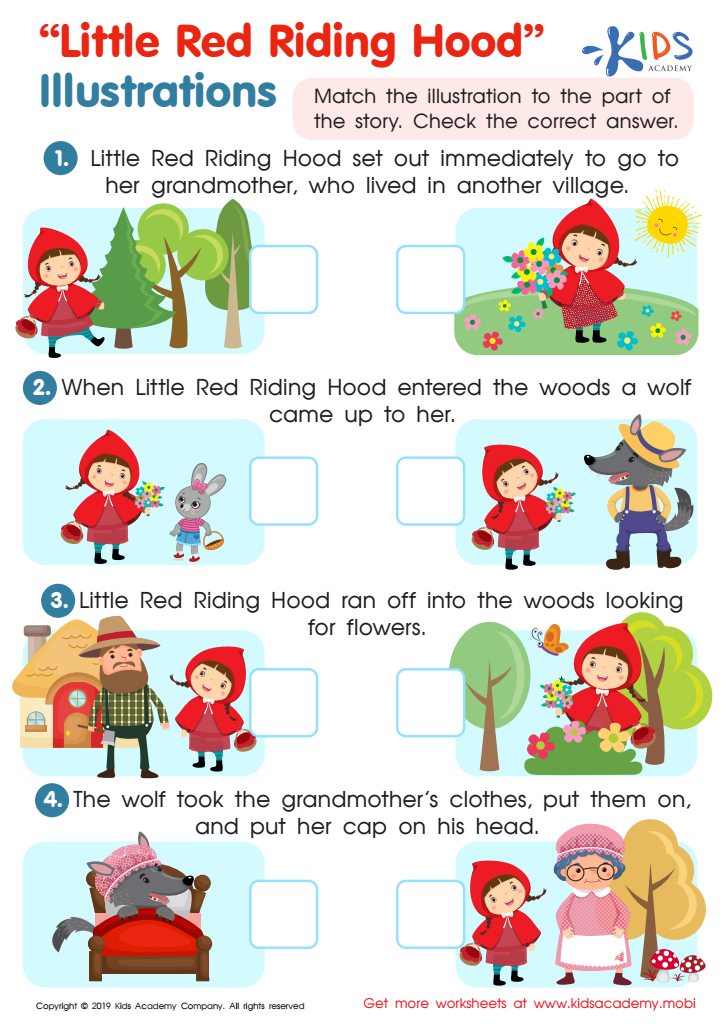
Little Red Riding Hood: Illustrations Worksheet
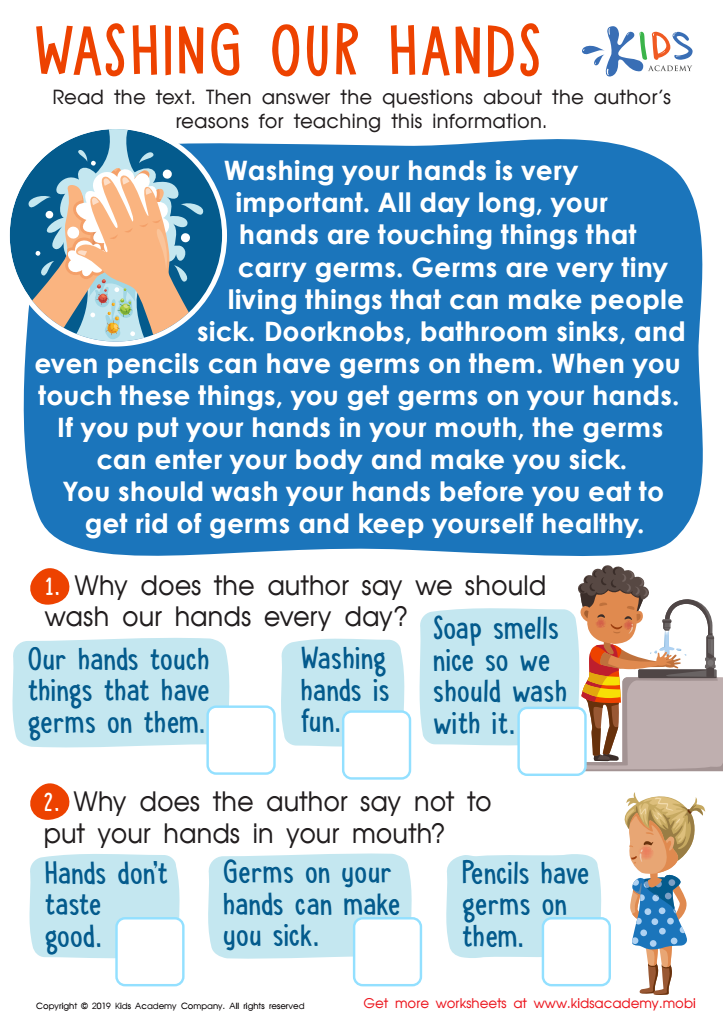
Washing Our Hands Worksheet








Sequence understanding is a critical cognitive skill for children aged 3-7, as it lays the foundation for future learning in various domains, including literacy, mathematics, and problem-solving. This skill involves recognizing and recalling the order of events, which helps children make sense of the world around them, whether through stories, daily routines, or activities.
Parents and teachers should care about sequence understanding because it enhances children's cognitive development, enabling them to organize information logically. Proficiency in sequencing helps children comprehend narratives, follow instructions, and improve memory retention. For instance, understanding the sequence of story events aids in reading comprehension, while grasping mathematical sequences strengthens their grasp of concepts like counting and patterns.
Moreover, sequencing facilitates social interactions. Children learn to predict what happens next in conversations or games, aiding in social cues and communication skills. Engaging in activities that promote sequencing—such as storytelling, cooking, or art projects—can foster parent-child and teacher-student bonding, creating a stimulating learning environment.
Investing in sequence understanding enriches children's academic and social-emotional development, ultimately equipping them with essential skills for lifelong learning and interaction. Therefore, it is vital for parents and educators to prioritize these activities in early childhood development.








