Spatial reasoning Normal Worksheets for Ages 3-7
5 filtered results
-
From - To
Explore our engaging Spatial Reasoning Normal Worksheets designed specifically for children aged 3-7! These worksheets focus on building essential skills through fun activities that foster cognitive development. Young learners will enjoy identifying shapes, understanding spatial relationships, and solving puzzles that enhance their problem-solving abilities. Each worksheet is crafted to suit varying skill levels, ensuring every child can learn at their own pace. Ideal for preschool and early elementary education, these resources encourage creativity and critical thinking. Download our free printable worksheets today and watch as your child develops a solid foundation in spatial reasoning while having fun!
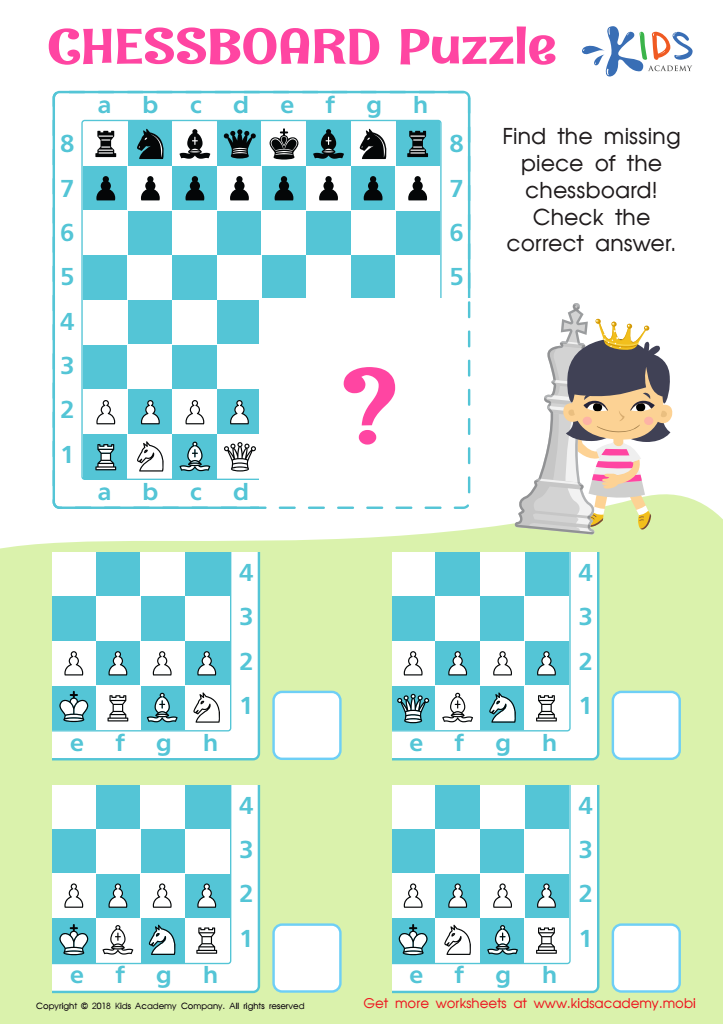
Chessboard Puzzle Worksheet
 Assign to My Students
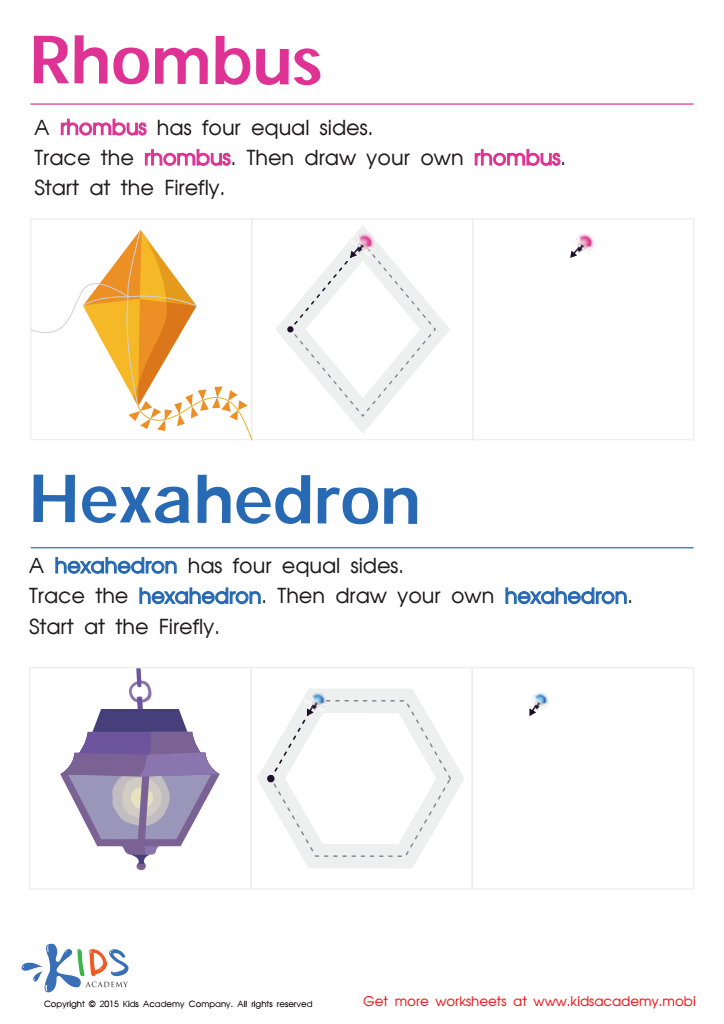
Draw a Rhombus And a Hexahedron Printable
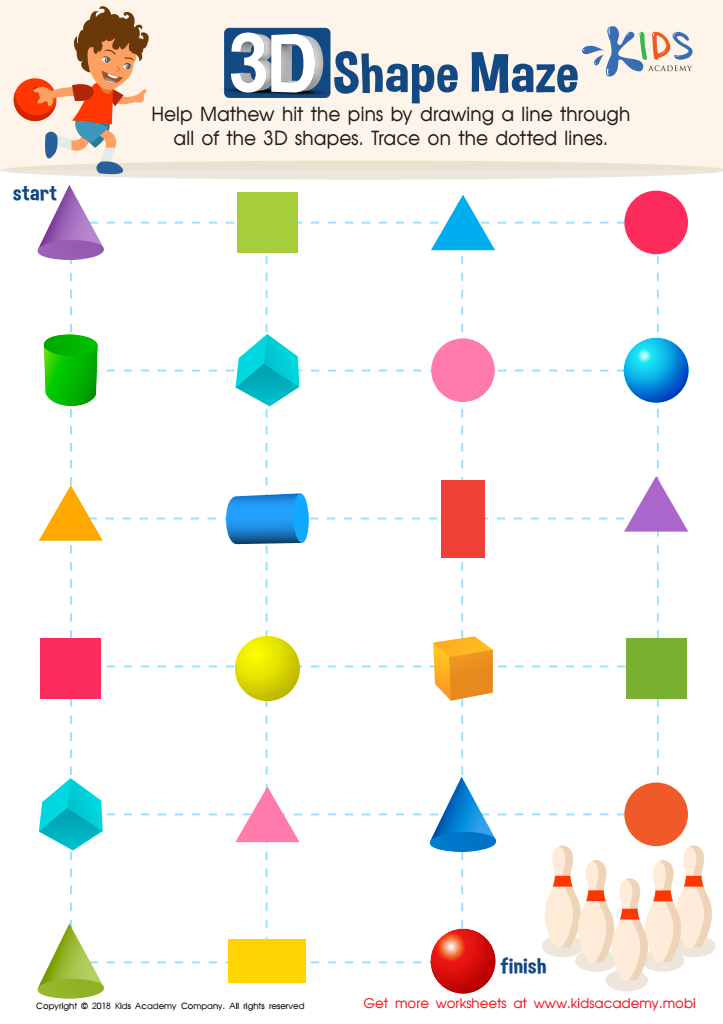
Shapes Maze Geometry Worksheet
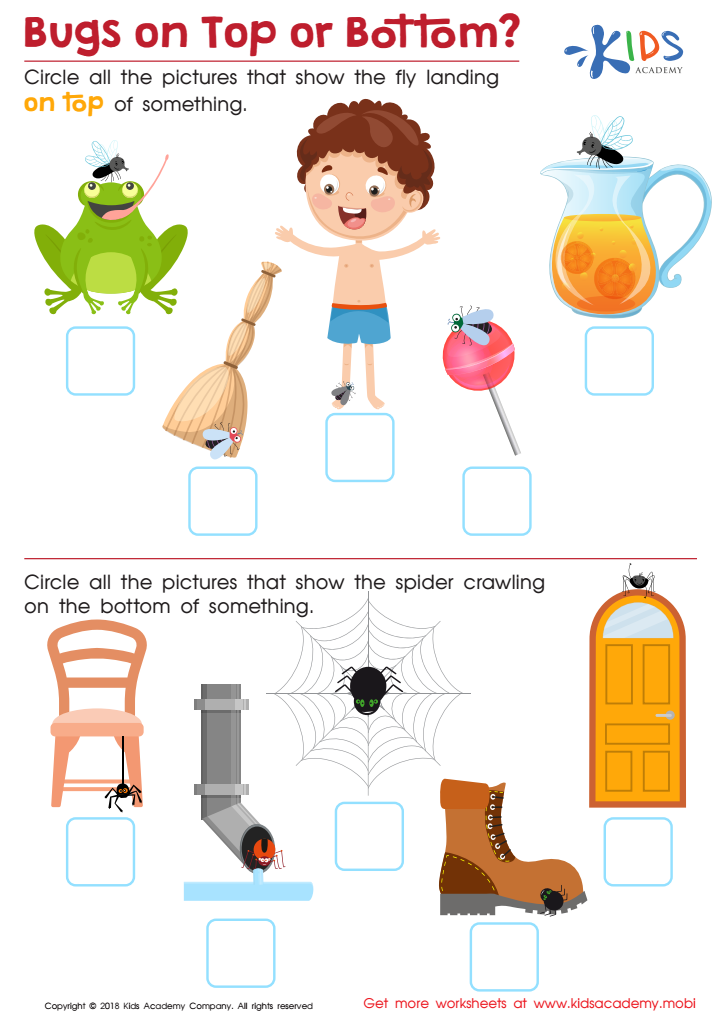
Bugs on Top or Bottom? Worksheet
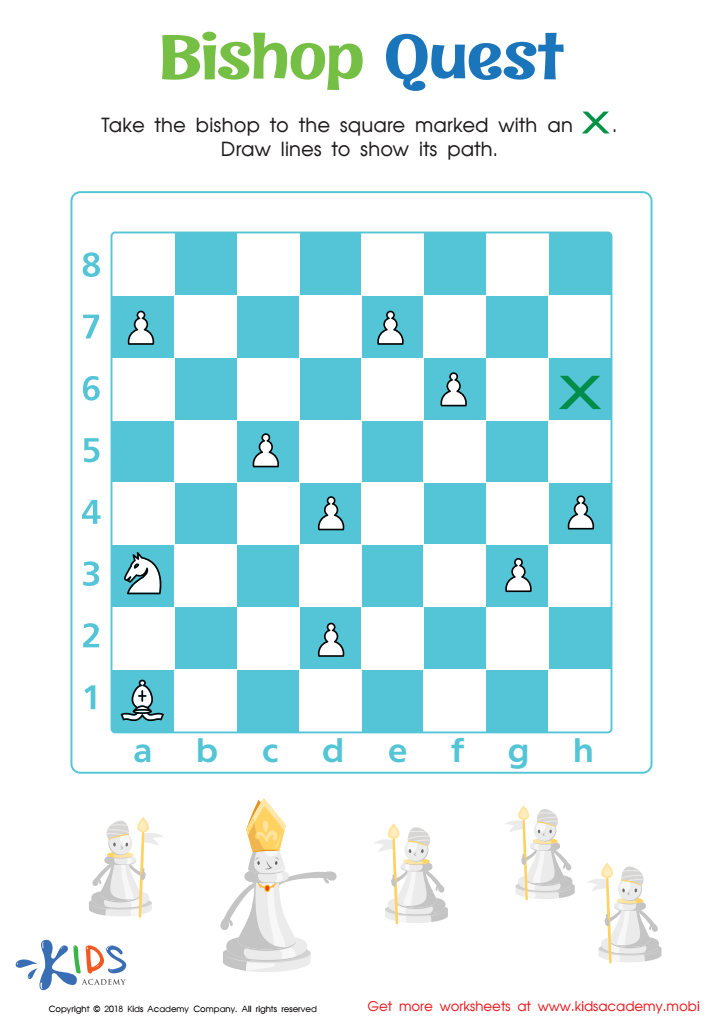
Bishop Quest Worksheet







Spatial reasoning is a fundamental cognitive skill that allows children to understand and navigate the world around them. For children aged 3-7, developing robust spatial reasoning abilities is particularly essential as it serves as a foundation for various learning areas, including mathematics, science, and even literacy.
During these formative years, children begin to engage with their environment through play, exploration, and hands-on activities. Effective spatial reasoning skills help children visualize shapes, understand how objects relate to one another, and grasp the concept of dimensions. For instance, strong spatial reasoning can translate to better performance in counting, recognizing patterns, solving puzzles, and conceptualizing concepts like volume and area in later grades.
Furthermore, engaging children in activities that promote spatial reasoning—such as building with blocks, drawing, or playing certain games—can enhance their problem-solving skills and critical thinking abilities. Parents and teachers should therefore prioritize activities that encourage spatial understanding, fostering a love for learning and building confidence. Ultimately, nurturing spatial reasoning during these crucial years can lead to lasting academic benefits and equip children with essential skills for future challenges in and outside of the classroom.








