
Understanding moon phases Normal Worksheets for Ages 3-7
3 filtered results
Difficulty Level
Grade
Age
-
From - To
Subject
Activity
Standards
Welcome to our "Understanding Moon Phases" worksheets for children aged 3-7! These engaging resources are designed to help young learners explore the enchanting world of the moon. With vibrant illustrations and simple activities, children can easily grasp the concept of lunar phases while developing their observational skills. Our worksheets encourage creativity and critical thinking, complementing early science education. Perfect for homeschooling or classroom use, these materials include coloring, matching, and discussion prompts that spark curiosity about the universe. Make moon exploration fun and educational with our thoughtfully designed worksheets that inspire a love for learning in science!
Favorites
With answer key
Interactive
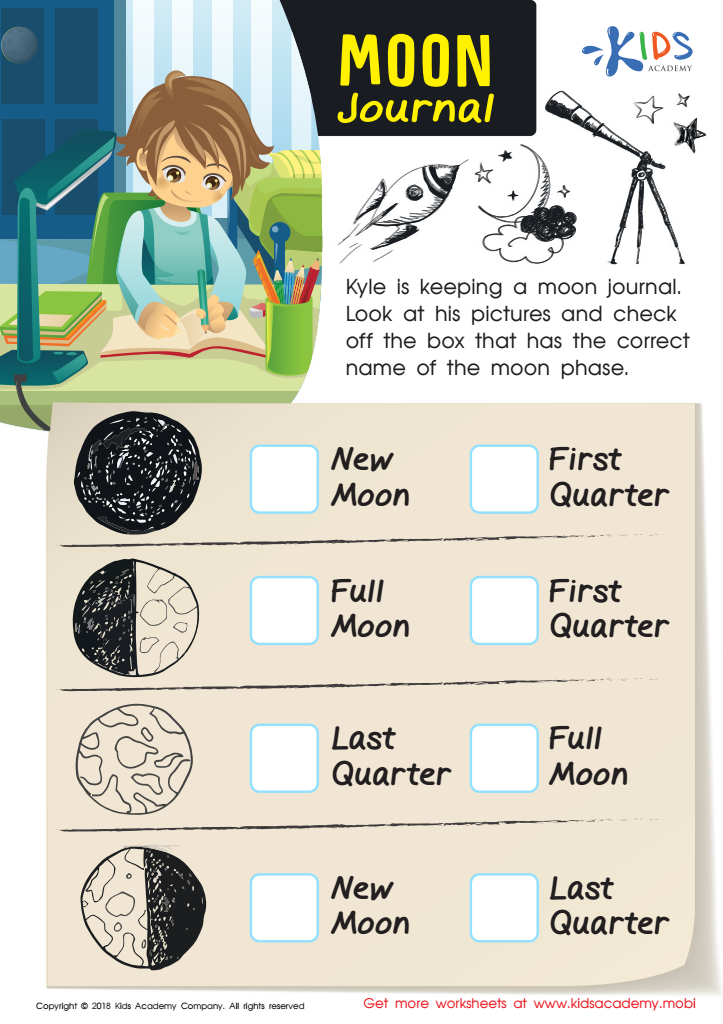
Moon Journal Worksheet
Observe the moon and its 8 phases with your child by downloading this free PDF worksheet from Kids Academy! Review the moon phases with them then help them label Kyle's moon journal. Select the right moon phase for each picture to complete the page!
 Assign to My Students
Moon Journal Worksheet
Worksheet
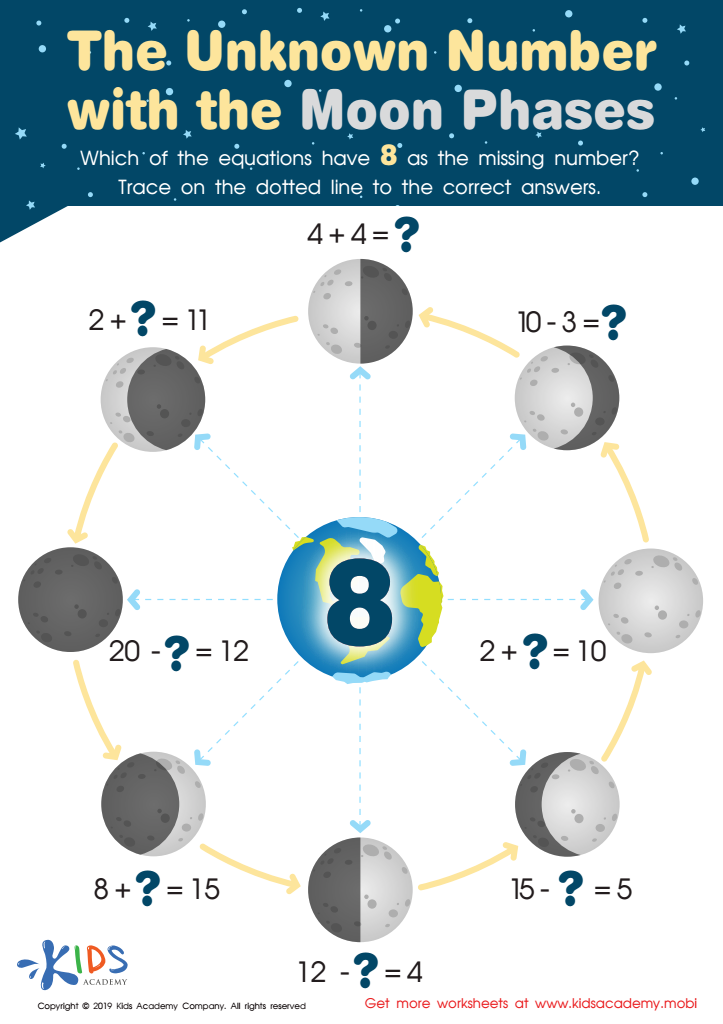
The Unknown Number with the Moon Phases Worksheet
Show your kids the moon one night! Explain why its shape changes during the month with a worksheet. Then, help them to solve math equations and trace the answer, where the missing number is '8'.
The Unknown Number with the Moon Phases Worksheet
Worksheet
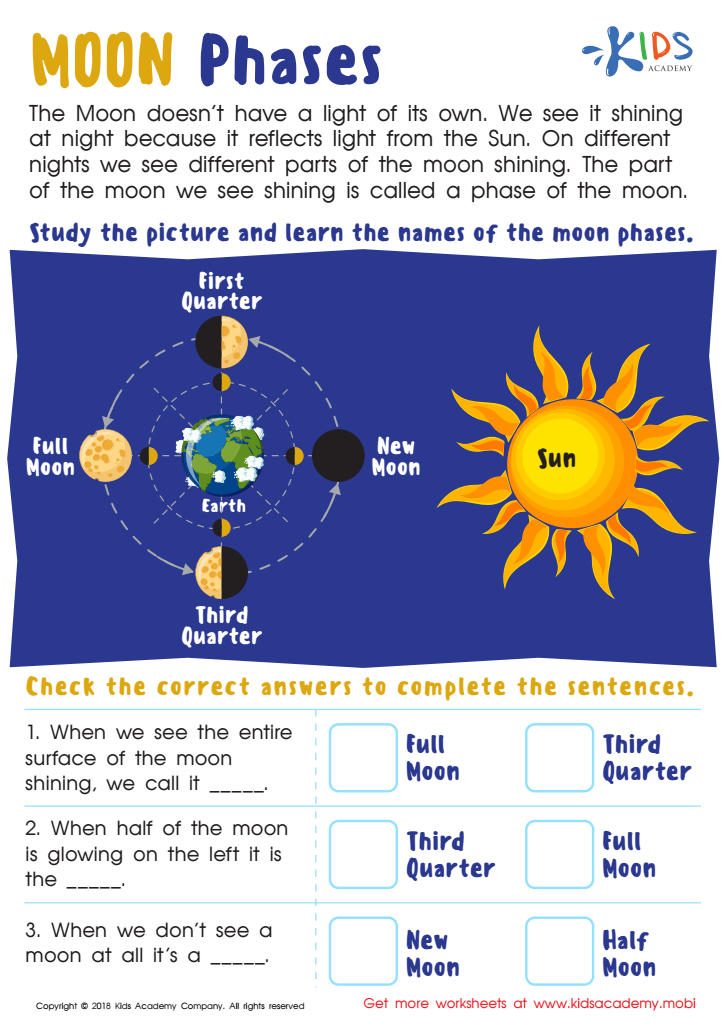
Moon Phases Worksheet
Gaze up at the night sky and the moon's appearance may change from night to night. Encourage your child to learn more about the sun, the moon, and space with this science worksheet. Have them read the text then study the picture. Finally, read the sentences and check the answers to identify the moon's phases.
Moon Phases Worksheet
Worksheet
Join Kids Academy for Free
Who is primarily going to use this learning content?








Understanding moon phases is important for children aged 3 to 7 for several reasons. Firstly, it fosters a sense of wonder and curiosity about the natural world. Moon phases help children learn about the changeable nature of the sky, sparking conversations about science, time, and the Earth's relationship with the moon.
Educationally, teaching about moon phases early on enhances a child’s comprehension of patterns and cycles. Just as they observe day and night, recognizing the moon's cycles can bridge concepts in math and science. This observational skill promotes critical thinking and inquiry.
Moreover, understanding moon phases connects children to cultural stories and traditions that revolve around the moon, weaving in social studies and storytelling. It can introduce lessons on history, navigation, and even environmental topics like tides.
Teachers and parents who engage children with moon observations can also cultivate a family habit. Keeping a moon diary, for instance, encourages writing skills, observation, and drawing, integrating language arts and creativity. Ultimately, nurturing an understanding of moon phases provides foundational knowledge, inspires curiosity, and enriches educational experiences, helping children become informed and engaged individuals.








