Visual discrimination skills Normal Worksheets for Ages 3-7
5 filtered results
-
From - To
Enhance your child's visual discrimination skills with our engaging worksheets, designed specifically for children ages 3-7. These activities help young learners to differentiate between similar shapes, colors, sizes, and patterns—essential skills for early academic success. Each worksheet is crafted to be enjoyable, allowing kids to strengthen their observation and analytical abilities while having fun. Suitable for home or classroom use, our normal worksheets foster critical thinking and attention to detail in young minds. Explore our collection and provide your child with the tools they need to excel in their educational journey! Start nurturing their skills today with our visual discrimination resources.
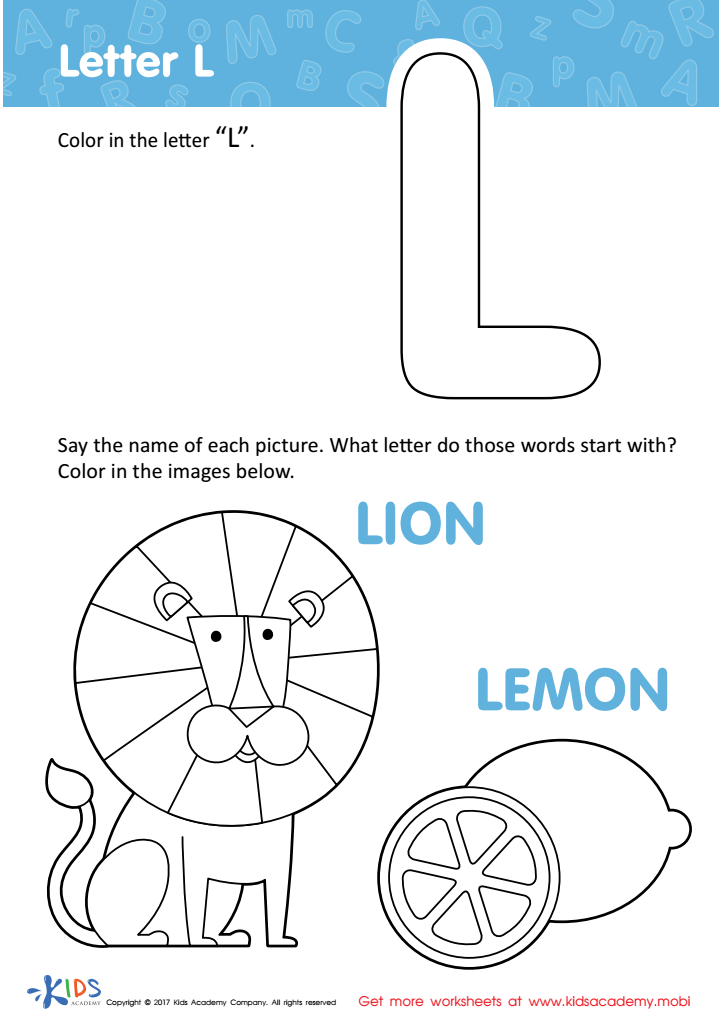
Letter L Coloring Sheet
 Assign to My Students

Find Uppercase Letters A, B, and C Worksheet
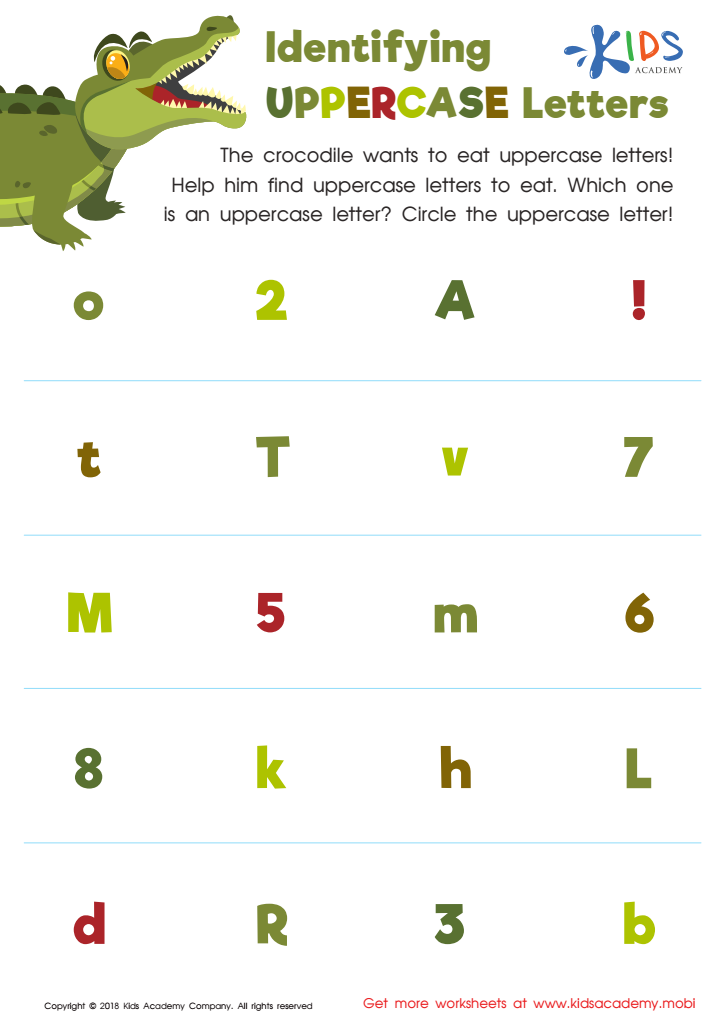
Identifying Uppercase Letters Worksheet
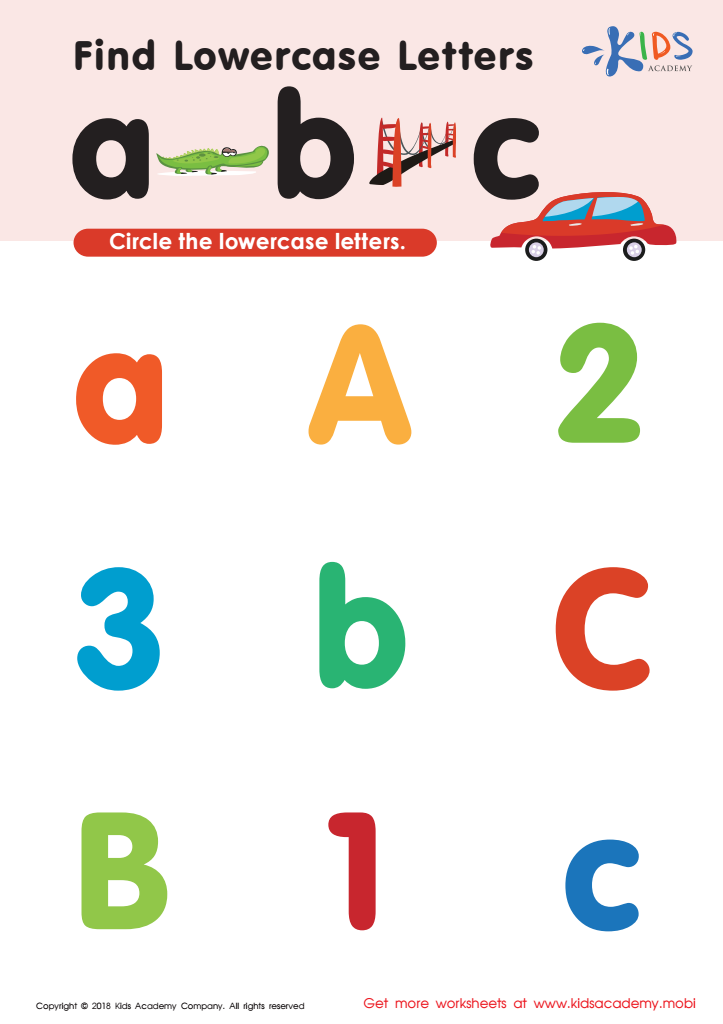
Find lowercase letters a b c Worksheet
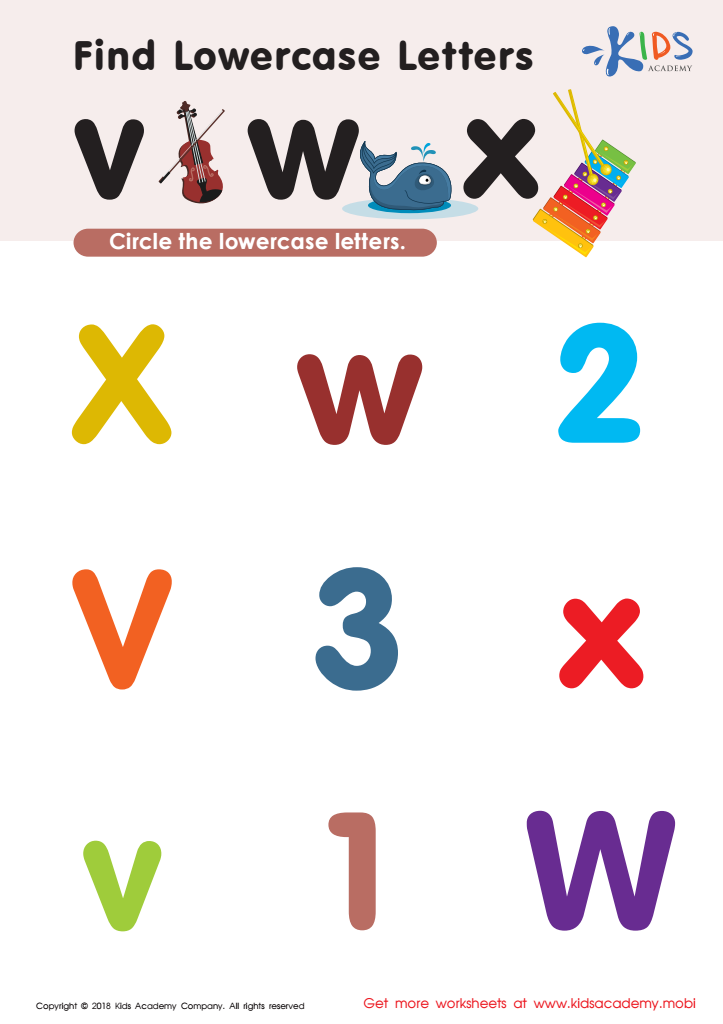
Find Lowercase Letters v w x Worksheet







Visual discrimination skills are crucial for children aged 3-7 as they lay the foundation for essential learning processes. These skills allow children to differentiate between similarities and differences in shapes, colors, sizes, and patterns. For parents and teachers, understanding the importance of visual discrimination is vital because it directly impacts a child's ability to learn basic literacy and numeracy skills.
Children who develop strong visual discrimination are better equipped to recognize letters and numbers, understand math concepts, and follow instructions that rely on visual information. This skill fosters early reading and writing readiness as they learn to distinguish letters from one another and identify words on a page. Additionally, it enhances a child’s ability to focus, follow directions, and engage in problem-solving activities, all of which are key for classroom success.
Furthermore, promoting visual discrimination skills can mitigate learning difficulties. By incorporating games and activities centered around matching, sorting, and identifying different visuals, caregivers can create an engaging learning environment. Ultimately, nurturing these skills not only supports academic achievement but also boosts a child's confidence and enthusiasm for learning—essential elements for successful development in these formative years.








