Problem-Solving Skills Normal 2D Shapes Worksheets for Ages 3-7
5 filtered results
-
From - To
Unlock your child's potential with our engaging Problem-Solving Skills Normal 2D Shapes Worksheets designed for ages 3-7. These interactive worksheets provide a fun and educational way to help young learners understand various 2D shapes while enhancing their critical thinking abilities. Each activity encourages kids to analyze, reason, and solve problems in engaging scenarios that ignite their creativity. Ideal for home or classroom use, our worksheets foster a deep comprehension of shapes, preparing children for future math concepts. Add a playful and enriching dimension to their learning journey today with our thoughtfully crafted resources!
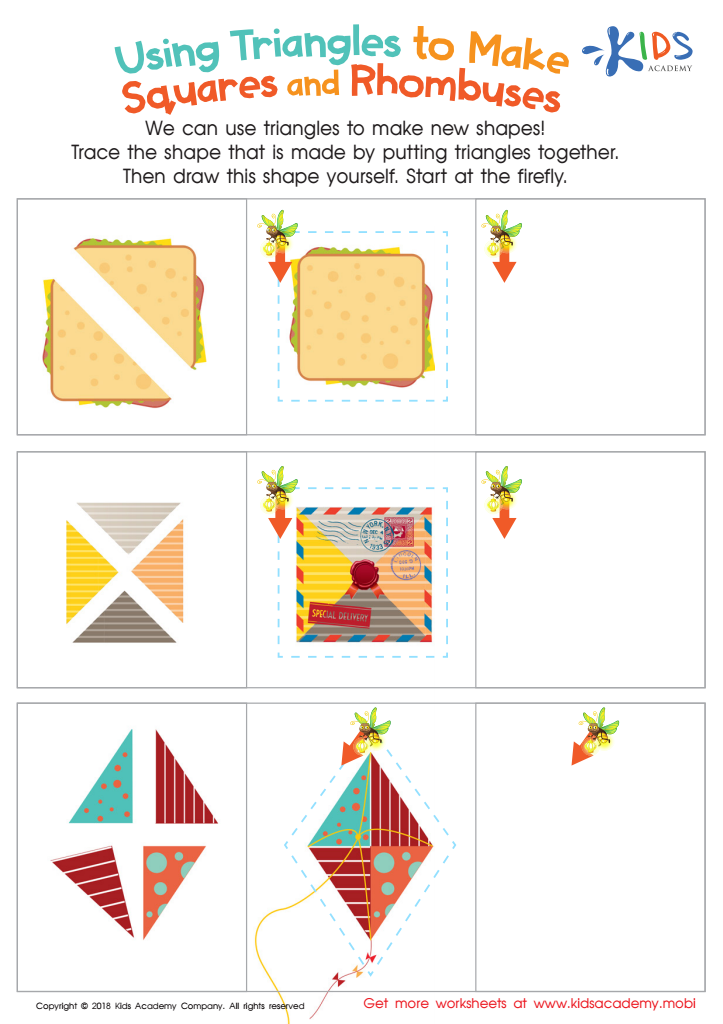
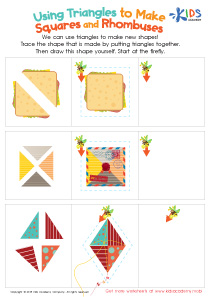
Using Triangles to Make Squares and Rhombuses Worksheet
 Assign to My Students




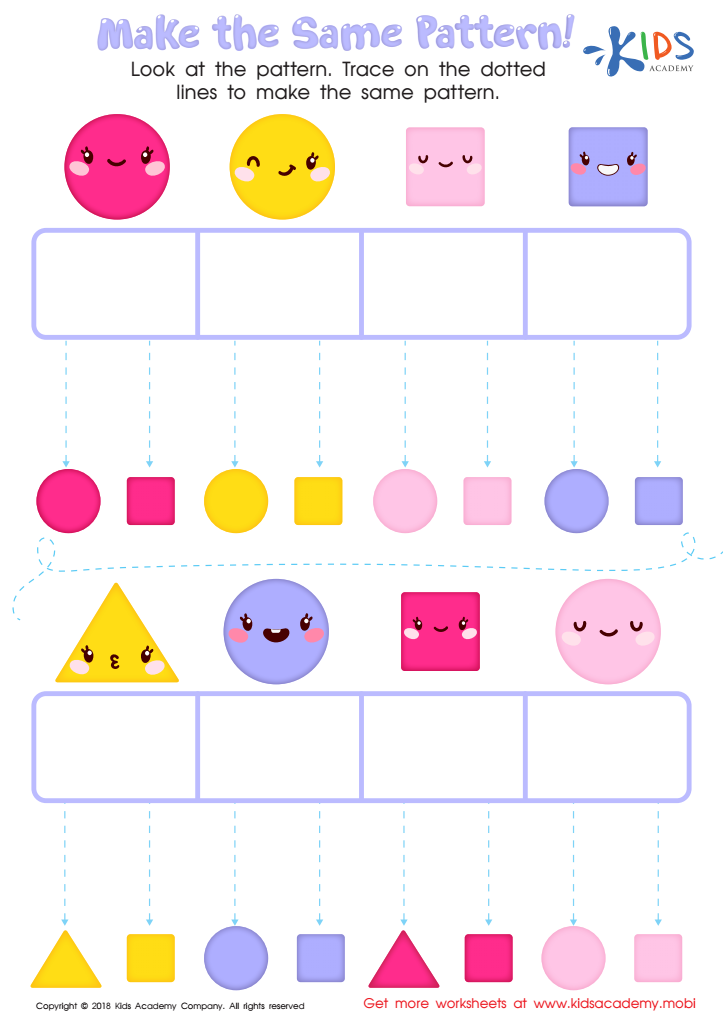
Make the Same Pattern Worksheet
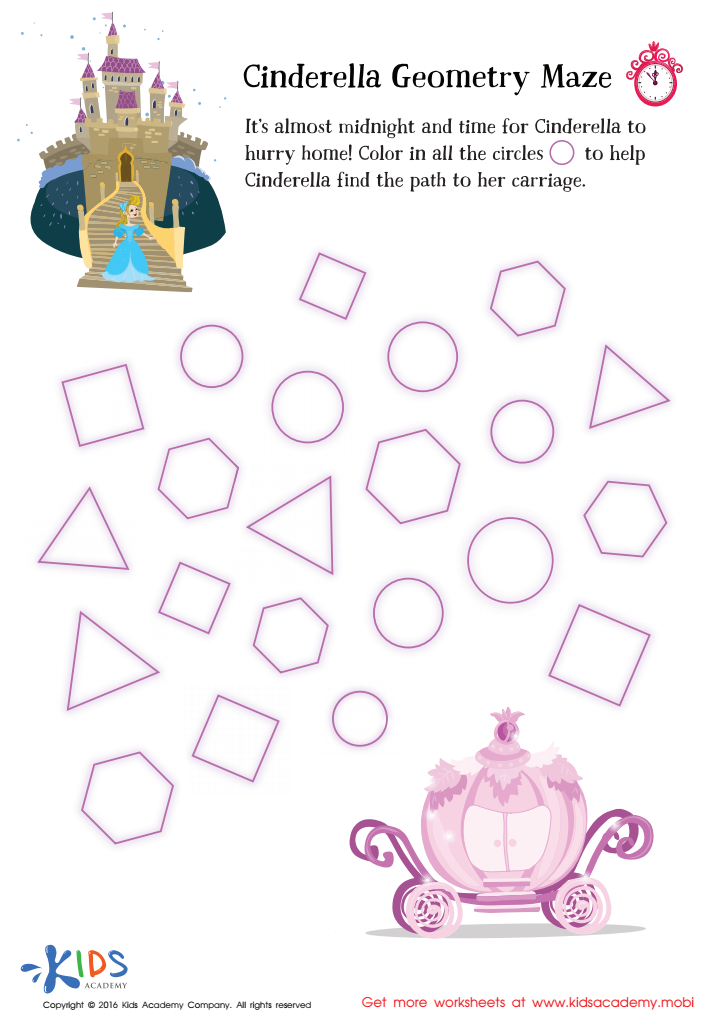
Cinderella Geometry Maze Worksheet
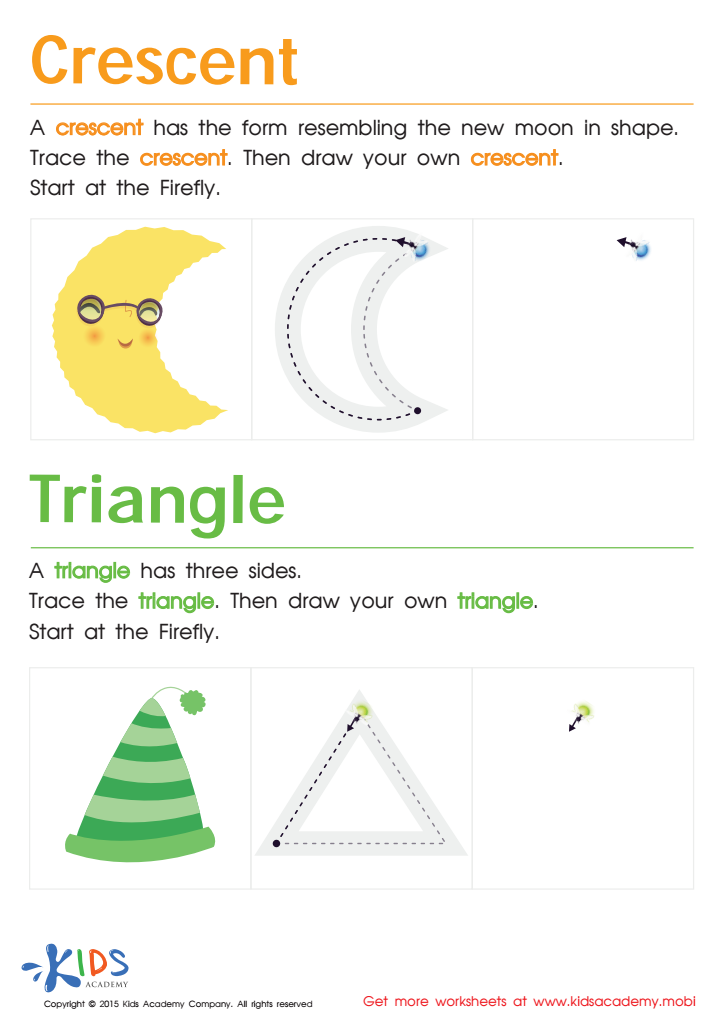
Learning to Draw Crescents And Triangles Worksheet
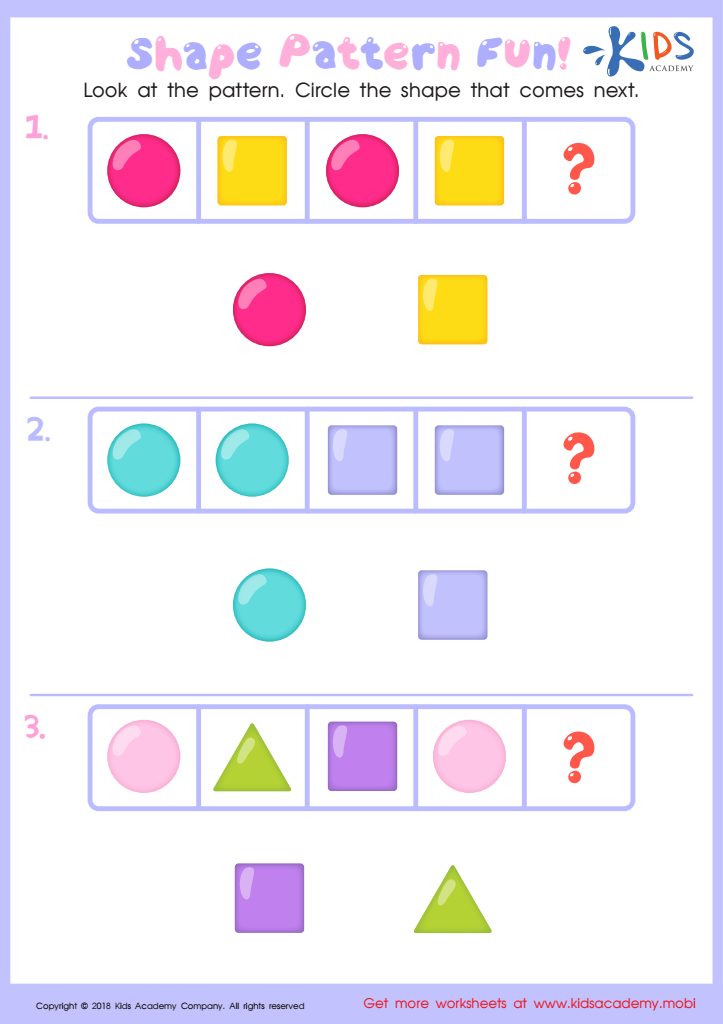
Shape Pattern Fun Worksheet








Problem-solving skills are foundational for young children, and normal 2D shapes provide an engaging context for developing these essential abilities. For children aged 3-7, the exploration of shapes not only introduces them to mathematics but also enhances their critical thinking, creativity, and reasoning skills.
When parents and teachers support children in identifying, classifying, and manipulating 2D shapes, they encourage cognitive development that extends beyond mere recognition. Engaging with shapes through hands-on activities, like puzzles and building projects, fosters spatial awareness and problem-solving. These activities require children to make decisions, evaluate options, and discover solutions, which are crucial life skills.
Moreover, problem-solving related to shapes can enhance language development as children articulate their thoughts and hypotheses. Ensuring that children can navigate these exploratory processes equips them with confidence when facing challenges in other life areas, such as literacy and science concepts.
Incorporating lessons on 2D shapes into everyday learning not only meets developmental milestones but also lays a strong foundation for future academic success. Therefore, parents and teachers play a vital role in facilitating these experiences, nurturing curious minds that are ready to tackle more complex problems as they grow.