Understanding subtraction Normal Addition & Subtraction Worksheets for Ages 3-7
5 filtered results
-
From - To
Welcome to our "Understanding Subtraction: Normal Addition & Subtraction Worksheets for Ages 3-7" section! This resource is designed to help young learners grasp the fundamentals of subtraction through engaging and interactive worksheets. Tailored specifically for children aged 3-7, our activities will make learning subtraction fun and enjoyable. Each worksheet focuses on reinforcing essential skills, including counting backward and recognizing the relationship between addition and subtraction. With colorful illustrations and simple instructions, kids will develop a strong foundation in math concepts. Whether at home or in the classroom, our worksheets provide the perfect tool to support early math education and boost confidence!
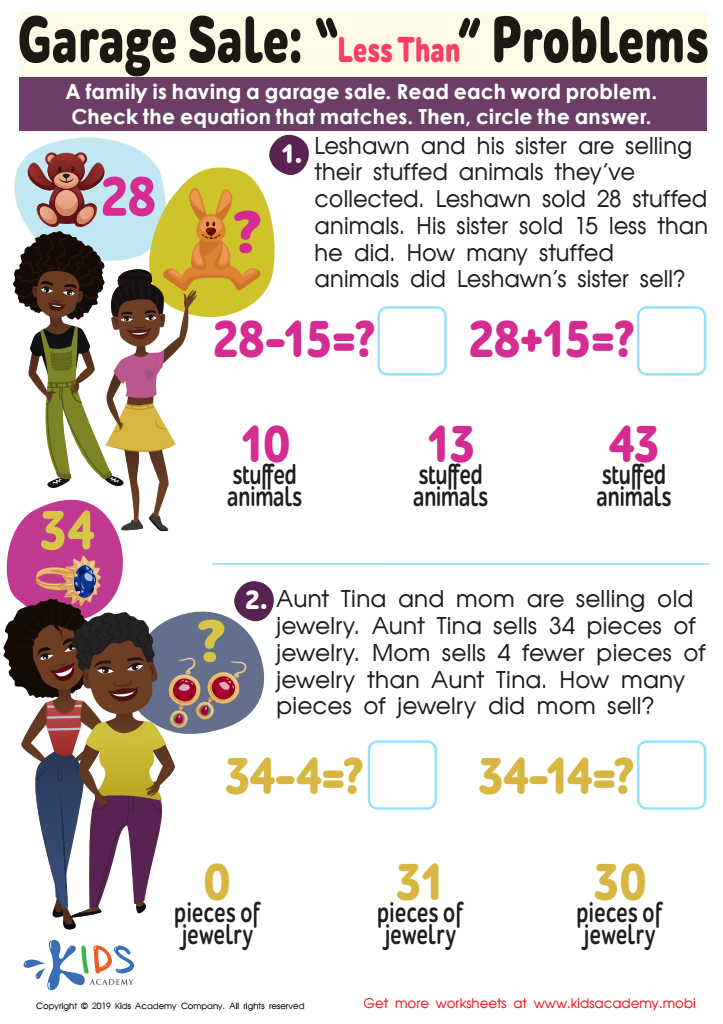
Garage Sale Less Than Worksheet
 Assign to My Students
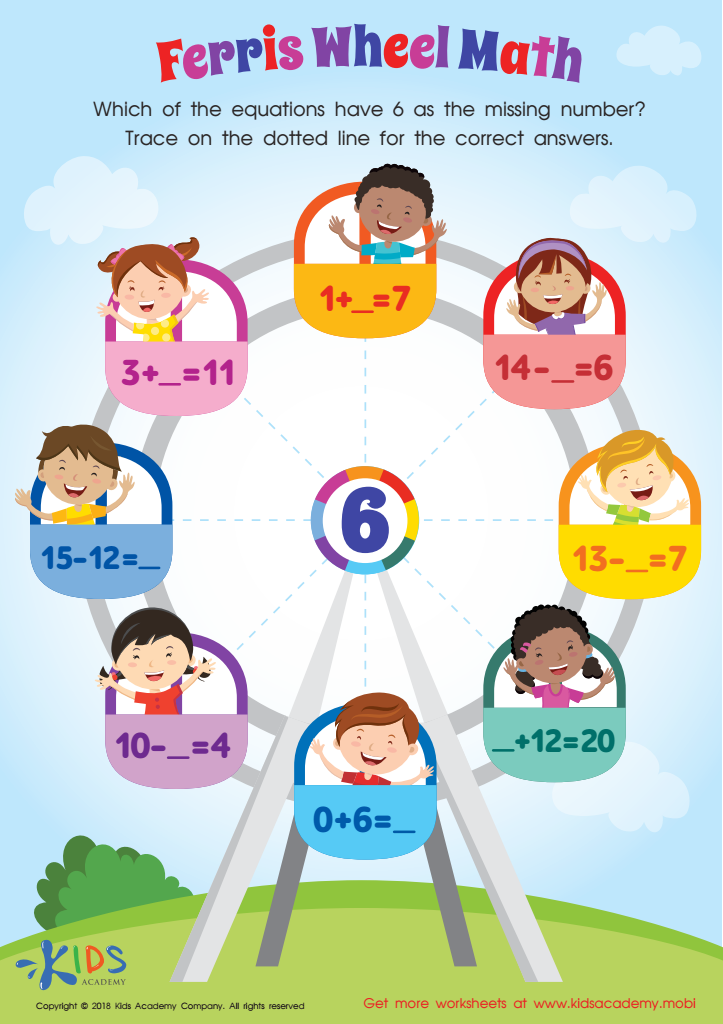
Missing Number: Ferris Wheel Math Worksheet
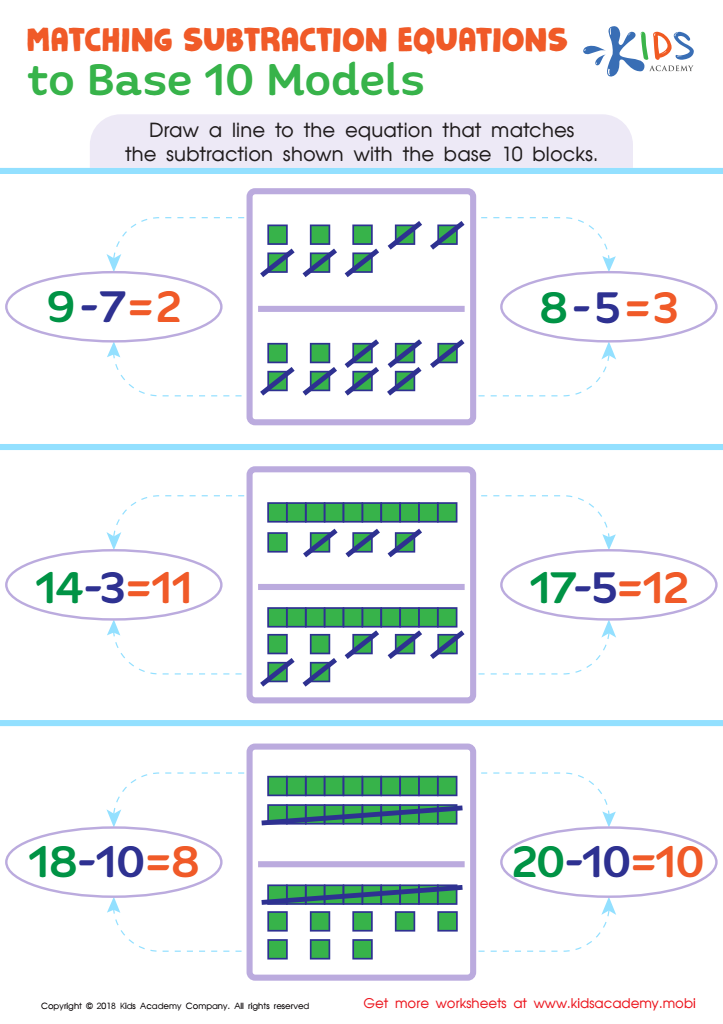
Matching Subtraction Equations To Base 10 Models Worksheet
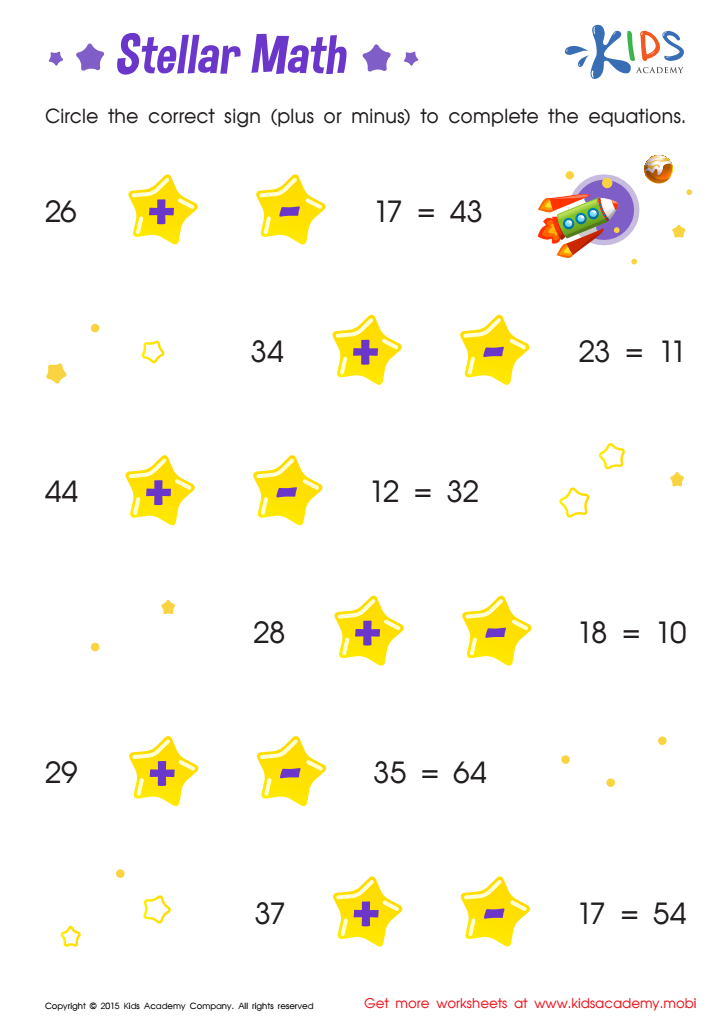
Stellar Math Substraction Worksheet
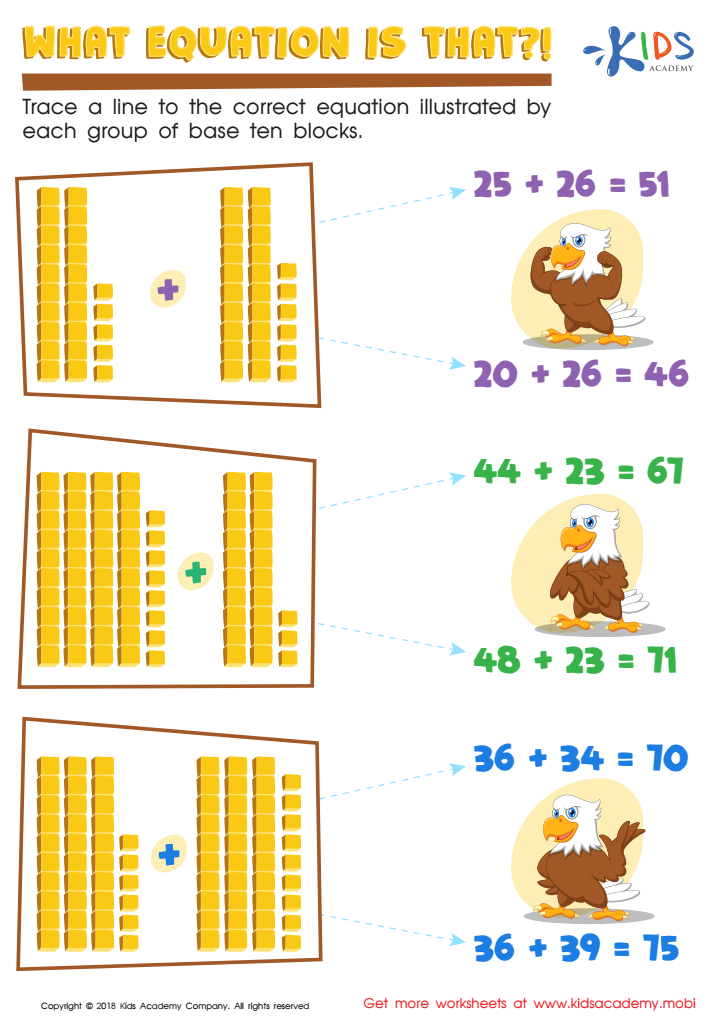
What Equation Is That? Worksheet








Understanding subtraction and normal addition is crucial for young learners aged 3-7, as these foundational math skills lay the groundwork for future academic success. At this age, children are naturally curious and eager to explore numbers, making it an ideal time for them to grasp basic mathematical concepts. Educators and parents should prioritize these skills because they not only enhance cognitive development but also help children develop problem-solving abilities.
Subtraction, in particular, allows children to understand the concept of "taking away," which is essential for everyday situations such as sharing, counting, and budgeting. Mastery of addition and subtraction fosters confidence in young learners, encouraging them to tackle more complex math problems as they progress through school. Furthermore, these skills promote critical thinking and logical reasoning, necessary for various subjects beyond math.
Additionally, a strong grasp of basic addition and subtraction can limit ’math anxiety’ later in life, as children build a positive attitude towards mathematics. Engaging in activities that involve these operations, such as games and storytelling, can also strengthen parent-child or teacher-student bonds, making learning a fun and collaborative experience. Ultimately, nurturing these fundamental skills early on equips children with the tools they need to succeed academically and in everyday life.








