Addition Practice Normal Numbers Worksheets for Ages 3-7
15 filtered results
-
From - To
Welcome to our "Addition Practice Normal Numbers Worksheets" for ages 3-7! Designed to make learning fun and engaging, these worksheets provide a variety of colorful and interactive activities for young learners to master basic addition skills. With age-appropriate problems and clear instructions, children can practice number recognition, counting, and simple addition techniques at their own pace. Our diverse range of exercises ensures that every child can build a strong foundation in mathematics while enjoying the learning process. Perfect for both home and classroom use, these printable worksheets will help your child develop essential math skills essential for their future success!
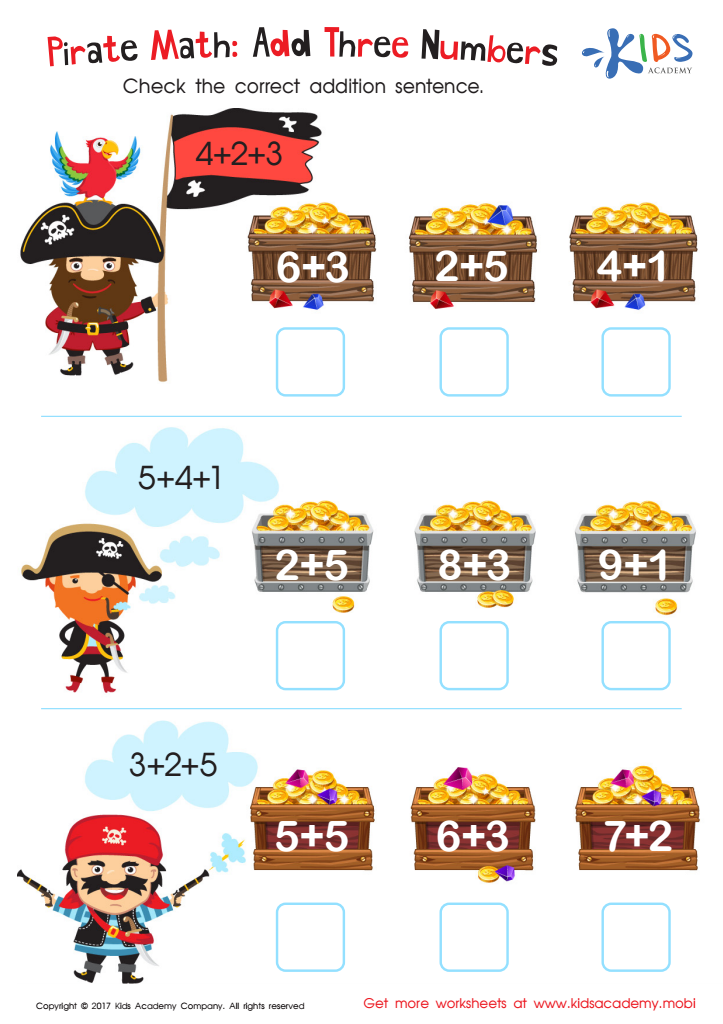
Pirate Math Printable
 Assign to My Students
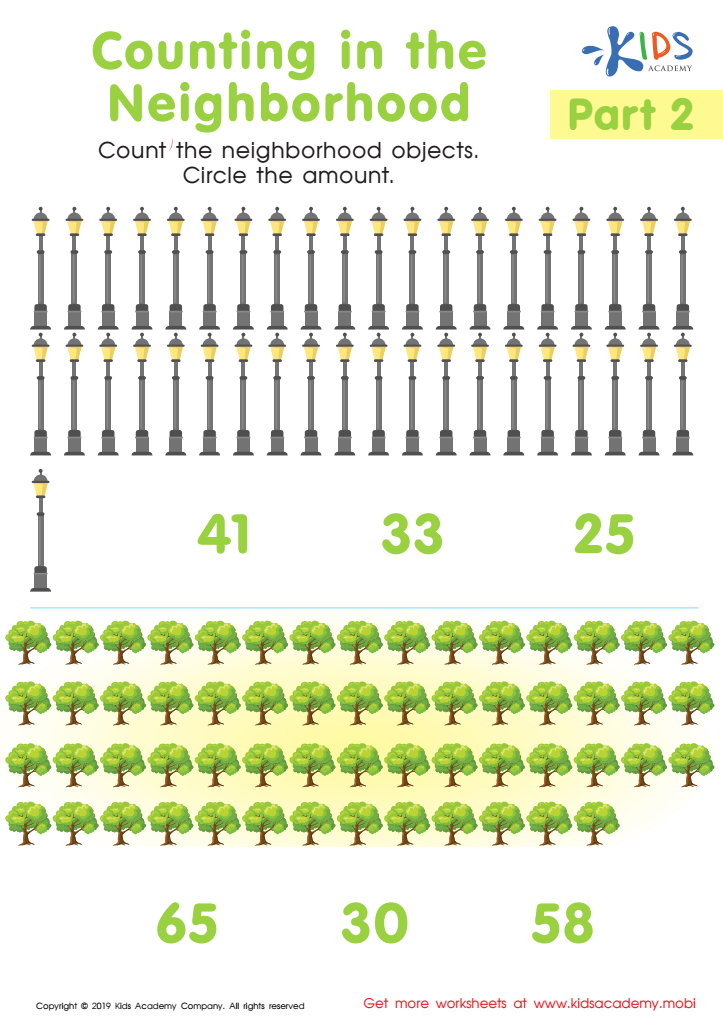
Counting In The Neighborhood Part 2 Worksheet
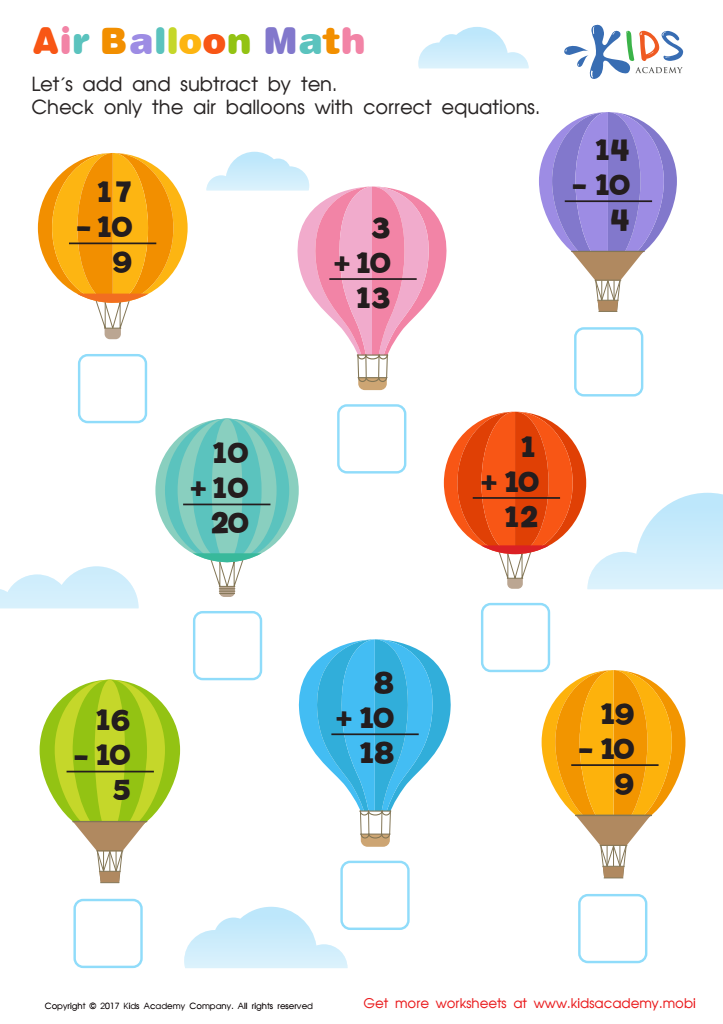
Air Balloon Math Worksheet
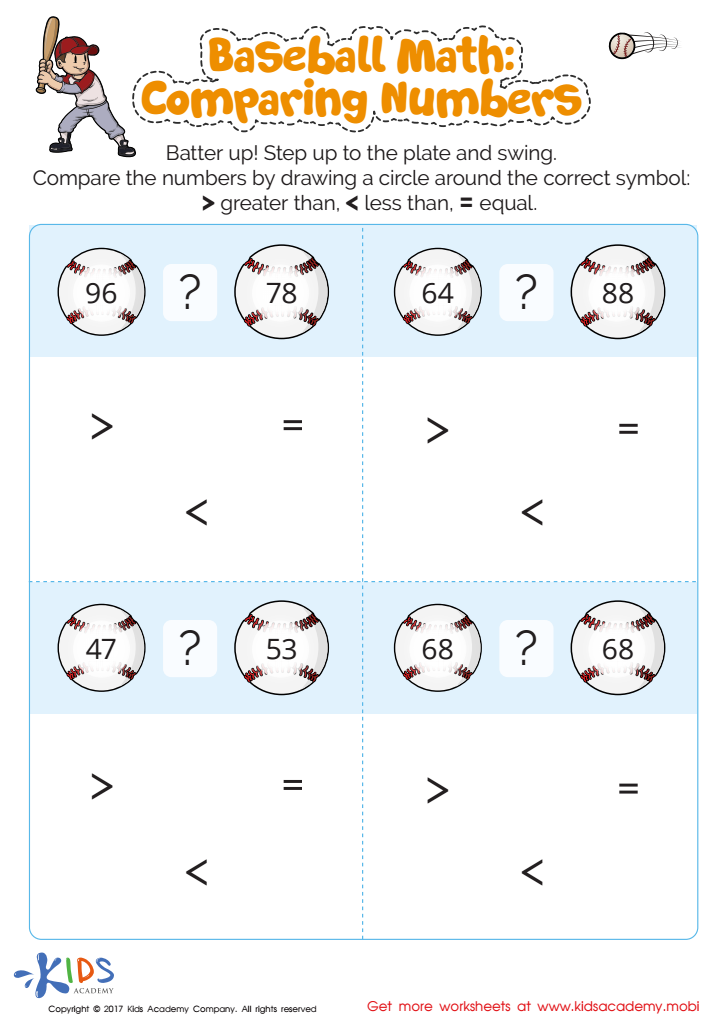
Compare Numbers Printable
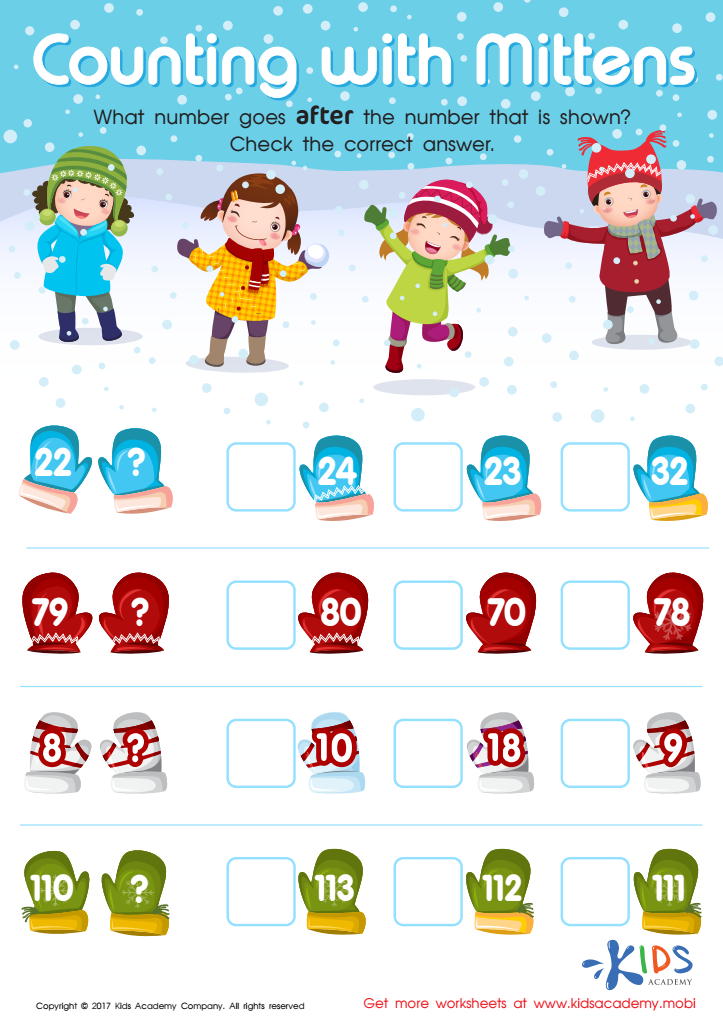
Counting with Mittens Worksheet
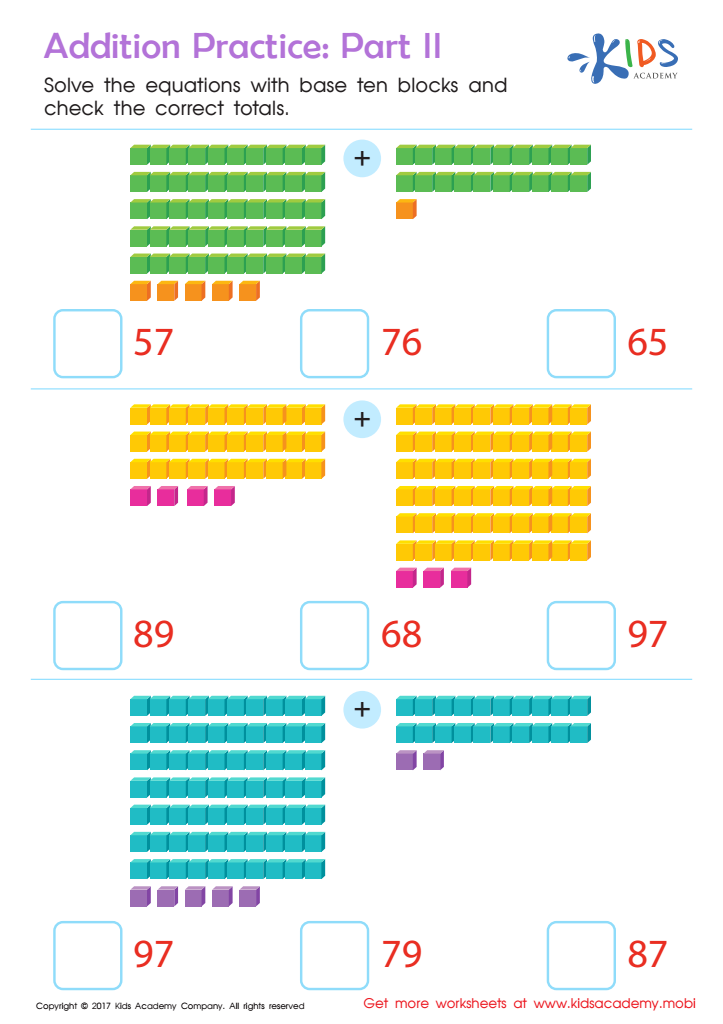
Addition Practice Sheet: Part 2
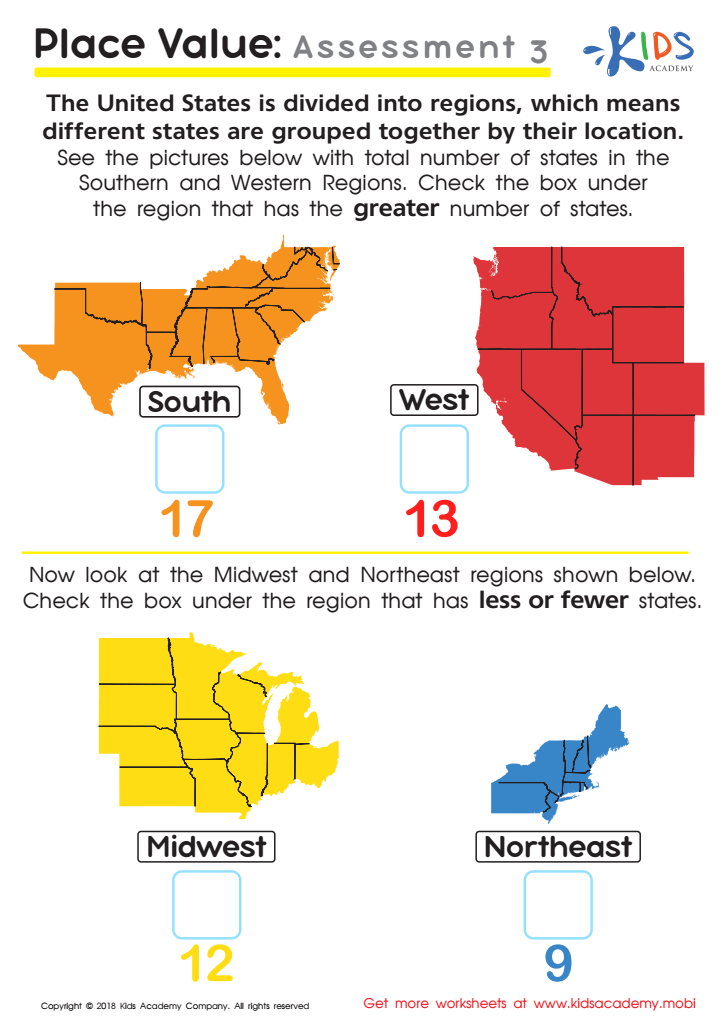
Place Value: Assessment 3 Worksheet
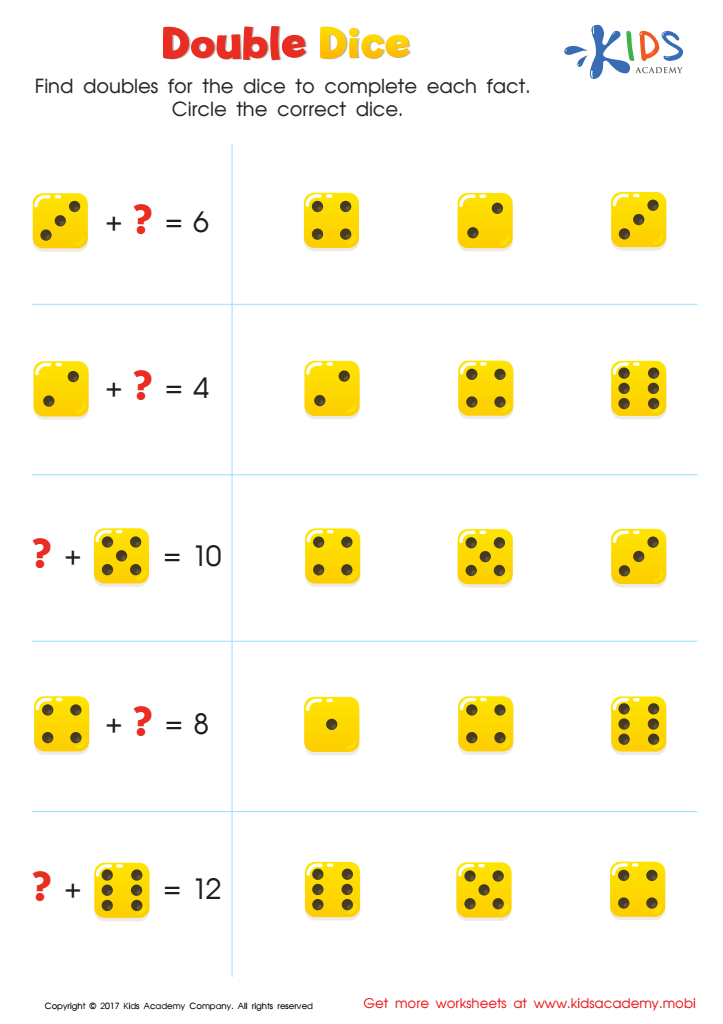
Addition Facts: Double Dice Worksheet
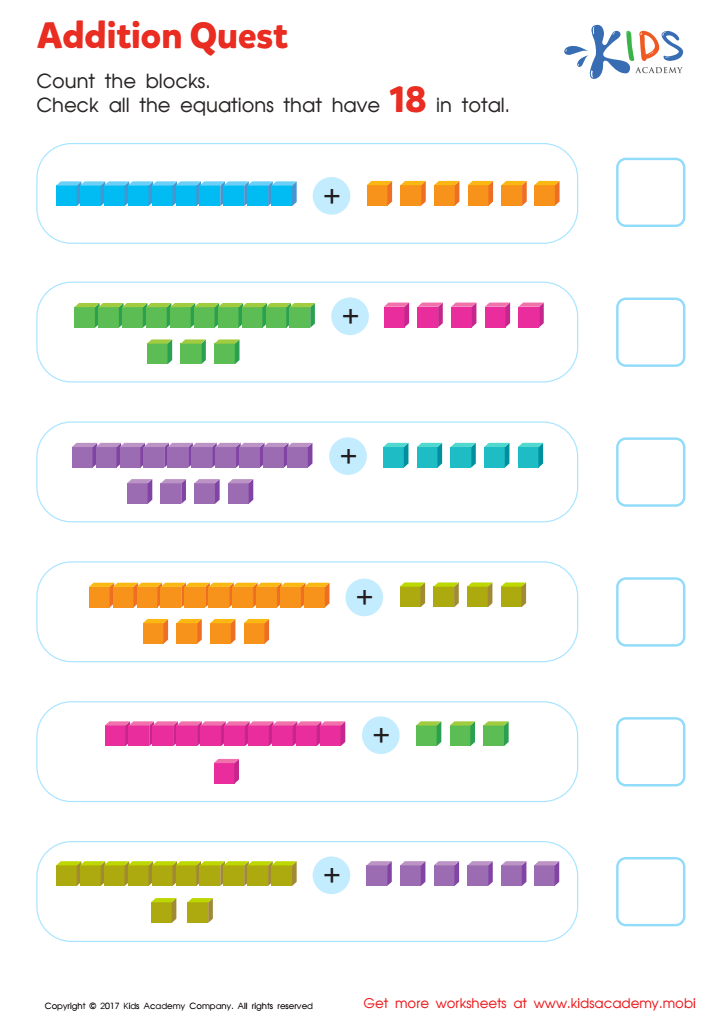
Addition Quest Worksheet: Part 2
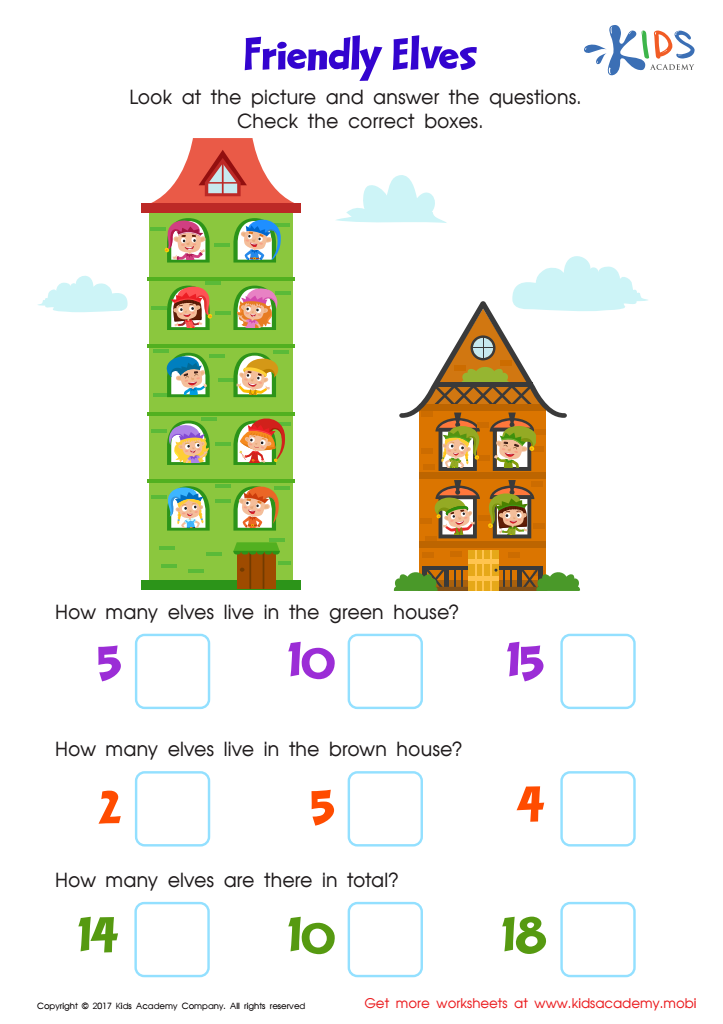
Place Value: Friendly Elves Worksheet
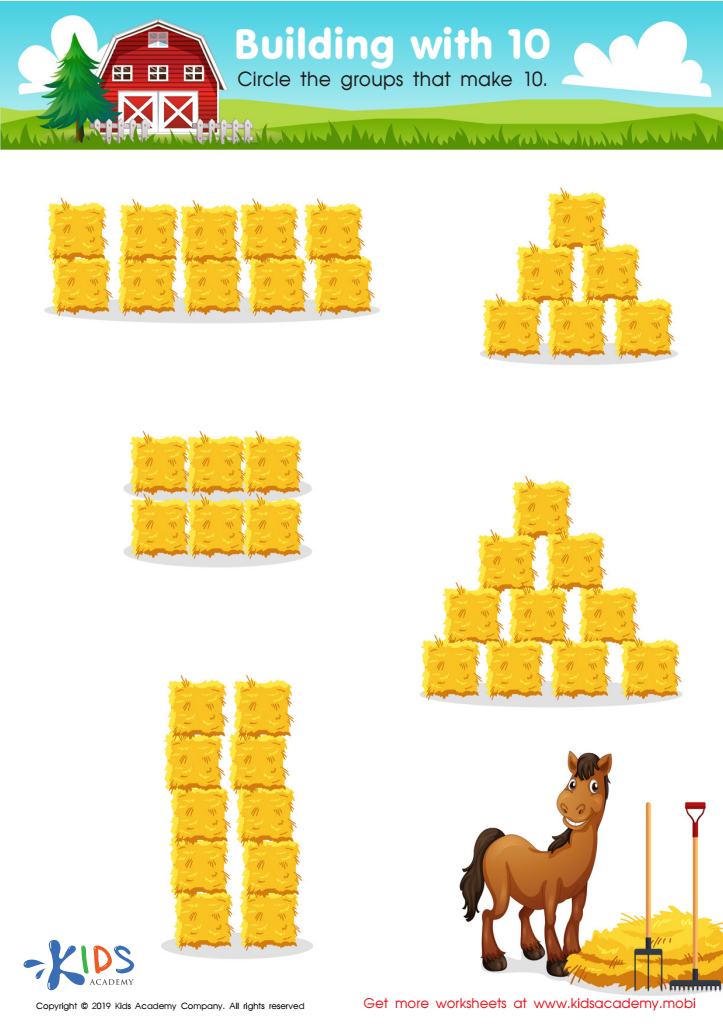
Building with 10 Worksheet
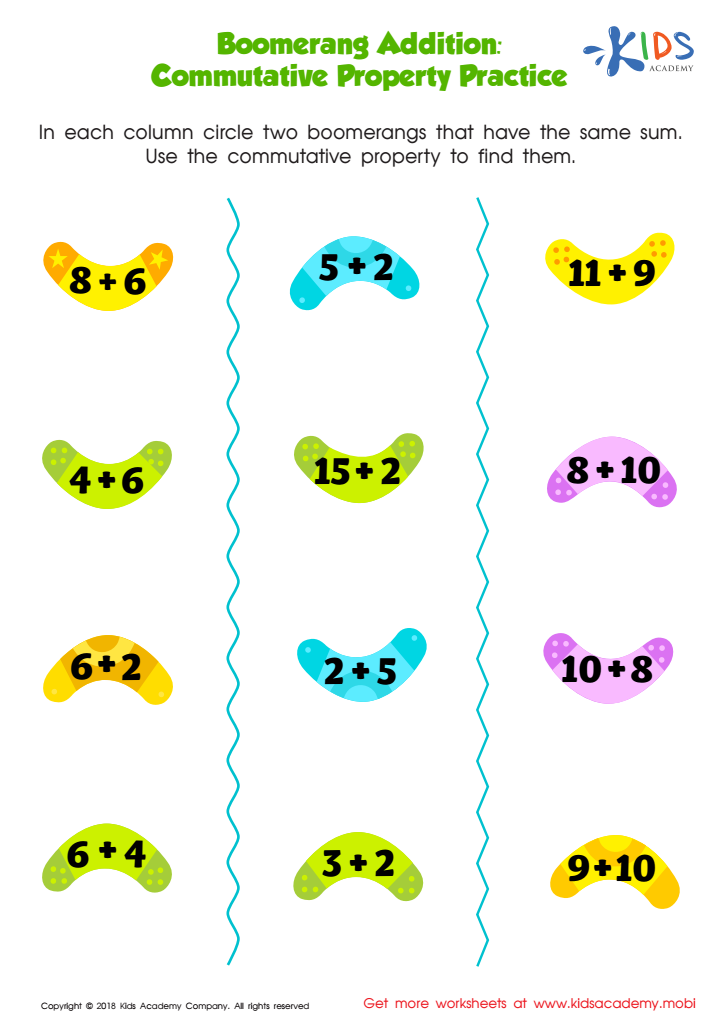
Boomerang Addition Worksheet
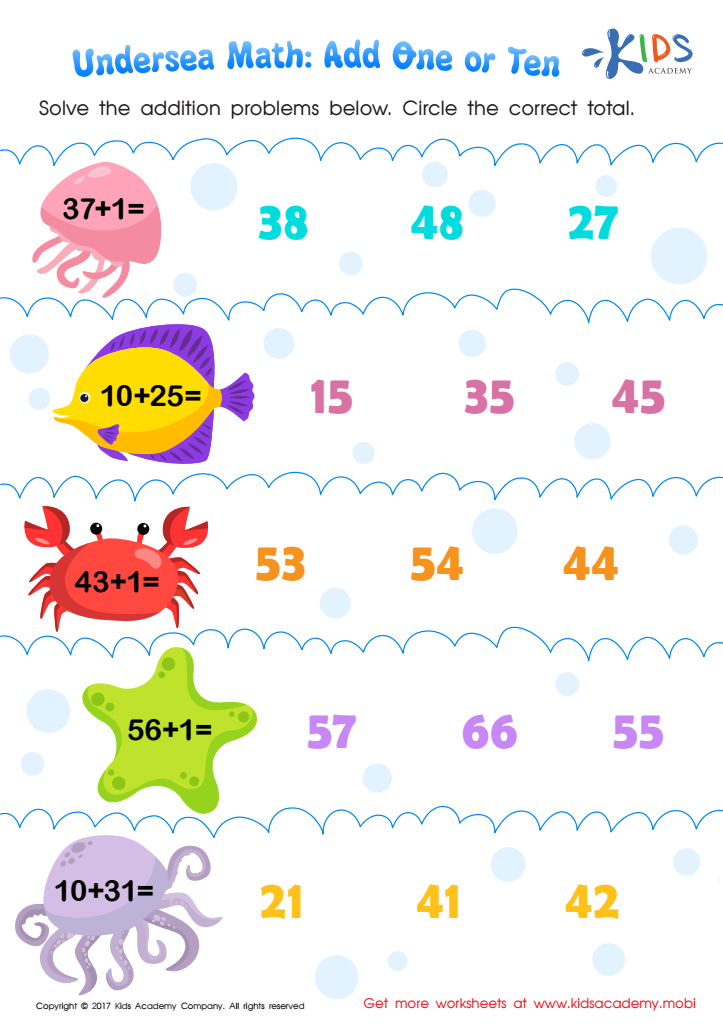
Undersea Math Worksheet
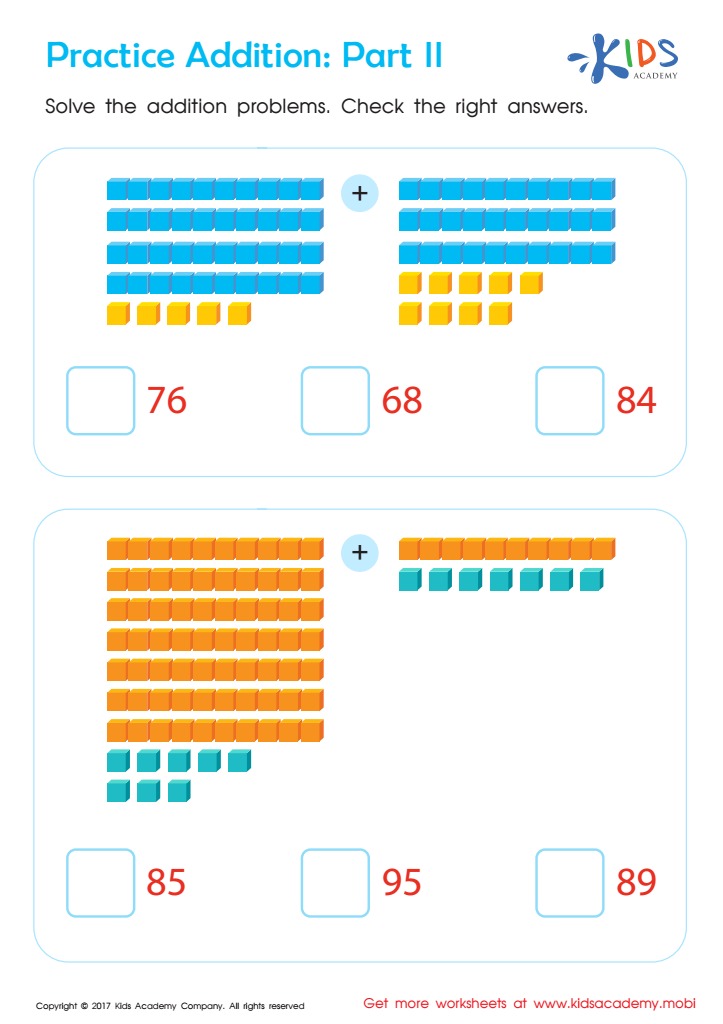
Practice Addition: Part 2 Worksheet
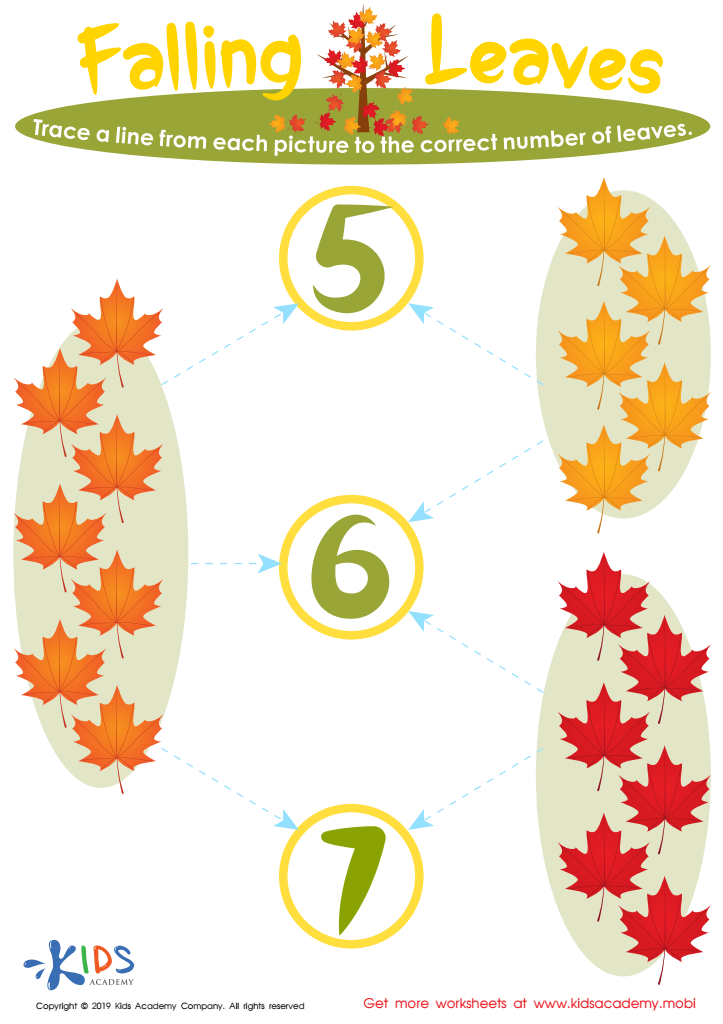
Falling Leaves Worksheet







Addition practice with normal numbers is crucial for children aged 3-7 as it lays the foundation for their mathematical understanding and problem-solving skills. At this early stage, learners are developing their cognitive abilities, and engaging in addition activities can significantly enhance their critical thinking. This foundational skill not only helps children comprehend numbers but also fosters their ability to follow sequences and patterns—essential components of mathematics.
Furthermore, addition practice encourages cognitive processes such as memory retention and recall. Young children learn best through play and repetition; thus, utilizing games, puzzles, or interactive tools to practice addition makes the learning process enjoyable and effective. Regular exposure to simple addition helps reinforce number relationships, allowing young learners to build confidence in their skills.
For parents and teachers, encouraging addition practice is an opportunity to enhance a child's educational experience, promote a positive attitude towards math, and ultimately prepare them for more complex mathematical concepts in the future. Moreover, involving parents in this practice provides a bonding experience, making learning enjoyable and fostering a supportive learning environment. It’s an investment that impacts their future academic success and lifelong learning.








