Reading analog clocks Normal Math Worksheets for Ages 3-7
3 filtered results
-
From - To
Enhance your child's understanding of time with our engaging "Reading Analog Clocks Normal Math Worksheets" designed for ages 3-7. These accessible resources steer your little ones toward mastering the art of telling time, offering fun activities that help them recognize hour and minute hands, distinguish between daytime and nighttime, and develop crucial mathematical skills. Our worksheets are thoughtfully created to build confidence and ensure a solid foundation in time-telling, making learning enjoyable. Each worksheet is tailored to various skill levels, fostering a love for math while equipping your child with essential life skills. Start the journey to time mastery today!
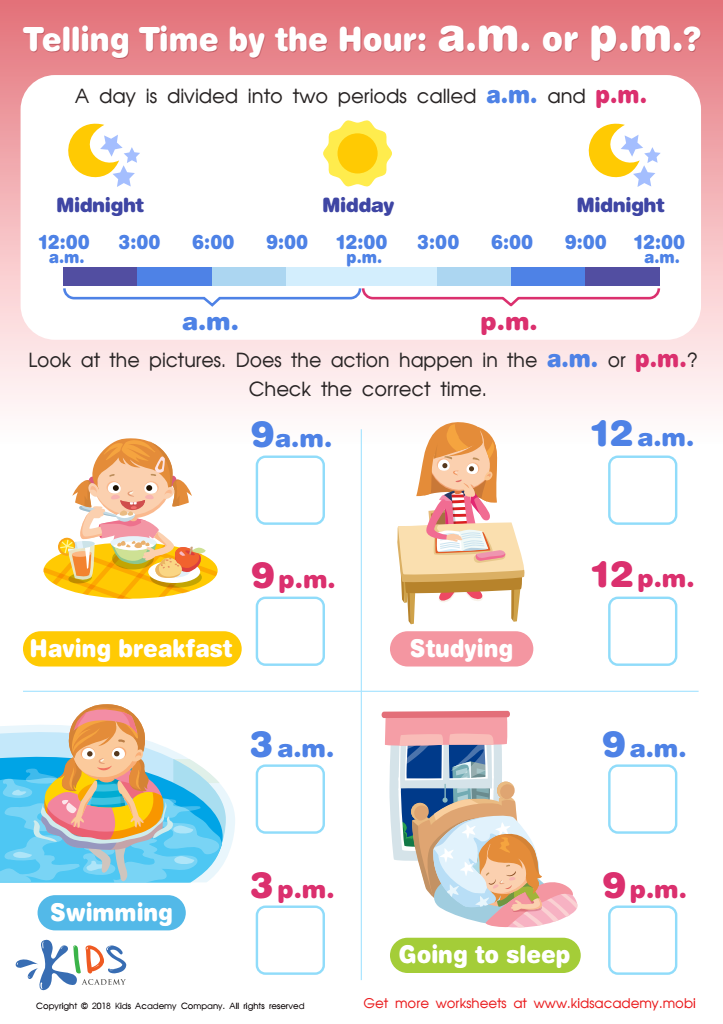
Tilling Time by the Hour: a.m. or p.m.? Worksheet
 Assign to My Students
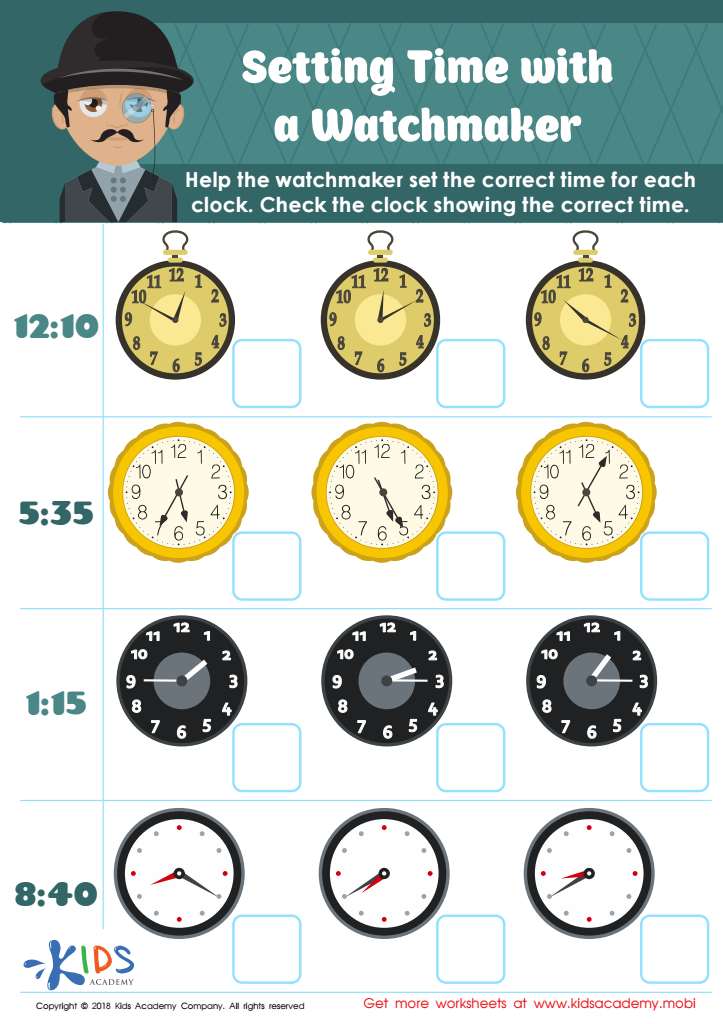
Setting Time with Watchmaker Worksheet
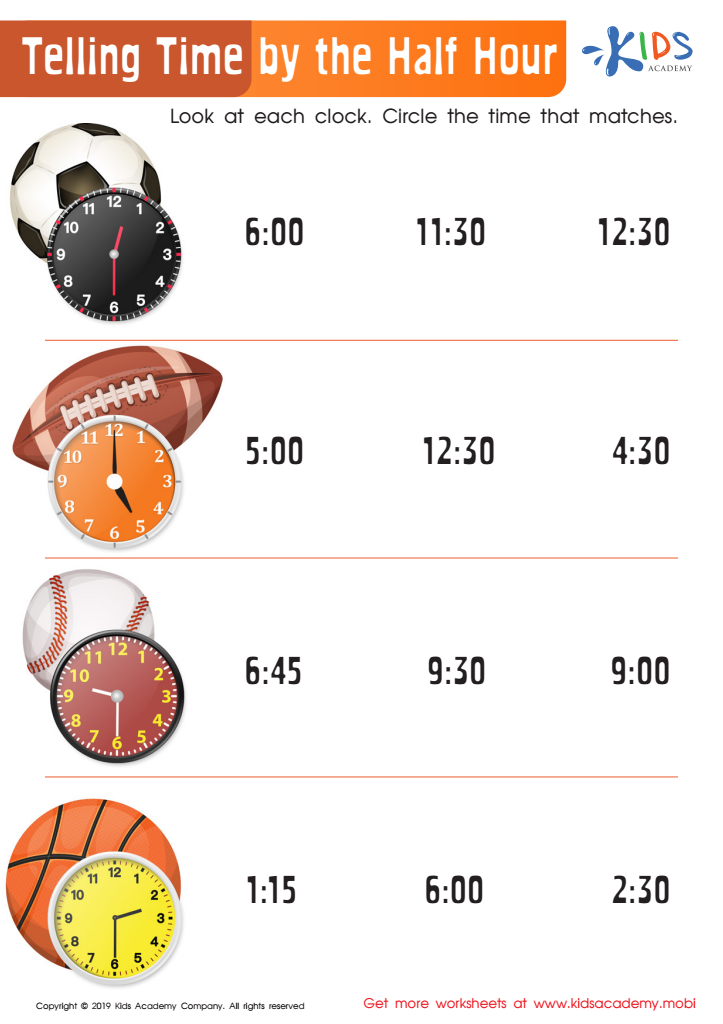
Telling Time by the Half Hour Worksheet






Teaching young children to read analog clocks is an essential life skill that goes beyond just telling time; it fosters fundamental mathematical understanding and cognitive development. For parents and teachers, introducing reading analog clocks to children aged 3-7 lays the groundwork for important concepts like number recognition, spatial awareness, and the ability to comprehend fractions.
Learning to read an analog clock promotes critical thinking by engaging children in problem-solving activities. It helps develop an understanding of time management, an essential component of daily life that will aid them in scheduling activities, understanding routines, and making decisions. Additionally, analog clocks provide a visual representation of time, allowing children to see the passage of time in a format that teaches them about cycles and sequences.
Additionally, using analog clocks can strengthen fine motor skills through hands-on activities where children manipulate clock hands. Furthermore, it encourages discussions about common themes such as community, daily schedules, and the natural rhythm of life, which deepens their social connections and comprehension of concepts. By emphasizing the importance of understanding analog clocks, parents and teachers equip children with vital skills that prepare them for future academic success and life experiences.








