
Vocabulary enhancement Normal Matching Worksheets for Ages 3-7
4 filtered results
Difficulty Level
Grade
Age
-
From - To
Subject
Activity
Standards
Explore our engaging Vocabulary Enhancement Normal Matching Worksheets, specially designed for children ages 3-7. These worksheets foster language development through fun and interactive matching activities. Young learners will connect words with images, enhancing their vocabulary while improving memory and comprehension skills. Each worksheet is crafted to captivate young minds, making learning an enjoyable experience. Perfect for preschool and early elementary settings, our resources support teachers and parents alike in cultivating a love for words. Download our printable worksheets to enrich your child’s vocabulary, ignite their imagination, and build foundational language skills essential for future success! Start the learning adventure today!
Favorites
With answer key
Interactive
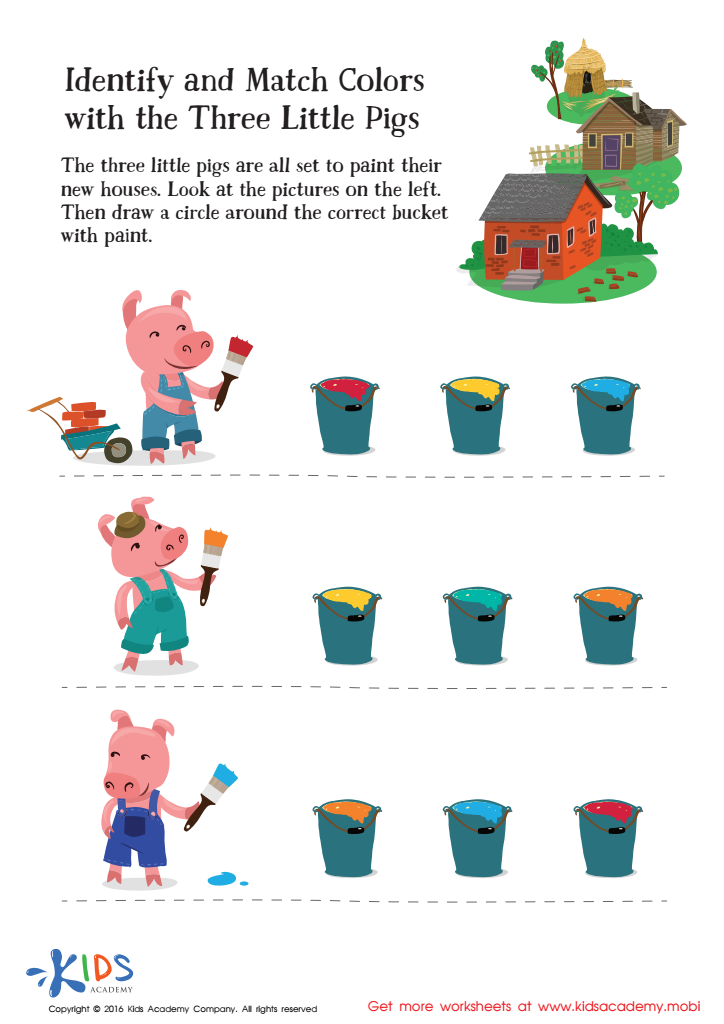
Fairy Tale Worksheet: Identify and Match Colors with Three Little Pigs
Help the 3 Little Pigs find the right color for their houses! This fun worksheet will have your child developing their problem solving and color recognition skills. It's a great way to start building the foundation for advanced logic skills. Plus, they'll love the Three Little Pigs coloring pages.
 Assign to My Students
Fairy Tale Worksheet: Identify and Match Colors with Three Little Pigs
Worksheet
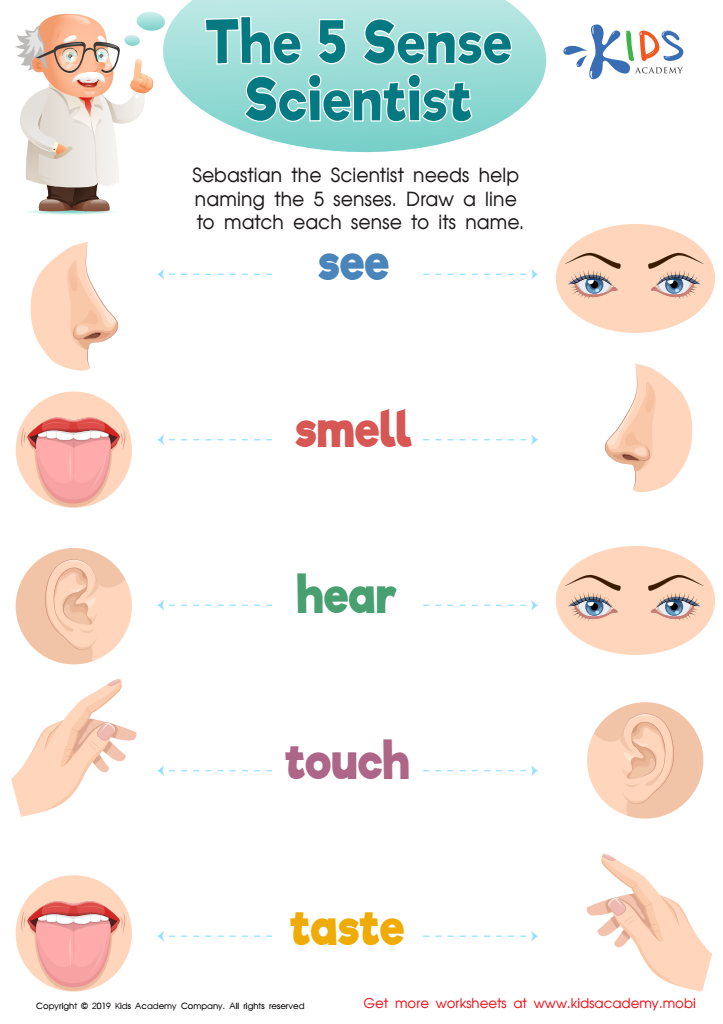
The 5 Sense Scientist Worksheet
Our young children will have fun learning about their five senses with this free Sense Scientist worksheet. Helping Sebastian the Scientist, they'll name the five senses and use traceable lines to connect each picture with its correct sense. Colorful words and pictures will create a memorable picture representation.
The 5 Sense Scientist Worksheet
Worksheet
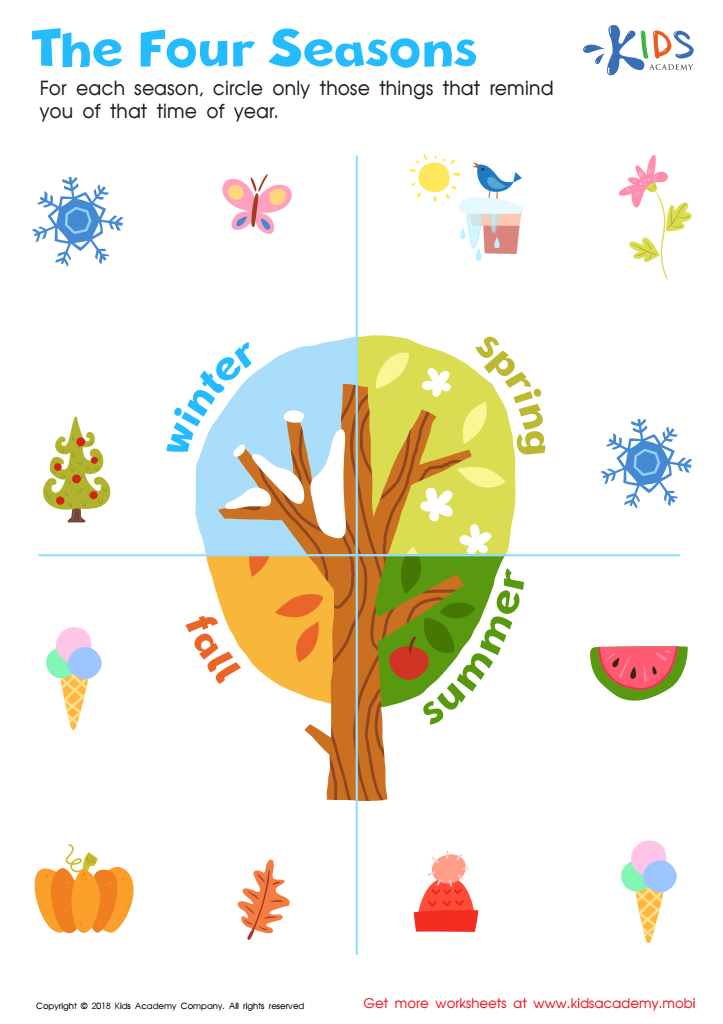
The Four Seasons Worksheet
Tell your child to circle things that remind them of each season. The tree has four squares, one for each season. Some things in each square match the season, others don't. Ask if any are out of place. Help them circle only items that remind them of that season.
The Four Seasons Worksheet
Worksheet
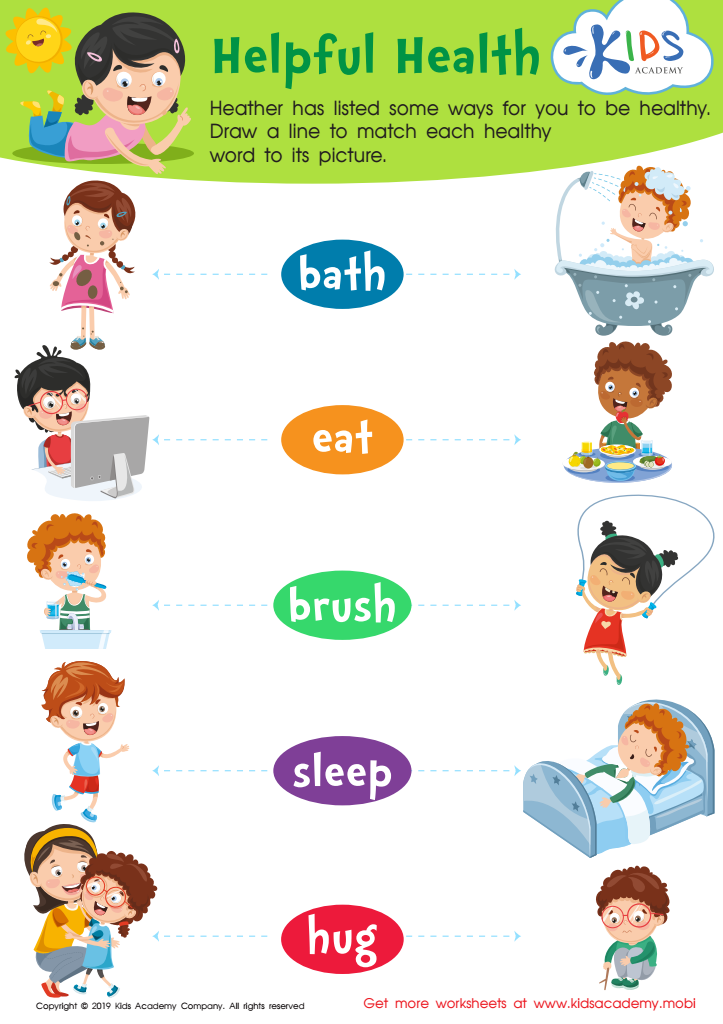
Helpful Health Worksheet
Kids can learn healthy habits with this free worksheet! With their pal Heather, they'll trace lines to connect health words with pictures like brushing teeth, hugging, and getting enough sleep. It's a great way to help young ones understand healthy activities.
Helpful Health Worksheet
Worksheet
Join Kids Academy for Free
Who is primarily going to use this learning content?








Vocabulary enhancement, particularly through Normal Matching techniques for ages 3-7, is crucial for language development and overall academic success. During this critical period, children undergo rapid cognitive growth and language acquisition, making it essential for parents and teachers to actively foster vocabulary skills. Enhancing vocabulary not only improves children's communication abilities but also boosts their comprehension skills, allowing them to understand and engage with age-appropriate texts more effectively.
Creating a robust vocabulary foundation empowers children to articulate their thoughts and feelings, which is vital for social development and confidence. Normal Matching strategies – such as pairing words with images, sounds, or corresponding definitions – cater to young learners' varied learning styles and help reinforce word meanings in an interactive and engaging manner.
Moreover, a rich vocabulary is strongly linked to academic performance; early exposure to diverse vocabulary sets the stage for successful literacy development. As children grow, a limited vocabulary can hinder their ability to thrive in more complex tasks in later grades. Therefore, prioritizing vocabulary enhancement strategies in grades Pre-K through 2 not only promotes effective communication but also lays the groundwork for lifelong learning and success. Parents and teachers play a pivotal role in nurturing this essential skill, ensuring children reap its long-lasting benefits.








