Basic Math Skills Normal Measurement Worksheets for Ages 3-7
3 filtered results
-
From - To
Help your child develop essential math skills with our "Basic Math Skills Normal Measurement Worksheets for Ages 3-7." Designed to enhance young learners' understanding of measurements, these worksheets offer engaging activities that make learning fun. Our carefully crafted exercises cover key concepts such as comparing sizes, lengths, and weights, providing a solid foundation in early math. Suitable for preschool and early elementary students, these worksheets build critical thinking and problem-solving skills. Equip your child with the tools they need for academic success by exploring our educational and enjoyable measurement worksheets today!
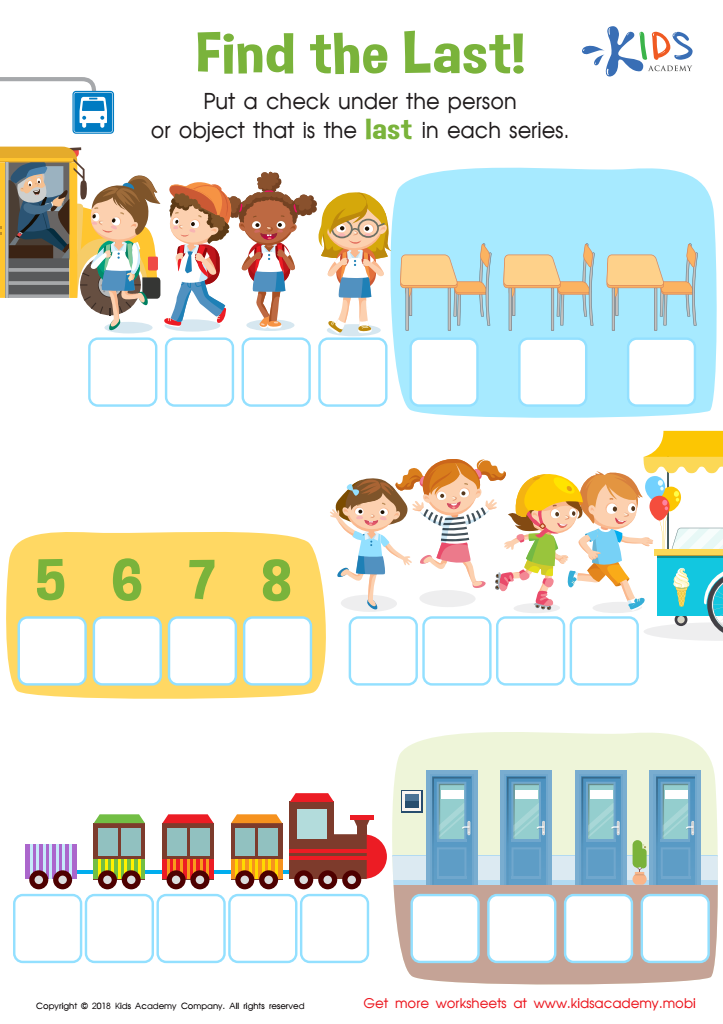
Find the Last! Worksheet
 Assign to My Students
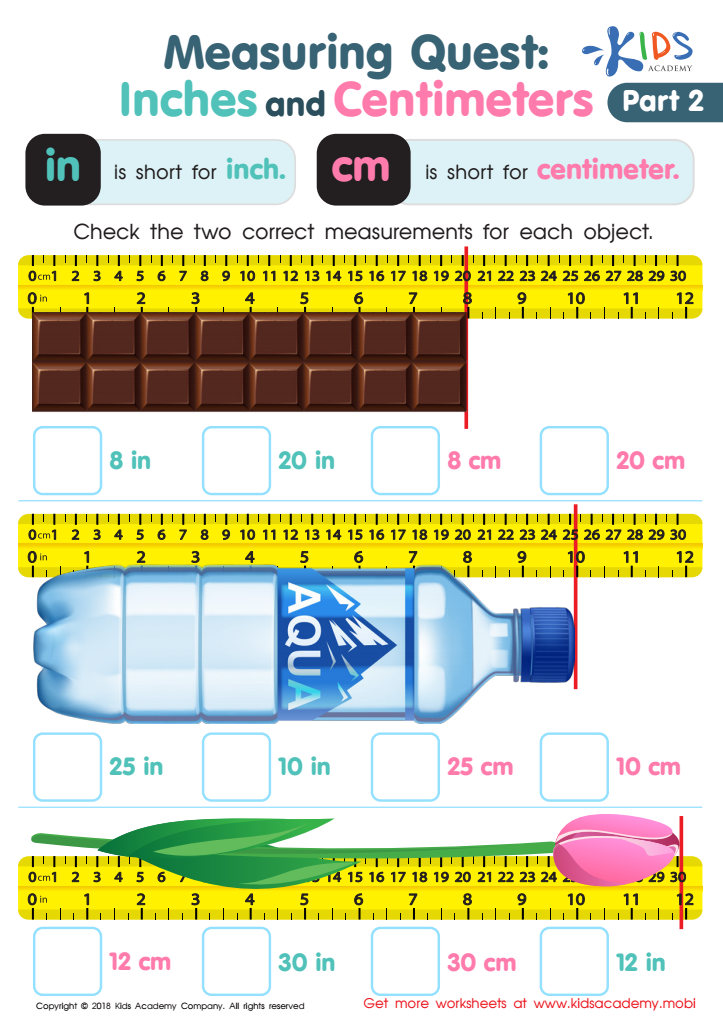
Measuring Quest: Inches and Centimeters - Part 2 Worksheet
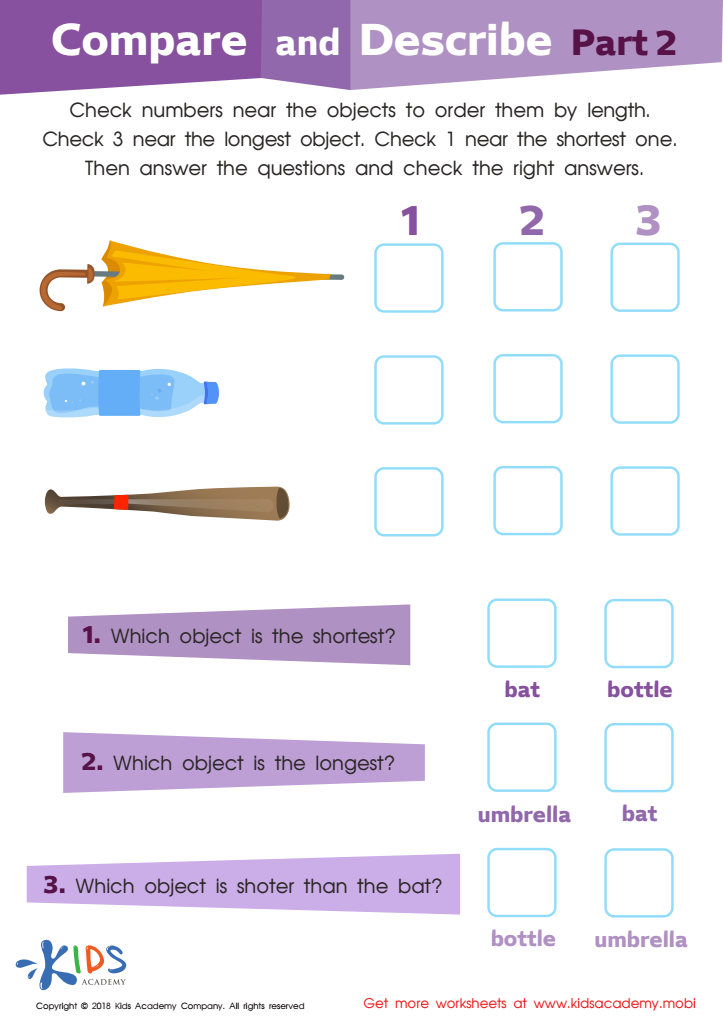
Compare and Describe: Part 2 Worksheet








Basic math skills and normal measurements for ages 3-7 are foundational for a child's future academic and life success. These early years are a critical period of brain development, and children are building the cognitive frameworks that will support all future learning.
Firstly, basic math skills, such as understanding numbers, counting, and recognizing shapes and patterns, serve as essential building blocks for more advanced mathematical concepts. Proficiency in early math skills has been linked to higher achievement in both math and literacy in later years. By mastering these concepts, children are better prepared for the structured learning environment of primary school.
Moreover, these skills foster critical thinking and problem-solving abilities. Math encourages children to identify patterns, make predictions, and work through challenges methodically, which are crucial qualities for overall intellectual development.
Teachers and parents should also care about normal measurement skills in young children as these offer practical understanding in real-life scenarios, such as measuring ingredients in cooking, understanding distances, and recognizing time. These skills empower children with basic tools to interpret and interact with the world around them.
Lastly, promoting early math skills enhances a child's confidence and enjoyment in learning. Early success in math can instill a positive attitude towards learning in general, motivating them to tackle new challenges eagerly. Therefore, focusing on these skills during early childhood lays a robust educational foundation that supports all future learning and development.








