Pattern recognition Normal Patterns Worksheets for Ages 3-7
5 filtered results
-
From - To
Discover our engaging "Pattern Recognition Normal Patterns Worksheets" designed specifically for children ages 3 to 7. These worksheets aim to enhance early math skills through fun and interactive pattern recognition activities. Young learners will identify and analyze various patterns, fostering critical thinking and problem-solving abilities. Each worksheet features colorful visuals to captivate children’s attention and encourage active participation. Our resources are perfect for both classroom activities and home practice, ensuring a well-rounded learning experience. Start your child’s journey towards mathematical fluency by exploring the joy of patterns with our thoughtfully crafted worksheets. Engage, learn, and grow with pattern recognition today!
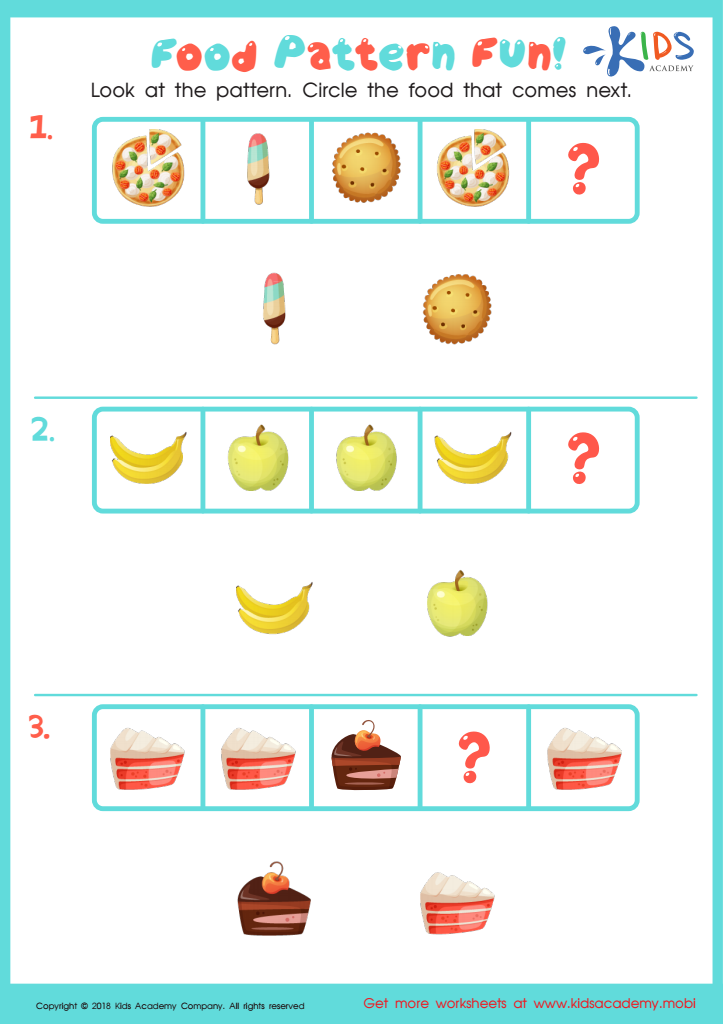
Food Pattern Fun Worksheet
 Assign to My Students
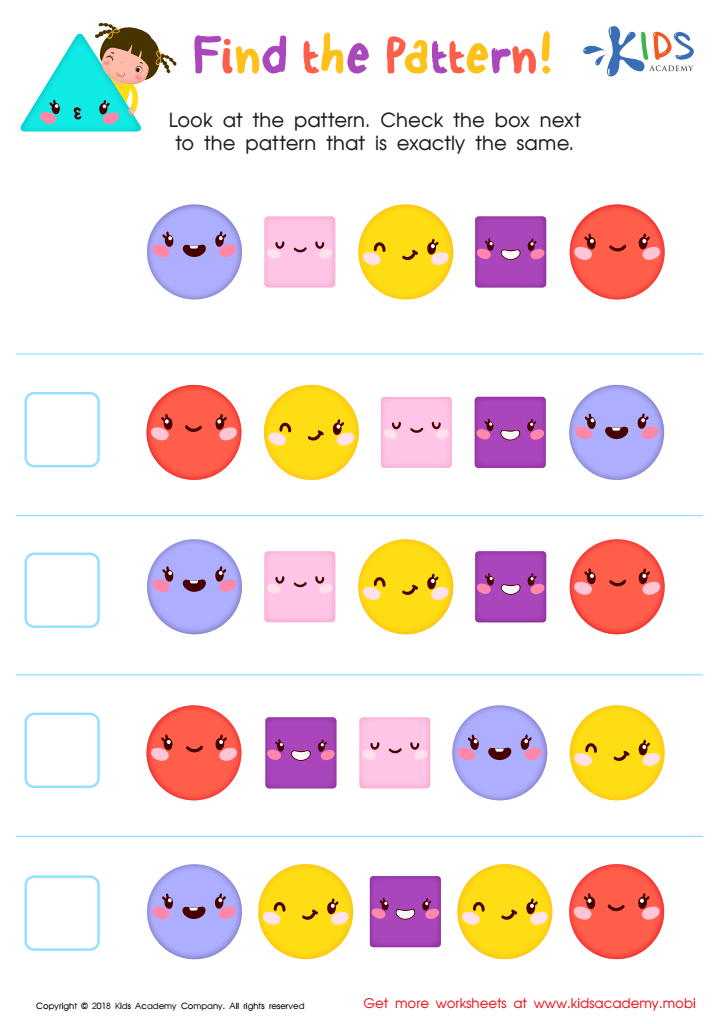
Find the Pattern Worksheet
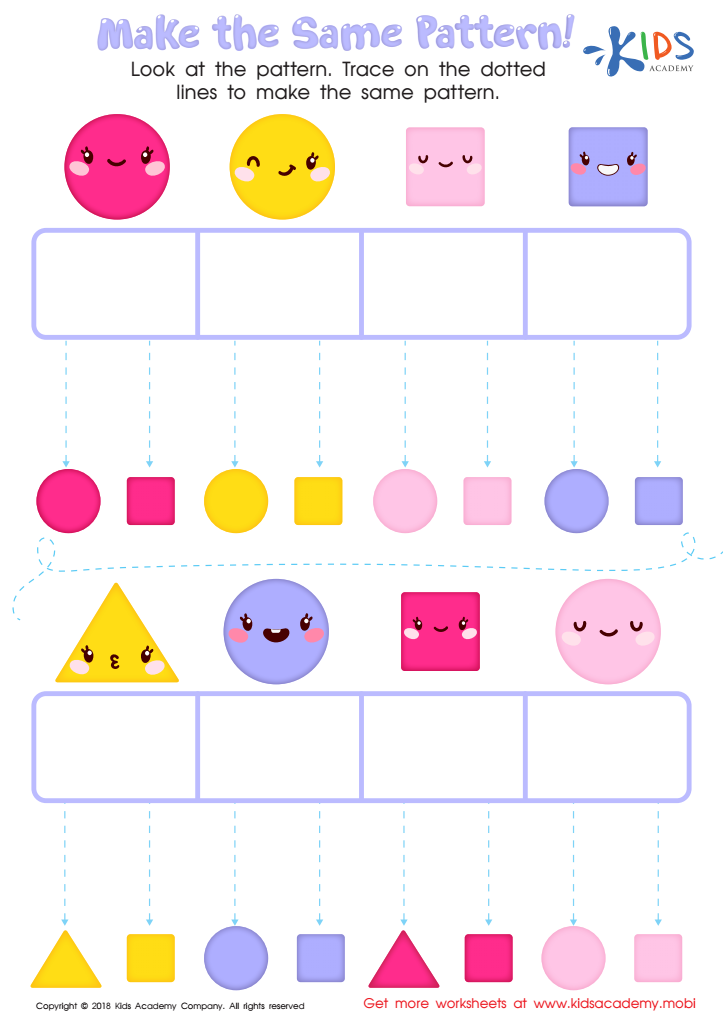
Make the Same Pattern Worksheet
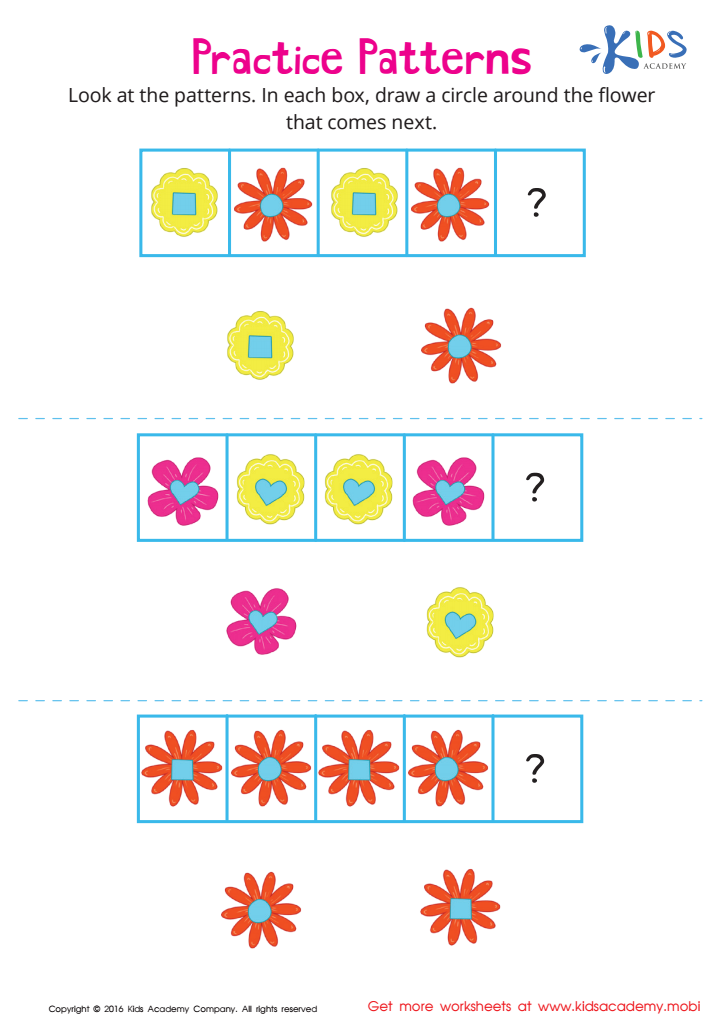
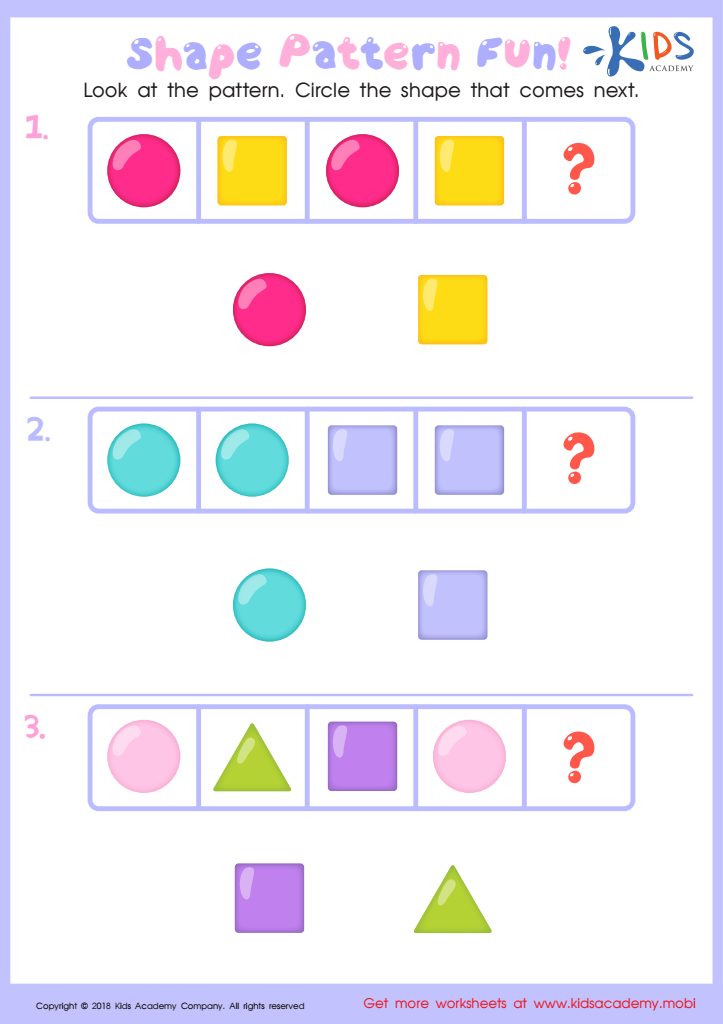
Shape Pattern Fun Worksheet








Pattern recognition is an essential skill for children aged 3 to 7, forming a foundation for critical thinking and problem-solving. Both parents and teachers should prioritize this developmental aspect because it promotes cognitive growth and enhances mathematical abilities. Recognizing patterns helps children make connections between concepts, aiding in their comprehension of the world around them.
From a young age, children encounter various patterns in everyday life, such as sequences in nature, rhythms in music, or arrangements in art. By nurturing their ability to identify and create these patterns, adults can encourage creativity and logical thinking. For instance, children learning to predict what comes next in a sequence boosts their analytical skills and reinforces language development, as they verbalize their thoughts.
In addition, pattern recognition is foundational for more complex subjects such as math and science. It lays the groundwork for understanding concepts like addition, subtraction, and sequences, which are crucial for future academic success. Furthermore, this skill fosters perseverance and resilience, as children learn to approach problems methodically. Ultimately, by supporting pattern recognition in early childhood, parents and teachers can significantly equip children with skills that will benefit them throughout their academic journey and beyond.








