Filters

55 filtered results

Clear all filters
Favorites
With answer key
Interactive

55 filtered results

Difficulty Level

Grade


Check out this FREE Trial Lesson on Reading Fiction for age 3-7!

Identify Characters, Settings, and Major Events in a Story

Favorites
With answer key
Interactive
  • 3-7
  • Reading comprehension
  • Reading Fiction
  • Normal
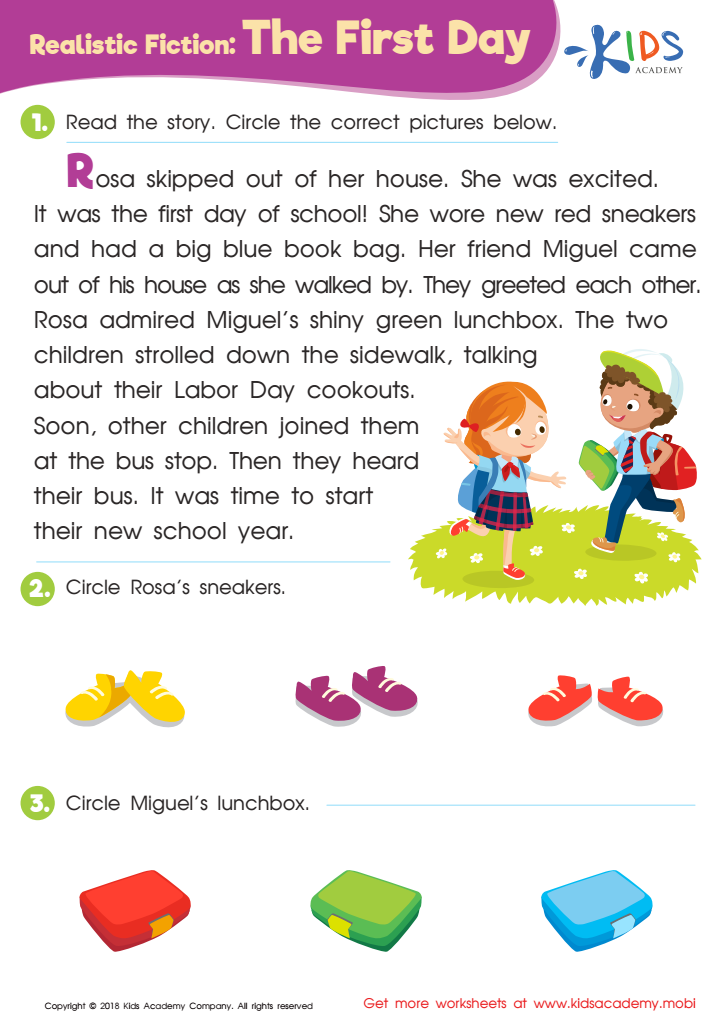
Realistic Fiction: The First Day Worksheet

Realistic Fiction: The First Day Worksheet

Fiction is made-up events, so story-writing is fiction writing. In this worksheet, there's a short story about Rosa, her friend Miguel, and their first day back at school. Read the story aloud to your kids and help them circle the right pictures to the questions. Repeat if needed.
Realistic Fiction: The First Day Worksheet
Worksheet
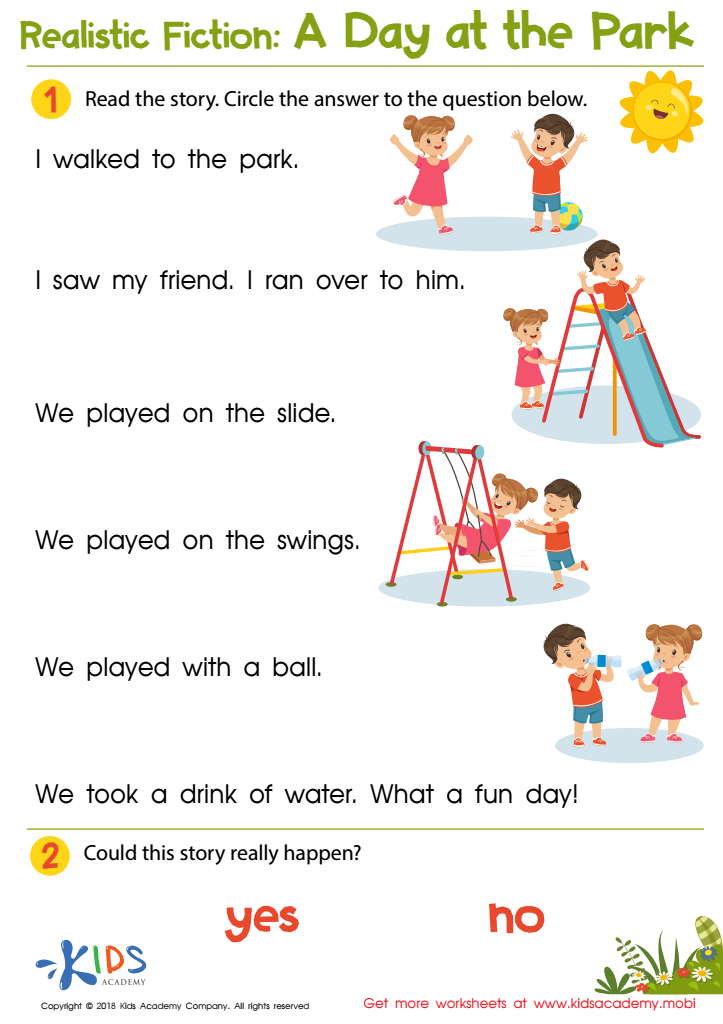
A Day at the Park Worksheet

A Day at the Park Worksheet

Kids as young as preschool-age can be taught to evaluate stories! Use this fun worksheet about a day at the park. Read each sentence aloud, looking at the pictures. Ask your child if the events in the story could happen in real life - if yes, circle yes, otherwise circle no. When finished, discuss with them the genre, realistic fiction.
A Day at the Park Worksheet
Worksheet
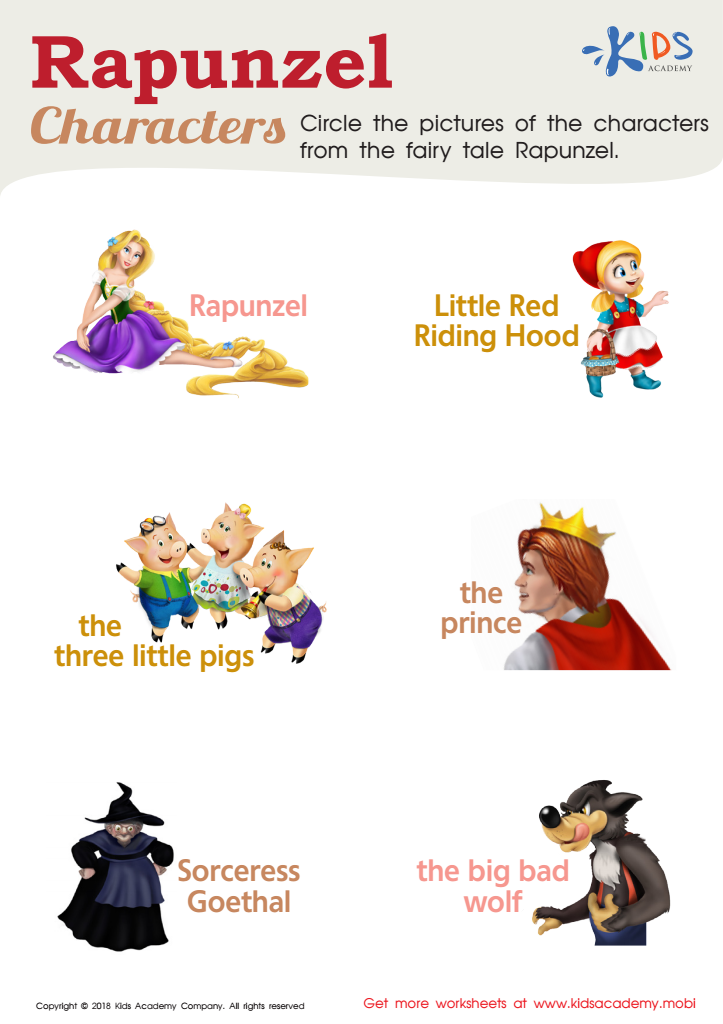
Rapunzel Characters Worksheet

Rapunzel Characters Worksheet

This fun and colourful worksheet is perfect to see what your kids have learned from story time. Test their knowledge with a Rapunzel-themed exercise! Ask them to circle the pictures of the characters from the fairy tale. Helping them to remember the lessons taught in the stories you have read.
Rapunzel Characters Worksheet
Worksheet
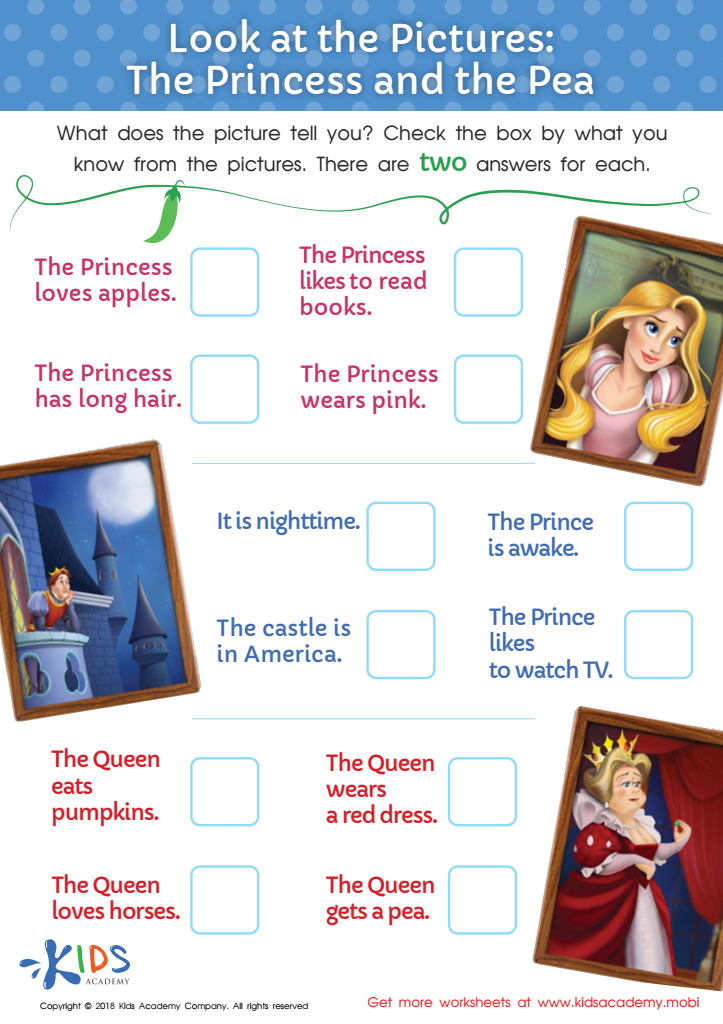
Look at the Pictures: The Princess and the Pea Worksheet

Look at the Pictures: The Princess and the Pea Worksheet

Early readers can benefit from picture clues to understand stories and text. Looking at images helps them learn the meaning of words and comprehend events. Use this worksheet on The Princess and the Pea to let students observe and learn from the pictures. It's a great way to help them comprehend early reading materials.
Look at the Pictures: The Princess and the Pea Worksheet
Worksheet
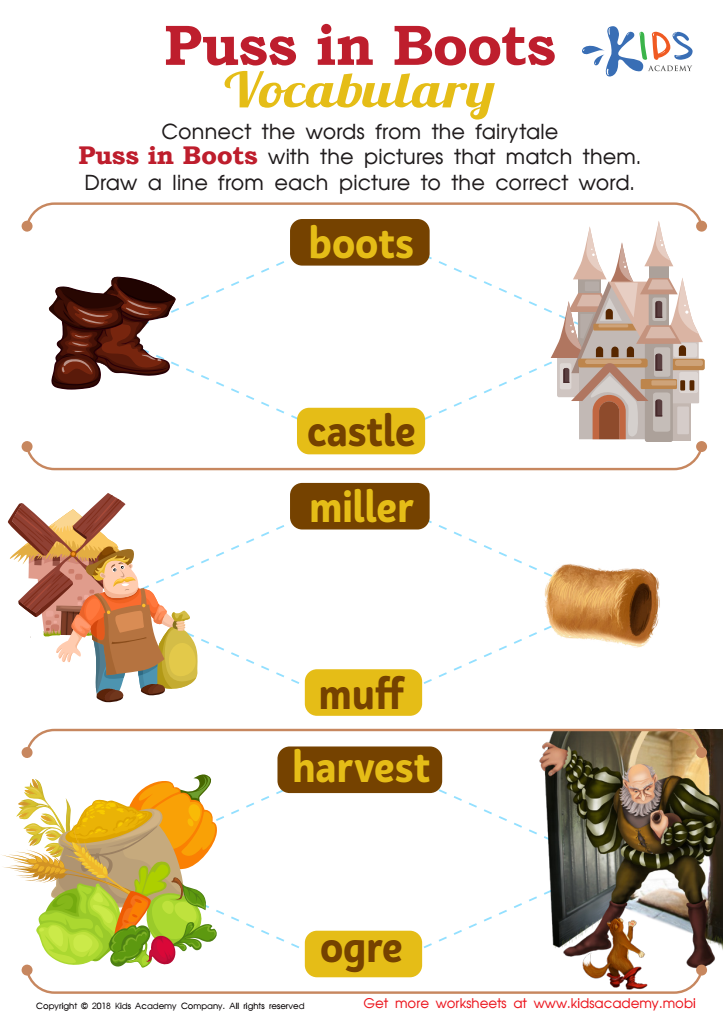
Puss in Boots Vocabulary Worksheet

Puss in Boots Vocabulary Worksheet

Let your kids enjoy story-telling while learning at the same time. Help them learn from the fairytale, Puss in Boots, by connecting words from the worksheet with the matching pictures. Ask them to draw a line between each picture and corresponding word to build their vocabulary.
Puss in Boots Vocabulary Worksheet
Worksheet
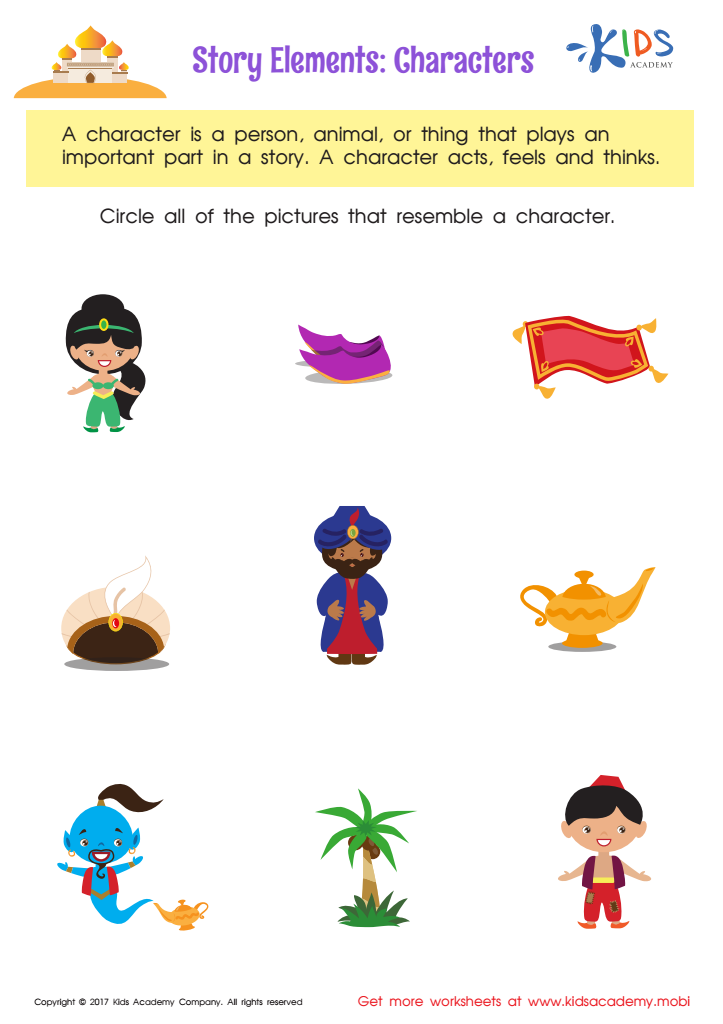
Reading Comprehension Worksheet: Aladdin

Story Elements Printable

Read the text and review the characters, settings and plot in a guided discussion. Take your child on a journey to the Middle East and review the characters, settings and plot of their favorite childhood stories with this Aladdin-themed worksheet! It'll help them master early analysis skills and learn about characterization. Enjoy a fun, guided discussion with your child as you review important story elements.
Story Elements Printable
Worksheet
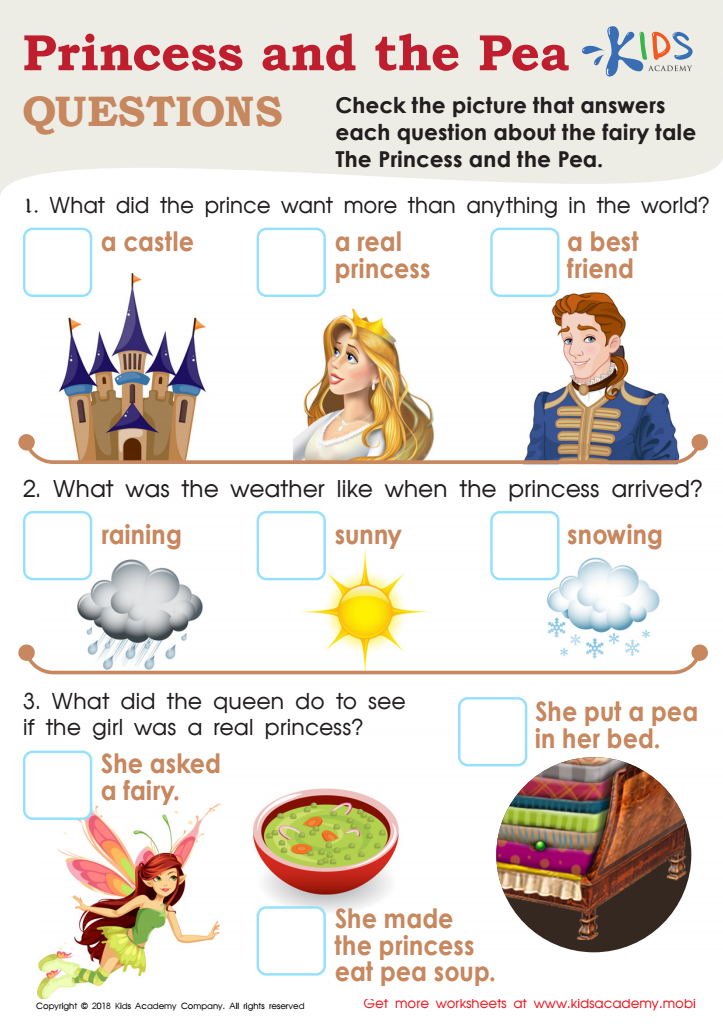
Princess and the Pea Questions Worksheet


Princess and the Pea Questions Worksheet

Your kid knows The Princess and the Pea inside-out? Test their knowledge with this worksheet. Ask your little one to read the questions and match each one to the picture. It's a fun way to see just how much attention they've paid to their bedtime story.
Princess and the Pea Questions Worksheet

Worksheet


... 2 3

Reading comprehension is a fundamental skill that shapes a child's academic success and love for learning, particularly in the early years. For children aged 3-7, engaging with normal reading fiction not only improves vocabulary and language skills but also nurtures critical thinking and emotional intelligence. By immersing children in stories, they learn to identify themes, characters, and motives, which helps them to understand diverse perspectives and emotions.

Parents and teachers should recognize that reading fiction fosters imagination and creativity, allowing young readers to explore worlds beyond their own. This exploration enhances cognitive development and supports their ability to engage in more complex problem-solving scenarios. Additionally, discussing stories together can strengthen the parent-child or teacher-student bond, encouraging a collaborative learning environment.

Moreover, evidence suggests that strong reading comprehension skills established during these formative years are linked to better academic performance later in life. Therefore, both parents and educators must prioritize reading comprehension strategies and provide enriching reading materials. By doing so, they equip children with the essential tools for successful learning pathways, empowering them to communicate effectively and think critically as they grow. Engaging early with reading fiction lays the foundation for lifelong literacy and a love of learning.