Understanding ecosystems Normal Animals Worksheets for Ages 3-7
3 filtered results
-
From - To
Explore the wonders of our planet with our "Understanding Ecosystems Normal Animals Worksheets" tailored for children aged 3-7. Designed to engage young minds, these worksheets provide a fun and interactive approach to learning about different ecosystems and the animals that inhabit them. Through colorful illustrations and easy-to-follow activities, kids will discover the importance of habitats, food chains, and biodiversity. These worksheets encourage critical thinking, creativity, and a love for nature while enhancing fine motor skills. Perfect for home or classroom use, our resources make science enjoyable and accessible for early learners. Start your child's adventure into the world of ecosystems today!
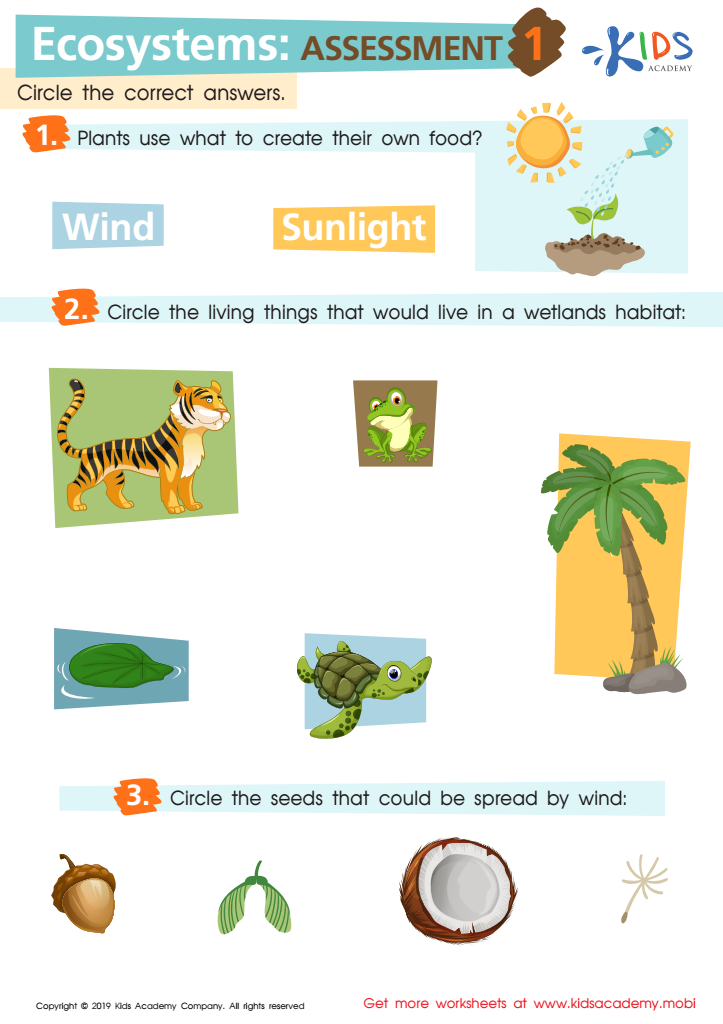
Ecosystems: Assessment 1 Worksheet
 Assign to My Students
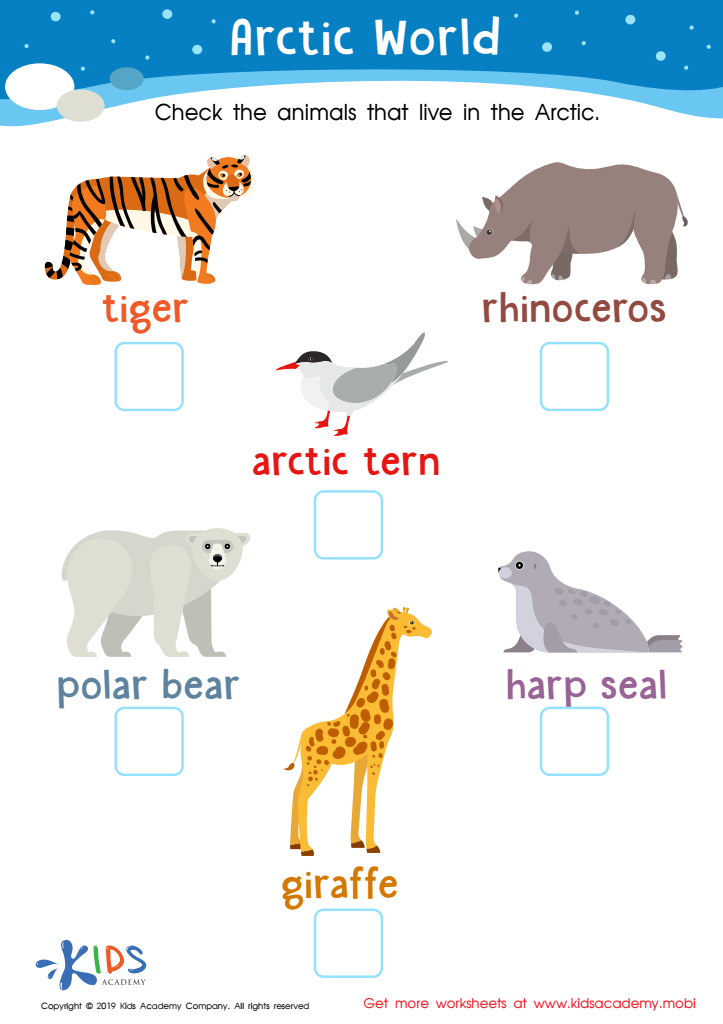
Arctic World Worksheet
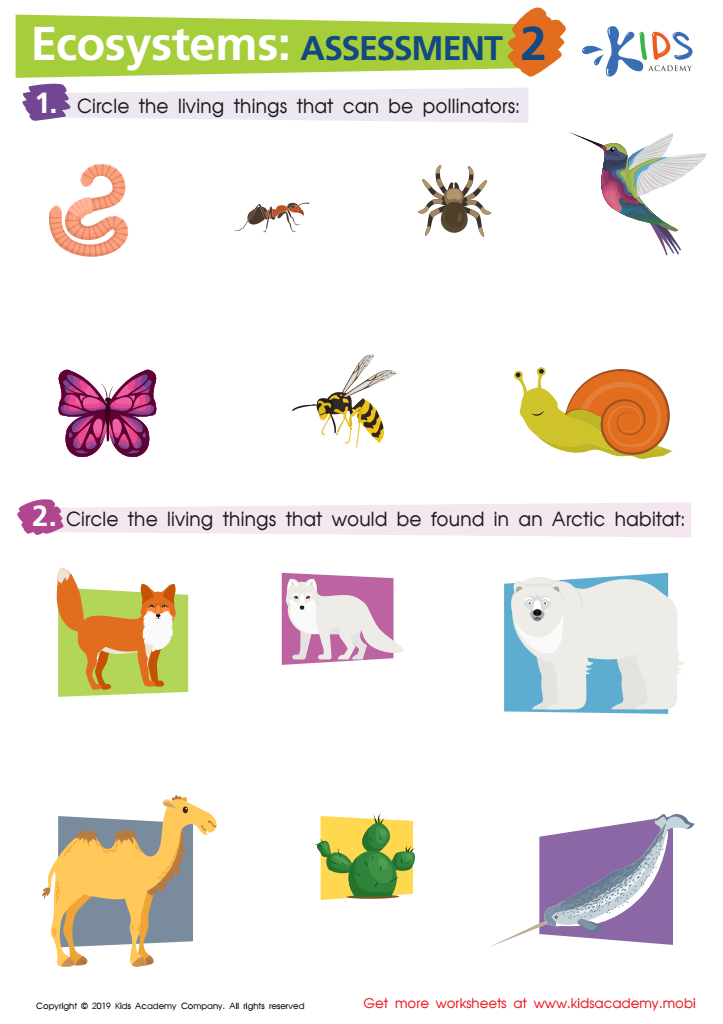
Ecosystems: Assessment 2 Worksheet








Understanding ecosystems and normal animals is crucial for children aged 3 to 7 for several reasons. First, early education about ecosystems fosters a sense of curiosity and connection to the natural world. When children learn about different environments and the animals that inhabit them, they begin to recognize the intricate balance of life and how their actions affect the world around them.
By exploring these concepts, children develop essential skills such as critical thinking and observation. They learn to ask questions, make predictions, and explore their surroundings—skills that are foundational for future scientific learning. Understanding ecosystems also promotes environmental stewardship, encouraging young learners to care for nature, which helps instill lifelong values of responsibility and empathy toward living beings.
Additionally, lessons about animals can enhance literacy and numeracy skills through engaging stories and hands-on activities, making learning more interactive and enjoyable. The knowledge gained helps children appreciate biodiversity and fosters an understanding of the importance of conservation from an early age. By incorporating ecosystem studies into their curriculum, teachers and parents can create a well-rounded educational experience that nurtures both intellectual and emotional development, empowering children to become mindful and informed future stewards of the planet.








