
Vocabulary expansion Normal Animals Worksheets for Ages 3-7
4 filtered results
Difficulty Level
Grade
Age
-
From - To
Subject
Activity
Standards
Unlock your child's language potential with our "Vocabulary Expansion Normal Animals Worksheets for Ages 3-7". Designed by educational experts, these fun and engaging worksheets help young learners build essential vocabulary related to common animals. Perfect for developing reading and comprehension skills, each activity introduces new words through colorful illustrations and interactive tasks. Ideal for children ages 3-7, our worksheets ensure productive screen-free learning that fosters curiosity and confidence. Transform your child’s educational journey today with our user-friendly and creatively crafted resources available now at Kids Academy!
Favorites
With answer key
Interactive
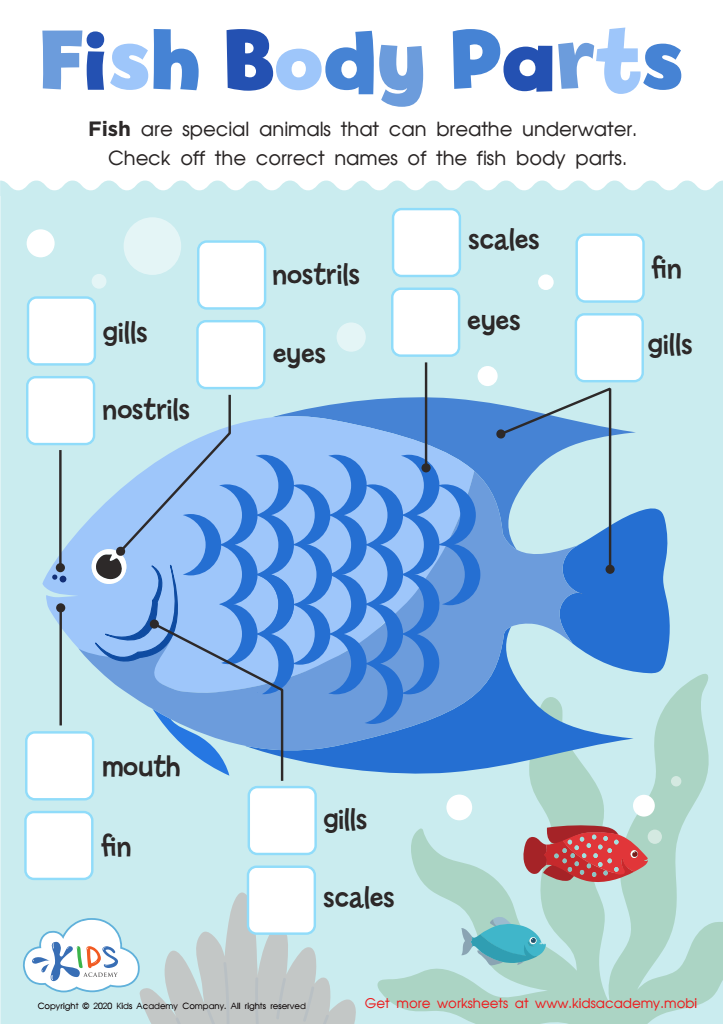
Fish Body Parts Worksheet
Fascinate kids with fish: teach them about these amazing creatures with this free Kids Academy printable worksheet. Let little learners study the vibrant blue fish, identify its different body parts, and discover why it can survive underwater. From gills to fins, your child will gain an early appreciation for life science!
 Assign to My Students
Fish Body Parts Worksheet
Worksheet
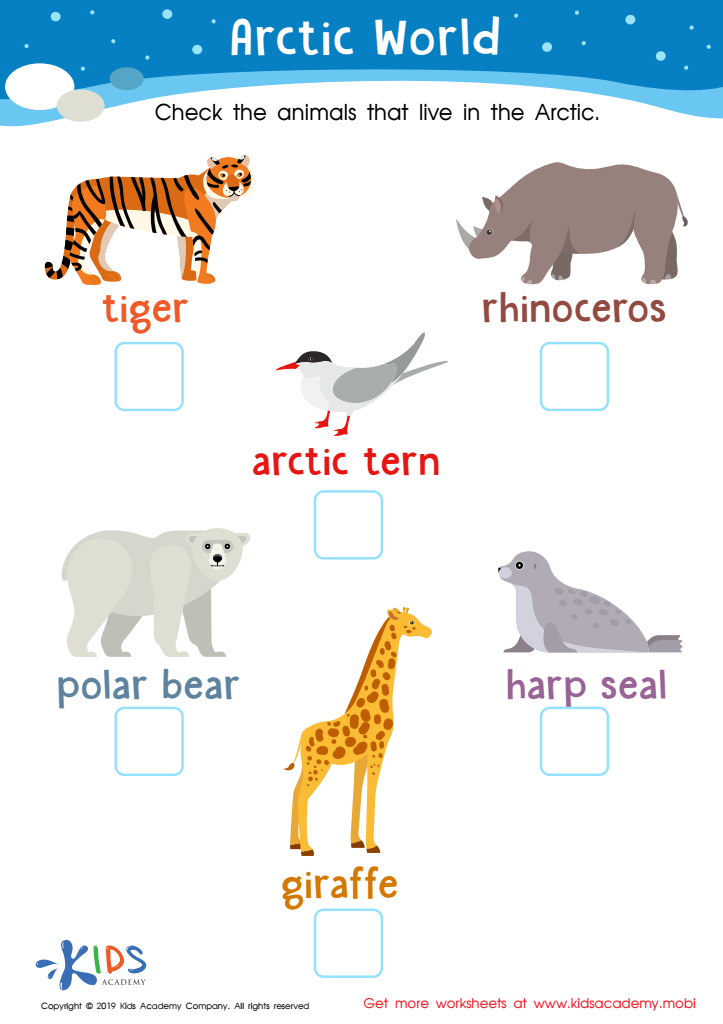
Arctic World Worksheet
Ask your students if they know where the Arctic is located and what lives there. If not, use a world atlas to show them. The Arctic is very cold and snow-covered; native animals have adapted to survive the harsh conditions. Look at the animals in the worksheet and help your students decide which ones live in the Arctic.
Arctic World Worksheet
Worksheet
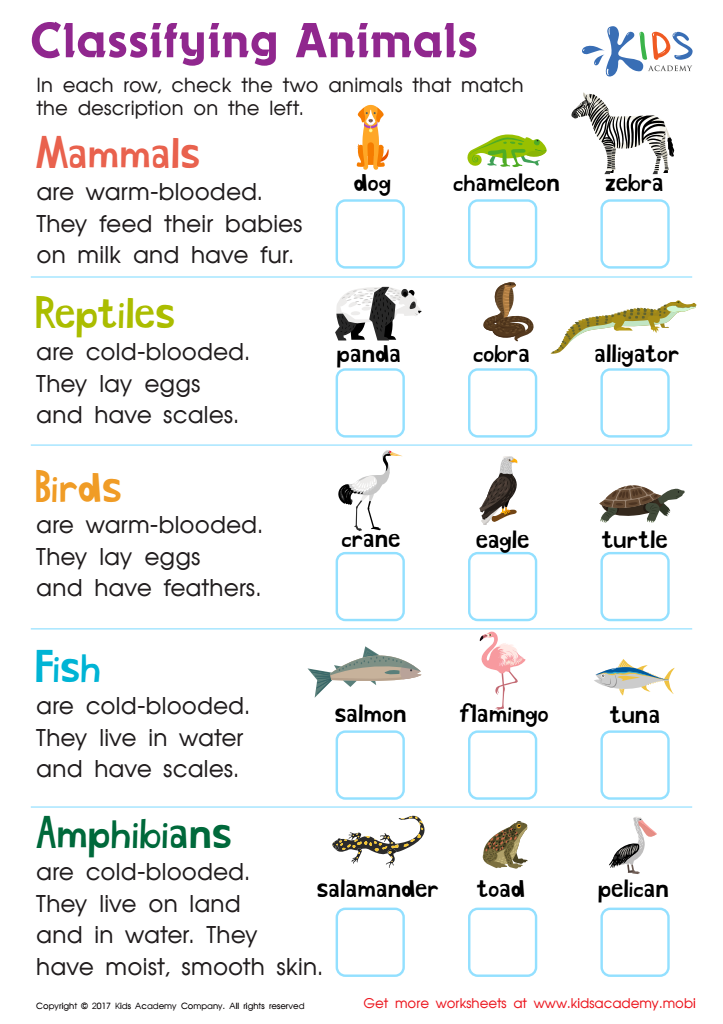
Classifying Animals Worksheet
Print the 2nd grade animal classification worksheet and help kids study the differences between mammals, reptiles, birds, fish and amphibians. Let them pick two examples from the options given.
Classifying Animals Worksheet
Worksheet
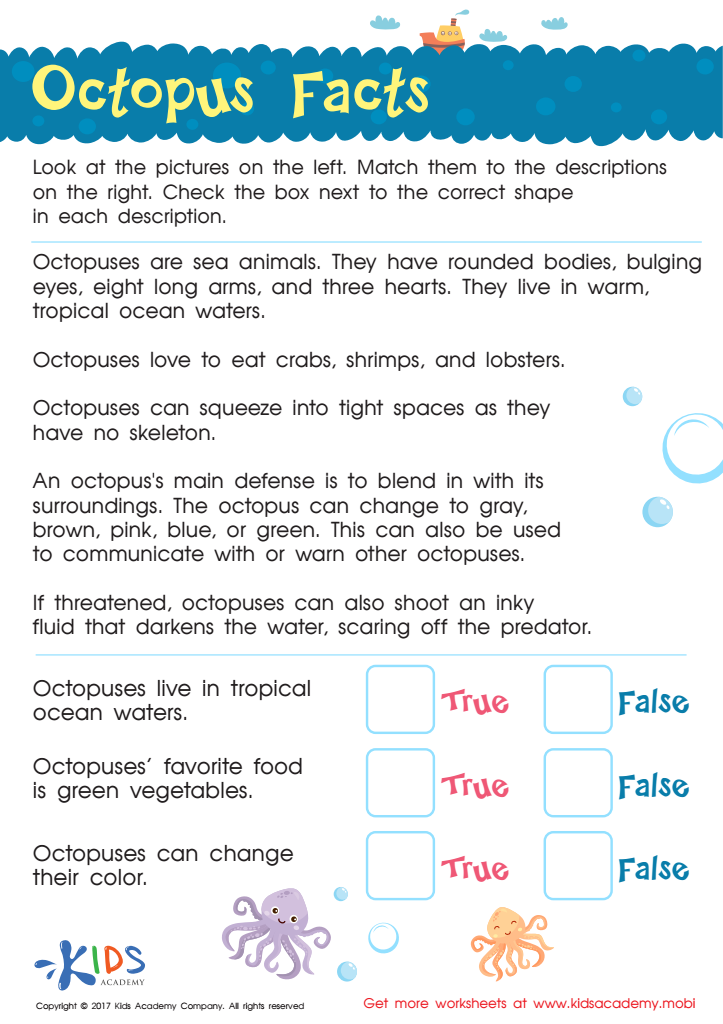
Octopus Facts Worksheet For Kids
Let your child dive into the world of octopuses with this fun worksheet. It offers invaluable practice in reading non-fiction texts, while they learn interesting facts about these strange sea creatures. It's a great way to help them hone their skills in reading comprehension.
Octopus Facts Worksheet For Kids
Worksheet
Join Kids Academy for Free
Who is primarily going to use this learning content?



%20(1).jpg)

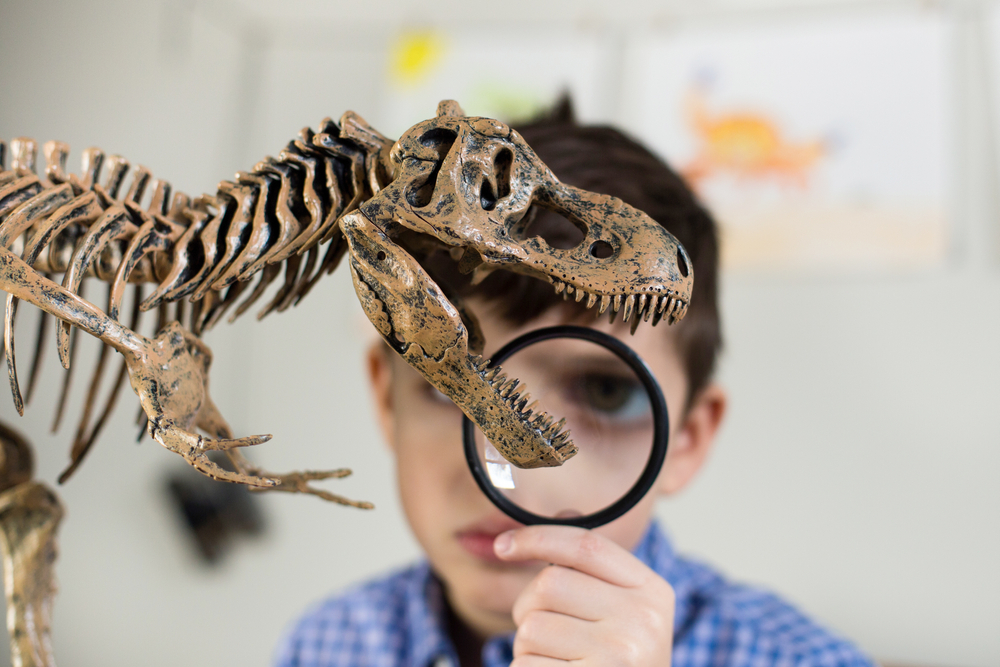


Expanding vocabulary in young children (ages 3-7) through knowledge of normal animals is a fundamental component of early education. At this critical age, children's brains are highly receptive, making it an ideal time for linguistic enrichment. A robust vocabulary enhances communication skills, enabling children to express their thoughts, needs, and emotions more accurately. When children learn the names and characteristics of common animals, they also acquire descriptive words, action verbs, and related nouns, which broadens their language base.
Moreover, learning about animals can stimulate curiosity and foster a love for learning. It helps in developing observational skills and understanding basic biological concepts, such as habitats, diets, and physical features, laying a foundation for future science education. Interactive lessons involving animals can be engaging, captivating children's interest and making learning both fun and memorable.
For parents and teachers, fostering a rich vocabulary is essential for cognitive development and academic success. A strong vocabulary is linked to improved reading comprehension, writing skills, and overall academic performance. Therefore, incorporating normal animal vocabulary into everyday conversations and educational activities is a strategic and effective way to support early literacy and cognitive growth in young children.








