
Matching skills Normal Geometry Worksheets for Ages 3-8
3 filtered results
Difficulty Level
Grade
Age
-
From - To
Subject
Activity
Standards
Enhance your child's geometric understanding with our Matching Skills Normal Geometry Worksheets, perfect for ages 3-8! These engaging and educational printables help young learners identify, match, and recognize basic geometric shapes like circles, squares, and triangles. Each worksheet is designed to foster critical thinking and improve problem-solving skills through fun activities tailored to their age group. Let your child explore the foundational concepts of geometry with colorful illustrations and interactive exercises that make learning enjoyable. Perfect for at-home practice or classroom use, our worksheets are an excellent resource for developing essential early math skills.
Favorites
With answer key
Interactive
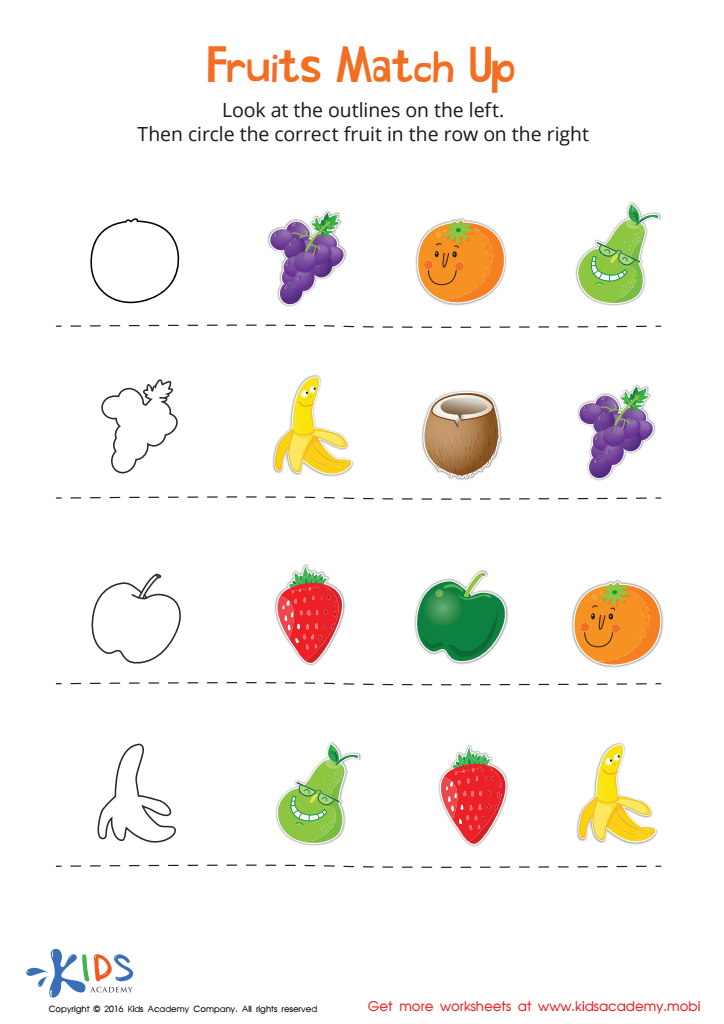
Fruits Match Up Worksheet
Motivate your child to count and sharpen their spatial reasoning skills with this vivid fruit worksheet.
 Assign to My Students
Fruits Match Up Worksheet
Worksheet











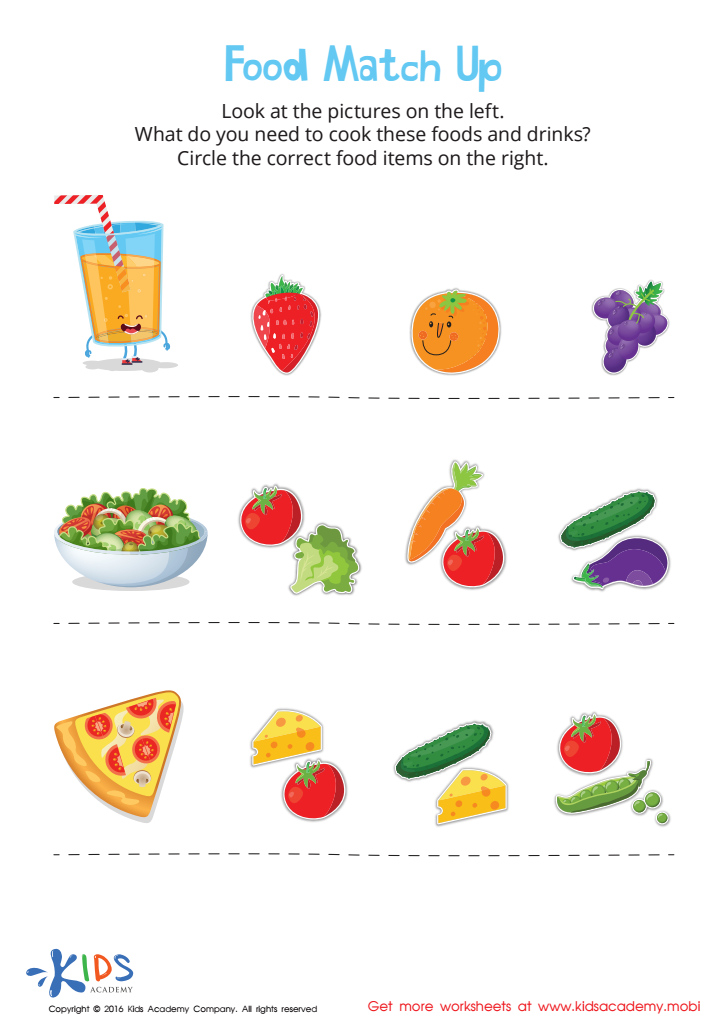
Food Match Up Worksheet
This worksheet will help your preschooler develop early math and cognitive skills. It challenges them to pay attention to details, understand how smaller parts make a whole, and increase important matching skills. Use it to give them a hands-on learning experience in the kitchen, and watch them understand how ingredients come together to make something delicious!
Food Match Up Worksheet
Worksheet
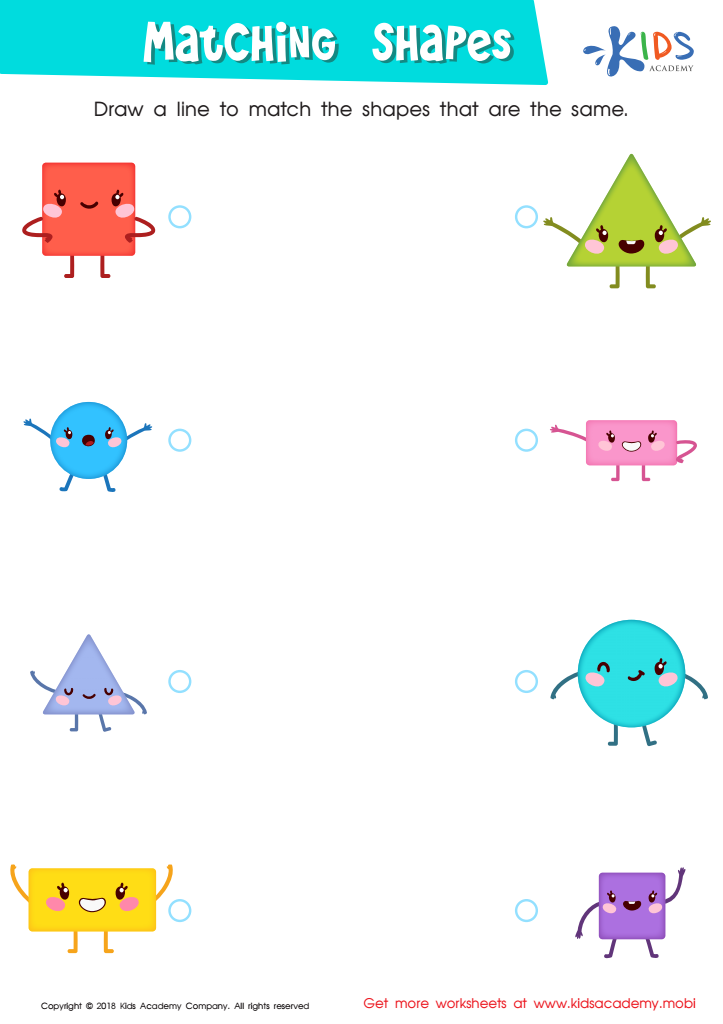
Matching Shapes Worksheet
Introduce your students to the 4 most common shapes: squares, triangles, rectangles and circles. When they progress, show them other shapes like rhombuses and parallelograms. Use this matching shapes worksheet to help them match two identical shapes. Print out the worksheet and instruct them to draw lines connecting them.
Matching Shapes Worksheet
Worksheet
Join Kids Academy for Free
Who is primarily going to use this learning content?








Matching skills in normal geometry are essential for children aged 3-8 because they lay the foundation for critical cognitive and academic development. Early experiences with shapes, patterns, and spatial relationships enable young learners to develop essential problem-solving skills. By engaging with geometric matching activities, children enhance their ability to recognize similarities and differences, promote analytical thinking, and practice visual discrimination—all fundamental skills for reading and mathematics.
For parents and teachers, incorporating these activities helps foster a child's spatial awareness, which is crucial for understanding complex concepts later on, such as graphing in mathematics or interpreting maps in social studies. Moreover, matching and sorting games can also fine-tune motor skills through hands-on manipulation of geometric shapes, fostering overall muscular coordination and dexterity.
These exercises also contribute to a child's focus and attention span, as they require listening to instructions, following multiple steps, and completing tasks. Emotional benefits include the sense of achievement children feel upon solving puzzles, which boosts their confidence and perseverance.
Thus, parents and teachers should care about introducing matching skills in normal geometry because it stimulates a child's intellectual curiosity, equips them with necessary academic skills, and supports their holistic growth, setting a strong groundwork for their future learning journey.








