Interpreting data Normal Math Worksheets for Ages 3-8
3 filtered results
-
From - To
Unlock the power of data interpretation with our engaging Normal Math Worksheets designed for children ages 3 to 8! These worksheets provide young learners with essential skills to analyze and understand primary data through fun and relatable activities. With vibrant visuals and intuitive questions, kids will explore concepts such as sorting, counting, and comparing information in a playful way. Your child will develop critical thinking and analytical skills while enjoying colorful illustrations and interactive challenges. Perfect for home learning or classroom use, our worksheets make math engaging and accessible, paving the way for a solid foundation in interpreting data. Start learning today!
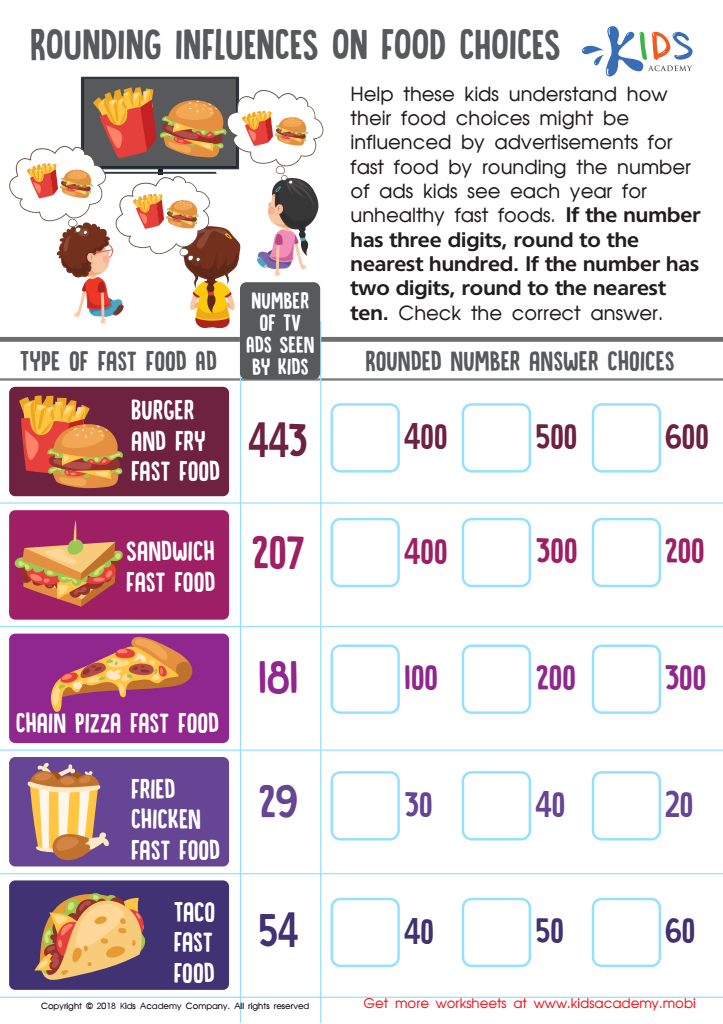
Rounding Influences Food Choices Worksheet
 Assign to My Students
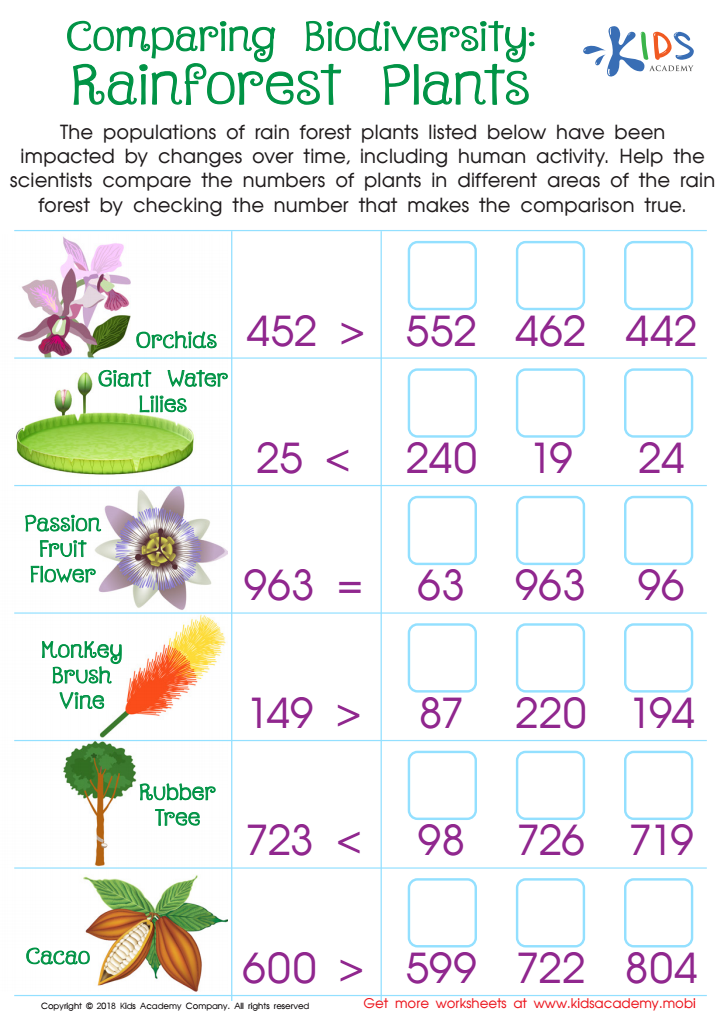
Comparing Biodiversity: Rainforest Plants Worksheet
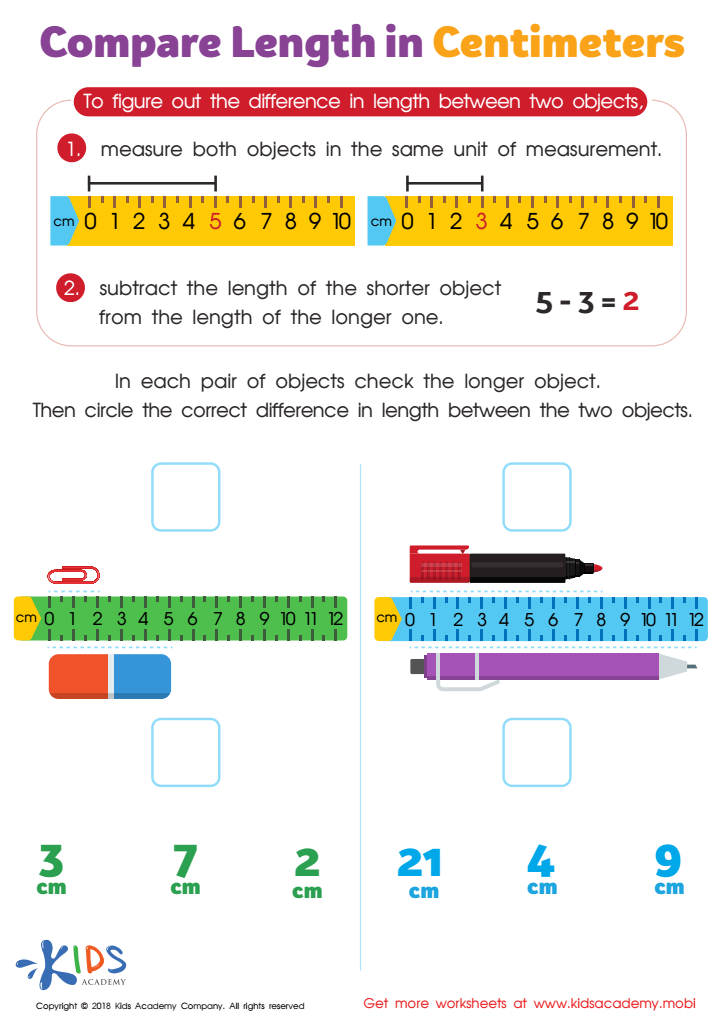
Compare Length in Centimeters Worksheet







Interpreting data in early mathematics for children ages 3-8 is crucial for both parents and teachers as it lays a foundational understanding of mathematical concepts and skills. During these formative years, children develop critical thinking and problem-solving abilities that are essential for their future academic success. By engaging with data-related activities, children learn to recognize patterns, make comparisons, and draw conclusions, enhancing their cognitive and analytical skills.
Parents and teachers can use data interpretation to track a child’s progress and adapt learning strategies accordingly. For instance, understanding where a child excels or struggles with specific math concepts allows for tailored instruction that meets their unique needs. Moreover, integrating data interpretation within everyday situations, such as counting items, measuring objects, or discussing statistics, promotes real-life application of math, making learning more relatable and enjoyable for young learners.
Ultimately, fostering strong early math skills builds a positive attitude toward mathematics, encouraging continued exploration and confidence in the subject. When parents and teachers emphasize the importance of interpreting data in early math, they prepare children for lifelong learning and empower them to navigate an increasingly data-driven world.








