
Animal Classification Normal Sorting Worksheets for Ages 3-8
3 filtered results
Difficulty Level
Grade
Age
-
From - To
Subject
Activity
Standards
Introduce your little explorers to the animal kingdom with our engaging "Animal Classification Normal Sorting Worksheets," designed for ages 3-8. These printable worksheets help kids learn to sort and classify animals based on common attributes such as habitat, type, and diet. Our educational activities support crucial learning skills, fostering early math concepts and observational abilities. Perfectly tailored for young learners, these fun exercises aid in cognitive development while keeping kids captivated with vibrant illustrations and easy-to-follow tasks. Turn sorting into an adventure with our expertly crafted worksheets, and watch your child’s understanding and love for nature flourish!
Favorites
With answer key
Interactive
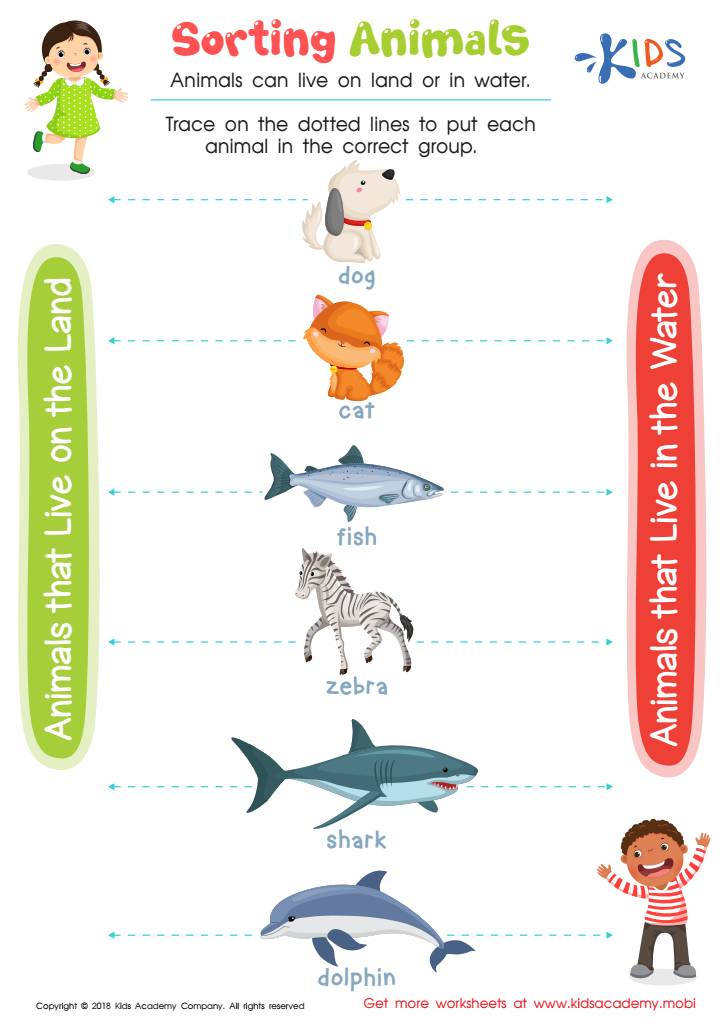
Sorting Animals Worksheet
Your kids will love this free, interactive worksheet! With image clues, they can read and trace the animal names, and then sort them into groups of land or water animals. It's an enjoyable way to boost their critical thinking, fine motor and prior knowledge skills.
 Assign to My Students
Sorting Animals Worksheet
Worksheet
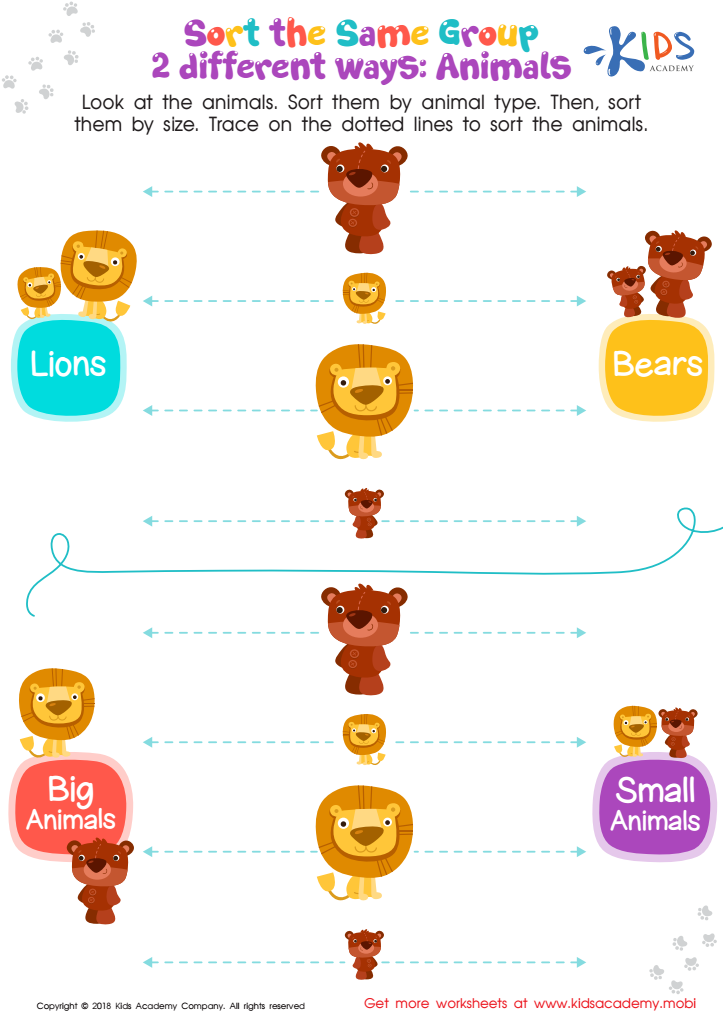
Sort the Same Group 2 Different Ways: Animals Worksheet
Look at the animals with your child. Ask them to name them, then sort them by type (e.g. lions and bears). Next, help them sort by size, tracing the dotted lines. This will teach them sorting skills.
Sort the Same Group 2 Different Ways: Animals Worksheet
Worksheet
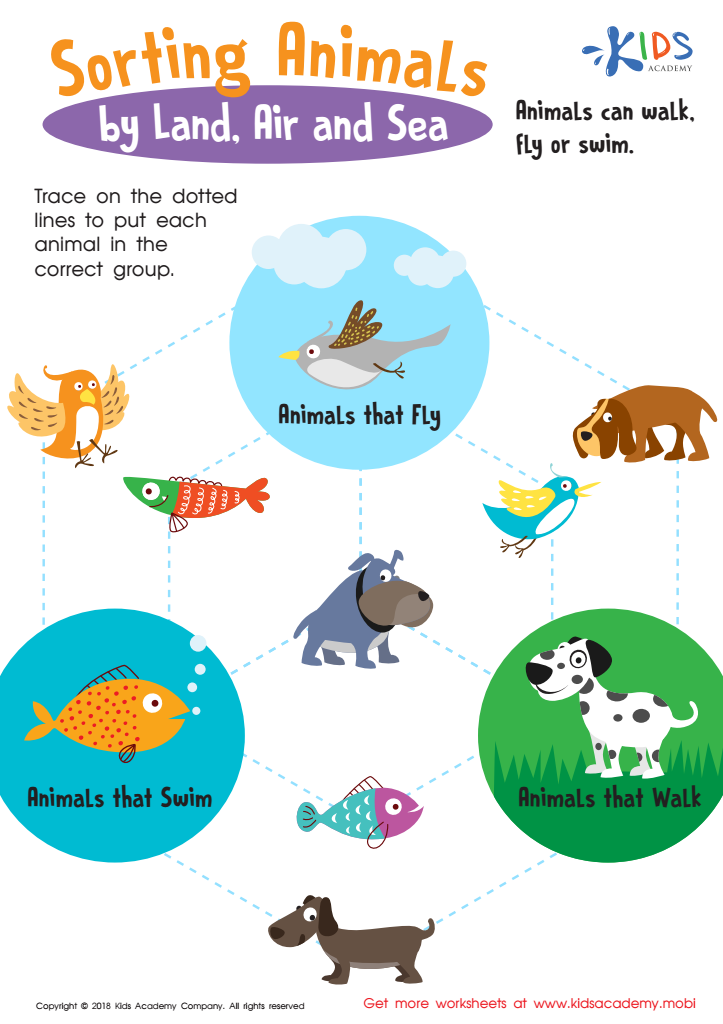
Sorting Animals by Land, Air and Sea Worksheet
Kids will use critical thinking and fine motor skills with this worksheet! They'll analyze animal traits and draw lines to sort them into groups of those that fly, swim, or walk. It's a fun way to hone skills and have a great time!
Sorting Animals by Land, Air and Sea Worksheet
Worksheet
Join Kids Academy for Free
Who is primarily going to use this learning content?







Parents and teachers should care about Animal Classification Normal Sorting for children ages 3-8 as it serves as an important foundational educational tool. At an early age, children are naturally curious about the world around them, and structured activities such as sorting animals by various categories (e.g., habitat, size, diet, etc.) help them make sense of this information. This practice fosters critical thinking and observational skills, which are crucial cognitive development milestones.
Involving children in animal classification also introduces them to basic scientific concepts and vocabulary, planting the seeds for future learning in biology and environmental science. It encourages the development of organizational skills as children learn to categorize objects based on similar attributes, a skill that is transferable to various other areas of learning and life.
Additionally, sorting activities are highly engaging and can be made fun and interactive, keeping children motivated and interested in learning. This sort of hands-on activity supports different learning styles, particularly for tactile and visual learners. Furthermore, it can be an excellent opportunity for social interaction and cooperation if done in groups, promoting teamwork and communication skills.
Overall, animal classification sorting activities for young children are more than just a pastime; they are a gateway to understanding the natural world, supporting cognitive and social development, and stimulating lifelong engagement with learning.








