Prefix understanding Normal Worksheets for Ages 3-9
3 filtered results
-
From - To
Discover our engaging "Prefix Understanding Worksheets" designed specifically for children ages 3 to 9. These worksheets aim to introduce young learners to the concept of prefixes in a fun and interactive way. Through colorful illustrations and age-appropriate activities, kids can boost their vocabulary skills while enhancing their understanding of word structures. They'll enjoy recognizing and applying different prefixes, making learning both enjoyable and effective. Perfect for use in the classroom or at home, these worksheets help foster a love for language and sharpen essential literacy skills. Start your child's journey to language mastery with our beautifully crafted prefix worksheets!
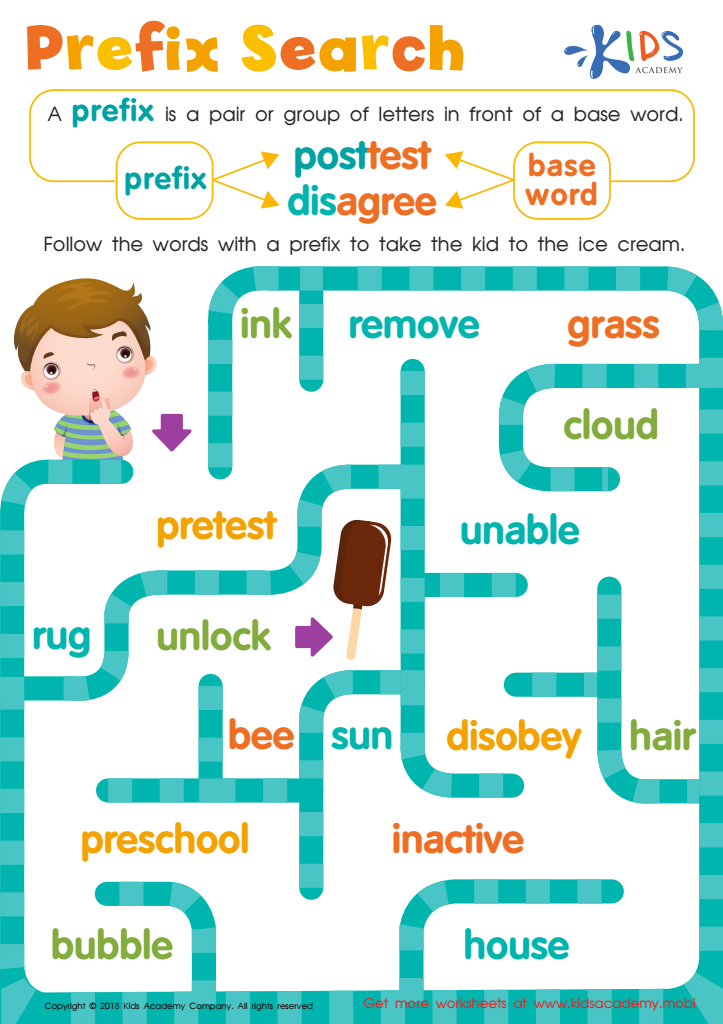
Reading: Prefix Search Worksheet
 Assign to My Students
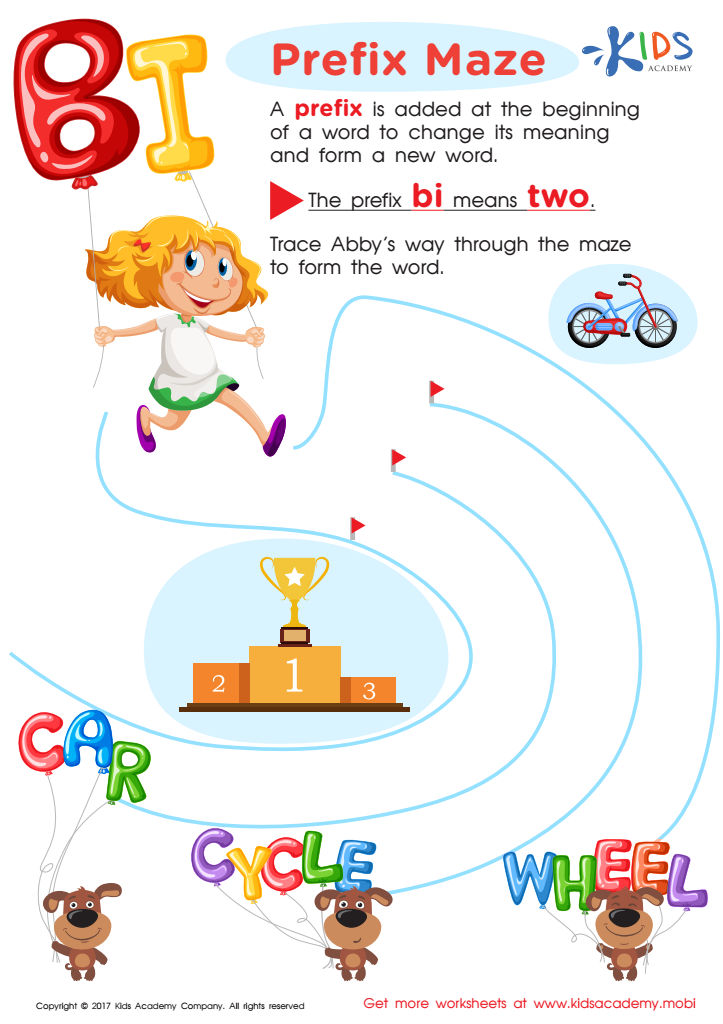
Prefix Bi Words Worksheet
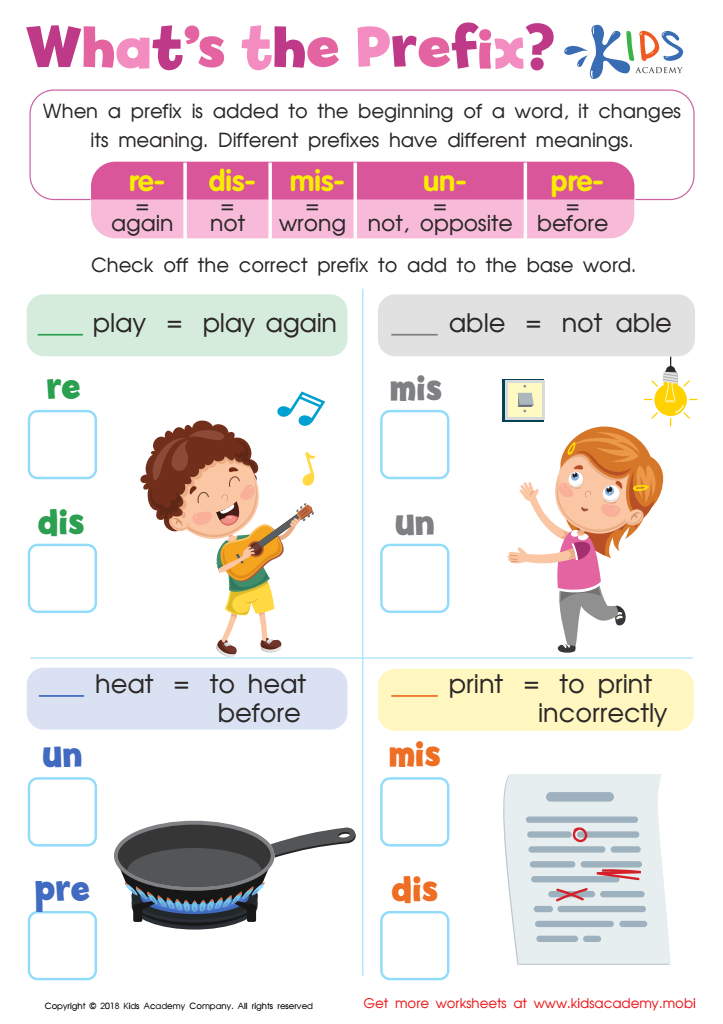
Reading: What Is the Prefix Worksheet





Understanding prefixes is crucial for children ages 3-9, as it lays the foundation for their language development and literacy skills. Prefixes are added to the beginning of root words to create new meanings. For instance, understanding the prefix "un-" helps children grasp words like “happy” vs. “unhappy,” enriching their vocabulary and bolstering their comprehension.
Parents and teachers should prioritize prefix knowledge because it encourages linguistic exploration and boosts confidence in communication. As children decode unfamiliar words, they thus become better readers. Engaging with prefixes also nurtures critical thinking skills; children learn to dissect and analyze language components, enhancing their overall cognitive abilities.
Moreover, early literacy skills have a significant impact on academic success. Children familiar with prefixes are likely to excel in spelling, writing, and reading comprehension. This knowledge can be tied into various subjects, making learning more integrated and meaningful.
Lastly, incorporating prefixes into everyday activities can make learning enjoyable. By using games, songs, or storytelling, parents and teachers can create a playful and interactive learning environment, making it fun to explore language. Emphasizing prefixes elevates a child’s educational journey, ultimately fostering a lifelong love of learning.








