
Rhyming skills development Normal Worksheets for Ages 3-9
4 filtered results
Difficulty Level
Grade
Age
-
From - To
Subject
Activity
Standards
Explore our engaging Rhyming Skills Development Worksheets designed for children aged 3-9! These printable resources foster early literacy by enhancing phonemic awareness through fun activities. Featuring colorful illustrations and age-appropriate exercises, our worksheets make learning to recognize rhymes exciting and interactive. Children will participate in matching, filling in the blanks, and completing rhyme pairs, promoting vocabulary growth and auditory skills. Ideal for parents and educators, these worksheets are perfect for home or classroom use. Support your child's language development and ignite a love for reading through the joy of rhyming! Dive into our collection and make learning delightful today!
Favorites
With answer key
Interactive
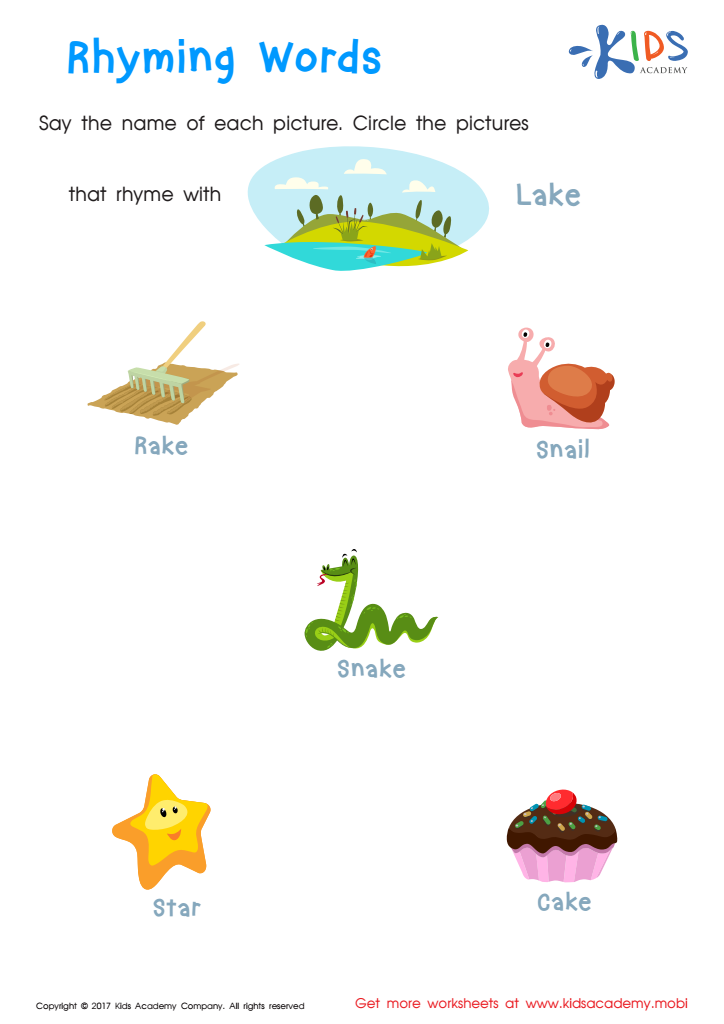
Rhyming Words Rhyming Worksheet
This worksheet is great for honing pre-reading skills. It helps kids make connections between pictures and written words, use problem-solving, and recognize sounds and words that rhyme. Have fun exploring rhyming words with your child, and they'll be rhyming in no time!
 Assign to My Students
Rhyming Words Rhyming Worksheet
Worksheet
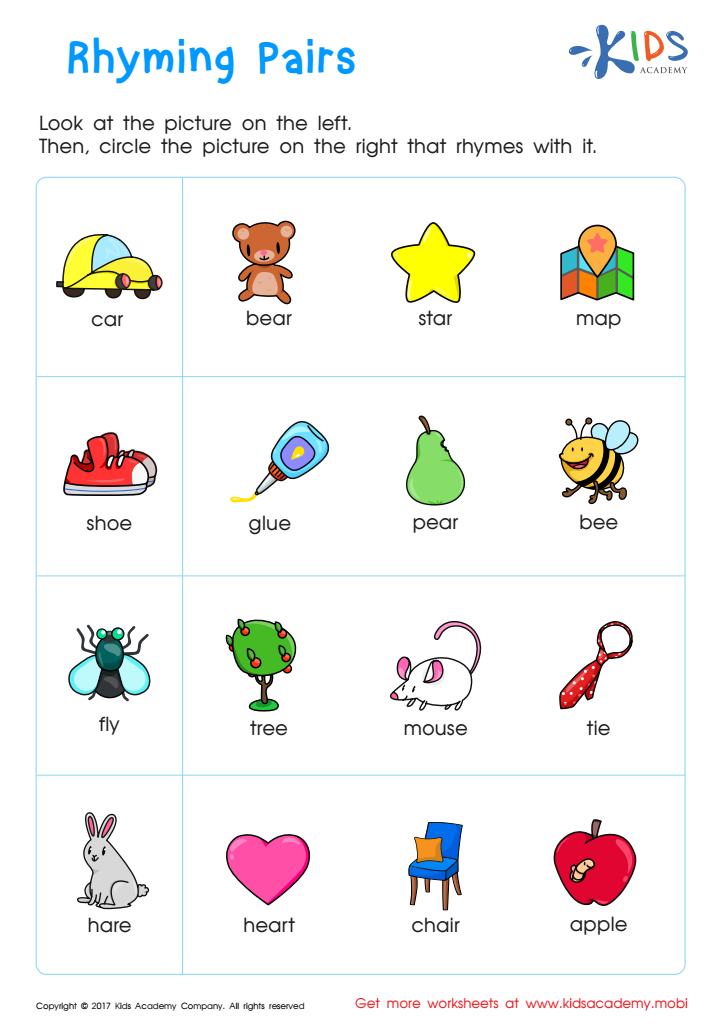
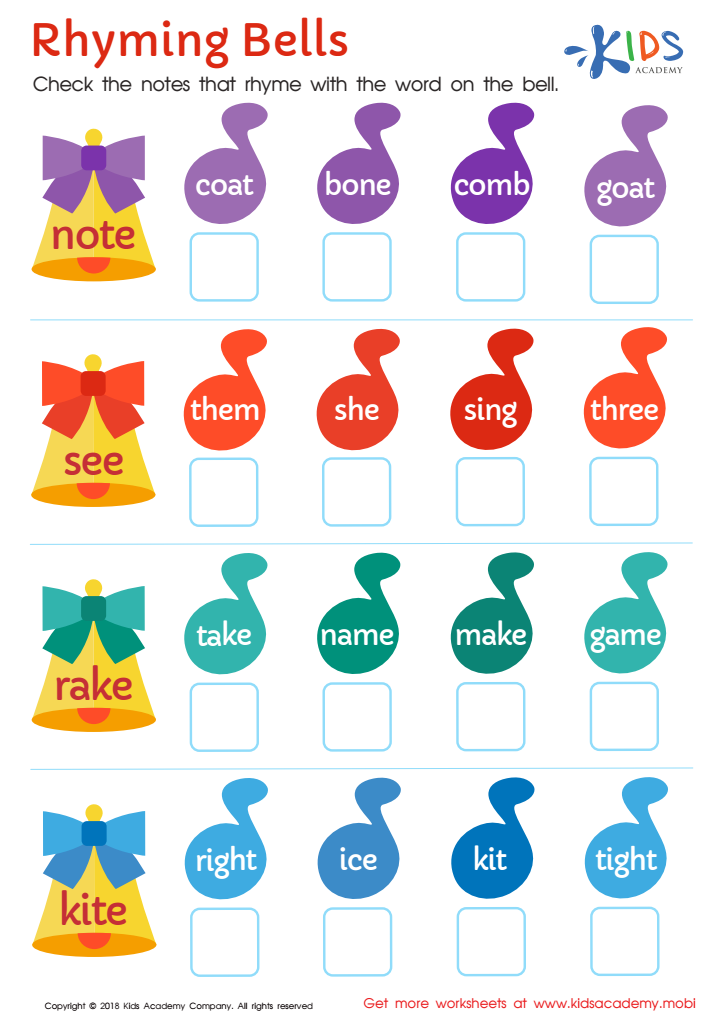
Rhyming Bells Worksheet
This printable worksheet helps students recognize rhyming words. Read a word, then pick the 4 words that rhyme. Look out for words with different spellings but same ending sound. It's a great exercise to improve understanding of rhyming words.
Rhyming Bells Worksheet
Worksheet
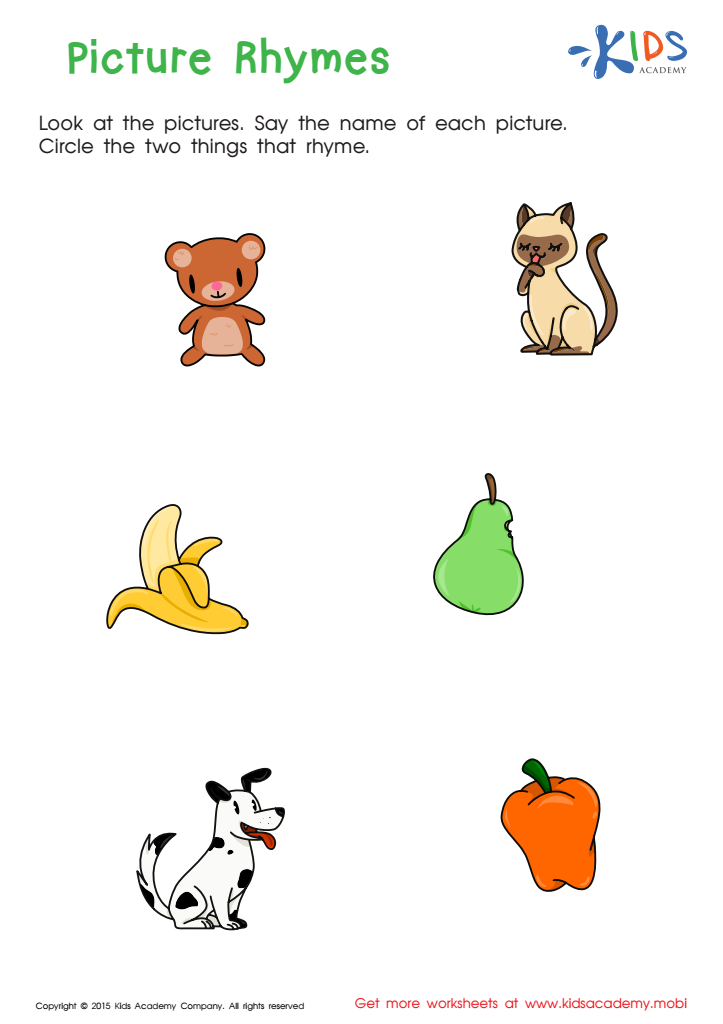
First Words: Picture Rhymes Worksheet
Rhyming helps kids understand language, read and write better. This printable worksheet boosts problem-solving and cognitive skills with vibrant pictures. It teaches kids to identify words, recognize rhymes, complete mental tasks and write words. An extra activity: show them how rhyming words share some of the same letters.
First Words: Picture Rhymes Worksheet
Worksheet
Join Kids Academy for Free
Who is primarily going to use this learning content?






Rhyming skills are a cornerstone of early language development, incredibly beneficial for children aged 3 to 9. Firstly, they enhance phonemic awareness, which is the understanding that words are made up of individual sounds. This awareness is crucial for reading and writing, as it forms the foundation for decoding words.
Furthermore, engaging with rhymes helps children develop vocabulary and improves their listening skills. When children are exposed to rhythmic and rhyming patterns in poetry or songs, they learn to anticipate sounds, which makes listening easier and more enjoyable. This anticipation fosters a love for language and nurtures creative thinking.
Additionally, rhyming activities can strengthen memory and cognitive skills. Children who engage in rhyming games tend to have improved auditory memory, aiding them both academically and in everyday conversations.
For parents and teachers, promoting rhyming is not only a fun and interactive way to support literacy but also an essential part of holistic child development. Rhyming boosts confidence in language use and fosters social skills as children sing, recite, and share rhymes with their peers. In a vibrant, engaging classroom or home, rhyming is a powerful tool to cultivate a positive, effective learning environment.








