Critical Thinking Normal Geometry Worksheets for Ages 3-9
5 filtered results
-
From - To
Unlock your child's potential with our "Critical Thinking Normal Geometry Worksheets for Ages 3-9." These expertly designed sheets inspire young learners to explore geometric concepts while honing critical thinking skills. Elements like shapes, patterns, and spatial reasoning are introduced through engaging and developmentally appropriate activities. Each worksheet not only aligns with educational standards but also makes math fun and interactive. Suitable for classroom use or at-home practice, these worksheets help lay a solid foundation in geometry and analytical thinking, preparing children for future academic success. Empower your kids to think critically with Kids Academy's trusted resources.
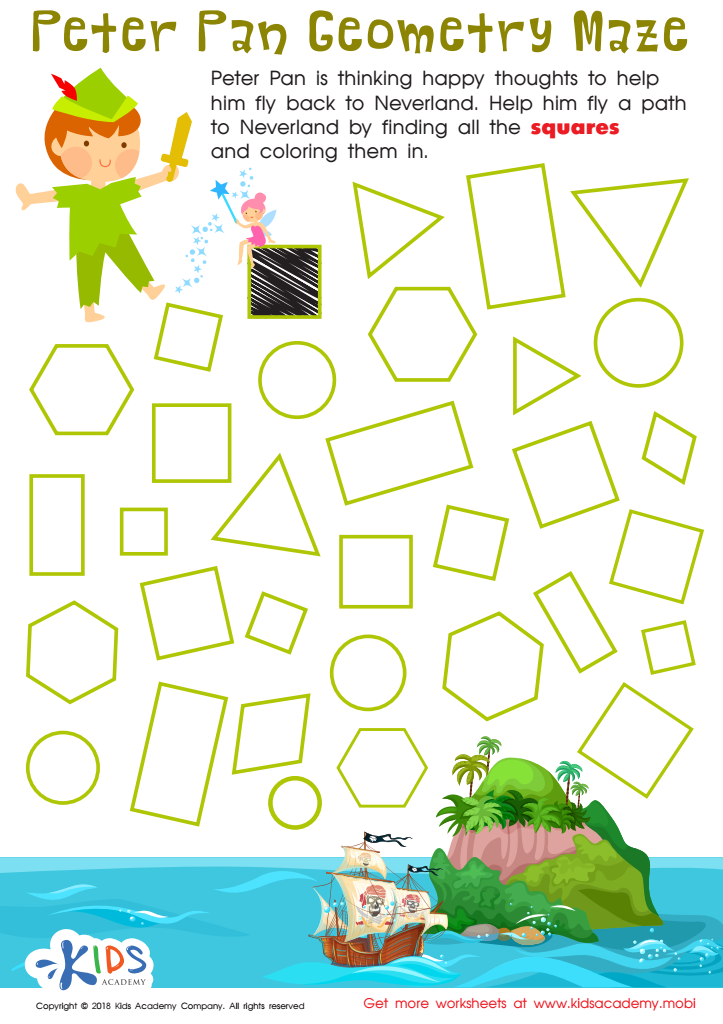
Peter Pan Worksheet
 Assign to My Students











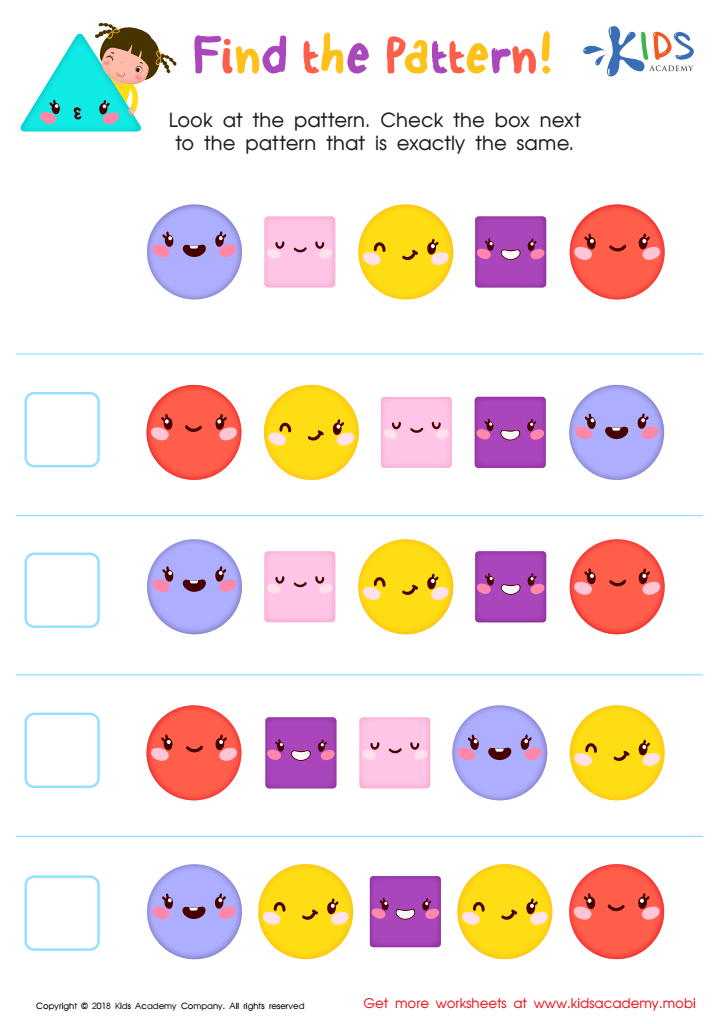
Find the Pattern Worksheet
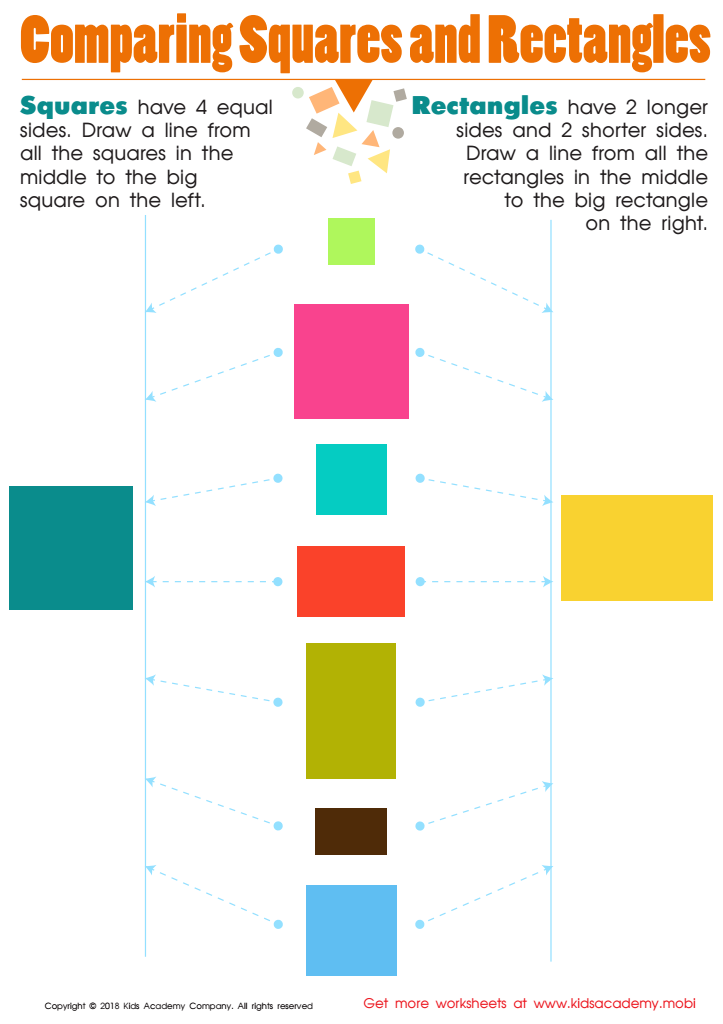
Comparing Squares Rectangles Worksheet
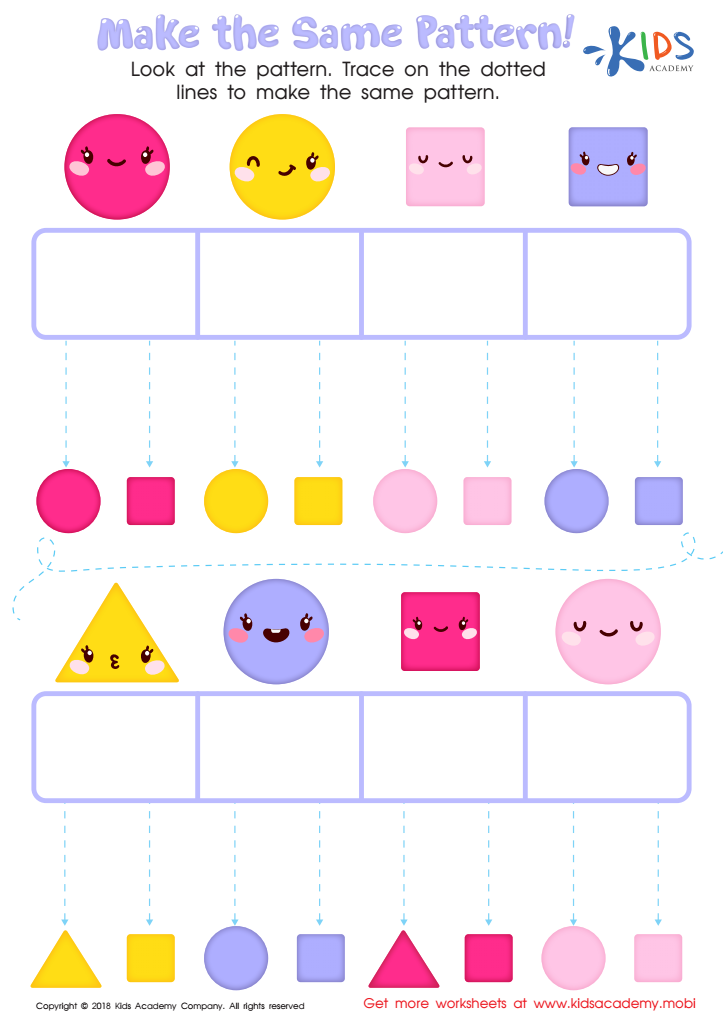
Make the Same Pattern Worksheet
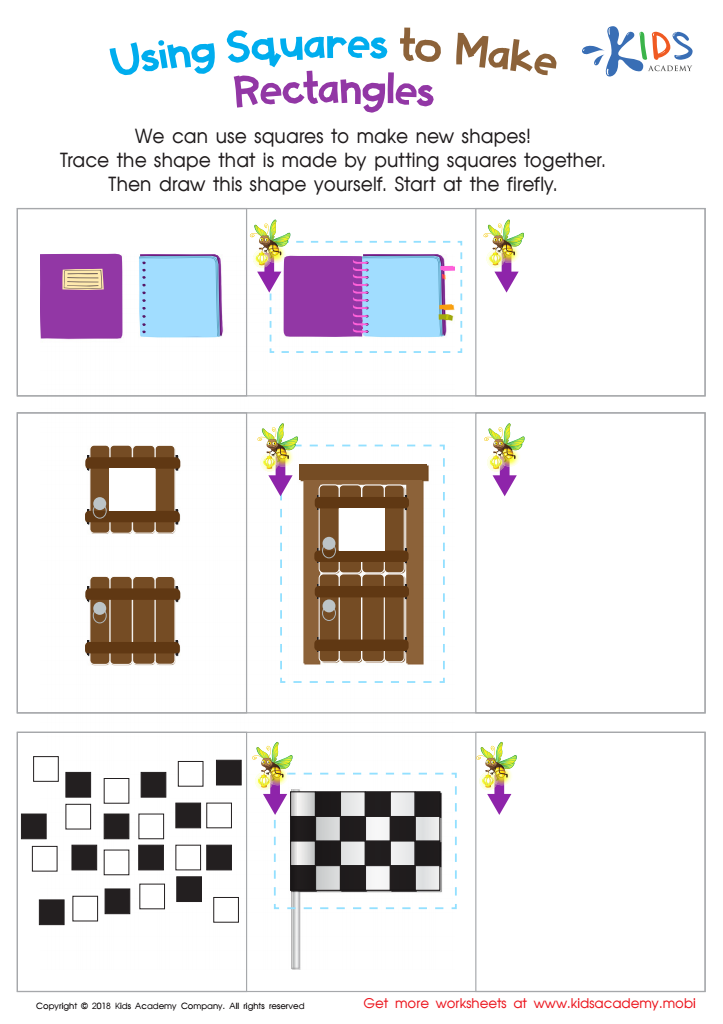
Using Squares to Make Rectangles Worksheet








Critical thinking and basic geometry are fundamental components in early childhood education, as they lay the foundation for a child’s cognitive development. For children aged 3-9, fostering critical thinking cultivates essential problem-solving skills that benefit them across various subjects and in real-life scenarios. Encouraging a questioning mindset helps children develop the ability to analyze, evaluate, and infer information, which are crucial skills for making informed decisions and reasoning logically.
Introducing normal geometry at a young age helps children understand spatial relationships, shapes, measurements, and properties. This foundational knowledge makes advanced mathematics concepts more accessible in later years and promotes a natural interest in STEM (Science, Technology, Engineering, and Mathematics). Geometry lessons stimulate children's curiosity about the world and enhance their ability to visualize and manipulate objects, which are important skills for various disciplines and everyday tasks.
Parents and teachers play a crucial role in integrating these skills in playful and engaging ways, like building blocks, drawing shapes, or exploring patterns. Establishing a robust understanding of critical thinking and geometry during these formative years empowers children to approach challenges confidently and innovatively, fostering a lifelong love for learning and intellectual growth. By investing in these areas, adults can significantly contribute to their children’s future academic and personal success.








