Filters

30 filtered results

Clear all filters
Favorites
With answer key
Interactive

30 filtered results

Difficulty Level

Grade


Check out this FREE Trial Lesson on Geometry for age 3-9!

Objects in the Environment- Circle, Square, Triangle & Rectangle

Favorites
With answer key
Interactive
  • 3-9
  • Shape Recognition
  • Geometry
  • Normal
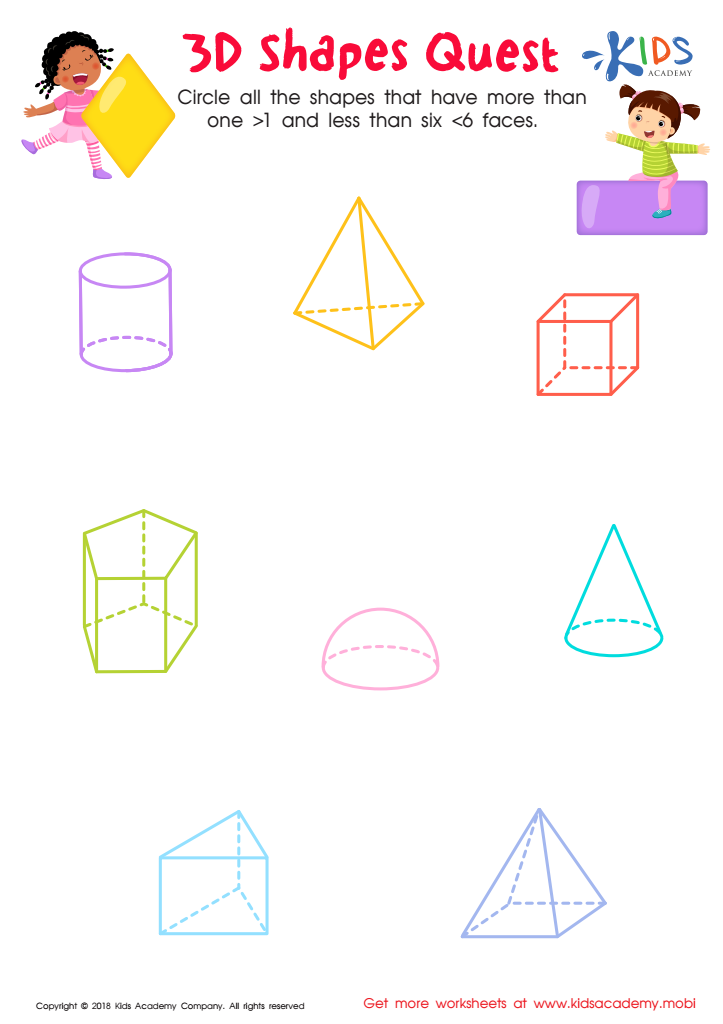
3D Shapes Quest Worksheet

3D Shapes Quest Worksheet

Ask your child if they know what faces of shapes are. If not, explain that faces are flat surfaces on shapes. Ask what a square and rectangle have in common - both have four faces. Your child's task is to circle shapes with more than 1 and less than 6 faces in this exercise.
3D Shapes Quest Worksheet
Worksheet
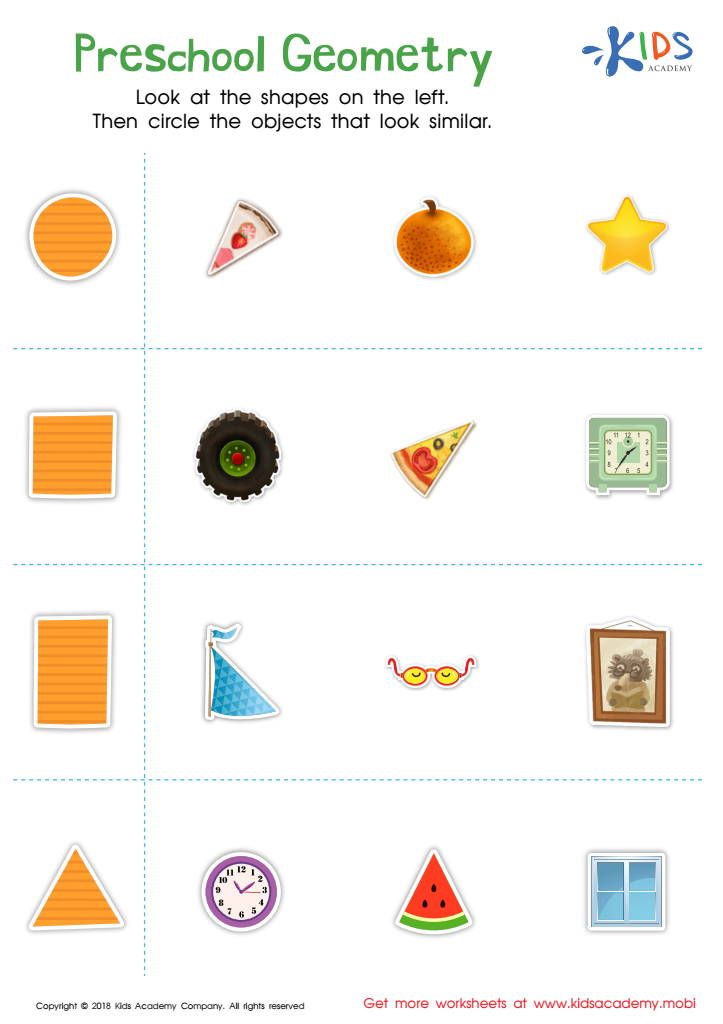
Preschool Geometry Worksheet

Preschool Geometry Worksheet

This worksheet gives 3rd graders the basics of geometry. Kids match everyday objects to shapes they know, e.g. an orange to a circle, a square to a slice of watermelon and a rectangle to a picture frame. It's a fun way to give them confidence to tackle more complex geometry in the future.
Preschool Geometry Worksheet
Worksheet
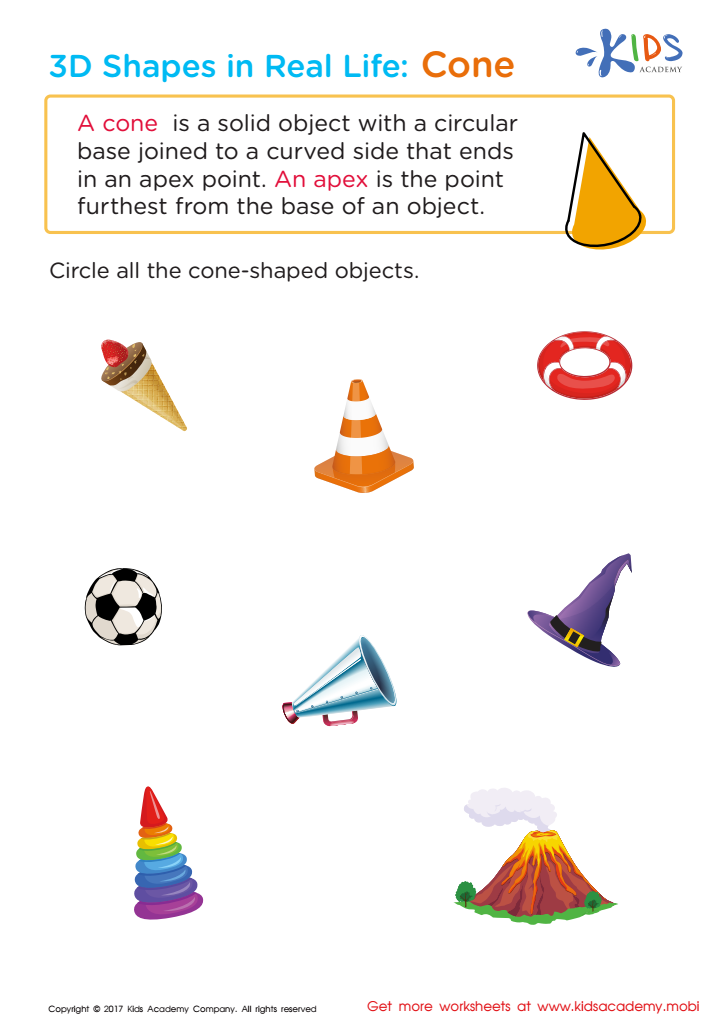
3D Shapes in Real Life Cone Printable

Shapes in Real Life: Cone Worksheet

Help your child get ahead in math by learning about geometry, including 3D objects, with this 3D shapes in real life cone worksheet.
Shapes in Real Life: Cone Worksheet
Worksheet
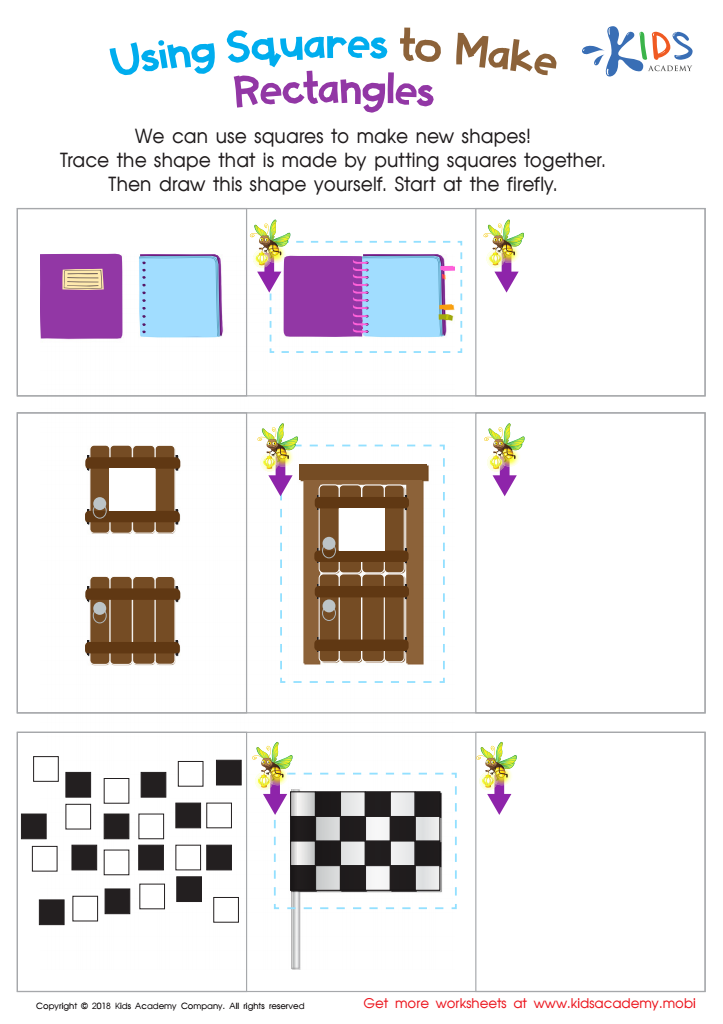
Using Squares to Make Rectangles Worksheet

Using Squares to Make Rectangles Worksheet

Creating shapes from other shapes (composing shapes) develops spatial skills, an essential geometry standard for young students. This worksheet introduces familiar square objects, then demonstrates how they create rectangles. Students practice tracing and then drawing the shape independently. Download this free math resource for the classroom today! (80 words)
Using Squares to Make Rectangles Worksheet
Worksheet
Circle Laser Cutting Worksheet

Circle Laser Cutting Worksheet

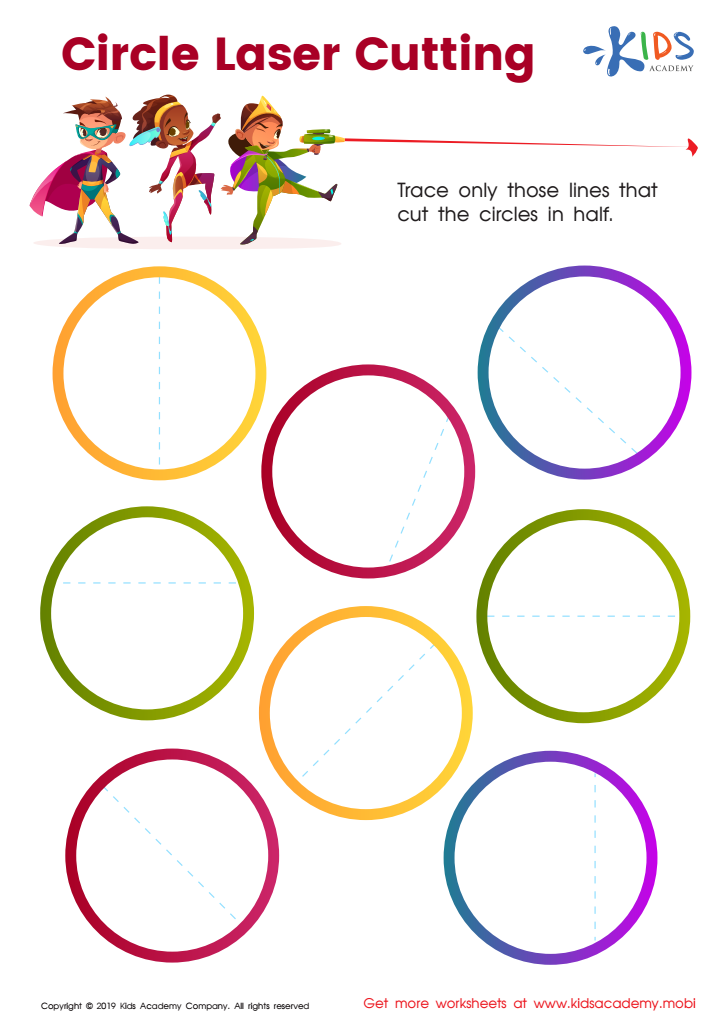
Encourage your kids to learn geometry! Remind them that when shapes are cut into two equal parts, they are called halves. Have them look at the circles in the worksheet, and trace the lines that cut the circles in half. Geometry is an essential part of education, and although it may not be exciting, it's a valuable skill to have.
Circle Laser Cutting Worksheet
Worksheet
Sorting Shapes - Part 2 Worksheet


Sorting Shapes - Part 2 Worksheet

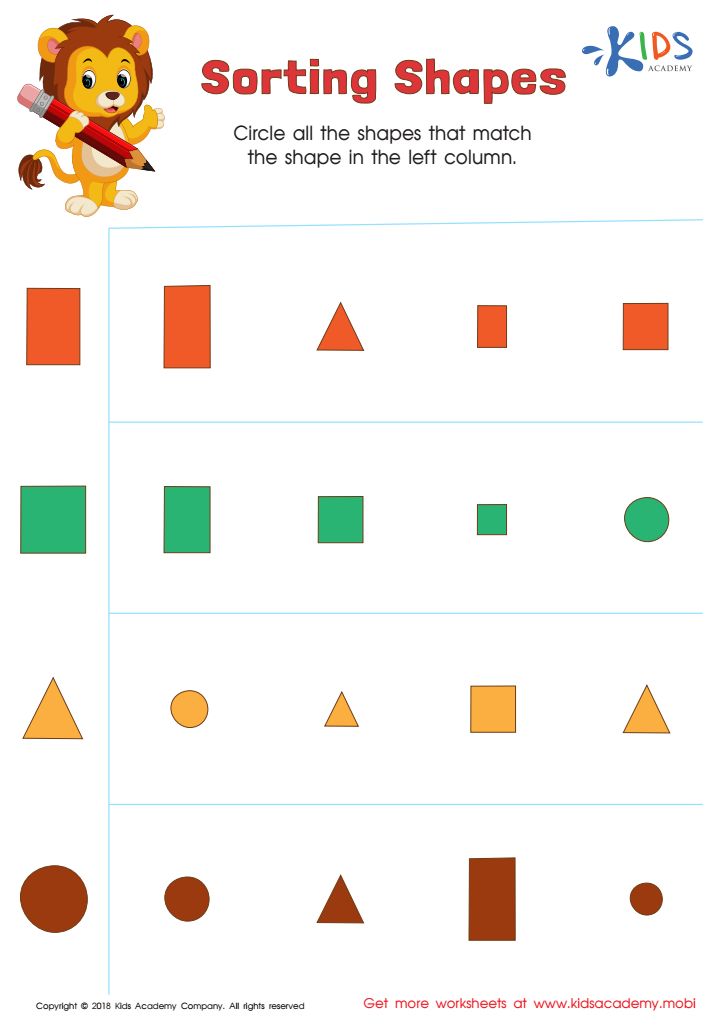
Tired of dull worksheets? Look no further than Kids Academy's colorful shape-sorting worksheet! It's perfect for challenging your toddler's problem-solving skills. Print the free PDF page and let your child practice the basics of geometry. Have them work down the left column, circling the shapes on the right that match. It's a great way to form a strong foundation in early learning.
Sorting Shapes - Part 2 Worksheet

Worksheet


Shape recognition and general geometric understanding are foundational skills for young children, significantly impacting their cognitive development and academic success. For ages 3-9, learning to identify and understand shapes is crucial for several reasons.

Firstly, recognizing various shapes enhances visual perception, an essential skill for decoding and processing visual information effectively. This skillset supports literacy as children apply shape knowledge to distinguish different letters and numbers. For instance, differentiating between ‘b’ and ‘d’ involves recognizing specific arrangements of lines and curves.

Secondly, geometric skills lay the groundwork for more advanced mathematical concepts. Basic shape recognition introduces children to the idea of spatial relationships and properties, which directly correlates to learning more complex topics like fractions, symmetry, and geometry in later academic years.

Thirdly, daily problem-solving requires an understanding of shapes. When children play with puzzles, build blocks, or even cut out shapes in arts and crafts, they are honing their problem-solving and fine motor skills. These activities help them understand shape properties and relationships creatively and enjoyably.

Lastly, fostering these skills promotes logical thinking and categorization, which are important for cognitive development in various subjects. By caring about geometric education from an early age, parents and teachers empower children with the tools necessary for educational achievement and everyday problem-solving.