
Logical Reasoning Normal Math Worksheets for Ages 3-9
15 filtered results
Difficulty Level
Grade
Age
-
From - To
Subject
Activity
Standards
Discover our comprehensive Logical Reasoning Normal Math Worksheets specially crafted for children ages 3-9. Designed to foster critical thinking and problem-solving skills, these worksheets focus on developing a solid foundation in logical reasoning through engaging, age-appropriate activities. Each worksheet promotes cognitive development and enhances mathematical skills, ensuring young learners grasp essential concepts in a fun and interactive way. Ideal for parents and educators aiming to boost their children's analytical abilities, these resources provide a structured approach to early education. Visit our page to access a variety of printable worksheets that make learning logic both enjoyable and effective.
Favorites
With answer key
Interactive
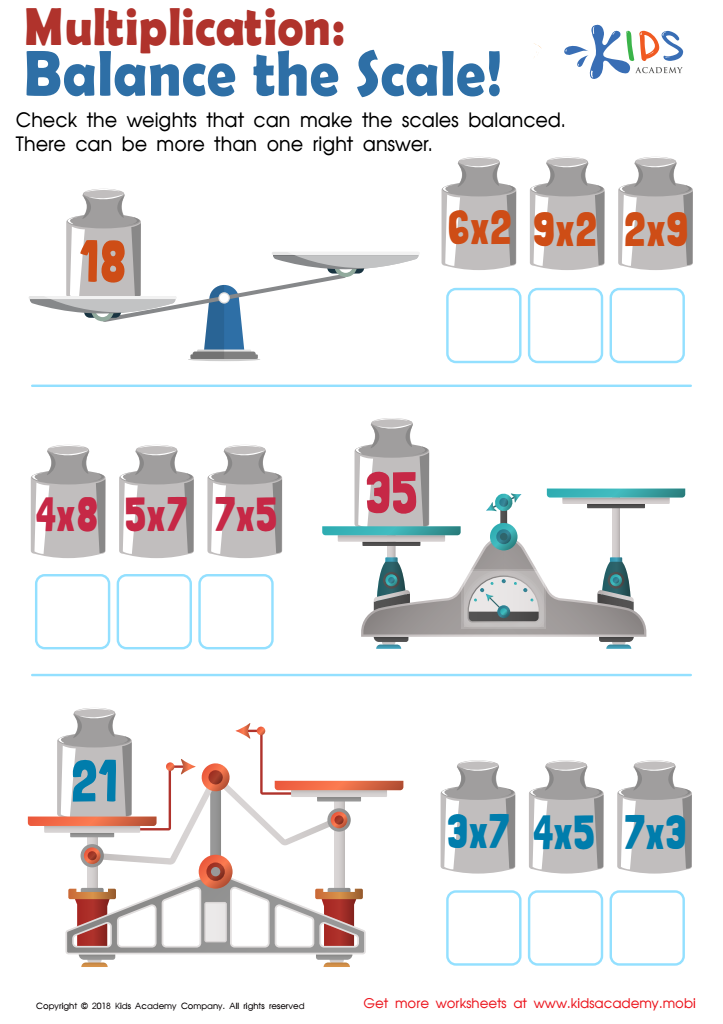
Balance the Scales Multiplication Worksheet
Challenge your child to practice math with our 'Balance the Scales' multiplication worksheet! Get them to solve each multiplication problem and select the weights that make them equal. Hint: it might be more than one!
 Assign to My Students
Balance the Scales Multiplication Worksheet
Worksheet
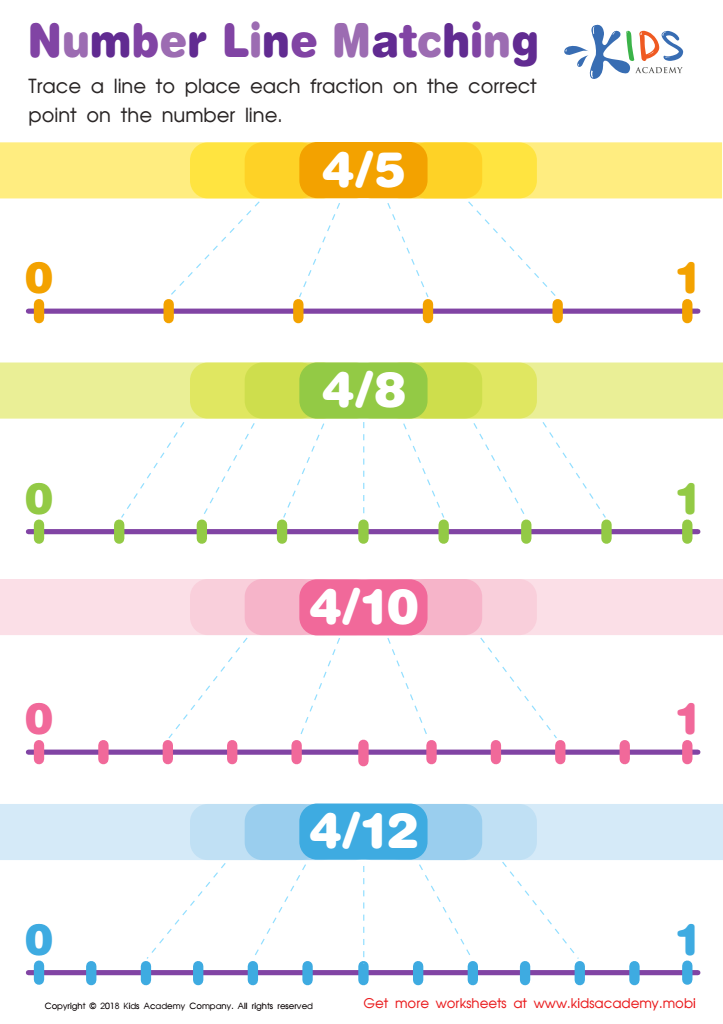
Number Line Matching Worksheet
Math can be fun! Have your child count points on the number line, then identify and trace fractions above it. It's a great way for them to learn and have some fun!
Number Line Matching Worksheet
Worksheet
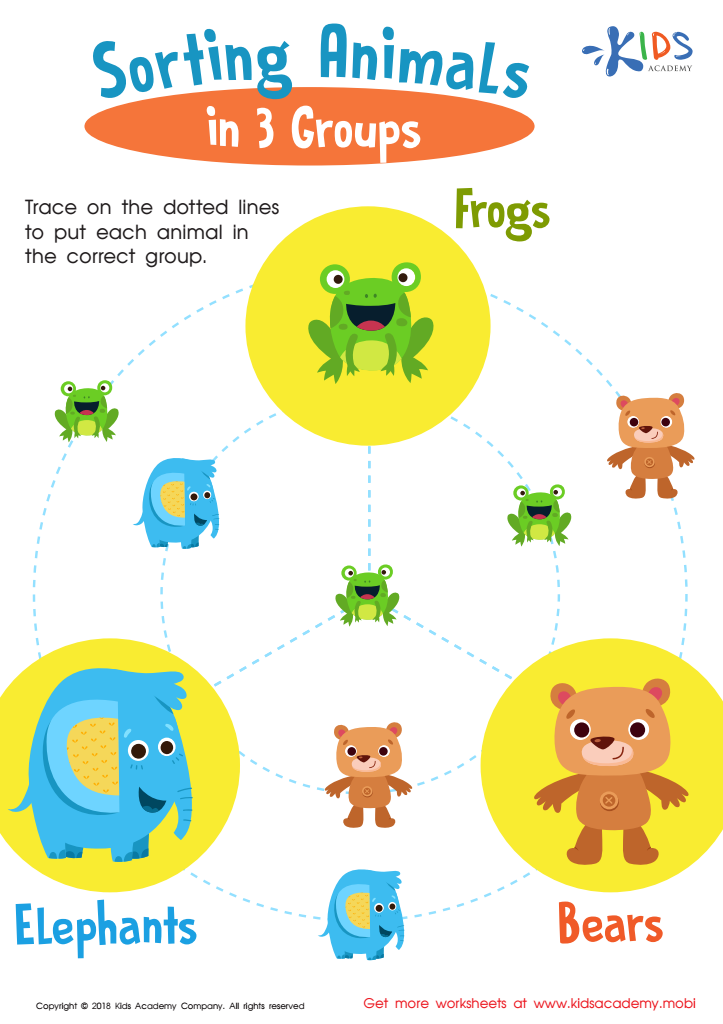
Sorting Animals in 3 Groups Worksheet
Let your kids practice and build skills for future Venn Diagrams with this PDF worksheet. They'll trace lines to match and group animals, and learn the differences and similarities of animals by categorizing with pictures and words. Plus, it's a great way to develop fine motor skills.
Sorting Animals in 3 Groups Worksheet
Worksheet
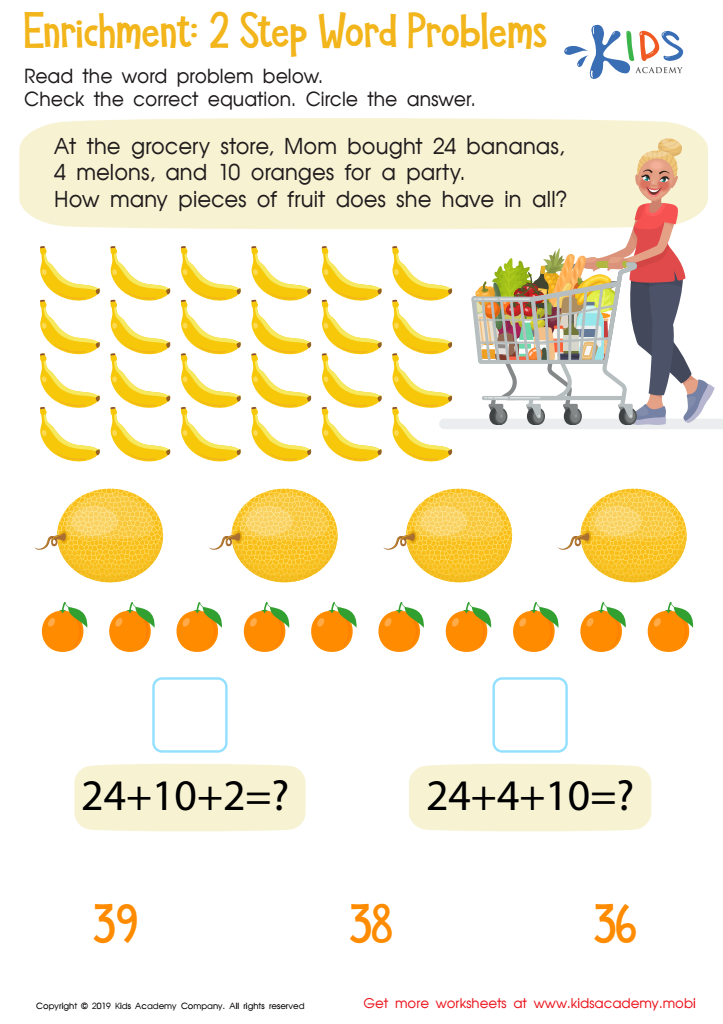
Enrichment -2 Step Word Problems Worksheet
Help your students learn math easier and faster with this colorful worksheet. Read the word problem and then guide them in checking the correct equation and finding the answer. Your students will benefit from the extra help, as they work through new concepts each day.
Enrichment -2 Step Word Problems Worksheet
Worksheet
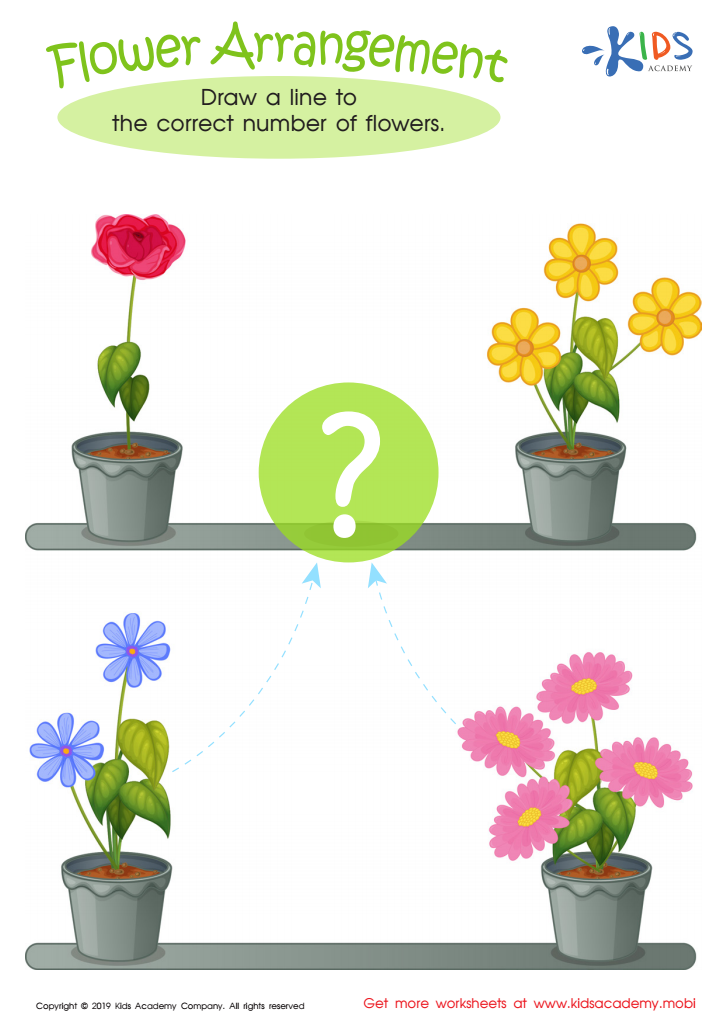
Flower Arrangement Worksheet
Your math whizzes can use flower power to showcase their counting skills with this bright PDF! One-to-one representation in pictures helps children build number sense, which leads to better math and computation efficiencies. This PDF features traceable lines for kids to draw to the correct number of flowers, all while practicing their counting with pretty pictures.
Flower Arrangement Worksheet
Worksheet
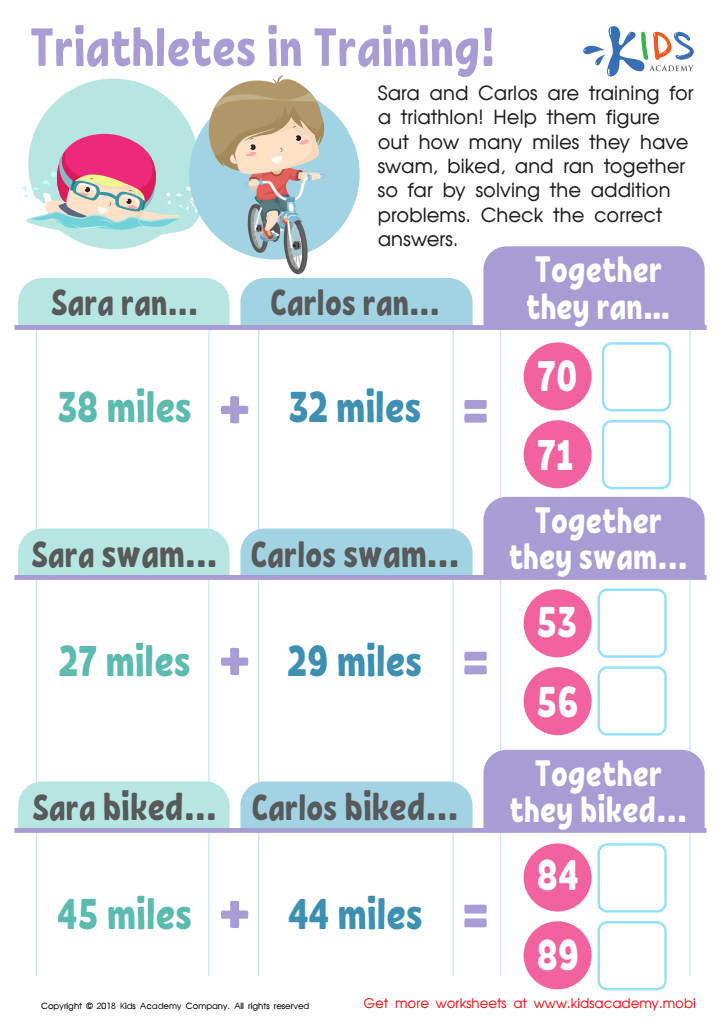
Triathletes in Training Worksheet
Sara and Carlos are training for a triathlon and need your child's help! They must solve the addition problems to figure out how many miles they've swam, ran, and biked. Help your kid check the answers and get them ready for the triathlon!
Triathletes in Training Worksheet
Worksheet
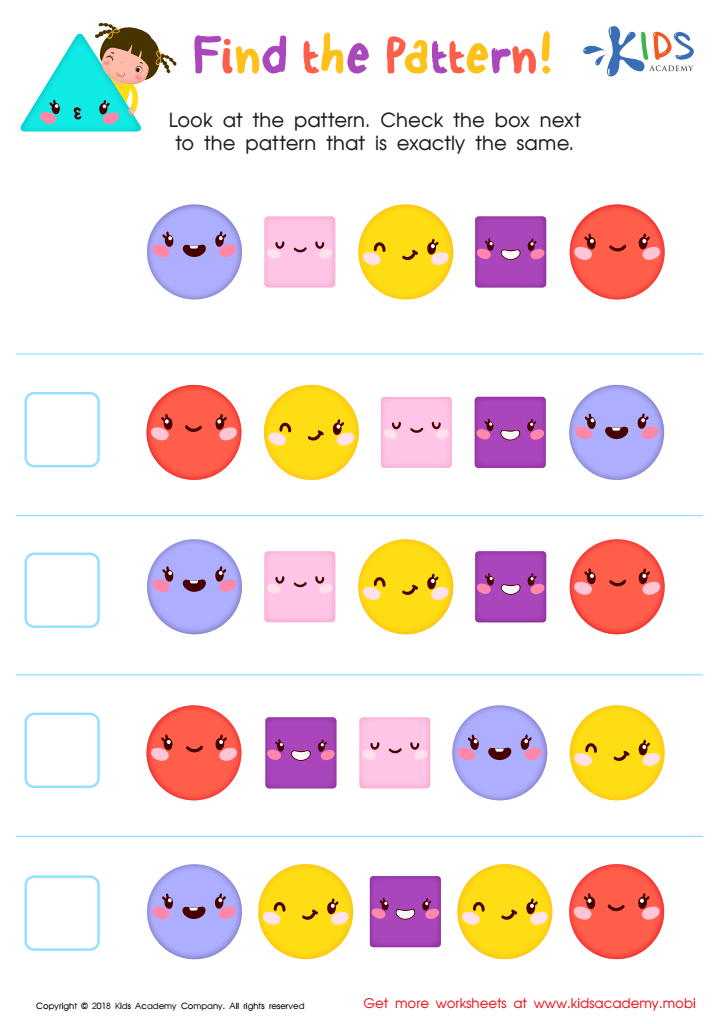
Find the Pattern Worksheet
This colorful pattern worksheet is perfect for testing your kids' pattern recognition. The bright colors will keep them engaged, while they check the box next to the pattern that is the same. Ask your kids to identify the colors used and see how well they can spot similarities!
Find the Pattern Worksheet
Worksheet
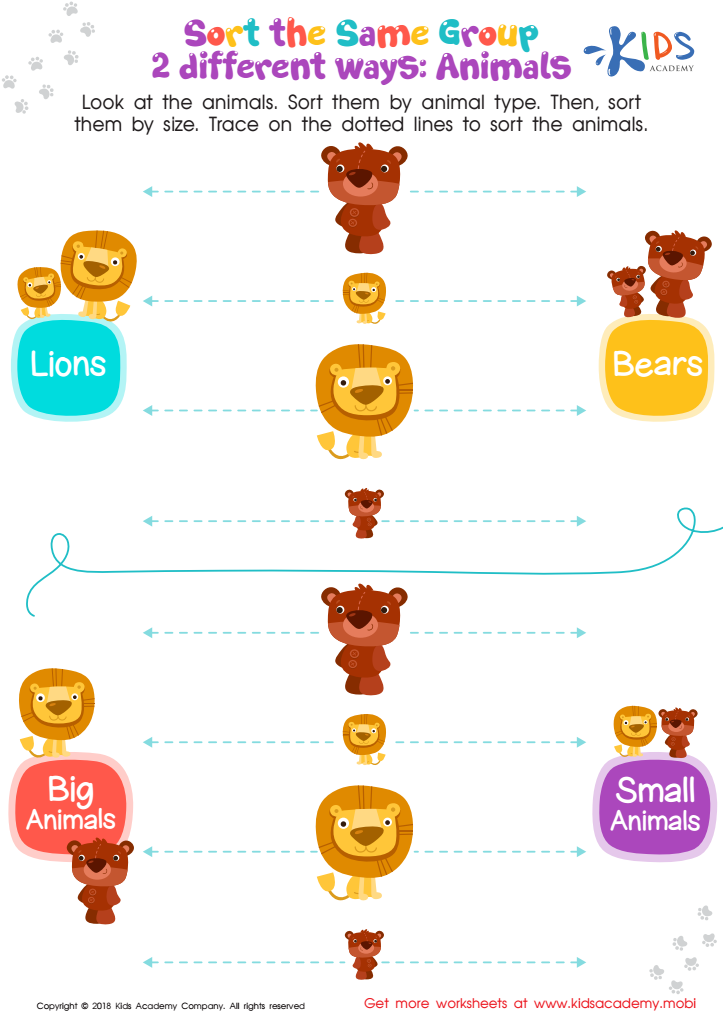
Sort the Same Group 2 Different Ways: Animals Worksheet
Look at the animals with your child. Ask them to name them, then sort them by type (e.g. lions and bears). Next, help them sort by size, tracing the dotted lines. This will teach them sorting skills.
Sort the Same Group 2 Different Ways: Animals Worksheet
Worksheet
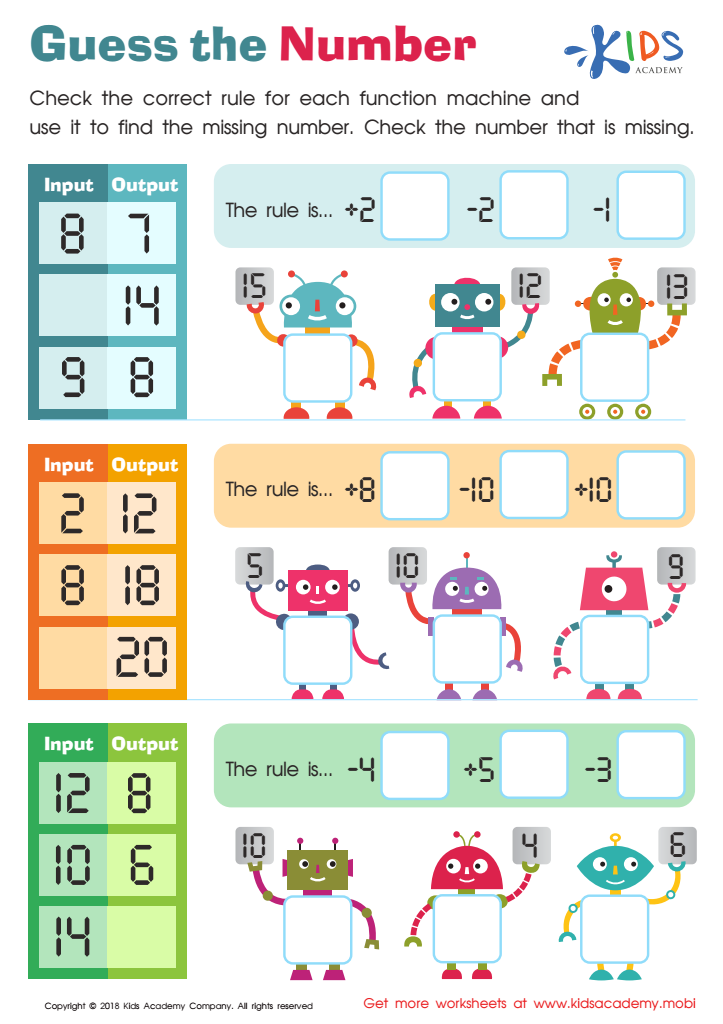
Guess the Number Worksheet
Kids need a solid number sense to succeed in math. This fun, robot-illustrated worksheet will help them identify patterns between numbers. They will examine the function machine, find the rule, and use it to solve for the missing number. It's a great way to learn!
Guess the Number Worksheet
Worksheet
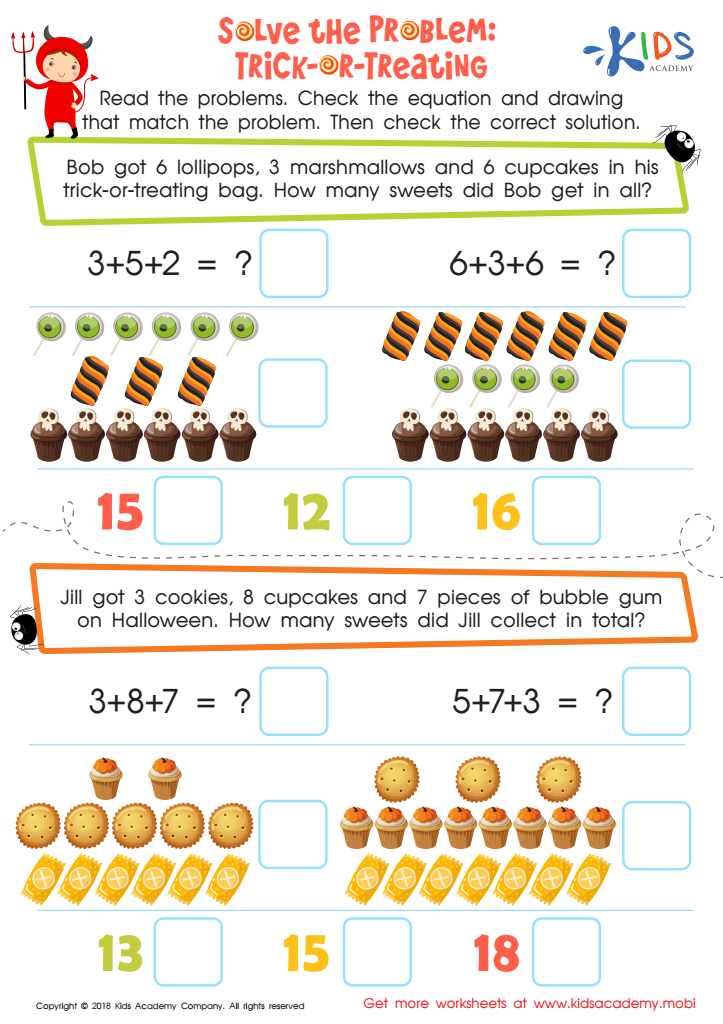
Solve the Problem: Trick–or–treating Worksheet
Kids will love this fun PDF worksheet for trick-or-treating! It's packed with yummy images and math practice. They can read the word problems, count and add numbers, check their answers, and match the addition equations with the pictures. Math made delicious!
Solve the Problem: Trick–or–treating Worksheet
Worksheet
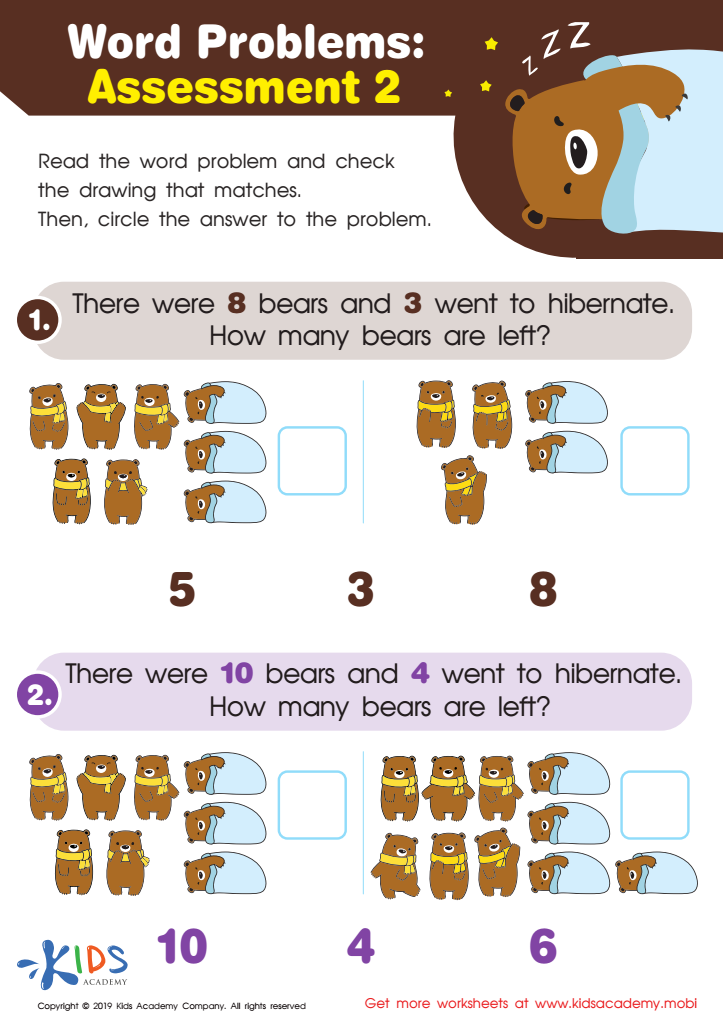
Word Problems: Assessment 2 Worksheet
This bear-themed worksheet is a great way to test subtraction skills. Have your child read the word problems and match the correct drawing with the answer. It's a fun way to quiz them without them even knowing. Enjoy counting cute snoozing bears! (80 words)
Word Problems: Assessment 2 Worksheet
Worksheet
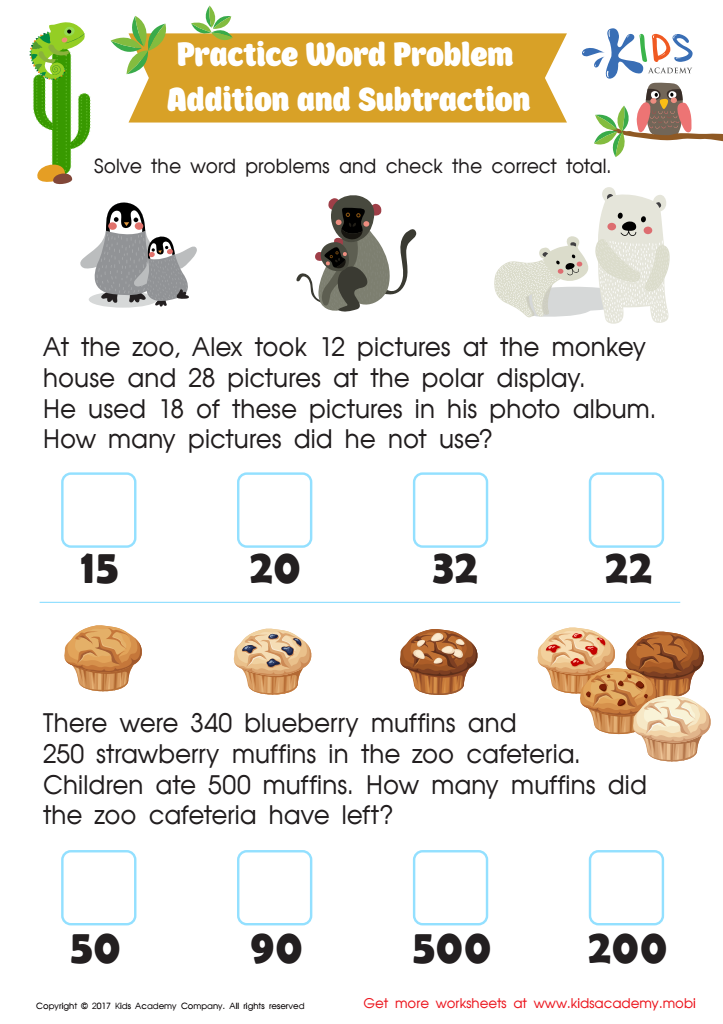
Addition and Subtraction: Word Problems Worksheet
Word problems can be difficult, but they offer another way to understand math. Our 3rd grade worksheet takes your child to the zoo; two intriguing word problems will test their thinking skills and help them find the total.
Addition and Subtraction: Word Problems Worksheet
Worksheet
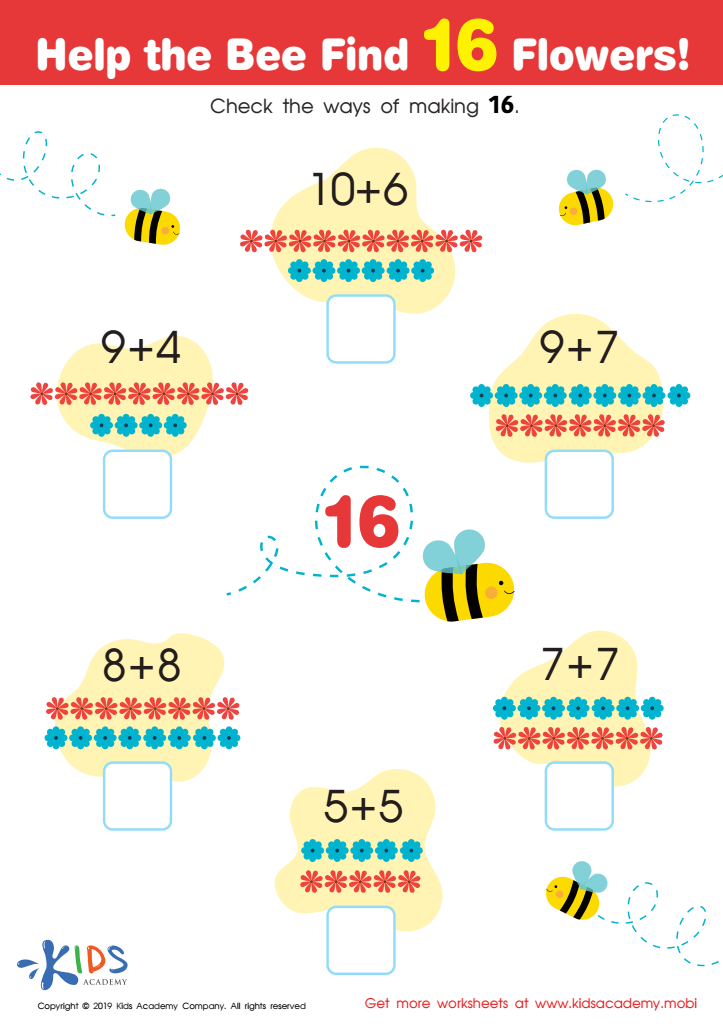
Help the Bee Find 16 Flowers Worksheet
Ask your students to count as high as they can. Show them that different numbers can equal the same figure with examples like 2+2=4 and 3+1=4. Ask for more examples, then help the bees find 16 flowers by checking the ways of making 16.
Help the Bee Find 16 Flowers Worksheet
Worksheet
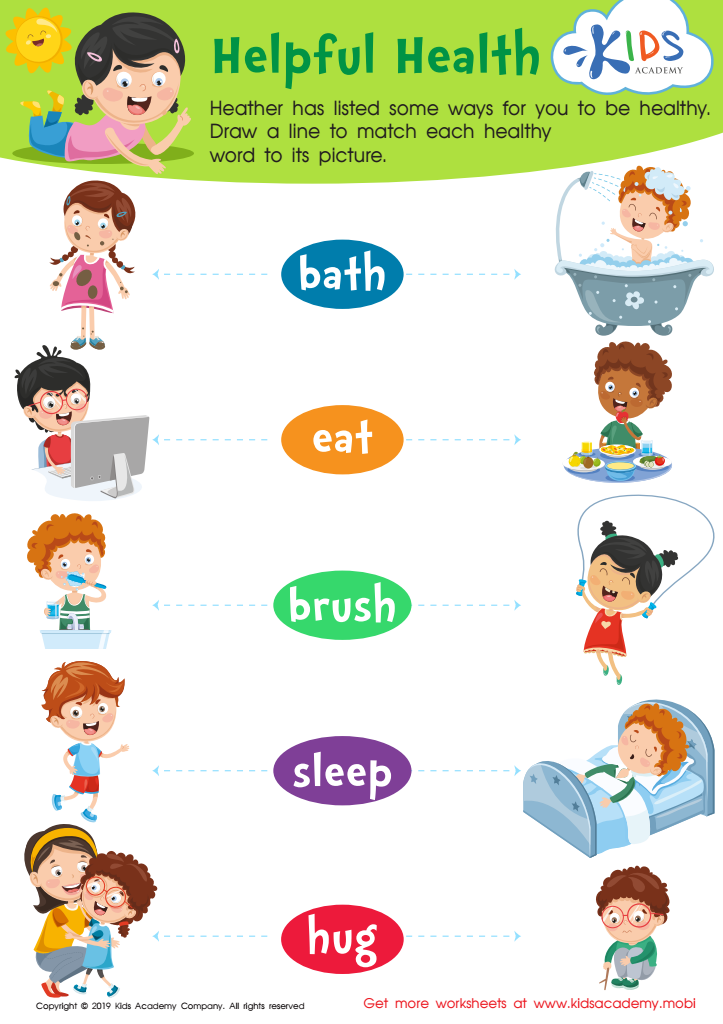
Helpful Health Worksheet
Kids can learn healthy habits with this free worksheet! With their pal Heather, they'll trace lines to connect health words with pictures like brushing teeth, hugging, and getting enough sleep. It's a great way to help young ones understand healthy activities.
Helpful Health Worksheet
Worksheet
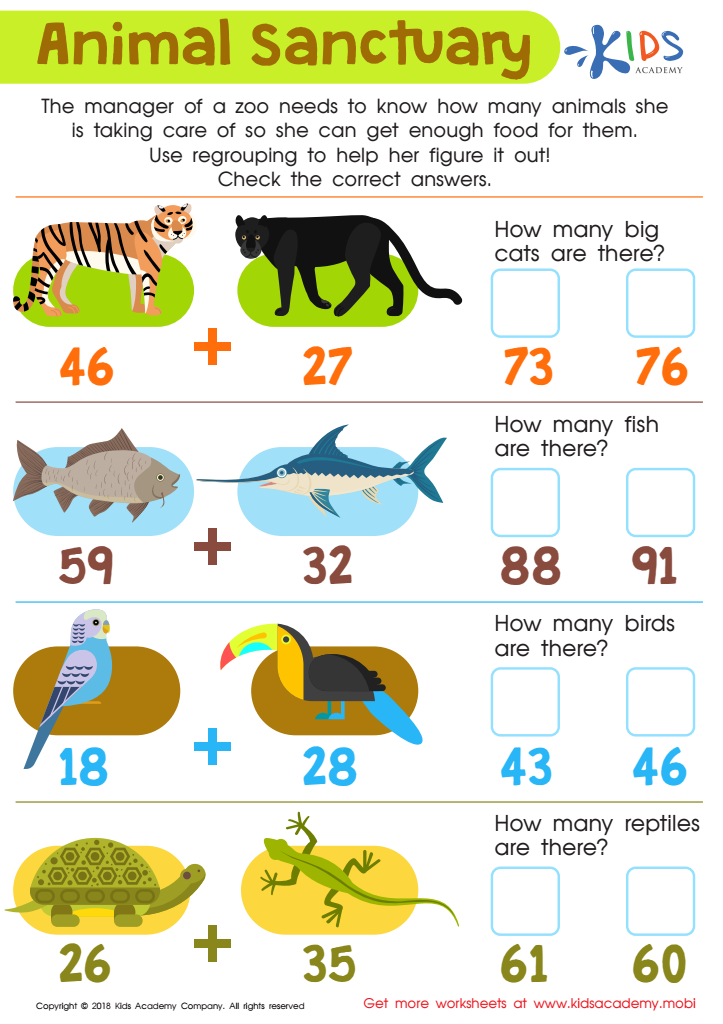
Animal Sanctuary Worksheet
Do your kids love visiting the zoo? Ask which animals they remember & which ones they liked the most. The manager needs help to get enough food for all the animals. Help your child use regrouping to figure out how many animals there are. And ask them to check the answers.
Animal Sanctuary Worksheet
Worksheet
Join Kids Academy for Free
Who is primarily going to use this learning content?








Parents and teachers should care about fostering logical reasoning and normal math skills in children ages 3-9 because these foundational abilities are crucial for cognitive development. At these early developmental stages, children's brains are exceptionally receptive to new information and skills. Introducing logical reasoning helps children to think systematically and solve problems efficiently, fostering critical thinking from a young age. Skills like recognizing patterns, sequences, and relationships between numbers roam beyond math; they are applicable across all subjects and everyday life.
For math, early exposure builds a strong foundation necessary for more complex concepts in later years. Understanding basic numerical concepts, arithmetic operations, and the principles of measurement and geometry during this impressionable period sets the stage for academic success. Additionally, proficiency in math-related tasks enhances children's confidence in their problem-solving abilities, encouraging a positive attitude toward learning and discovery.
Moreover, logical reasoning and math are intertwined with other crucial developmental skills like language, memory, and executive functions. When children engage in activities that require logical thinking and math, they learn to focus, follow instructions, and engage in abstract thinking. Thus parents and teachers play an indispensable role in nurturing these skills early, ensuring children develop the mental toolkit necessary for comprehensive lifelong learning.








