
Text analysis Normal Reading Comprehension Worksheets for Ages 3-9
3 filtered results
Difficulty Level
Grade
Age
-
From - To
Subject
Activity
Standards
Unlock your child's reading potential with our Text Analysis Normal Reading Comprehension Worksheets designed for ages 3-9. These engaging resources foster critical thinking and comprehension skills through fun, age-appropriate texts. Each worksheet encourages young readers to analyze and interpret information, enhancing their ability to understand complex ideas. With vibrant illustrations and interactive activities, children can explore various themes and topics while developing essential literacy skills. Perfect for classroom use or home learning, our worksheets provide valuable opportunities for guided practice, ensuring a solid foundation for lifelong reading success. Empower your little learners today with our comprehensive text analysis worksheets!
Favorites
With answer key
Interactive
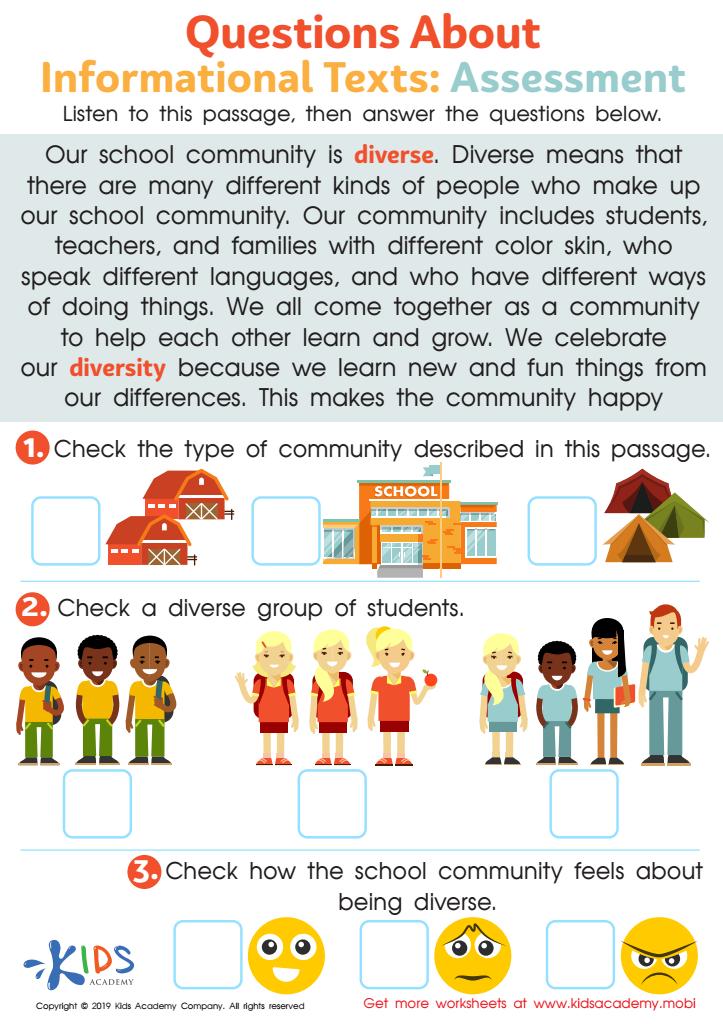
Questions About Informational Texts: Assessment 1 Worksheet
Ask your students: What comes to mind when we talk about a community? What different habits do people practice? What do fellow students do that seems strange? Read this passage aloud to your kindergartners and make sure they understand it. Then, answer the questions at the bottom of the page. (80 words)
 Assign to My Students
Questions About Informational Texts: Assessment 1 Worksheet
Worksheet
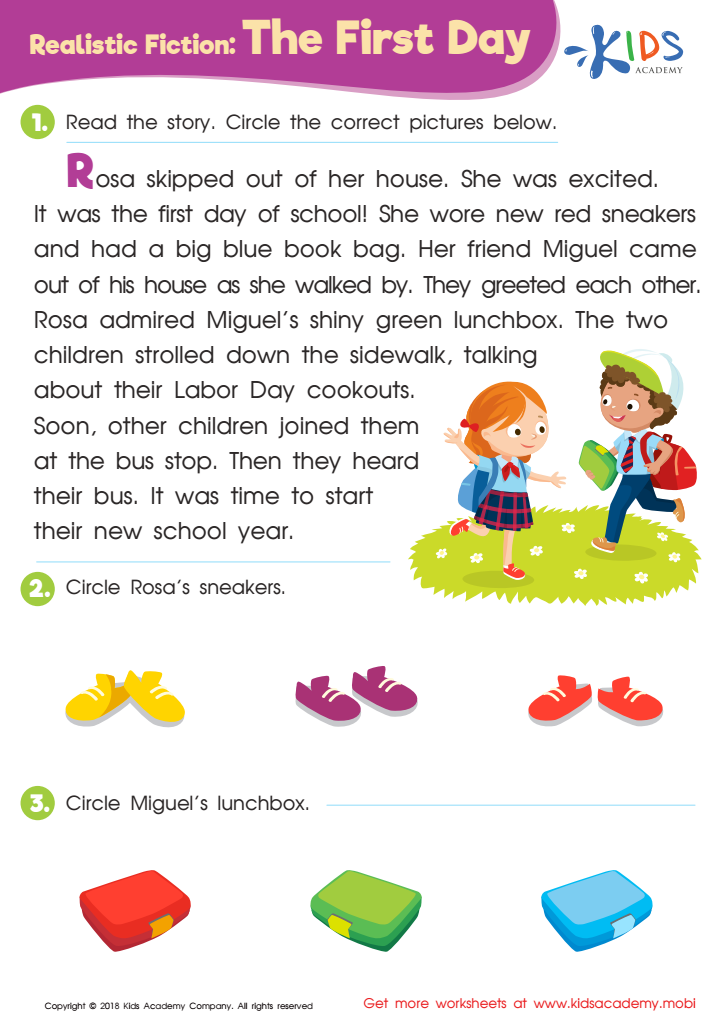
Realistic Fiction: The First Day Worksheet
Fiction is made-up events, so story-writing is fiction writing. In this worksheet, there's a short story about Rosa, her friend Miguel, and their first day back at school. Read the story aloud to your kids and help them circle the right pictures to the questions. Repeat if needed.
Realistic Fiction: The First Day Worksheet
Worksheet
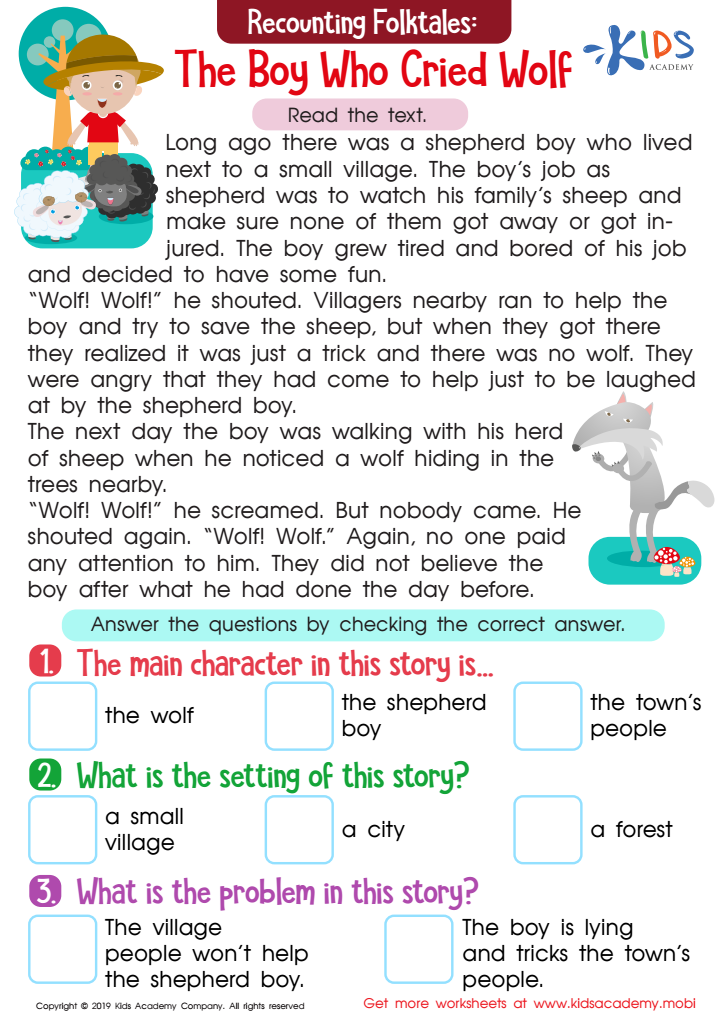
The Boy Who Cried Wolf Part 1 Worksheet
Storytime can be your kid's favorite part of the day. Ask them what their favorite stories are, then read the text in the printout. Read along with them, making sure they understand each word. At the end, go over the questions and have them check the correct answers.
The Boy Who Cried Wolf Part 1 Worksheet
Worksheet
Join Kids Academy for Free
Who is primarily going to use this learning content?







Text analysis and normal reading comprehension are crucial for early readers aged 3-9, and parents or teachers should prioritize them for several reasons. Firstly, this developmental stage is foundational for literacy; children begin to understand language, context, and the basic elements of storytelling. Careful text analysis during reading helps children identify critical components such as characters, settings, and plots. Currently, a balanced focus encourages active participation in discussions, enhancing their ability to think critically about what they read.
Furthermore, fostering reading comprehension skills aids in academic success. As children grasp the material they encounter in various contexts—whether in school, during leisure time, or engaging with educational programs—they build connections to vocabulary and deeper understanding of longer texts. This proficiency supports their transition into more complex reading during their later school years.
Additionally, engaging with stories and wider texts promotes emotional and social growth, allowing children to develop empathy and broaden cultural understanding. Likewise, communicating through text analysis encourages dialogue between parents and children or teachers and students, enhancing relationships and fostering a collaborative learning environment. Such interactions make literacy a joyful and integral part of life, promoting continued interest outside the classroom. By nurturing these skills, caregivers lay the groundwork for lifelong learning and communication capabilities.








