
Critical thinking skills Normal Social Studies Worksheets for Ages 3-9
5 filtered results
Difficulty Level
Grade
Age
-
From - To
Subject
Activity
Standards
Enhance your child's critical thinking skills with our fun and educational Social Studies worksheets, perfect for ages 3-9! Our comprehensive worksheets encourage young learners to ask questions, make connections, and develop problem-solving techniques. Tailored to stimulate curiosity, each activity helps children navigate complex concepts and real-world scenarios. Whether it's identifying community helpers, understanding map basics, or exploring cultural traditions, our resources make learning engaging and interactive. Give your child the tools they need to succeed in school and beyond with Kids Academy’s carefully crafted worksheets designed to ignite their passion for learning and critical thinking.
Favorites
With answer key
Interactive
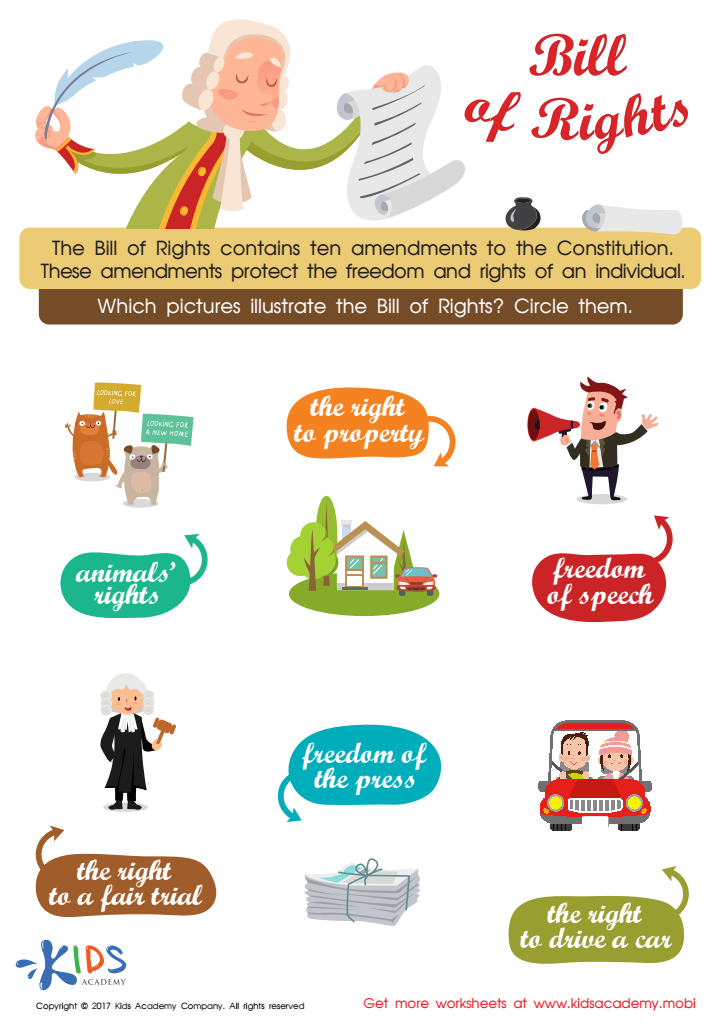
Bill of Rights Worksheet
Kids can learn about the rights the Bill of Rights grants us as US citizens. Work on the PDF worksheet with your 3rd grader to understand the ten amendments. This is a great way for your child to learn about the historical and essential document!
 Assign to My Students
Bill of Rights Worksheet
Worksheet
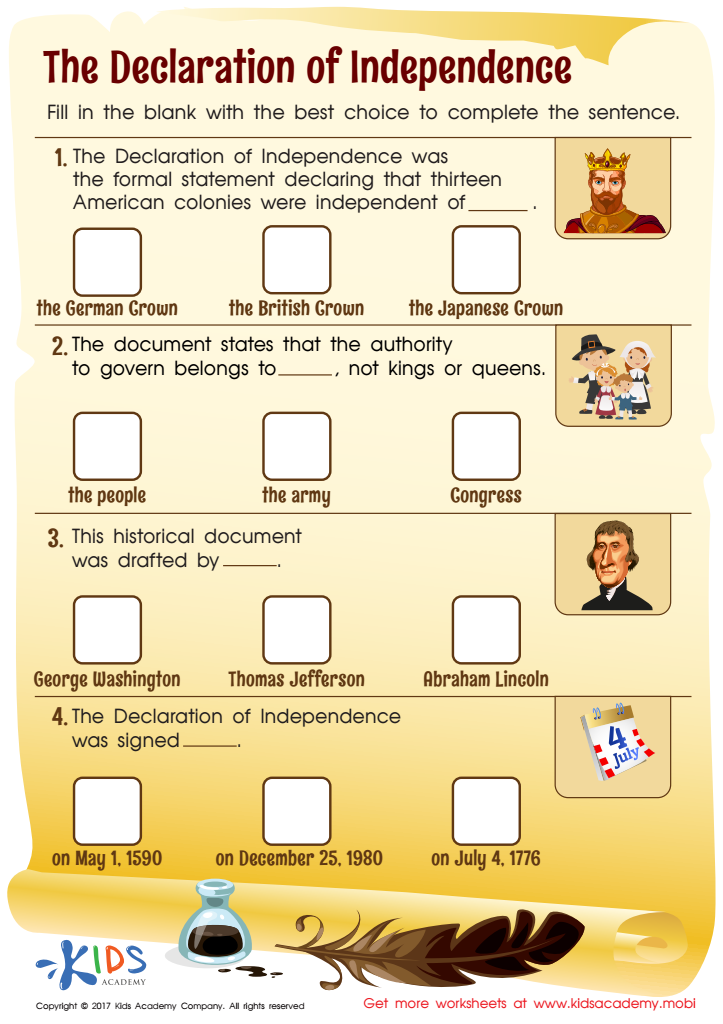
Declaration of Independence Worksheet
This PDF worksheet will help your child review important US history facts about the Declaration of Independence. It will cover key topics such as its purpose, author and date it was signed, which are integral to the US as a nation.
Declaration of Independence Worksheet
Worksheet
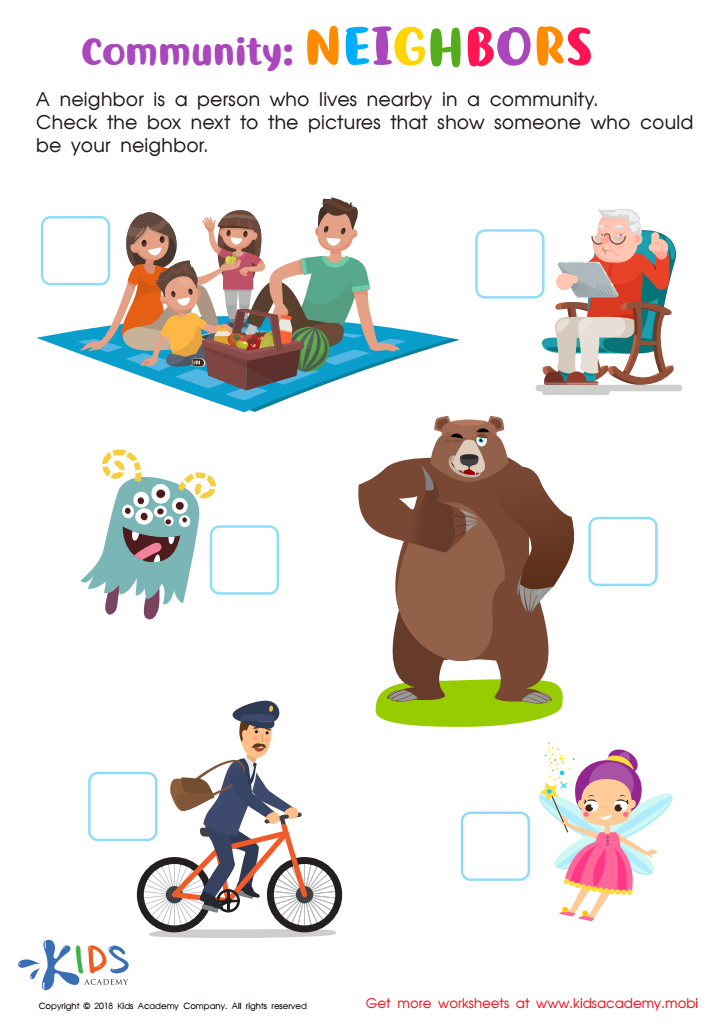
Community: Neighbors Worksheet
This free worksheet helps young learners understand who neighbors are and how they fit into their community. Have your student check out the options, decide which can and can't be neighbours and develop essential social and emotional skills. It's a fun and cheery way to learn about the social sciences!
Community: Neighbors Worksheet
Worksheet
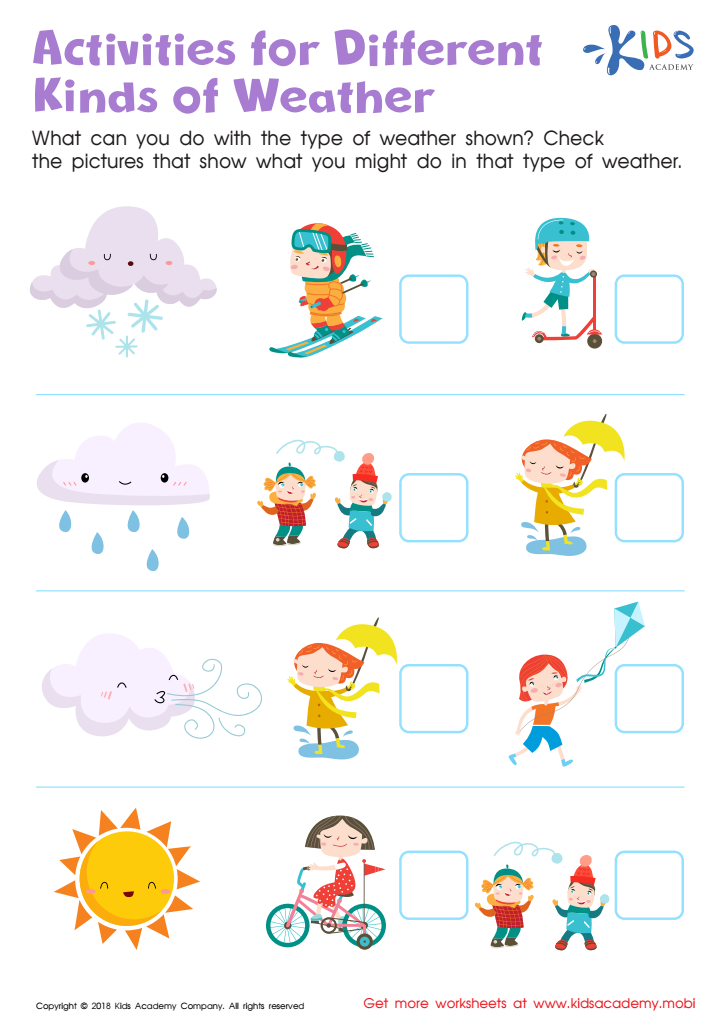
Activities for Different Kinds of Weather Worksheet
Help your child explore the changing seasons with this interactive worksheet. Ask them to name the different seasons and activities associated with each type of weather. Show the pictures and explain what they can do in that kind of weather. Have them check off the activities to help them learn and enjoy the changing seasons.
Activities for Different Kinds of Weather Worksheet
Worksheet
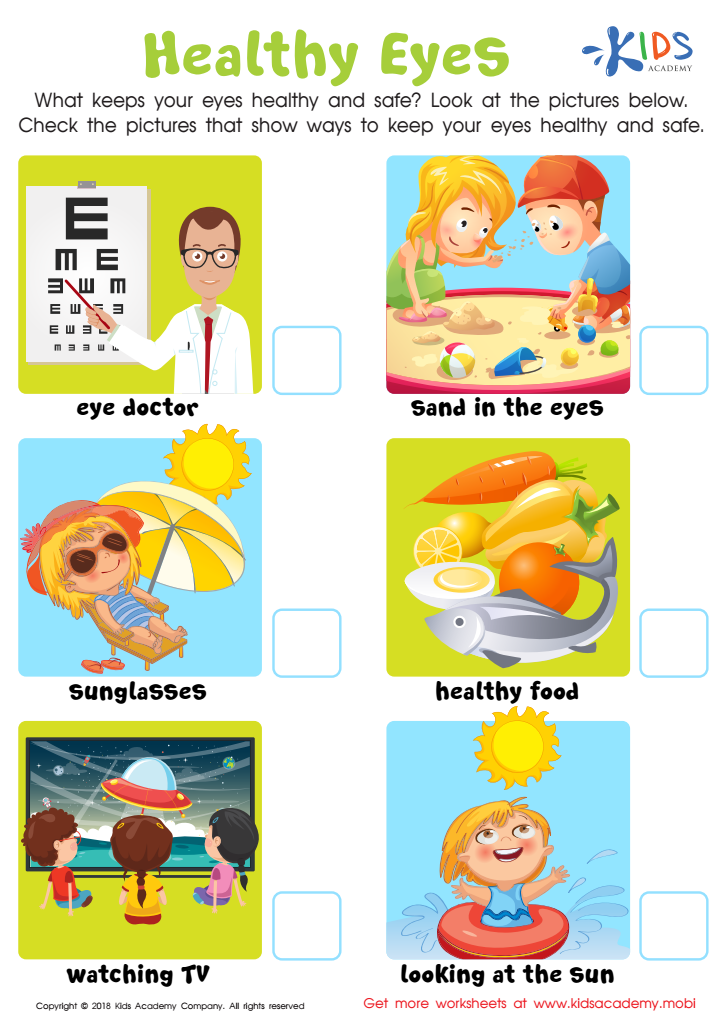
Healthy Eyes Worksheet
Does your child know how to care for their eyes? Help them understand with this worksheet. Look through the pictures together and discuss the different ways to keep the eyes healthy and safe. These include visits to the doctor, wearing sunglasses, and eating healthy food.
Healthy Eyes Worksheet
Worksheet
Join Kids Academy for Free
Who is primarily going to use this learning content?







Critical thinking skills are essential, even for children as young as ages 3-9, because they lay the foundation for advanced cognitive abilities and overall educational success. At this developmental stage, fostering critical thinking helps children learn how to analyze information, solve problems, and make informed decisions. This is particularly vital in the context of social studies, which introduces children to the world around them, from understanding community roles to grasping basic historical and cultural notions.
Incorporating critical thinking into social studies lessons encourages children to go beyond memorizing facts. Instead, they start understanding cause-and-effect relationships, comparing different perspectives, and contemplating the reasons behind various societal structures and events. This deeper understanding empowers them to appreciate diversity, recognize biases, and develop empathy.
For parents and teachers, investing in these skills early on ensures children grow up as proactive and informed citizens. Early exposure to critical thinking also enhances academic performance across various subjects, as the ability to think clearly and rationally is universally applicable. Furthermore, it nurtures self-confidence and independence in learning, making children more enthusiastic and engaged in their educational journey.
In essence, by prioritizing critical thinking skills within social studies, parents and teachers prepare children for a lifetime of thoughtful and responsible citizenship.








