Cognitive Development Normal Geometry Worksheets for 3-Year-Olds
5 filtered results
-
From - To
Explore our engaging and fun Cognitive Development Normal Geometry Worksheets designed specifically for 3-year-olds! These worksheets introduce young learners to fundamental geometric shapes and concepts, fostering critical thinking and spatial awareness. Through colorful designs and interactive activities, children will identify, classify, and match shapes, enhancing their cognitive skills while having fun. Perfect for preschool or at-home learning, our worksheets encourage independent exploration and support cognitive development. Designed to meet educational standards, they assist in building a strong foundation for future math learning. Get started today and watch your child's confidence and understanding of geometry grow!
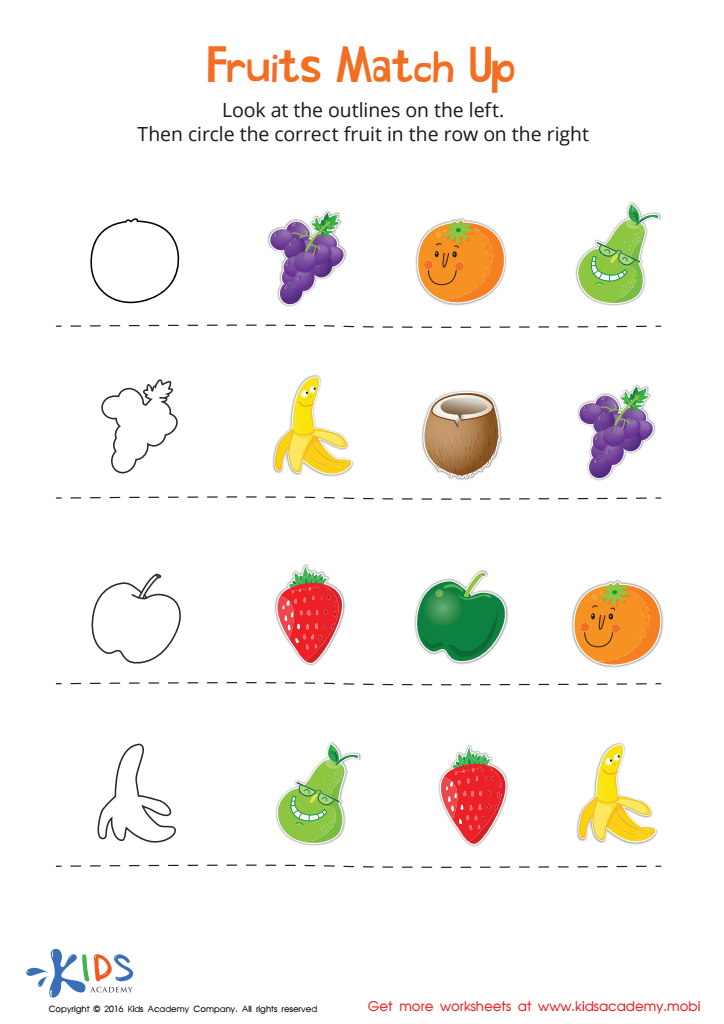
Fruits Match Up Worksheet
 Assign to My Students











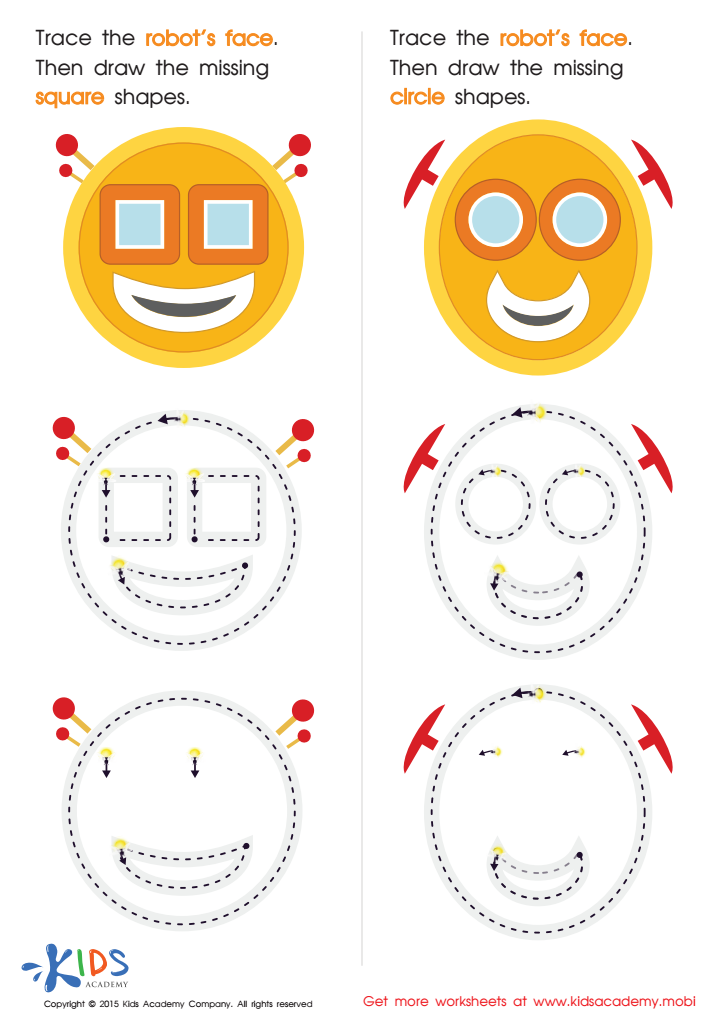
Practicing to Draw Circles And Squares Printable
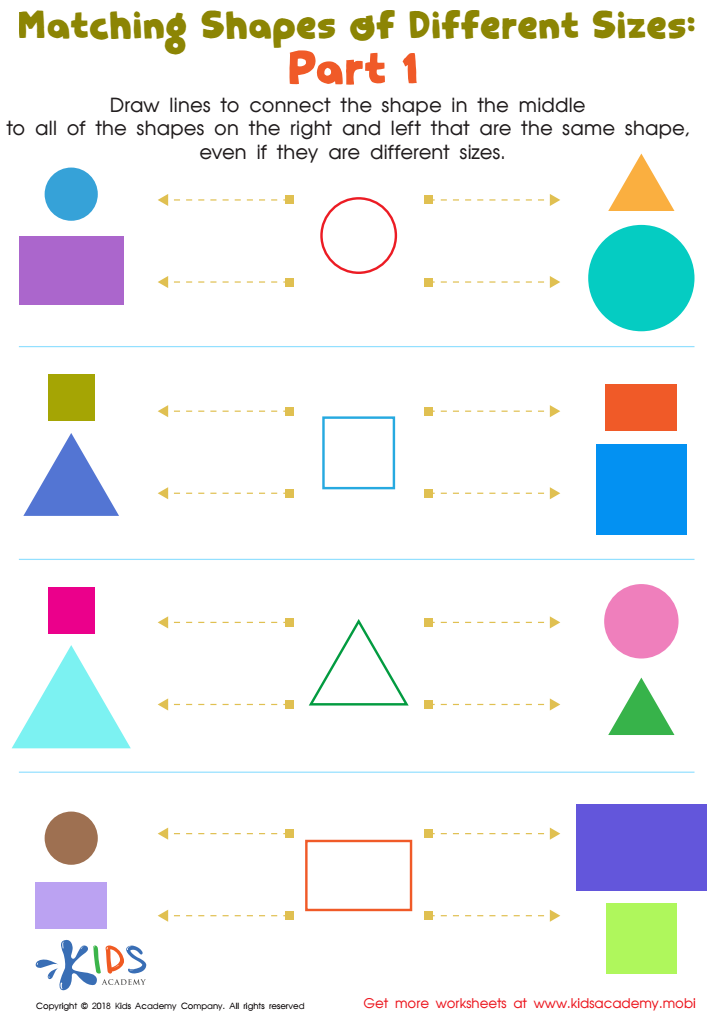
Geometry: part 1 Worksheet
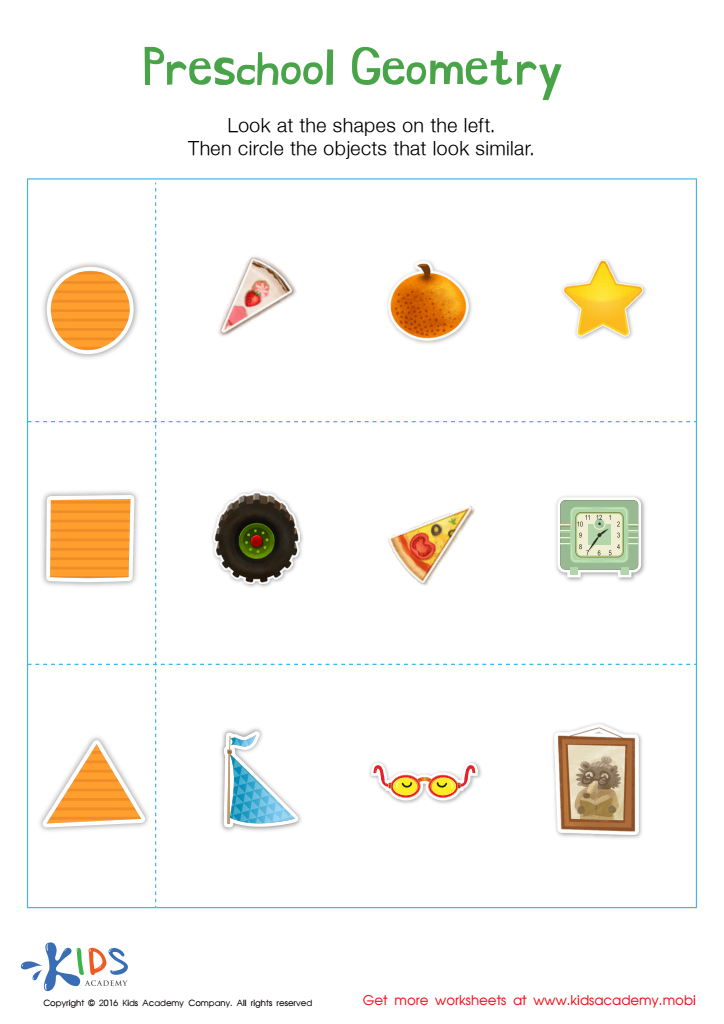
Preschool Geometry Match Up Worksheet
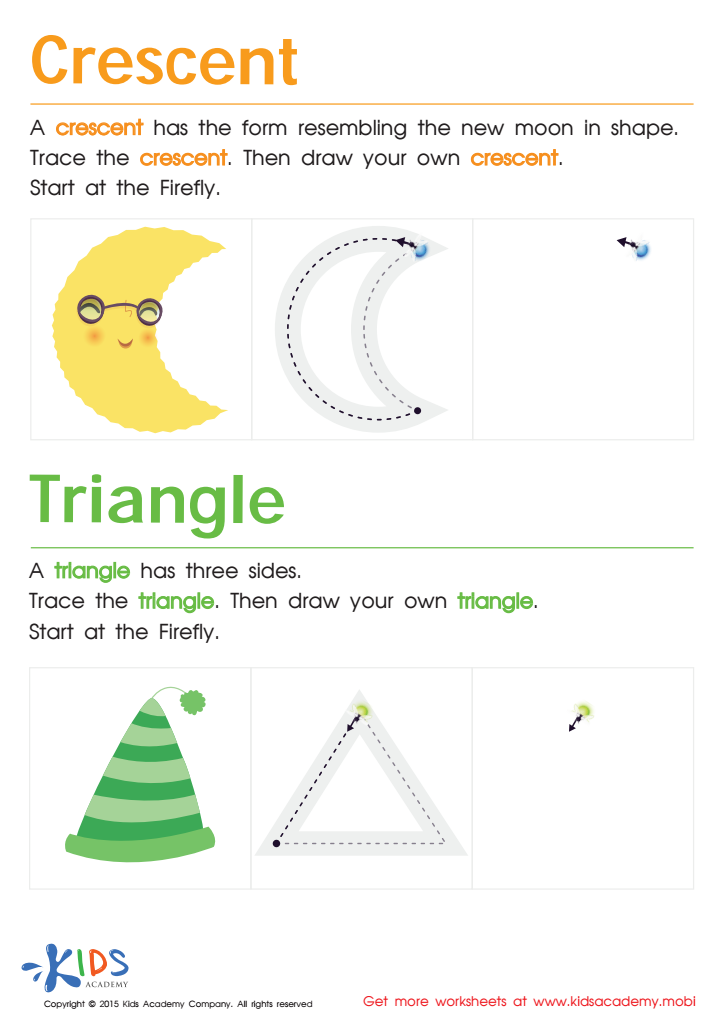
Learning to Draw Crescents And Triangles Worksheet








Cognitive development in young children is crucial, as it lays the foundation for their learning and problem-solving skills. For 3-year-olds, understanding basic geometry concepts is particularly important. At this stage, they begin to recognize shapes, sizes, and spatial relationships, which are vital cognitive skills.
Parents and teachers should care about normal geometry development because it promotes critical thinking and reasoning. Engaging in activities involving shapes—such as sorting, matching, and building—enhances a child's ability to classify and understand the world around them. This comprehension not only supports mathematical reasoning but also influences literacy skills and everyday decision-making.
Moreover, early exposure to geometry fosters curiosity and exploration. For example, playing with blocks or drawing shapes allows children to experiment and learn through play, which is a natural way for them to absorb information. Recognizing normal development patterns assists adults in identifying any learning delays early on, ensuring timely intervention if necessary.
Additionally, a solid grasp of geometric concepts will help children transition smoothly into more advanced math and science fields as they grow. By caring about early cognitive development in geometry, parents and teachers contribute significantly to a child's lifelong academic success and problem-solving abilities.








