Filters

30 filtered results

Clear all filters
Favorites
With answer key
Interactive

30 filtered results

Difficulty Level

Grade


Check out this FREE Trial Lesson on Numbers for age 3!

Breaking Down 7

Favorites
With answer key
Interactive
  • 3
  • Counting skills
  • Numbers
  • Normal
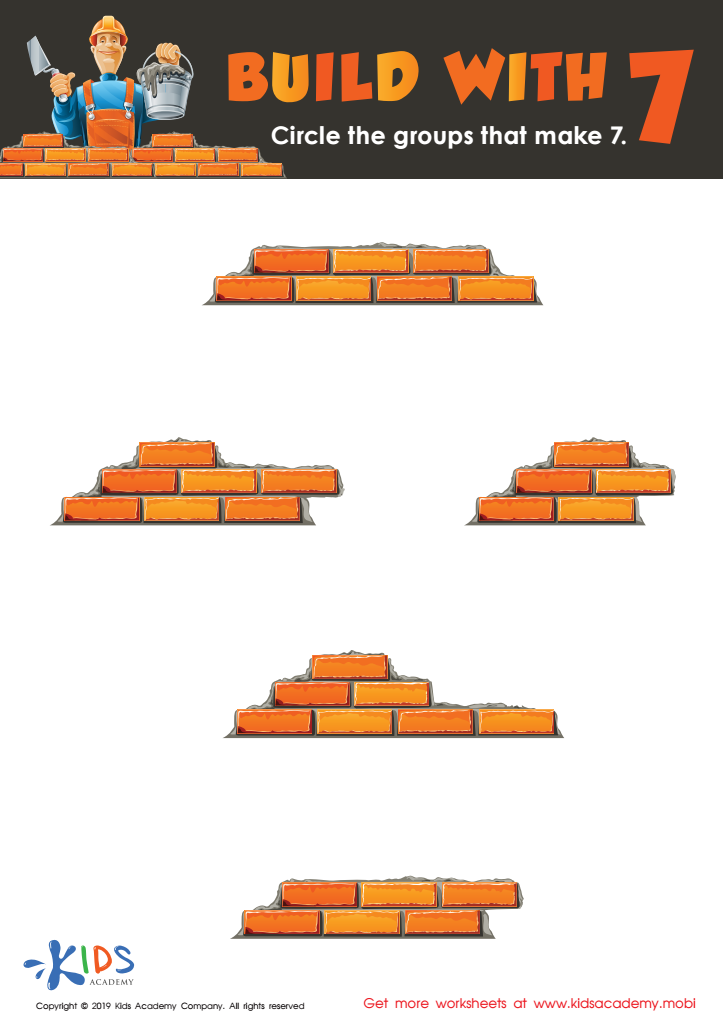
Build with 7 Worksheet

Build with 7 Worksheet

Kids learn best by practicing counting & number sense. This PDF helps them practice with the number 7, using picture representation. When they first start counting, picture representation provides an easy-to-understand & concrete way to remember things. Practice makes perfect!
Build with 7 Worksheet
Worksheet
Math PDF Worksheets - Count and Match Vegetables: 1 – 5

Count and Match Vegetables 1 – 5 Math Worksheet
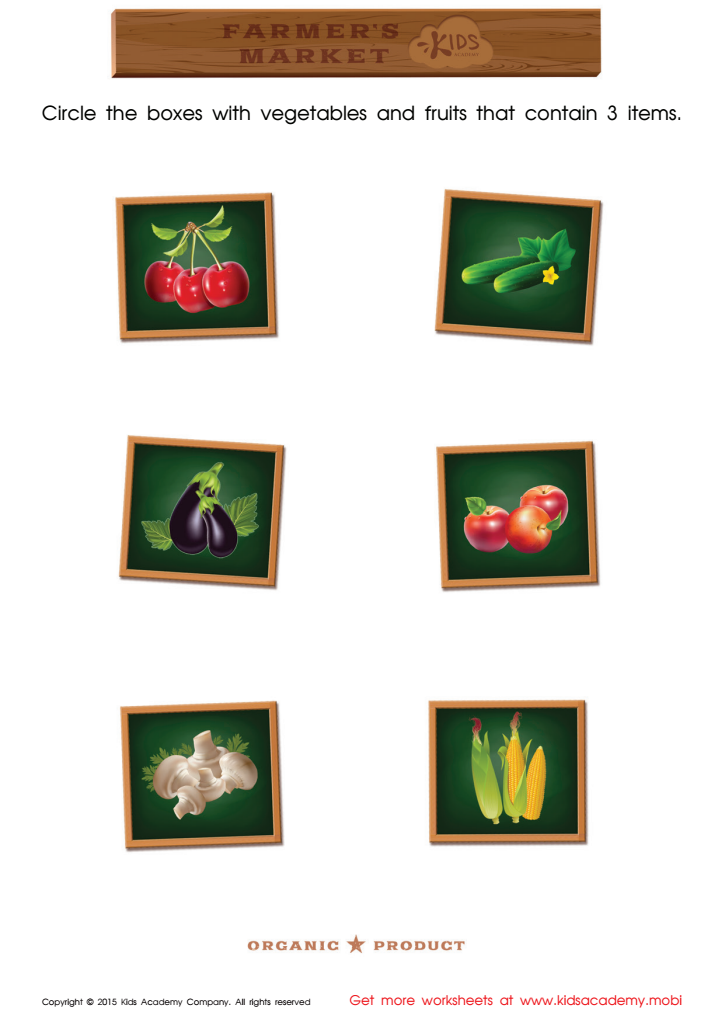
Get your kindergartener to match the same number of vegetables with the boxes using this fantastic math worksheet. Using the Singapore approach, this printable worksheet makes math problems easy and fun for kids. Want more free worksheets? Click here for Kids Academy's selection!
Count and Match Vegetables 1 – 5 Math Worksheet
Worksheet
Learning Numbers Worksheets: Trace And Write Number 0 PDF Worksheet

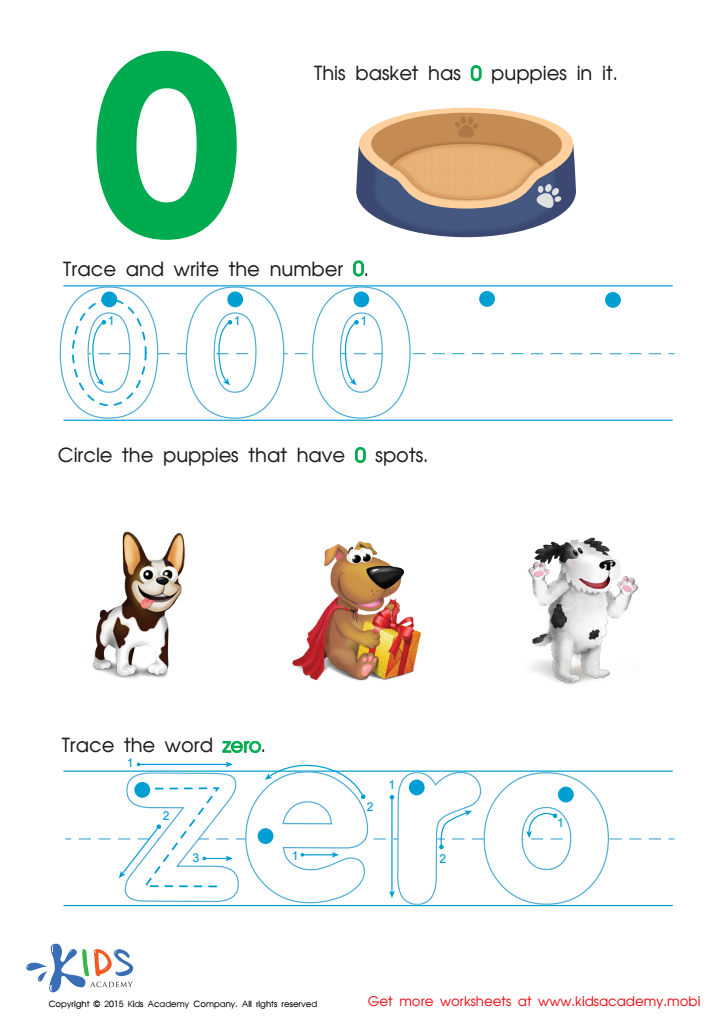
Trace And Write Number 0 Worksheet
Let’s learn numbers together! Start with zero: practice writing, counting, matching spots. Tracing lines will help. Then move on to the collection of number worksheets. Enjoy learning with Kids Academy!
Trace And Write Number 0 Worksheet
Worksheet
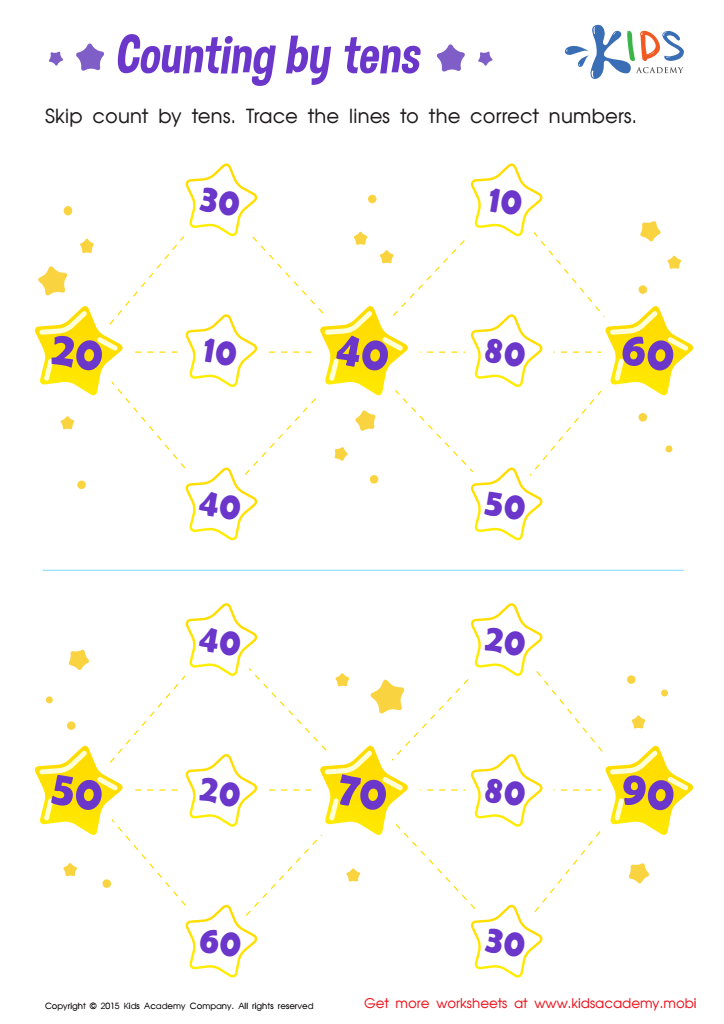
Kindergarten Counting by Tens

Learn Dozens: Counting by Tens Printable
Kindergartners need to learn skip counting - counting in number groups - to increase number sense and be ready for more advanced math. Our kindergarten worksheet featuring a starry trip to outer space will help your child practice this valuable skill. Your child will choose correct answers to trace the lines to the stars, building fluency in skip counting. They'll also strengthen problem solving and see the pattern it creates. Get your little learner to the next level with this skip counting worksheet!
Learn Dozens: Counting by Tens Printable
Worksheet
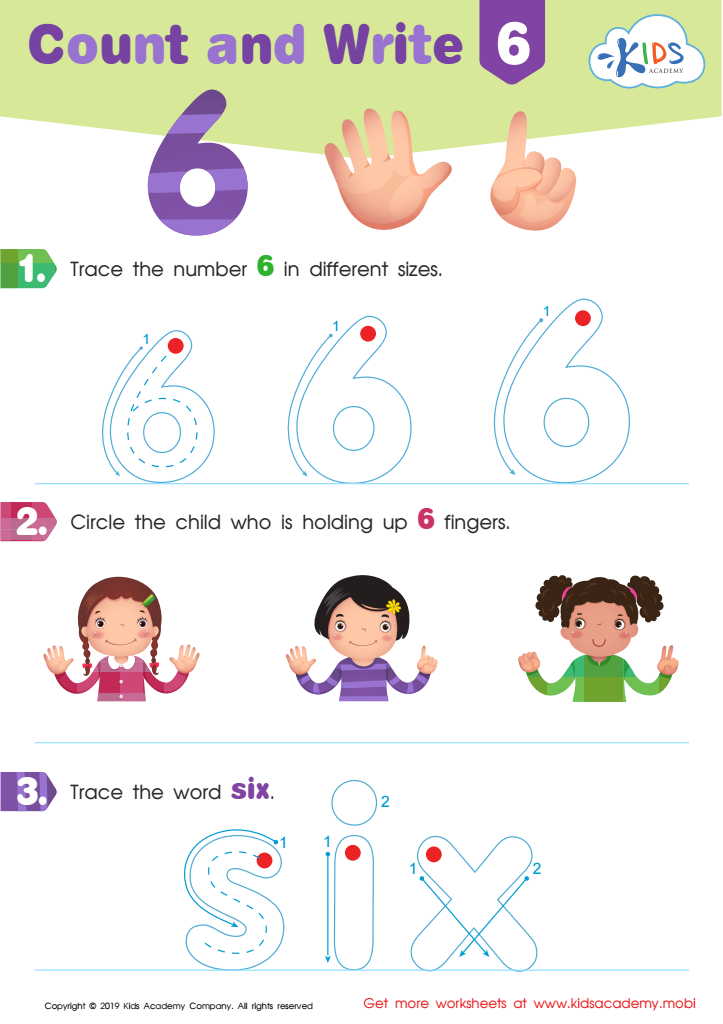
Count and Write 6 Worksheet

Count and Write 6 Worksheet

Kids begin math by mastering recognition skills. This worksheet helps with that by giving them practice writing "six" and the numeral 6, with guide dots and traceable lines. Giving kids multiple ways to learn the basics helps them build a strong math foundation.
Count and Write 6 Worksheet
Worksheet
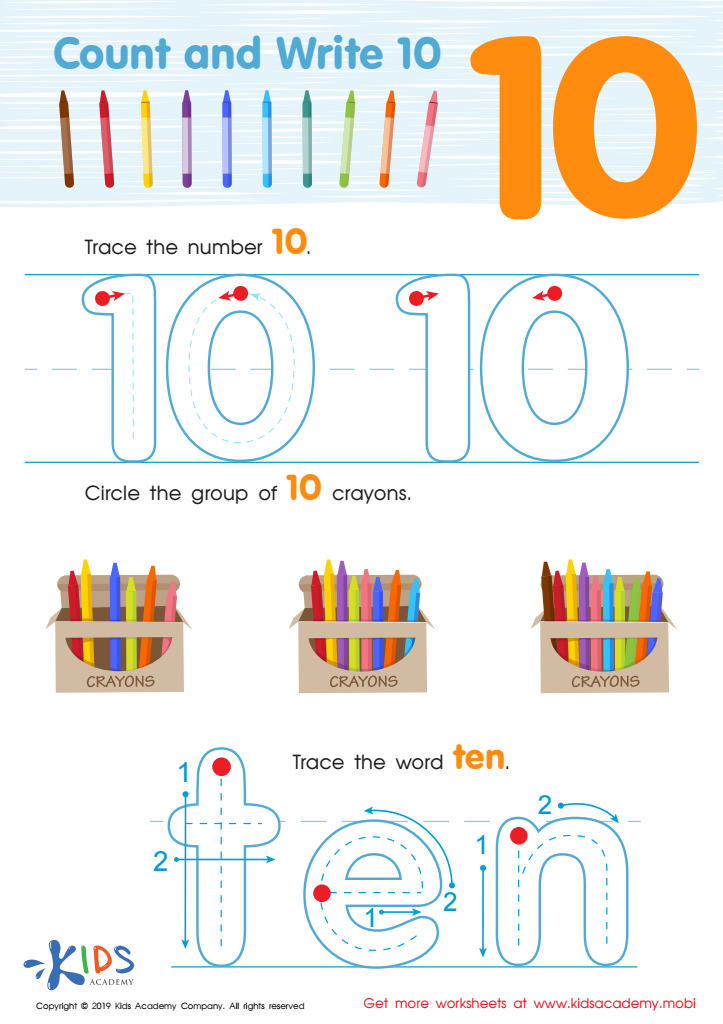
Count and Write 10 Worksheet


Count and Write 10 Worksheet

Help your child succeed by teaching them numbers! They should already know their 1,2,3s before their first day of school. This worksheet will give them the practice they need to write and count to 10. Get them to count and circle the 10 crayons, then trace the number 10. It's a great way to help them understand numbers and get a head start.
Count and Write 10 Worksheet
Worksheet


Counting skills using normal numbers is crucial for 3-year-olds as it lays the foundation for future mathematical understanding and everyday problem-solving. At this age, children are naturally curious and eager to explore their environment, making it an ideal time for parents and teachers to introduce basic numerical concepts. Mastering counting enables children to understand quantity, develop spatial awareness, and recognize patterns, which are essential cognitive skills.

Moreover, counting serves as an entry point for learning more complex mathematical operations later in life. Engaging young children in enjoyable counting activities—such as counting objects, clapping hands, or singing counting songs—stimulates their brain development and enhances their ability to focus and follow directions.

Additionally, counting skills can strengthen language and communication abilities, as children learn to verbalize numbers and concepts related to size, order, and variety. For parents and educators, fostering counting in children helps nurture a positive attitude toward math, diminishing the anxiety often associated with numbers in later schooling. By integrating counting into daily routines and play, adults can significantly influence a child's confidence and competence in handling mathematical tasks in the future. Ultimately, it sets the groundwork for lifelong learning and critical thinking.