Pattern recognition Normal Math Worksheets for 3-Year-Olds
6 filtered results
-
From - To
Introduce your little ones to the exciting world of math with our "Pattern Recognition Normal Math Worksheets for 3-Year-Olds." These engaging activities are designed to foster early learning by helping kids identify and create patterns using fun, familiar objects and vibrant illustrations. As children progress through the worksheets, they'll enhance their critical thinking and fine motor skills in a playful, stress-free environment. Perfect for parents and educators, our expertly crafted worksheets are the ideal resource for early childhood development, laying a solid foundation for future math success. Visit our page to download and start exploring today!
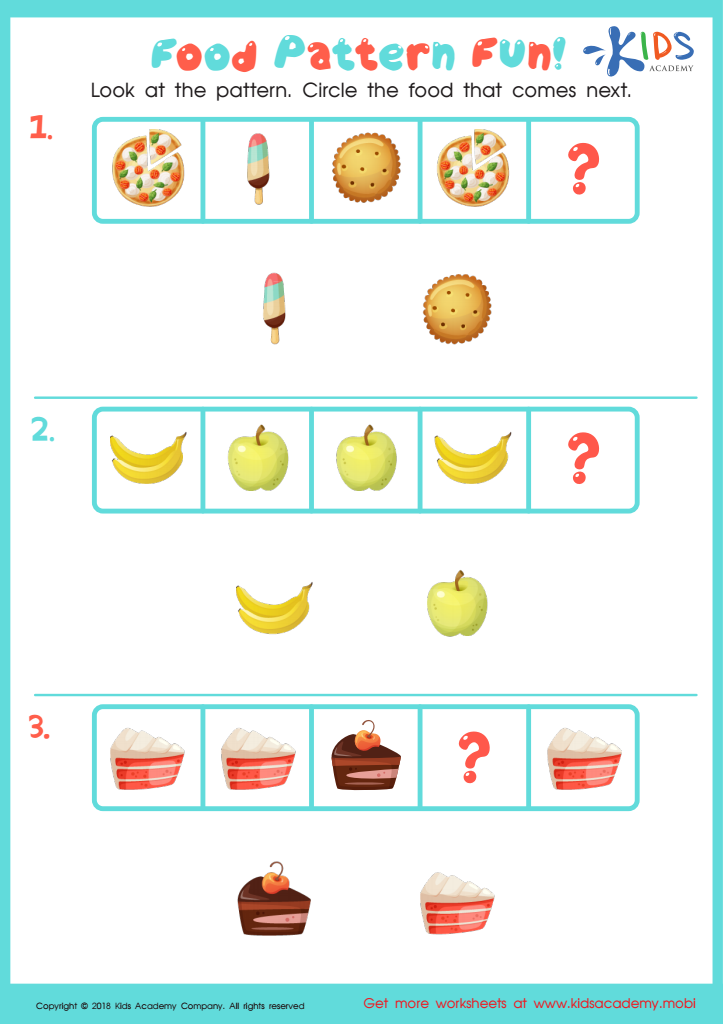
Food Pattern Fun Worksheet
 Assign to My Students
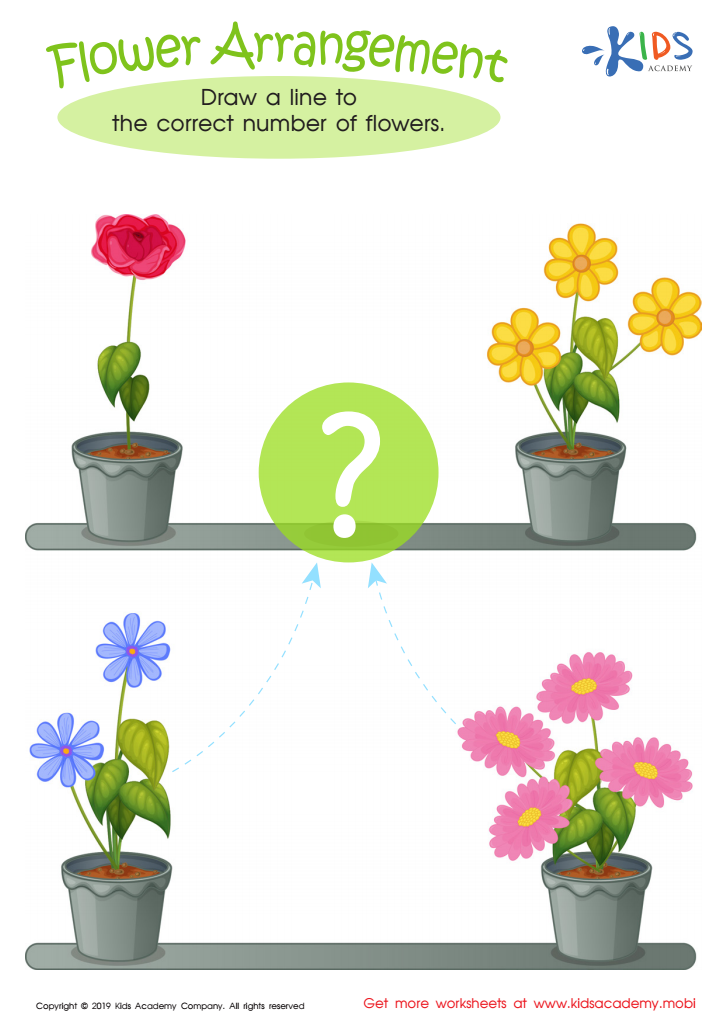
Flower Arrangement Worksheet
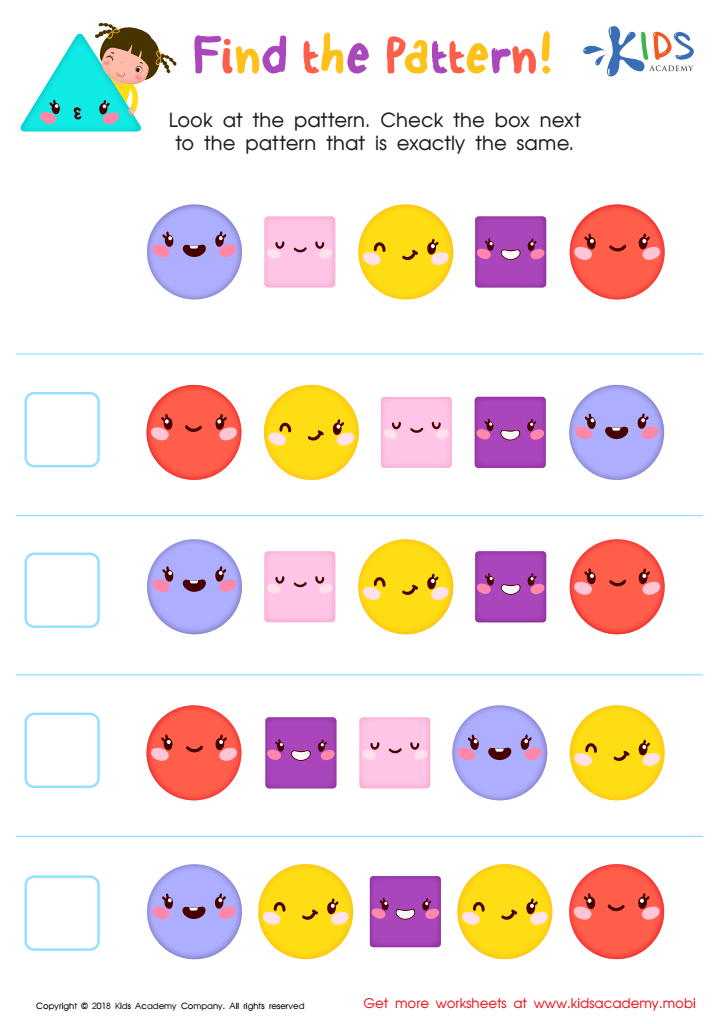
Find the Pattern Worksheet
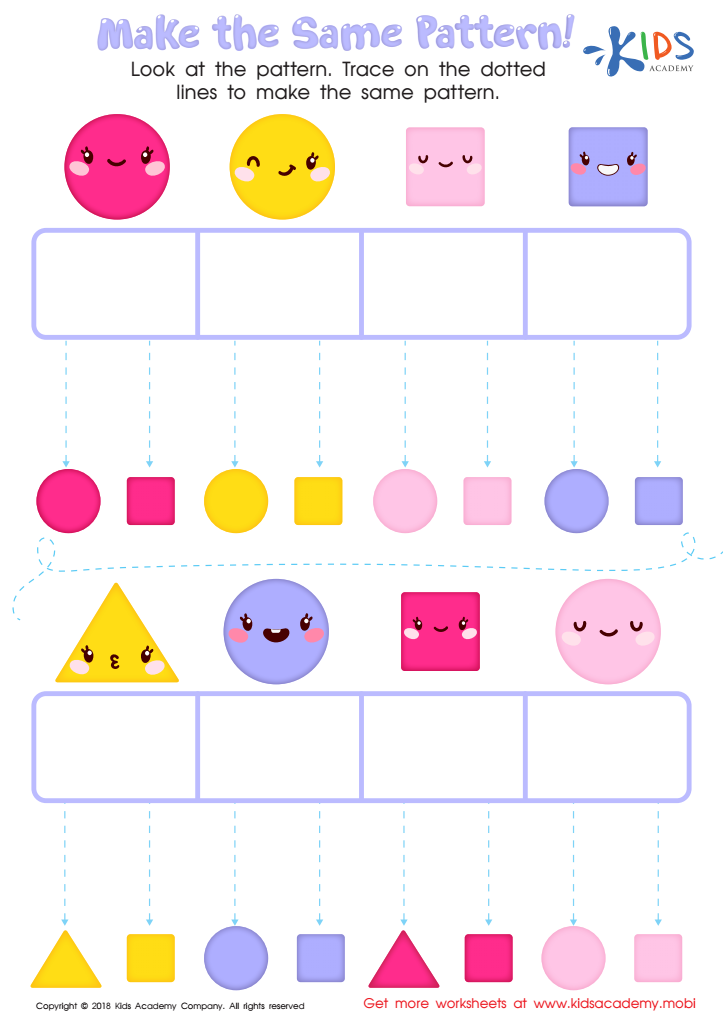
Make the Same Pattern Worksheet
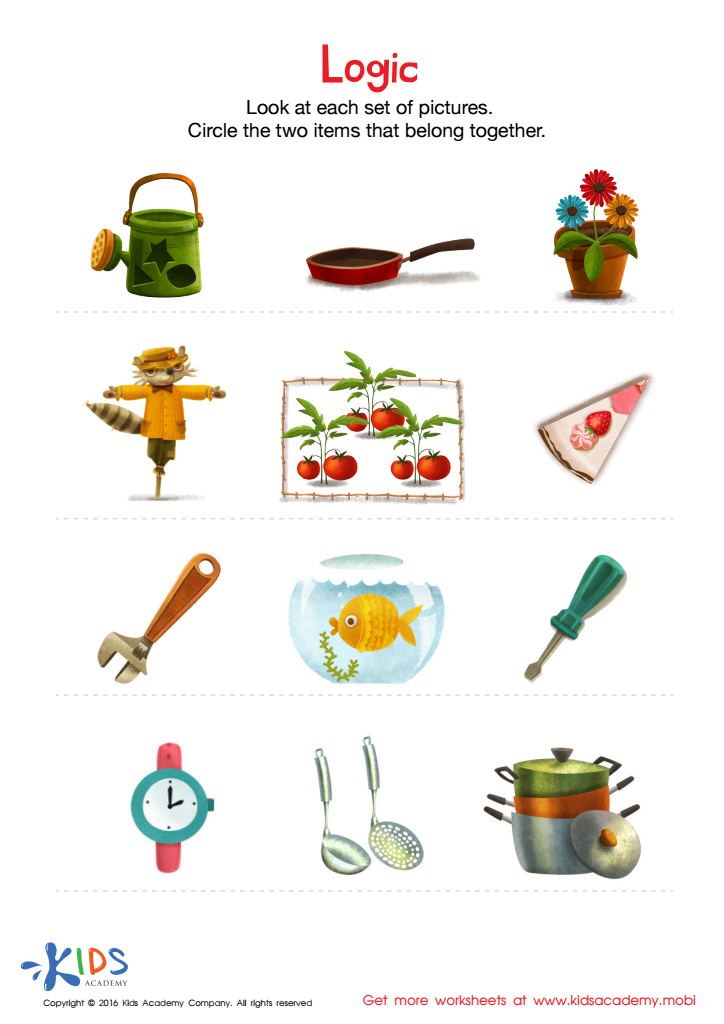
Logic Game Sorting Worksheet
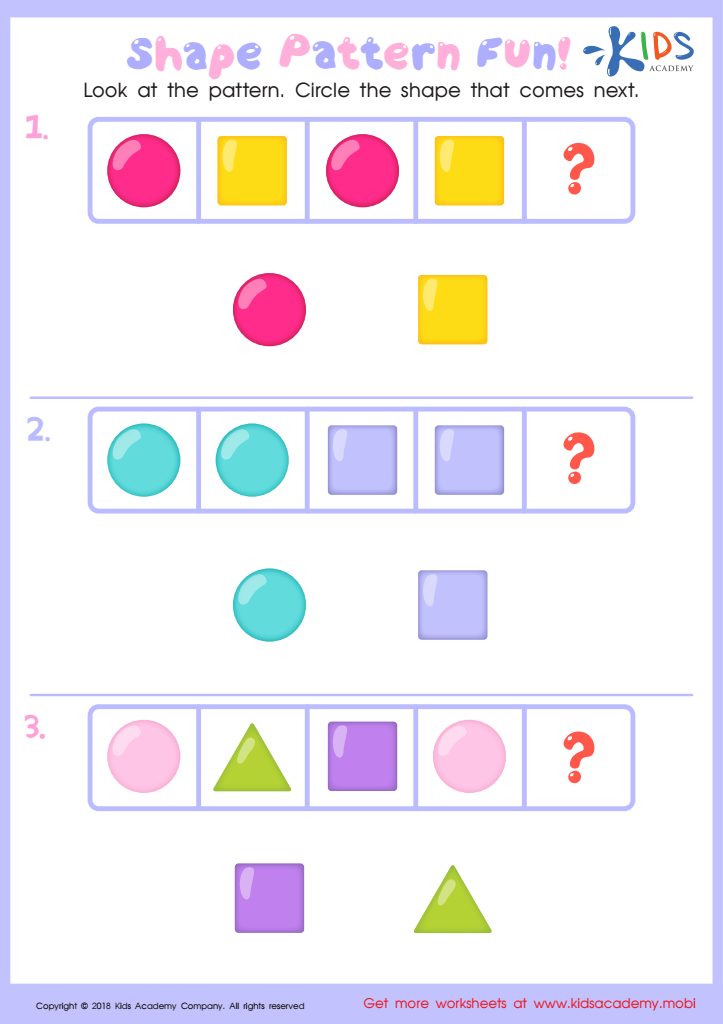
Shape Pattern Fun Worksheet








Pattern recognition is a foundational skill that significantly benefits 3-year-olds, and both parents and teachers should actively nurture this ability. When young children identify patterns, they are engaging in early stages of logic and critical thinking. Recognizing and predicting patterns lays the groundwork for more advanced mathematical concepts such as sequencing, algebra, and even coding.
For 3-year-olds, simple activities like identifying color sequences (red-blue-red-blue) or shape patterns (circle-square-circle-square) enhance observational skills. These activities extend beyond math; they can improve language acquisition, as patterns like rhythms and rhymes can help with phonemic awareness, an essential component of reading.
Moreover, engaging in pattern recognition fosters problem-solving skills and attention to detail. As children learn to discern how patterns are created and how they evolve, they build the confidence to approach more complex problems analytically.
Also, by developing pattern recognition skills early, children cultivate a sense of order and predictability, which can aid emotional development. Consistent routines and patterns in daily activities provide young children with a secure framework, allowing them to feel more in control and less anxious.
Incorporating pattern recognition activities in daily learning ensures that children develop cognitive, language, and emotional skills in a balanced and integrated manner. Thus, parents and teachers should prioritize this aspect of early education to set a robust foundation for lifelong learning.








