Comparing sizes Normal Math Worksheets for Ages 4-6
3 filtered results
-
From - To
Discover our engaging "Comparing Sizes" math worksheets designed for children ages 4-6! These fun and interactive resources help young learners grasp the concept of size comparison through colorful visuals and intuitive activities. Each worksheet encourages kids to identify, compare, and differentiate between small, medium, and large objects, fostering essential cognitive skills. Ideal for preschool and early primary education, our printable worksheets are perfect for reinforcing learning at home or in the classroom. Enhance your child's understanding of sizes while making math enjoyable. Start educating with creativity today! Visit our website for access to these essential learning tools.
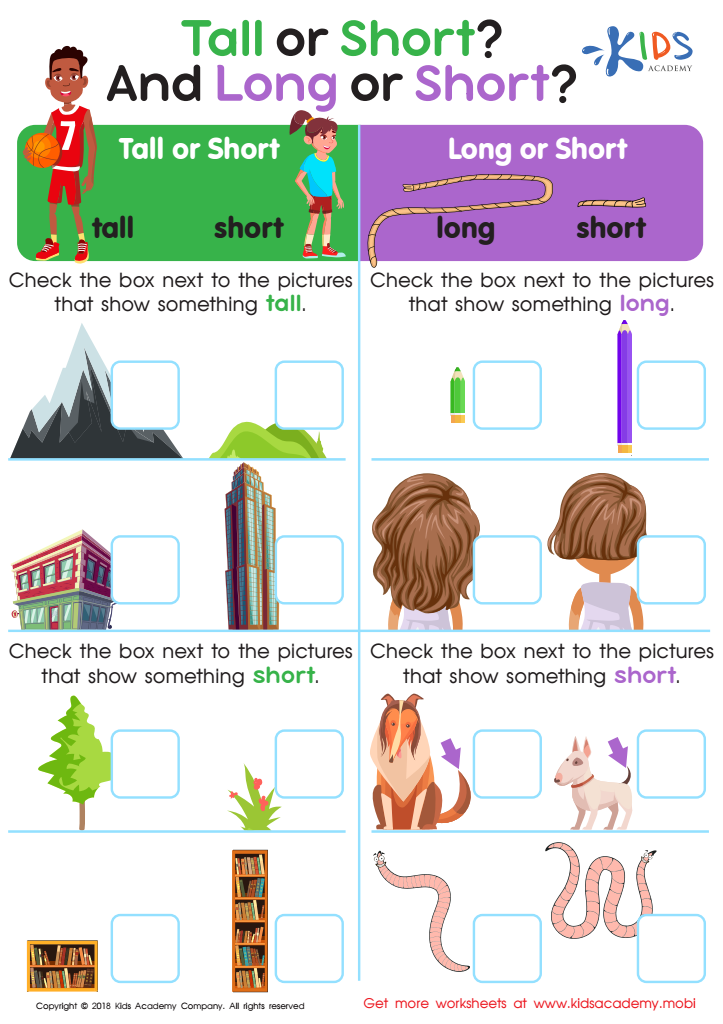
Tall or Short and Long or Short? Worksheet
 Assign to My Students
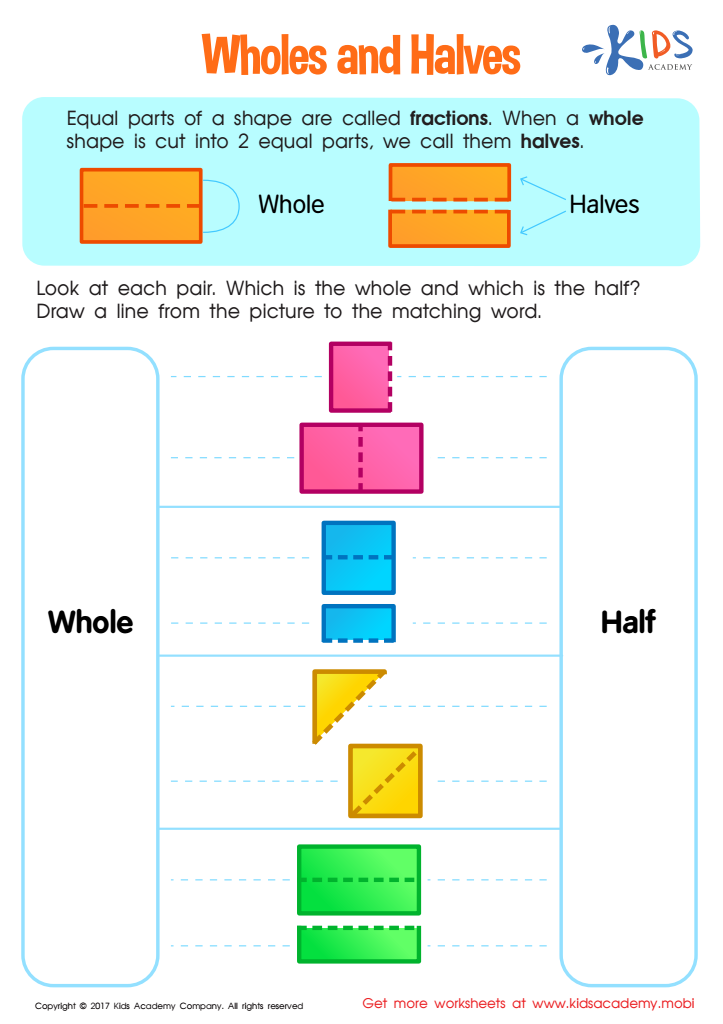
Wholes and Halves Worksheet
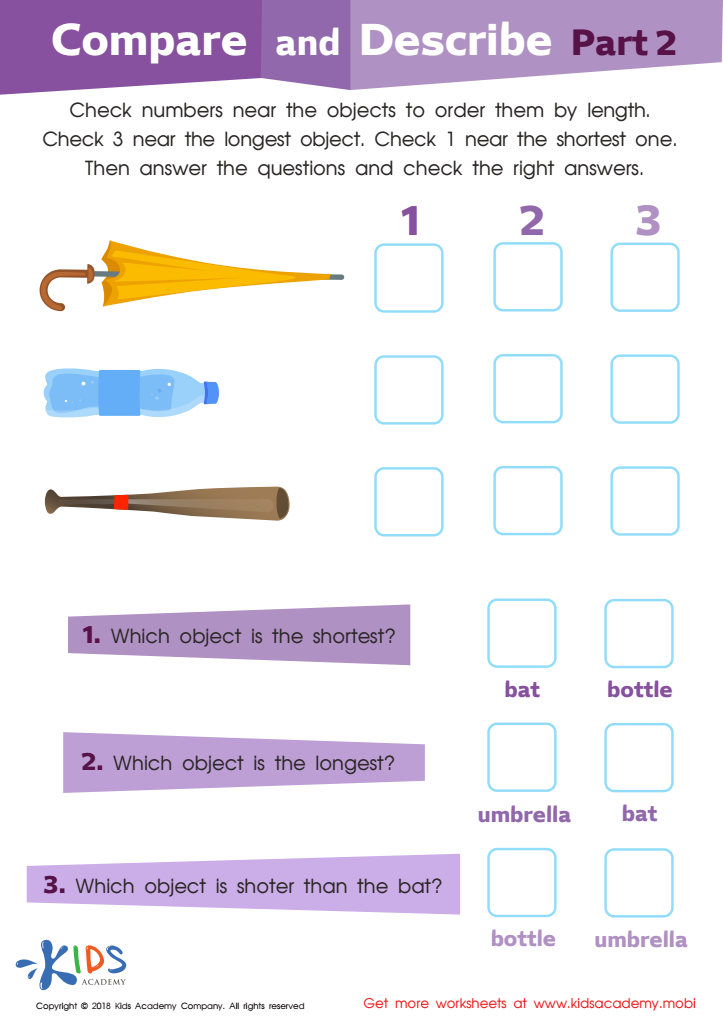
Compare and Describe: Part 2 Worksheet



.jpg)




Comparing sizes is a foundational math skill crucial for the cognitive development of children aged 4-6. Parents and teachers should prioritize this learning area because it lays the groundwork for more complex mathematical concepts. By engaging children in comparing sizes, they develop analytical thinking, enhance their problem-solving skills, and foster a sense of logic through hands-on experiences.
When children learn to compare sizes—be it small versus large or tall versus short—they sharpen their observational skills and learn to classify objects based on their attributes. This activity promotes active engagement, encouraging children to communicate their observations and reasoning, which is vital for language development.
Moreover, understanding size comparisons is applicable to everyday life situations, such as measuring ingredients while cooking or selecting clothes, providing context for learning that makes it more relatable and useful. Additionally, it instills early spatial awareness, helping children better navigate their environment.
Incorporating size comparison into playful learning allows children to explore math in a fun, interactive way, reinforcing a positive attitude towards the subject. For parents and educators, nurturing these foundational skills is essential for building confidence and laying the groundwork for future success in math and other disciplines.








