Problem-Solving Skills Normal Addition & Subtraction Worksheets for Ages 4-7 - Page 2
28 filtered results
-
From - To
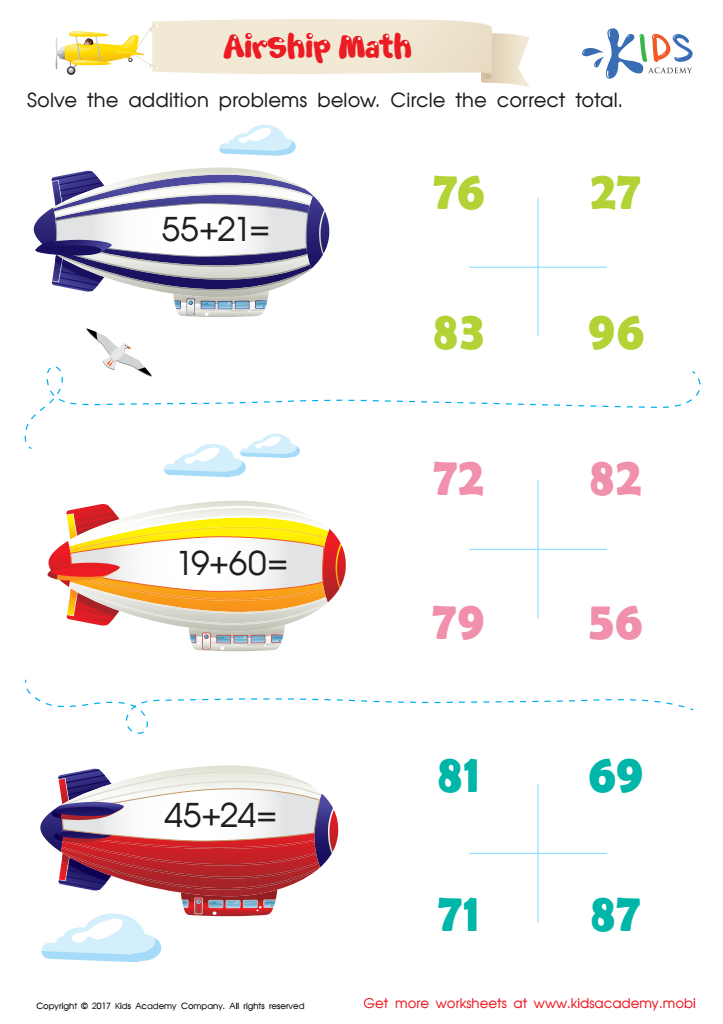
Airship Math Addition Printable
 Assign to My Students
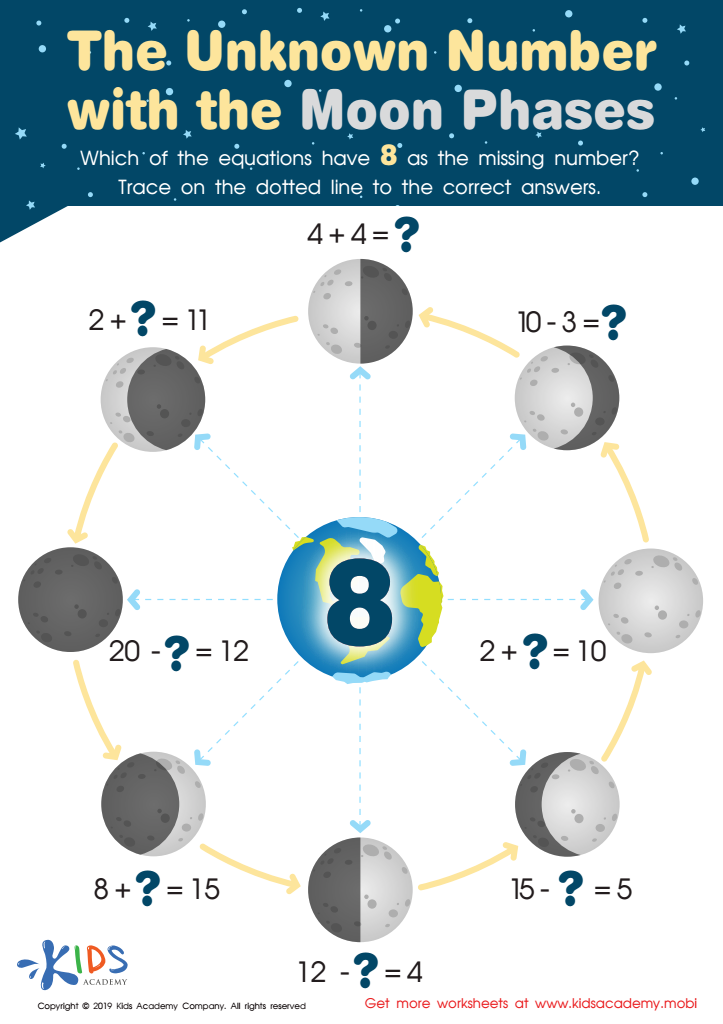
The Unknown Number with the Moon Phases Worksheet
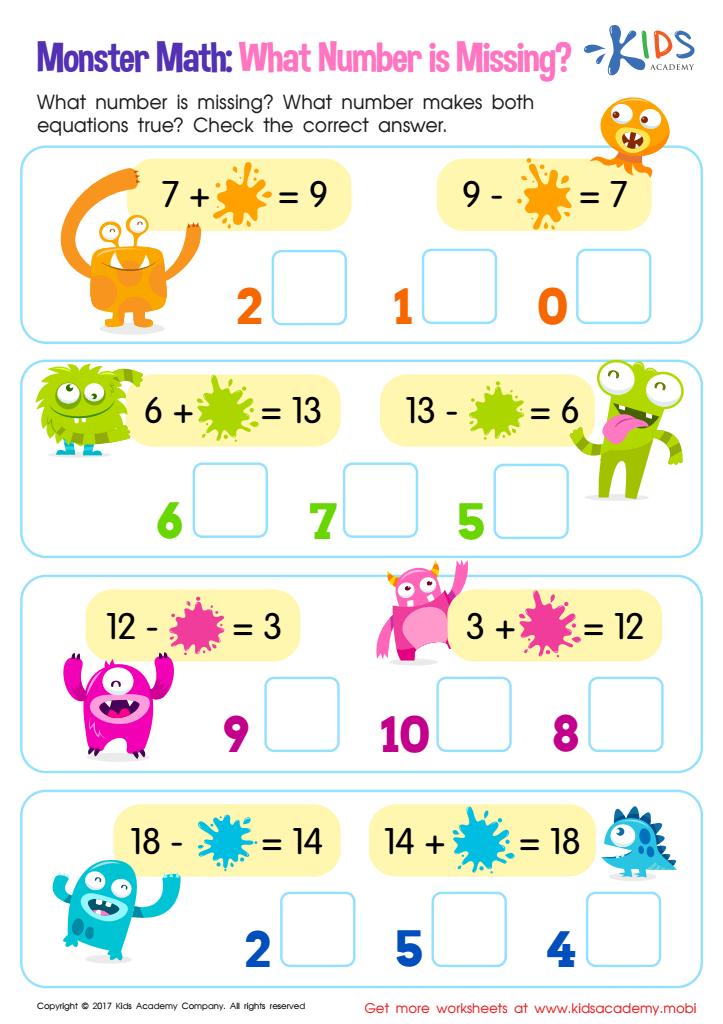
Missing Number: Monster Math Worksheet
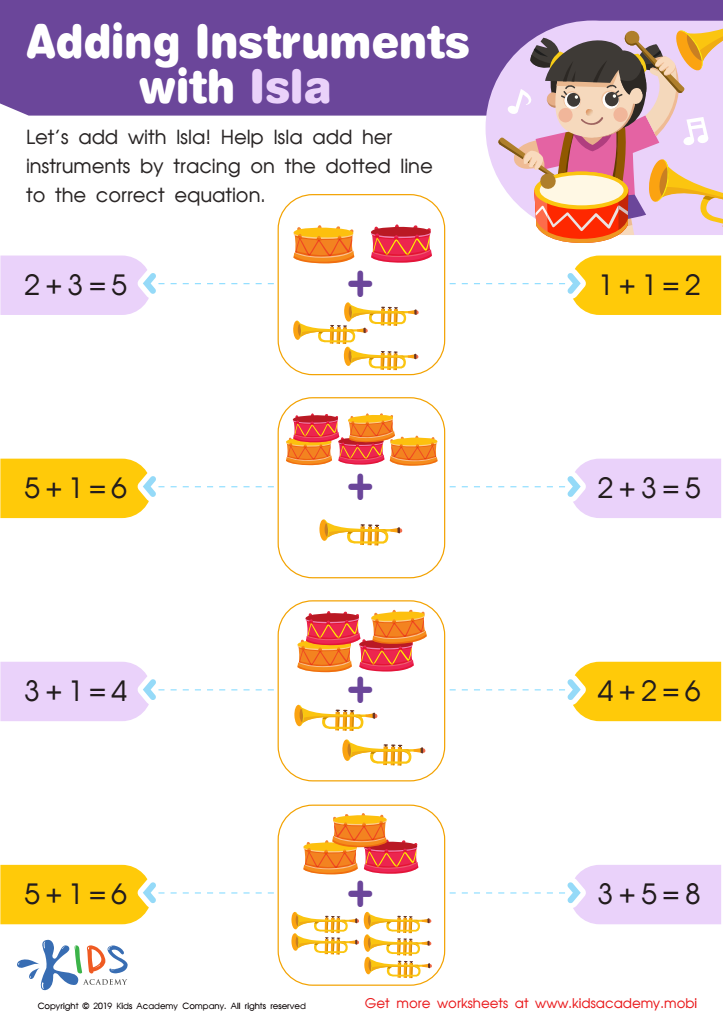
Adding Instruments with Isla Worksheet








Parents and teachers should care about developing problem-solving skills through normal addition and subtraction for children ages 4-7 because these foundational mathematical concepts are essential for cognitive development and future academic success. At this early age, children's brains are highly receptive to new information, and engaging them with basic arithmetic helps stimulate logical thinking and the ability to approach problems methodically.
Introducing addition and subtraction in this developmental stage ensures that young learners build a strong number sense, understanding the relationships between numbers, and recognizing patterns. These skills are not solely confined to mathematics but are transferable to everyday situations, enabling children to make decisions, reason quantitatively, and navigate challenges with confidence. For instance, managing simple tasks like sharing toys or dividing snacks becomes an exercise in problem-solving.
Furthermore, early exposure to problem-solving tasks enhances perseverance and patience, critical qualities for lifelong learning. When children tackle addition and subtraction problems, they learn to approach difficulties with curiosity rather than frustration, fostering a growth mindset. This solidifies their ability to persist through challenges, which is invaluable in all areas of life, both academic and personal.
In summary, prioritizing problem-solving skills through normal addition and subtraction in the early years lays a robust foundation for children’s future learning experiences, promoting intellectual growth, emotional resilience, and practical competence.








