Normal Numbers Worksheets for Ages 4-7 - Page 9
193 filtered results
-
From - To
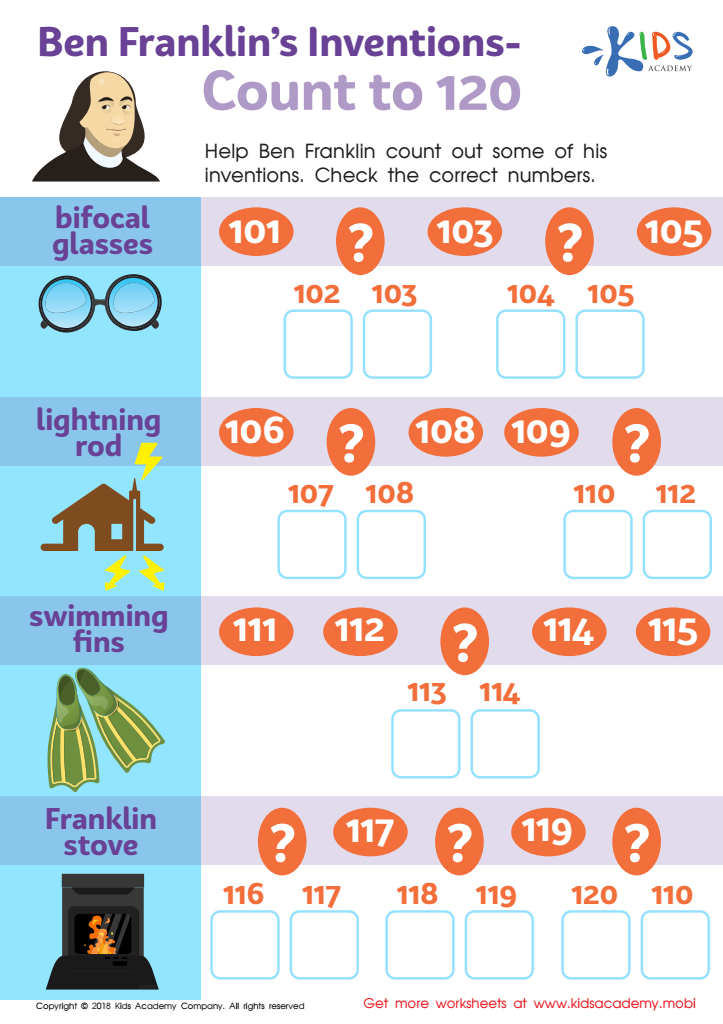
Ben Franklin’s Inventions – Count to 120 Worksheet
 Assign to My Students


.jpg)





Parents and teachers should care about normal numbers for children ages 4-7 because understanding basic numerical concepts forms the foundation for all future math learning and everyday problem-solving skills. Early exposure to normal numbers—such as counting from 1 to 10, recognizing numbers, and beginning to understand the concept of quantity—helps young children develop number sense, which is crucial for their cognitive development.
Children naturally encounter numbers in daily activities: counting objects, telling time, or even playing games. When parents and teachers prioritize discussing and practicing normal numbers, children become more comfortable and confident with basic math concepts. This early engagement not only aids in developing essential arithmetic skills but also encourages logical thinking and pattern recognition.
Moreover, familiarizing young learners with numbers can ignite a love for learning by making it fun and interactive. Activities like singing number songs, playing counting games, or engaging with number-based storybooks can make the experience enjoyable. Consequently, children associate numbers with positive experiences, which can boost their enthusiasm for math as they advance in school.
In summary, an early focus on normal numbers equips children with fundamental skills, promotes cognitive growth, fosters a positive attitude toward math, and prepares them for academic success, making it an important aspect for parents and teachers to emphasize.








