
Enhancing Counting Skills Normal Math Worksheets for Ages 4-7
7 filtered results
Difficulty Level
Grade
Age
-
From - To
Subject
Activity
Standards
Boost your child’s early math abilities with our engaging counting skills worksheets for ages 4-7. Designed to develop foundational numeracy skills, these worksheets help children recognize and count numbers with fun, interactive exercises. Suitable for young learners, the activities include colorful visuals and practical balancing tasks that make learning enjoyable. Ideal for parents and educators, these printables are an excellent resource to reinforce counting, number sequencing, and early problem-solving skills. Foster confidence in your child’s mathematical journey by enhancing their counting skills with our expert-crafted worksheets from Kids Academy. Start nurturing your child's love for numbers today!
Favorites
With answer key
Interactive
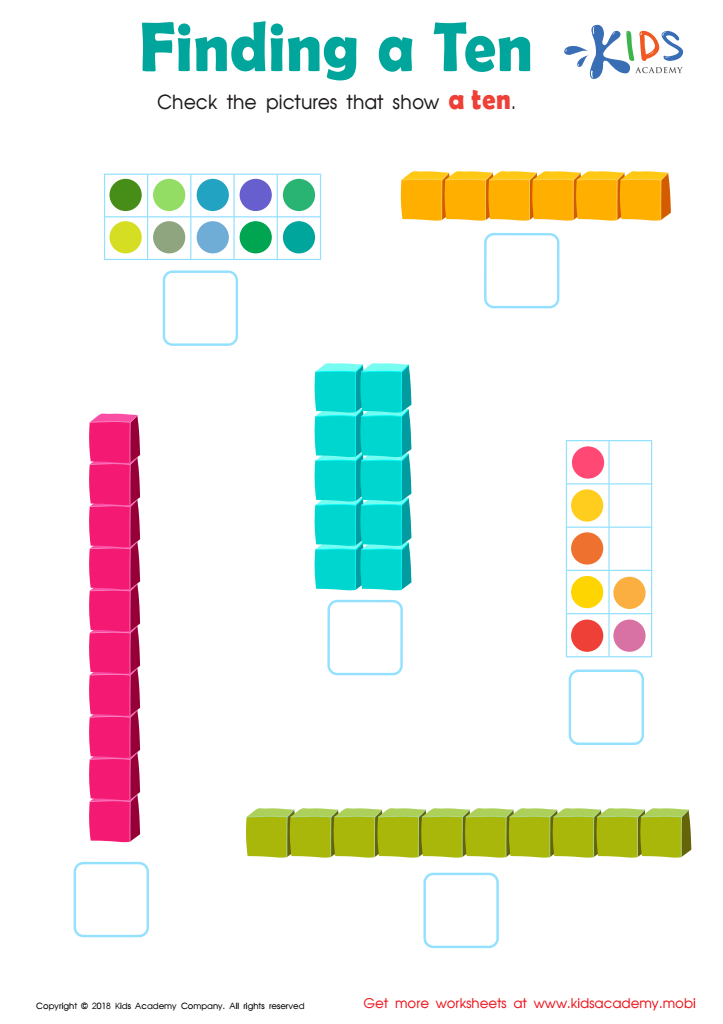
Finding a Ten Worksheet
Can your child count to ten? Distinguish groups of ten? This free printable worksheet uses shapes and colors to help first graders learn to count and understand what groups of numbers look like. It's fun and easy to comprehend, helping kids master the fundamentals of math.
 Assign to My Students
Finding a Ten Worksheet
Worksheet
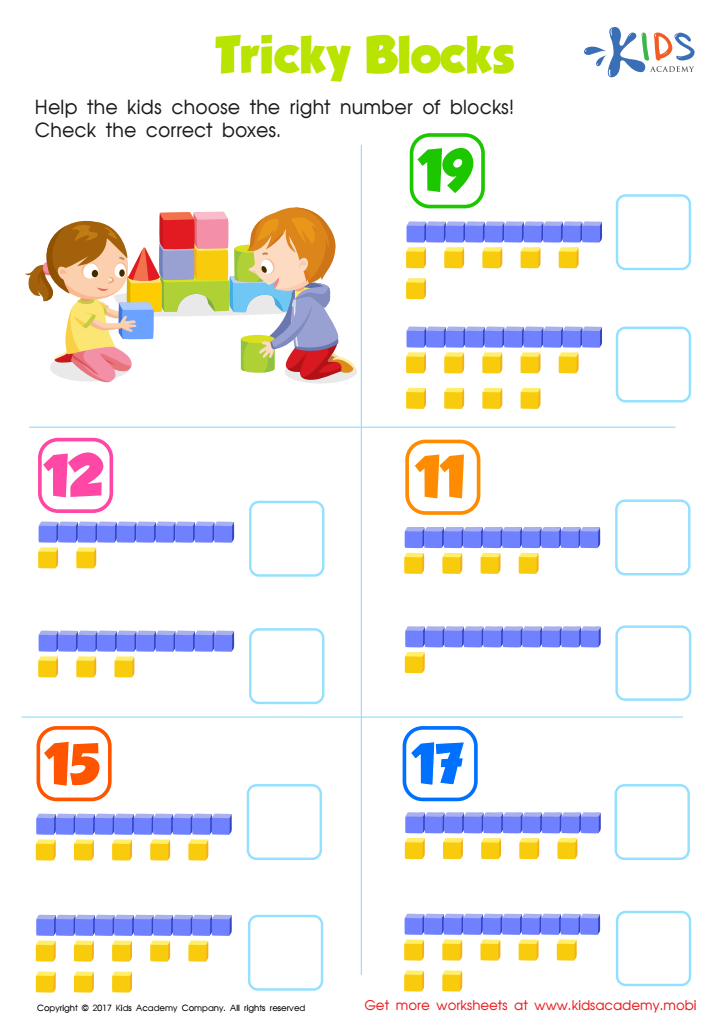
Tricky Blocks Worksheet
Help your child count with this printable worksheet. You'll be able to explain the technicalities of each answer as you work together to count the boxes and choose the correct number in the spaces provided. This will help your child better understand the concept and will go faster than if they do it alone.
Tricky Blocks Worksheet
Worksheet
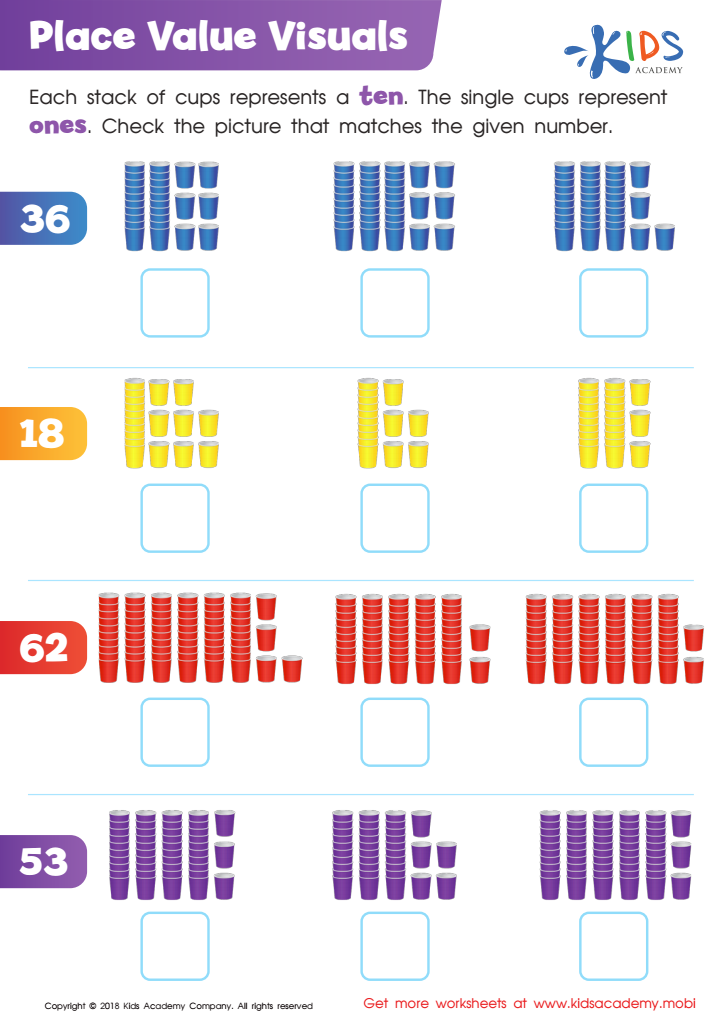
Place Value Visuals Worksheet
Help your child count the cups in each picture, using the simple rule that each stack is 10 and each single cup is 1. Ask them to match the number on the left to the picture on the right. No need to count each cup individually; since each stack is 10, 3 stacks is 30 and so on.
Place Value Visuals Worksheet
Worksheet
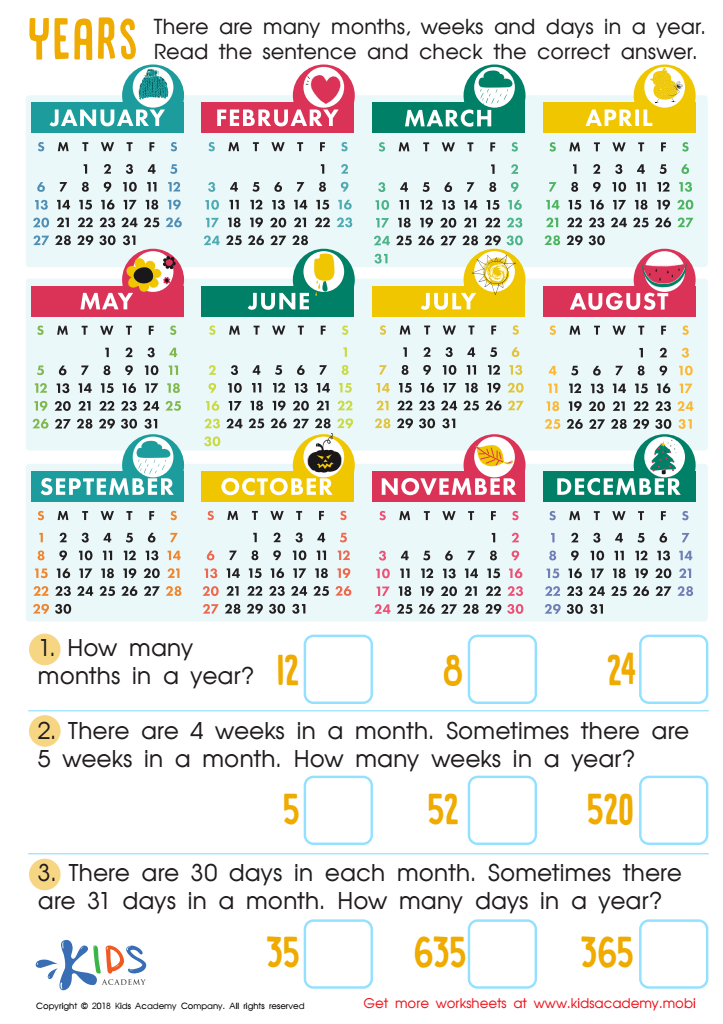
Years Worksheet
This worksheet is a great way to test your children's knowledge of the calendar. Ask them if they can name the days of the week and months in a year. Read and discuss the questions with them and help them find the right answers. Encourage them to check their answers.
Years Worksheet
Worksheet
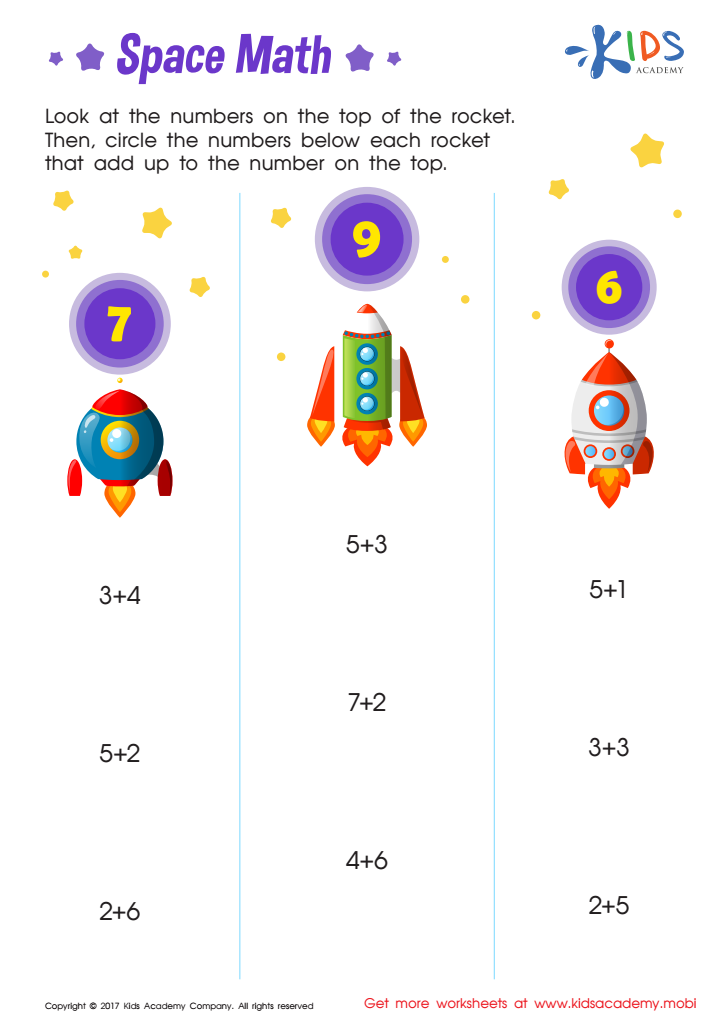
Addition: Space Math Worksheet
Fun and engaging space-themed practice with vivid pictures and matching numbers will make learning more meaningful. Take their math skills out of this galaxy today with Kids Academy!
Addition: Space Math Worksheet
Worksheet
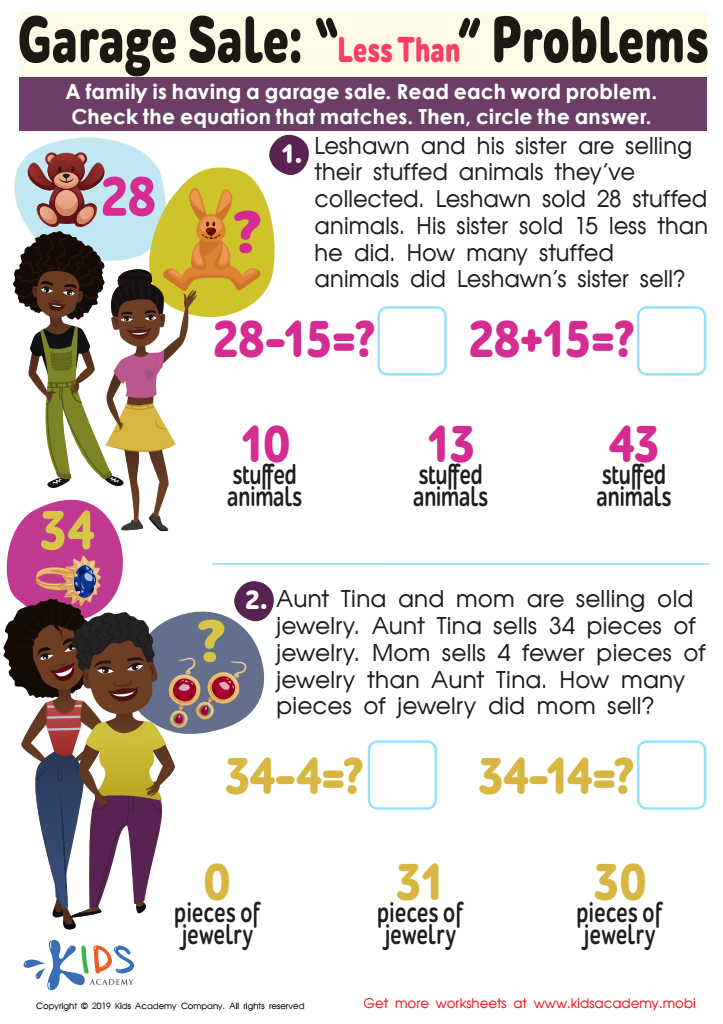
Garage Sale Less Than Worksheet
Kids often struggle with math word problems. This worksheet offers practice, using a real-world situation: friends having a garage sale. Students read each problem, extract the relevant information, match it with the correct equation and solve. Great for honing those essential problem-solving skills!
Garage Sale Less Than Worksheet
Worksheet
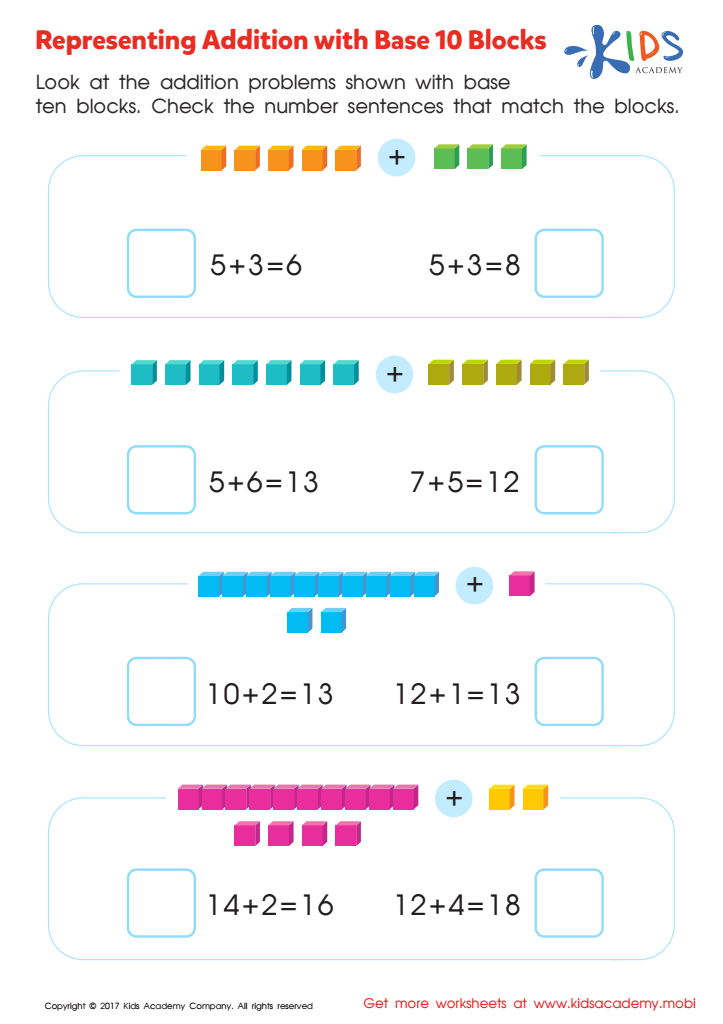
Representing Addition with Base 10 Blocks Worksheet
Solve addition problems with your little one: help them count the blocks, then select the correct equation from the choices. Circle the answer. Word play and math make a winning combo!
Representing Addition with Base 10 Blocks Worksheet
Worksheet
Join Kids Academy for Free
Who is primarily going to use this learning content?








Enhancing counting skills in children aged 4-7 is crucial as it lays the foundation for their mathematical understanding and overall cognitive development. At this young age, children's brains are highly adaptable and capable of absorbing new concepts quickly. Developing strong counting skills early on helps them not only in arithmetic, but also in problem-solving and logical reasoning.
Counting is much more than reciting numbers; it includes understanding number relationships, effective comparison, and understanding quantities. Mastering counting skills helps children effortlessly transition to more complex math concepts such as addition, subtraction, multiplication, and division. Besides academics, counting practice supports fine motor skills, ordering abilities, whether they're tallying objects or comprehending time and sequences.
Furthermore, these skills boost confidence and independence in young learners, providing them with a critical tool for everyday activities and future academic success. Empowering children in their early stages to develop proficiency in counting instills a positive attitude towards mathematics, diminishing math anxiety later in their educational journey.
Teachers and parents play a vital role by incorporating counting games, daily practical counting activities, and foster a stimulating mathematical environment that can turn a simple numeric understanding into a meaningful and enriching learning experience. Investing time and effort in enhancing counting skills early is a cornerstone for lifelong numeracy competency.








