Normal History Worksheets for Ages 4-7 - Page 2
26 filtered results
-
From - To
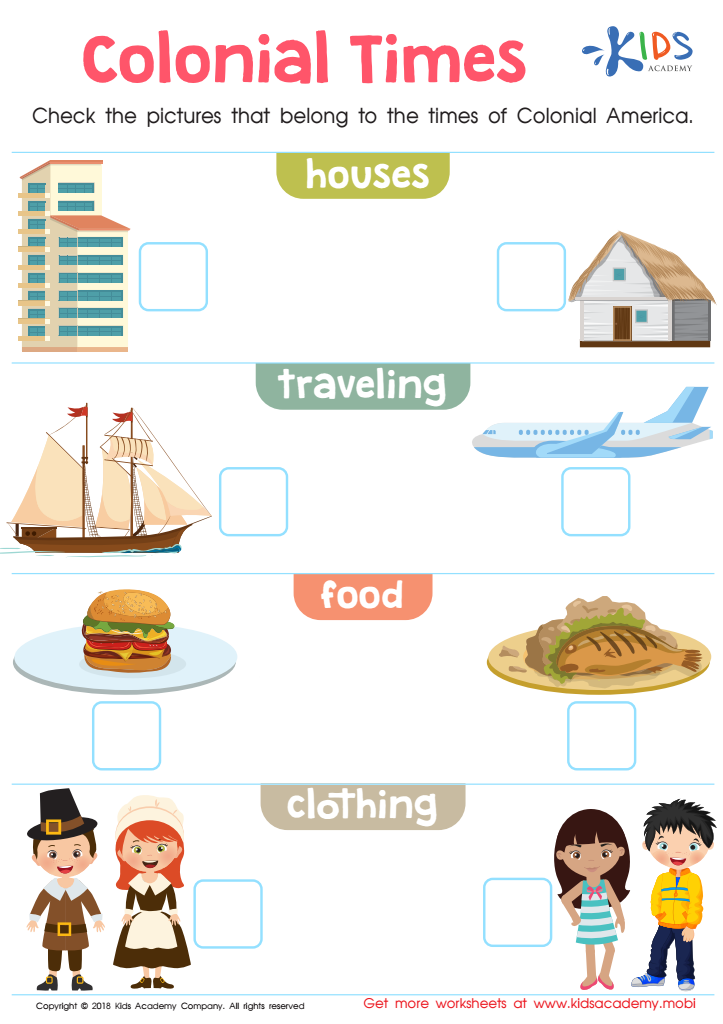
Colonial Times Worksheet
 Assign to My Students
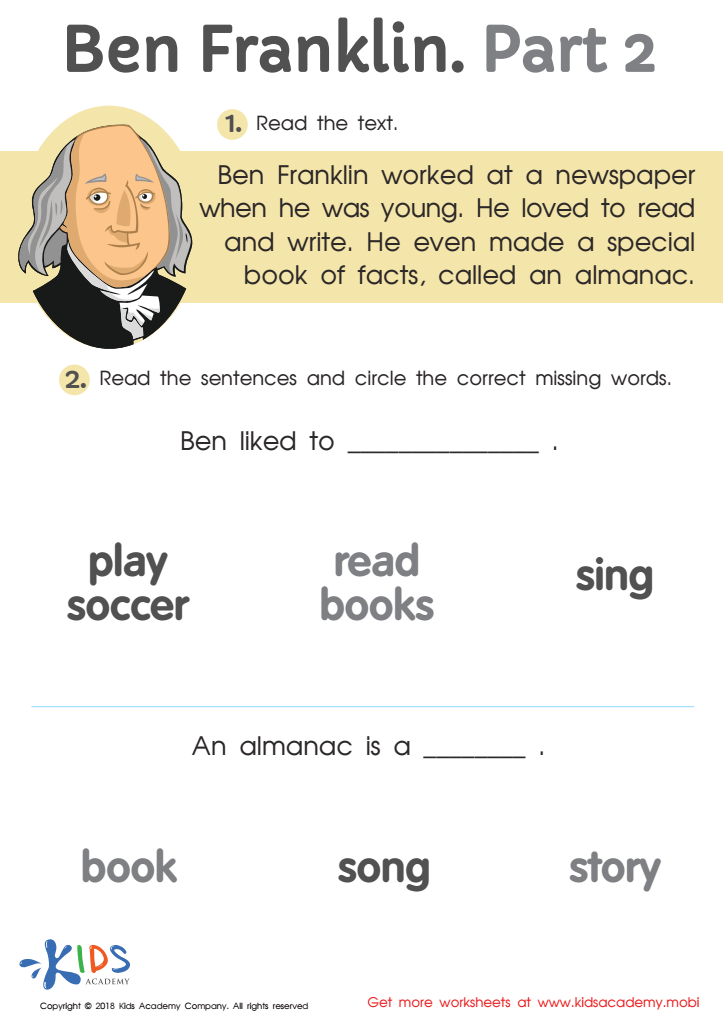
Ben Franklin Part 2 Worksheet








Understanding Normal History is vital for parents and teachers of children aged 4-7 as it provides them with a foundational knowledge of cultural and social contexts that shape our world. At this formative age, children are naturally curious and begin to learn about relationships, communities, and the histories of mankind. By introducing them to Normal History, adults can foster an environment where children learn to appreciate diversity, respect various perspectives, and understand the importance of empathy.
Teaching Normal History helps to cultivate critical thinking skills early on. Children start to recognize patterns, understand cause-effect relationships, and distinguish between fact and myth. Moreover, incorporating history into learning can ignite a passion for inquiry and inspire young minds to ask questions and seek deeper meanings behind events.
Additionally, Normal History helps build a sense of identity and belonging. Understanding their own cultural background can empower children and teach them about their heritage. Educators and parents who prioritize this subject aid in developing socially aware, informed citizens ready to engage with their communities. In essence, Normal History provides young learners with the tools they need to navigate and understand their world, preparing them to be thoughtful, compassionate individuals in the future.