Alphabet understanding Normal Worksheets for Ages 4-8
8 filtered results
-
From - To
Unlock the joy of learning with our "Alphabet Understanding Normal Worksheets for Ages 4-8" at Kids Academy! These interactive worksheets are designed to build alphabet recognition, phonics, and early reading skills in young minds. Featuring fun and engaging activities, children will enjoy tracing, coloring, and matching letters. Our worksheets cater to varying skill levels, making them perfect for use at home or in the classroom. Whether your child is just beginning to learn letters or is ready to start blending sounds, our resources provide the foundational support needed for literacy success. Empower your child's learning today!
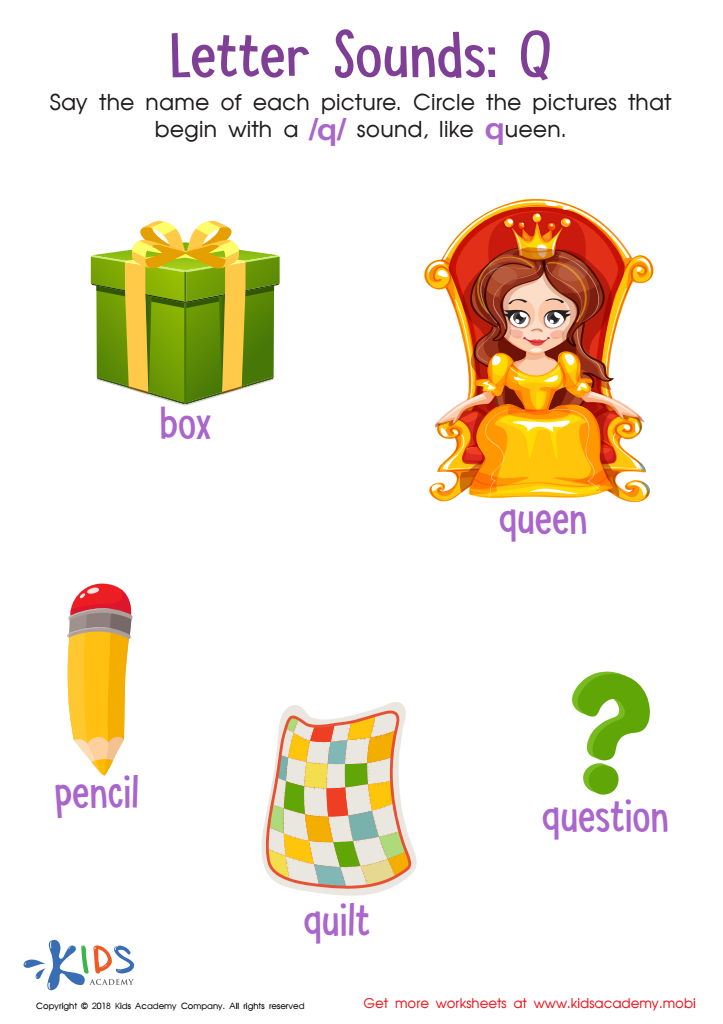
Letter Q Sounds Worksheet
 Assign to My Students
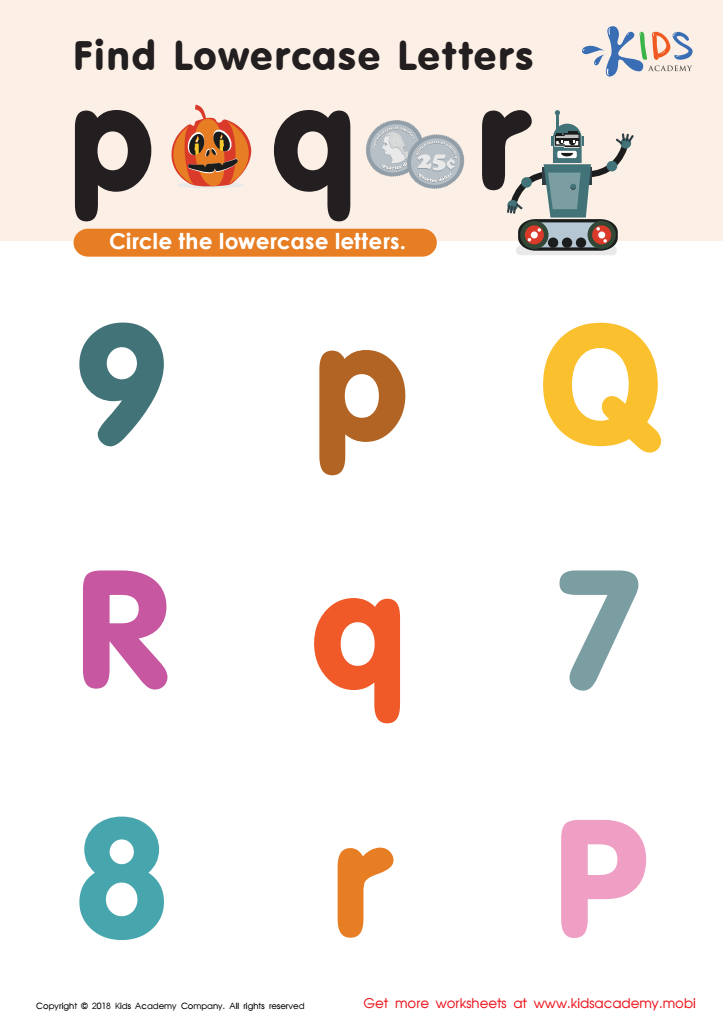
Find lowercase Letters p q r Worksheet
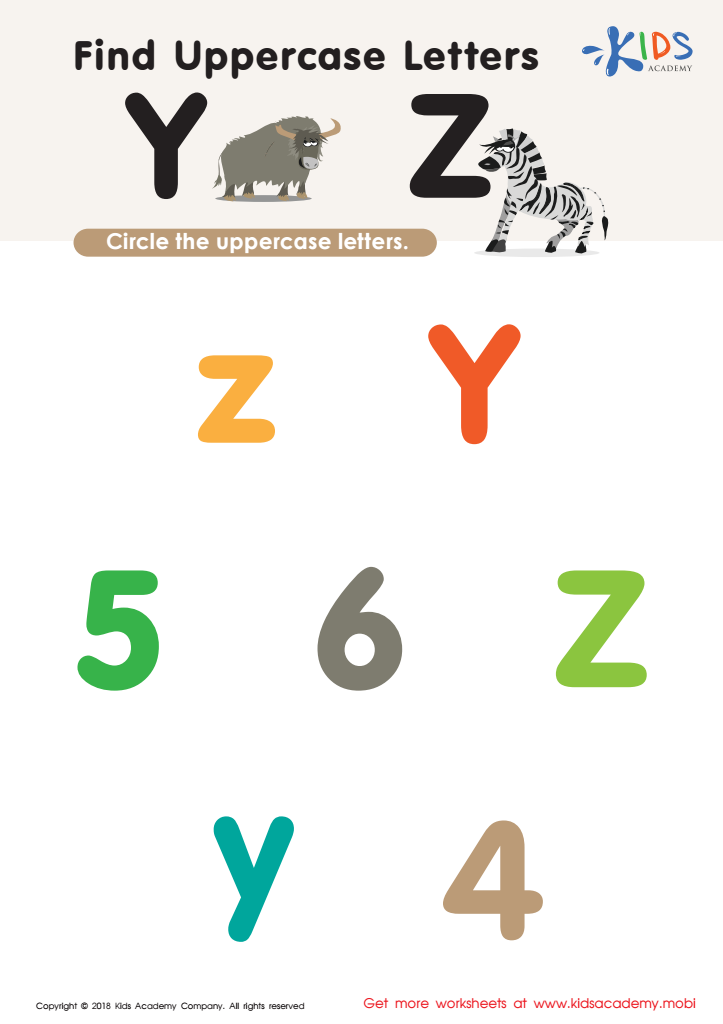
Find Uppercase Letters Y Z Worksheet
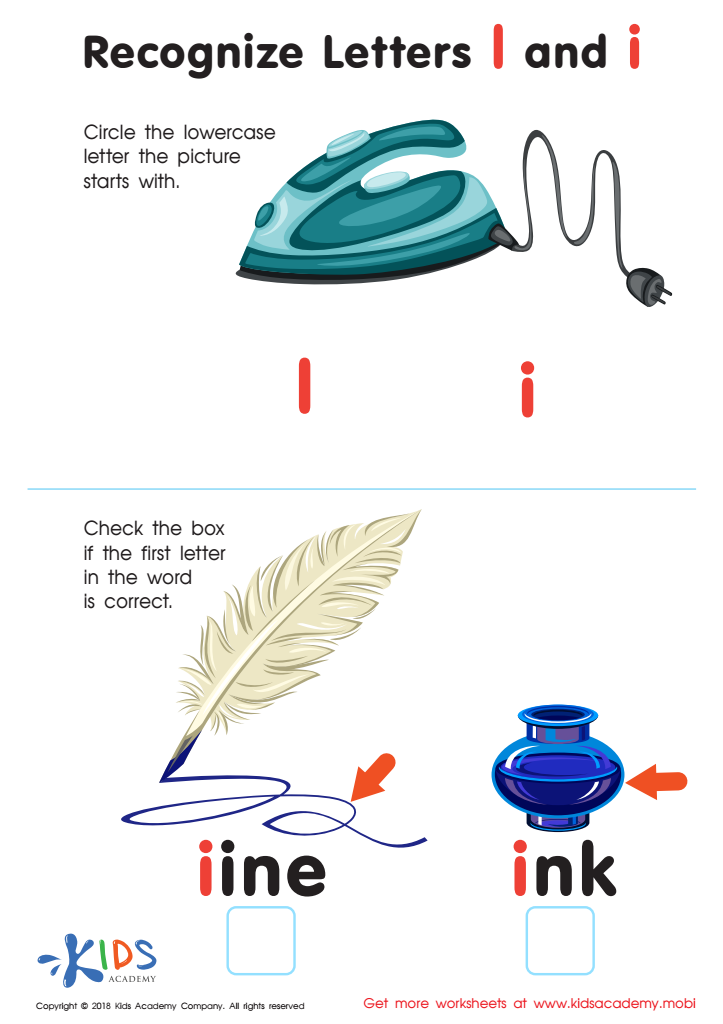
Recognize Letters l and i Worksheet
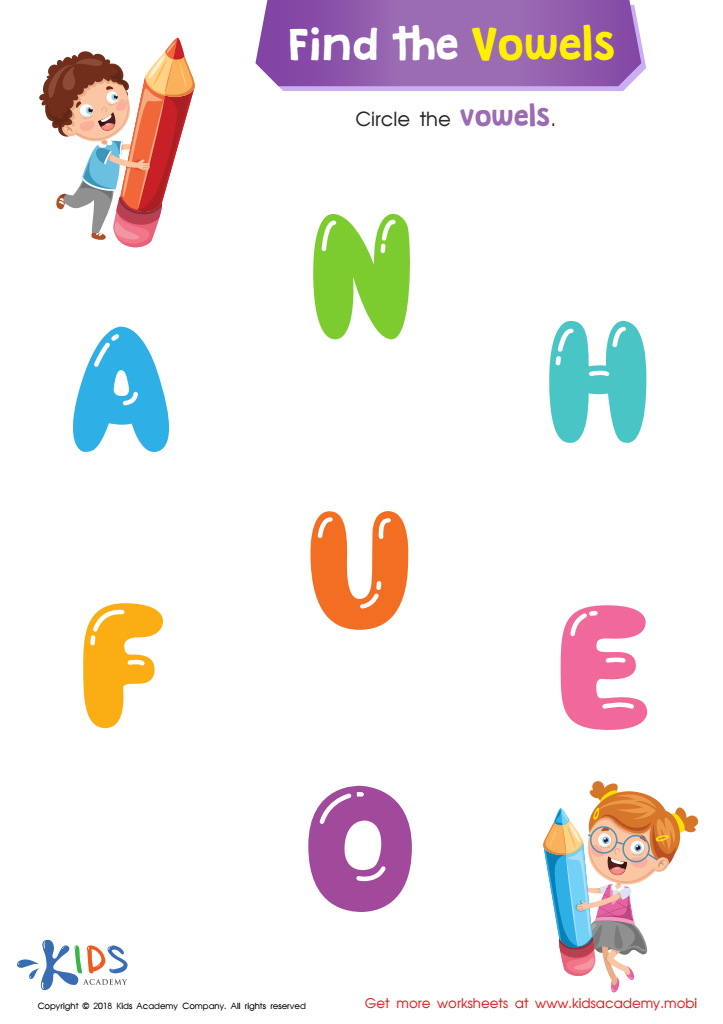
Find the Vowels Reading Worksheet
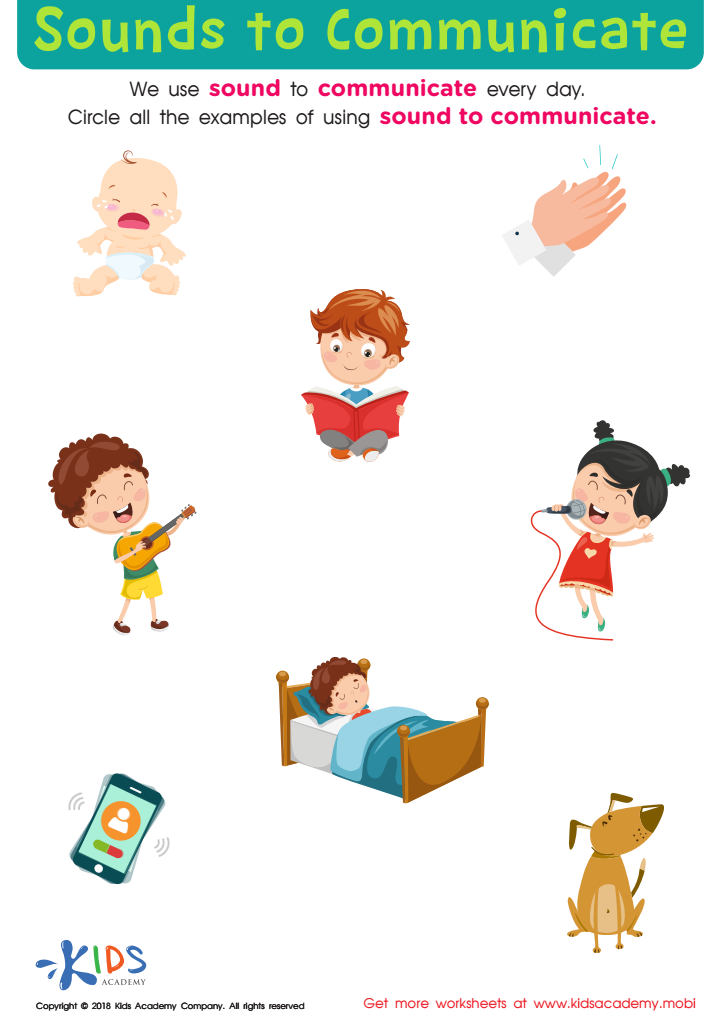
Sounds to Communicate Worksheet
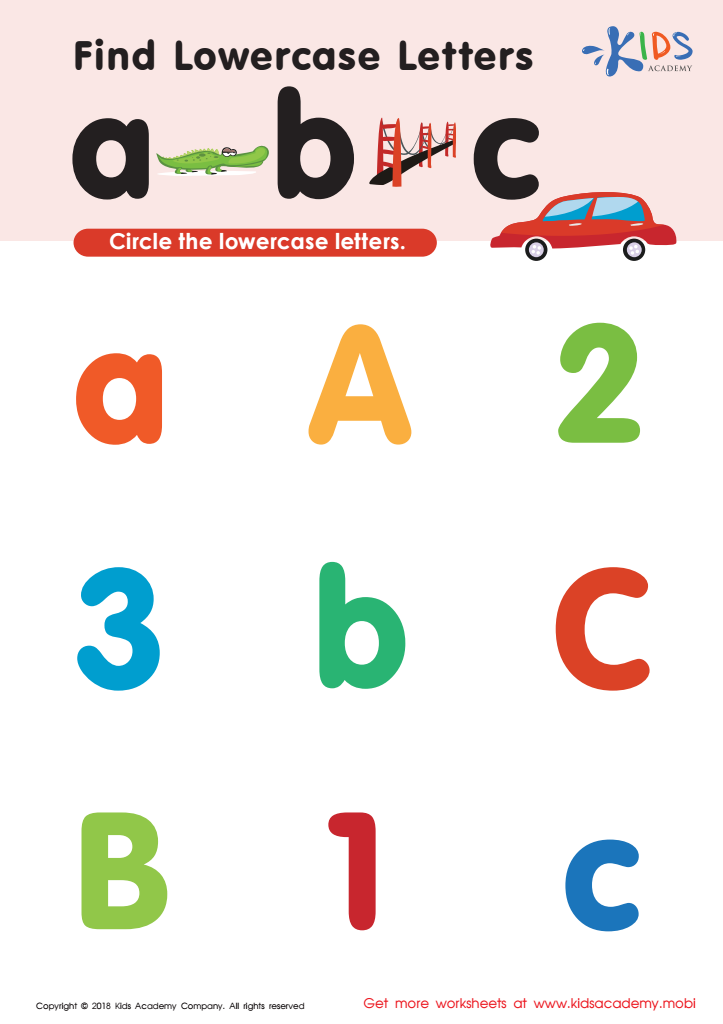
Find lowercase letters a b c Worksheet
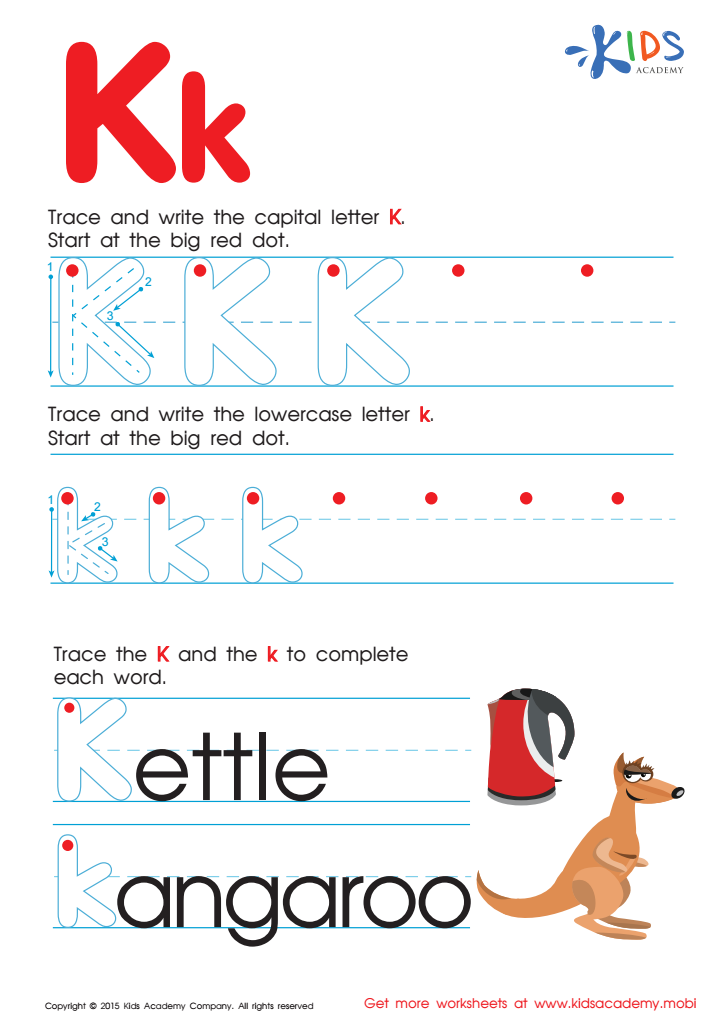
Letter K Tracing Page




.jpg)



Understanding the alphabet is a foundational skill crucial for children aged 4-8. Parents and teachers must prioritize this aspect of early education because it forms the bedrock of literacy. At this developmental stage, children are developing the cognitive ability to recognize and differentiate between the letters A-Z, essential for reading and writing.
Proficiency in the alphabet allows children to engage in phonemic awareness, the ability to hear, identify, and manipulate individual sounds, which is vital for subsequent literacy skills like phonics and spelling. For example, knowing that 'B' sounds like /b/ and 'C' like /k/ or /s/ helps children decode words while reading and encode them when writing.
Moreover, early alphabet knowledge fosters confidence and an intrinsic motivation for learning. It opens up new avenues for vocabulary expansion, storytelling, and effective communication. Alphabet familiarity also supports other subjects because literacy is intertwined with understanding instructions, accessing information, and demonstrating knowledge.
Parental involvement in alphabet learning, such as singing alphabet songs or reading alphabet books, forms strong parent-child bonds and creates a supportive learning environment. Teachers can use interactive methods, like playful activities and tech-based tools, to ensure that this critical knowledge sticks, setting up children for sustained academic success.








