Basic geometry understanding Normal Worksheets for Ages 4-8
4 filtered results
-
From - To
Explore our engaging Basic Geometry Understanding worksheets designed specifically for ages 4-8! These printable resources provide young learners with essential skills in shapes, spatial awareness, and simple measurements. Our thoughtfully crafted worksheets feature colorful visuals and interactive activities that make learning geometry fun and accessible. Children will develop their understanding of basic shapes such as circles, squares, and triangles while enhancing their problem-solving abilities. Ideal for home or classroom use, these worksheets encourage hands-on learning and foster a strong foundational understanding of geometry. Equip your child with the necessary tools for academic success and watch their confidence grow as they master these concepts!
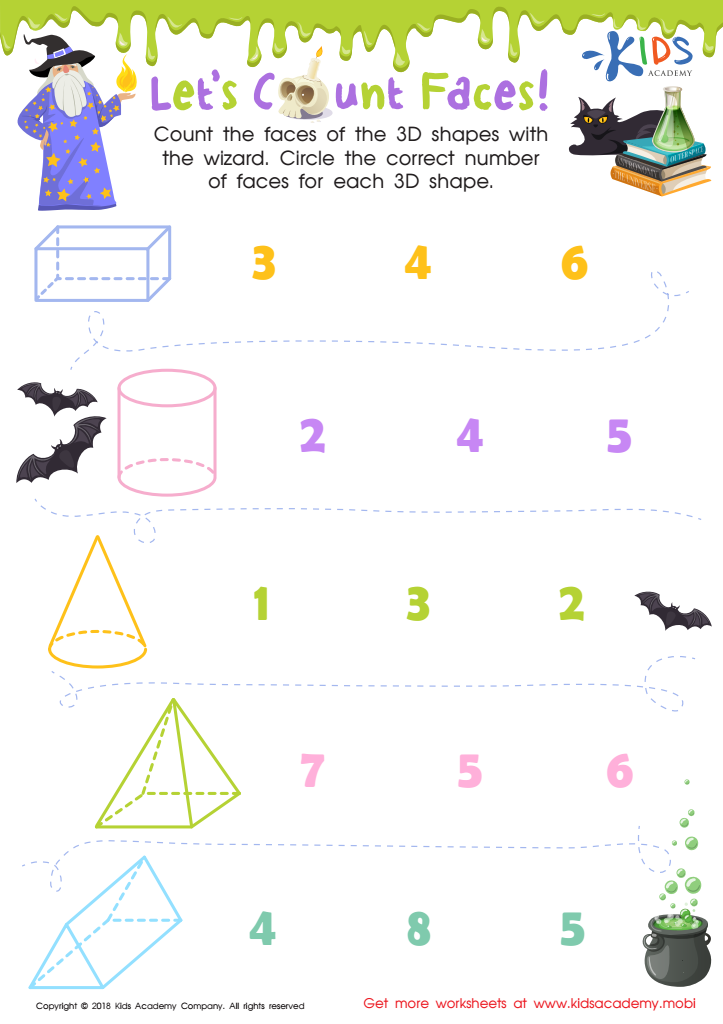
Let's Count Faces! Worksheet
 Assign to My Students
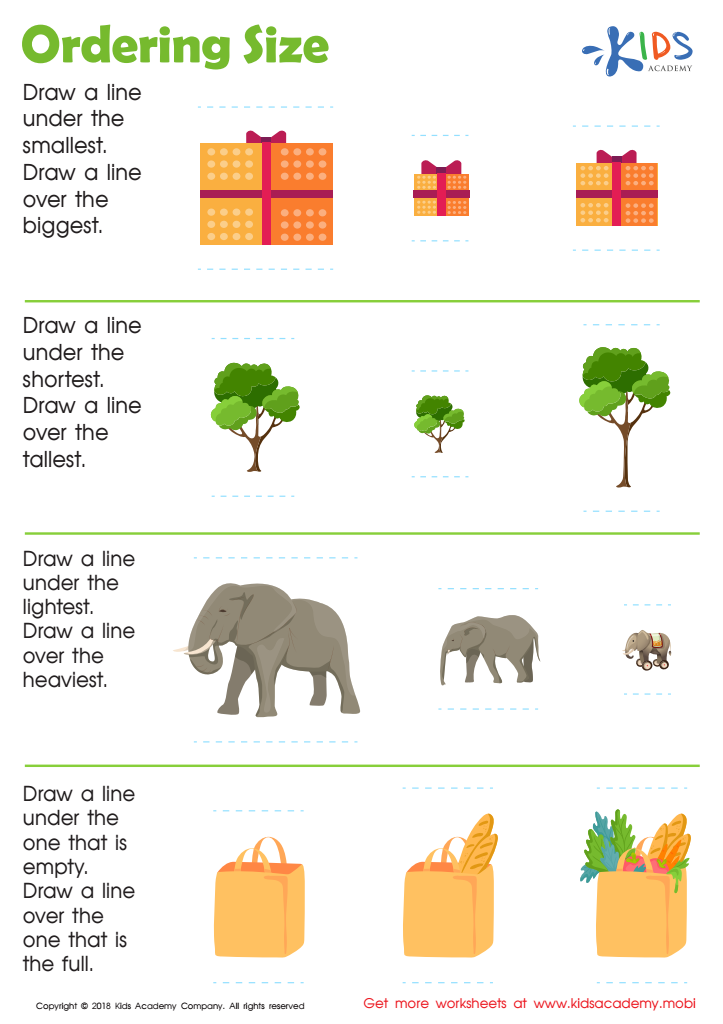
Ordering Size Worksheet
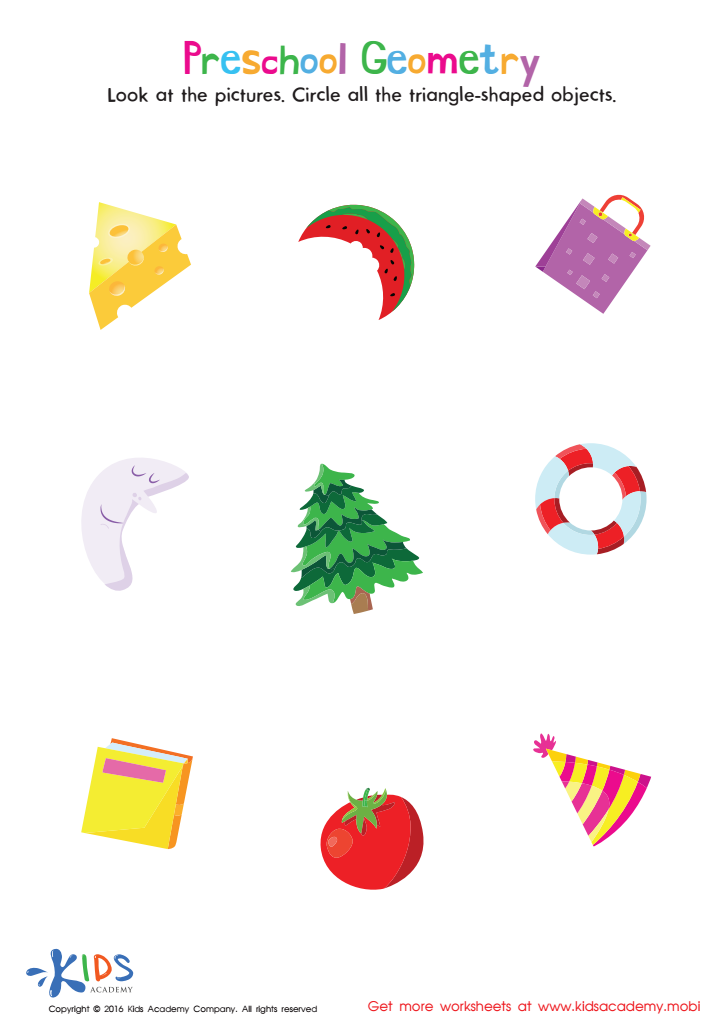
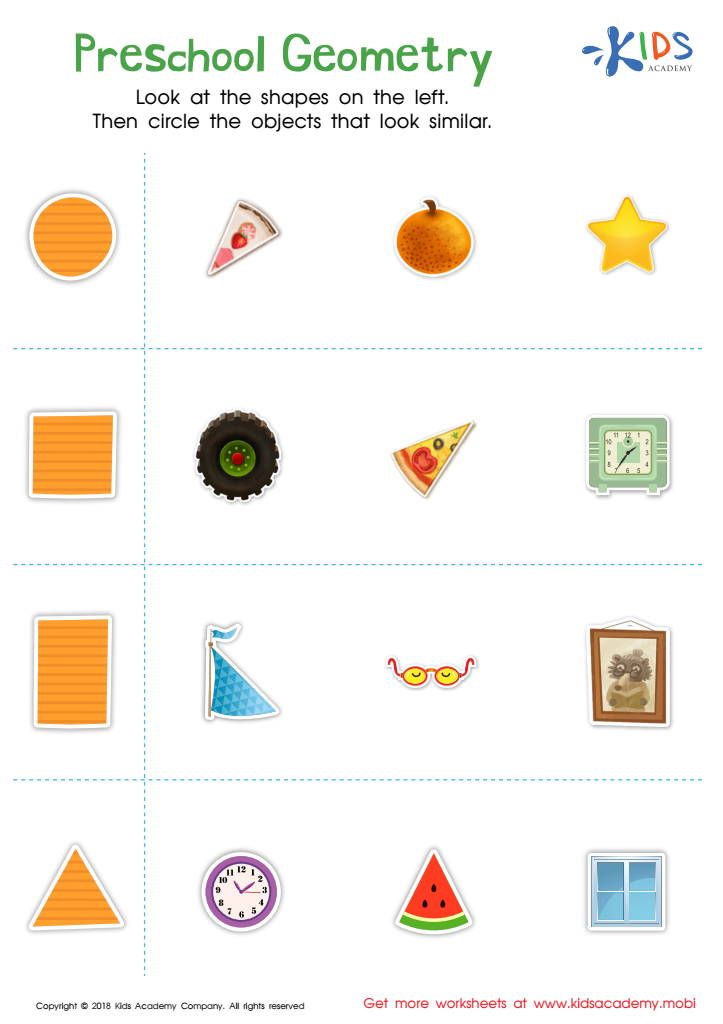
Preschool Geometry Worksheet








Understanding basic geometry is crucial for children aged 4-8 as it forms the foundation for their spatial awareness, critical thinking, and problem-solving skills. At this stage, kids are naturally curious about shapes, sizes, and spatial relationships. Teaching them about basic geometric concepts helps nurture their observation skills and enhances their ability to classify and categorize the world around them.
Geometry connects to everyday experiences. For instance, recognizing shapes in objects like buildings, toys, and nature fosters a child’s cognitive development. Additionally, studies show that a strong grasp of geometric concepts predicts future success in math and science endeavors. When children learn to recognize, compare, and manipulate shapes, they are practicing essential skills they'll need later in more complex mathematics.
Furthermore, introducing geometry through hands-on activities—like puzzles, building blocks, and drawing shapes—makes learning enjoyable. This age-appropriate approach not only captures attention but also encourages creativity and teamwork during collaborative activities. Ultimately, teachers and parents should prioritize early geometry understanding to equip children with foundational skills, boost their self-confidence, and ignite a lifelong interest in learning. These early experiences lay the groundwork for a child's academic achievements and overall cognitive development.








