Categorizing objects Normal Worksheets for Ages 4-8
4 filtered results
-
From - To
Explore our engaging "Categorizing Objects Normal Worksheets" thoughtfully designed for children aged 4-8. These worksheets provide a fun way to help young learners develop critical thinking and organizational skills by sorting various objects into categories. Through interactive tasks, children will enhance their comprehension of groups, similarities, and differences, making learning enjoyable! Ideal for home or classroom use, our worksheets support early educational development, fostering essential cognitive abilities. With colorful illustrations and age-appropriate activities, young learners will eagerly dive into the world of categorization. Empower your child’s learning journey today with our specially crafted worksheets and watch their confidence grow!
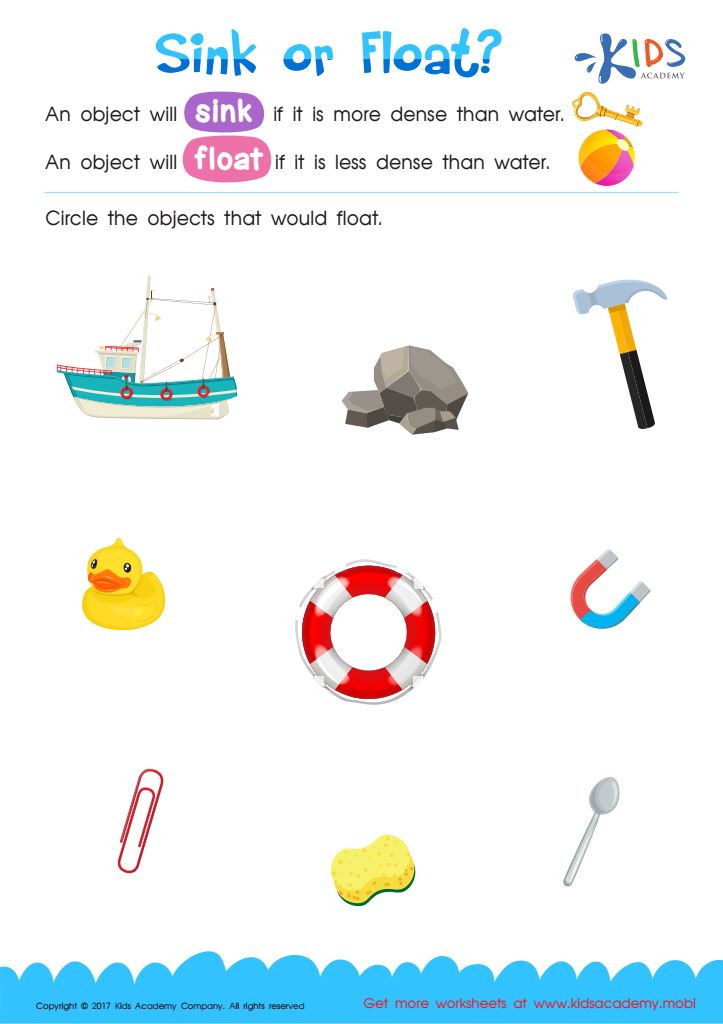
Sink or Float Printable
 Assign to My Students
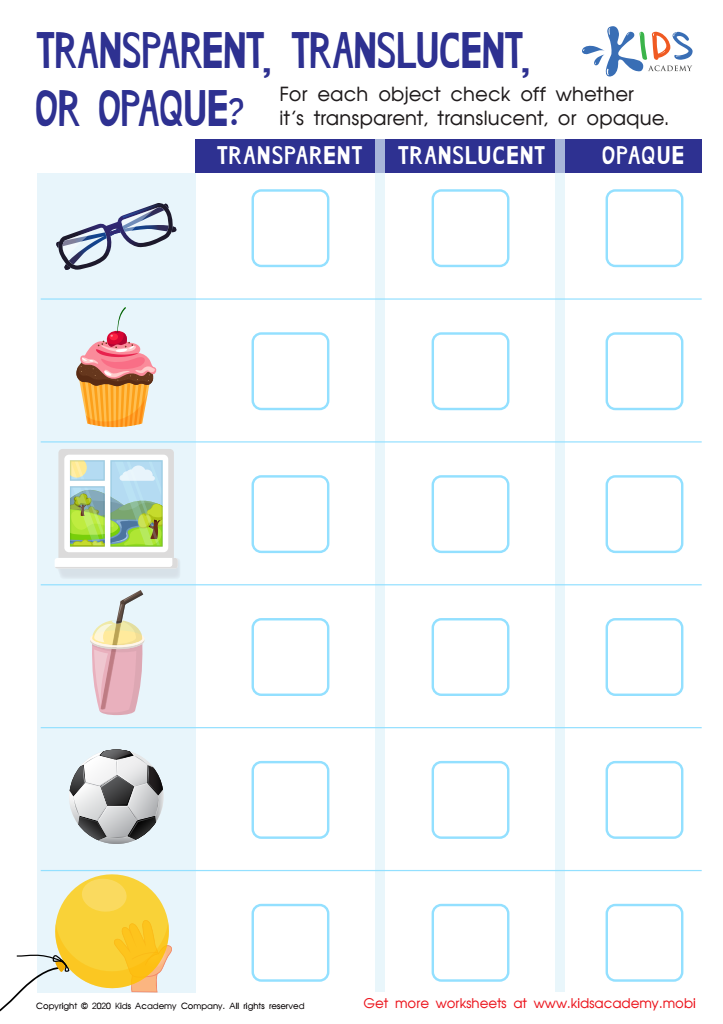
Transparent, Translucent, or Opaque Worksheet
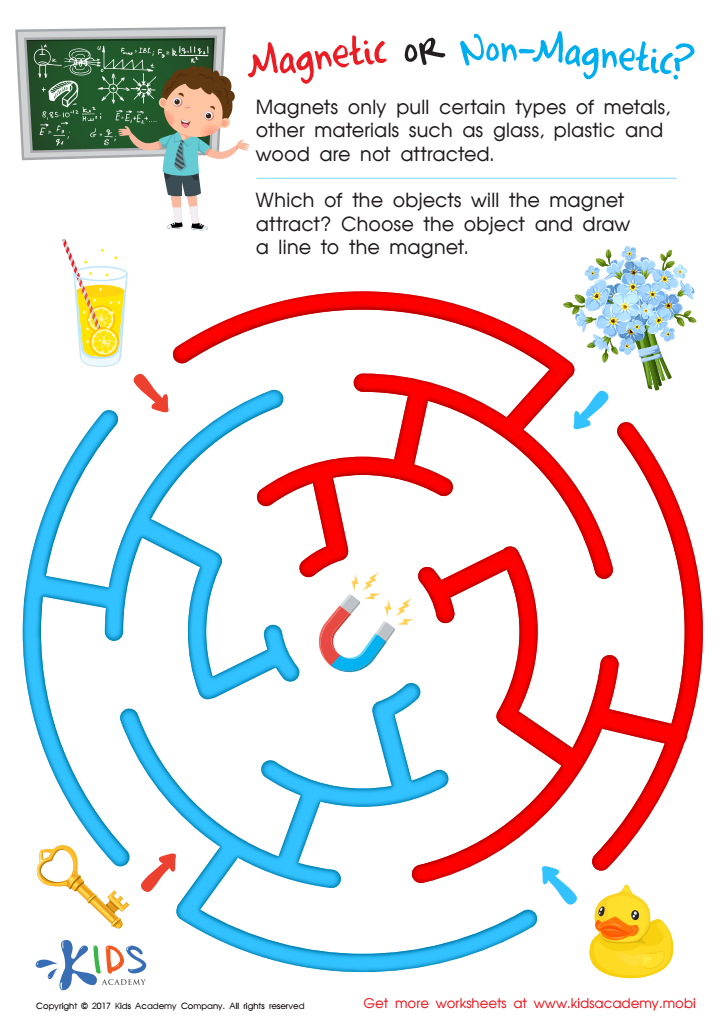
Magnetic or Non–Magnetic Worksheet
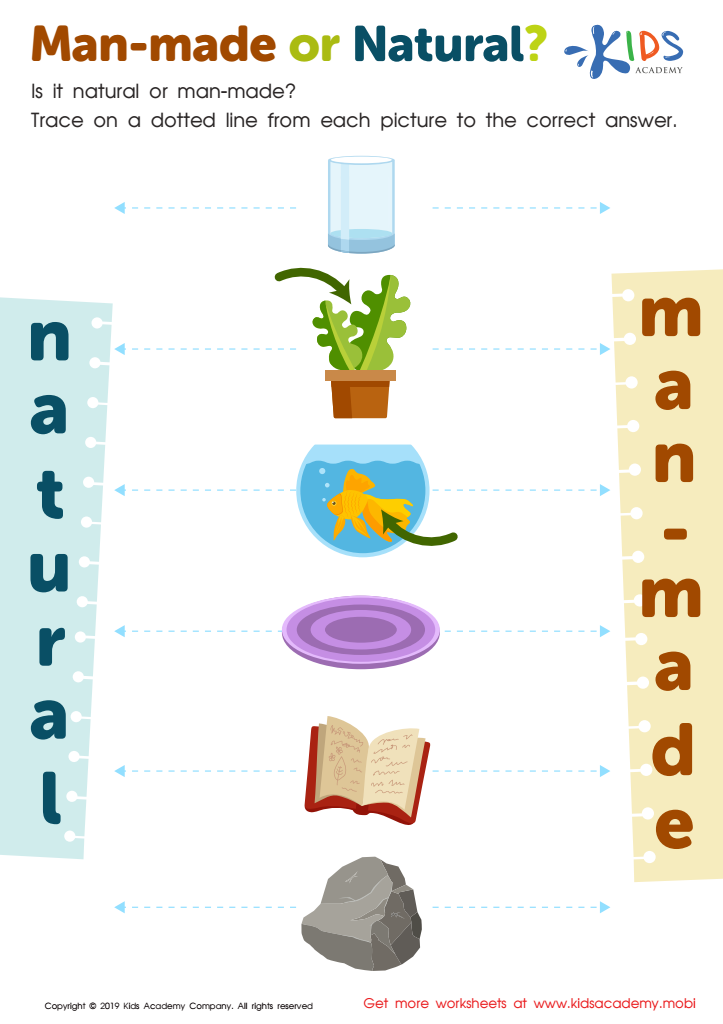
Man-Made or Natural? Worksheet




.jpg)


Categorizing objects is a fundamental cognitive skill that significantly supports the development of children aged 4-8. This process involves recognizing similarities and differences, which fosters critical thinking and reasoning skills. For parents and teachers, nurturing this ability is essential as it lays the groundwork for various learning milestones.
When children categorize objects, they learn to group items based on shared characteristics, enhancing their observational skills. This skill is not only vital in subjects like math and science, where classification and organization are key, but it also aids in language development as children learn new vocabulary related to categories.
Moreover, categorization promotes organizational skills and prepares children for problem-solving tasks. It empowers them to sort information logically, a skill crucial for academic success. Engaging in categorizing activities, whether with toys, animals, or everyday objects, also supports social skills as children discuss their reasoning and engage in collaborative play.
Ultimately, when parents and teachers emphasize the importance of categorizing, they equip children with essential tools for lifelong learning. It helps cultivate their ability to process information and encourages a sense of order and understanding in their environment, making it a core element of early childhood education.








