Historical Knowledge Normal Worksheets for Ages 4-8 - Page 2
27 filtered results
-
From - To
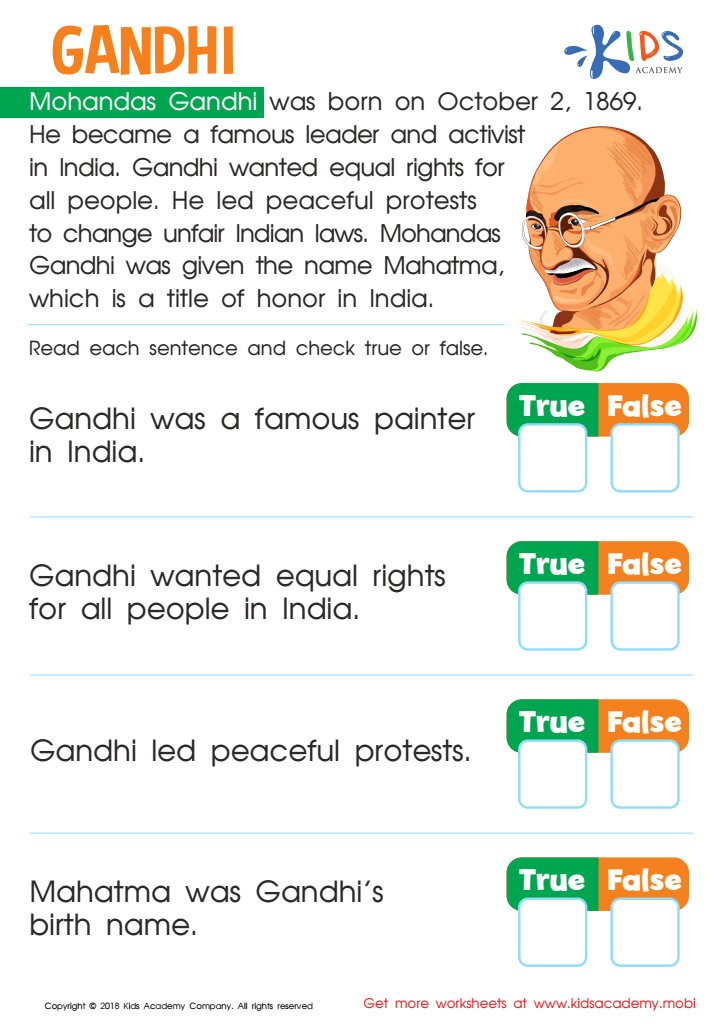
Gandhi Worksheet
 Assign to My Students
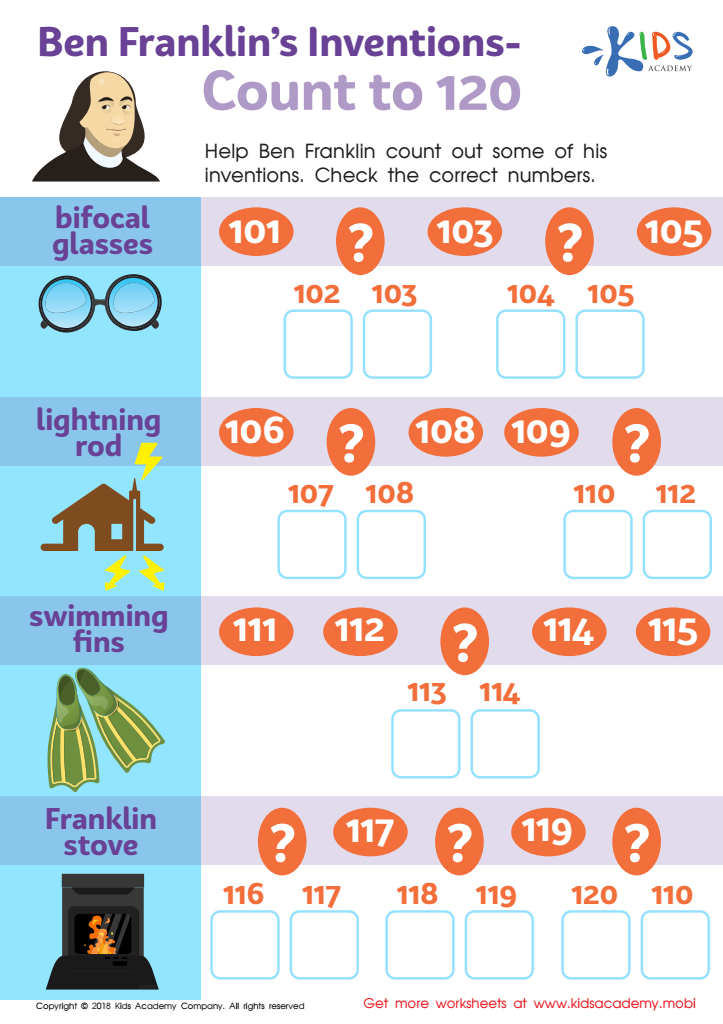
Ben Franklin’s Inventions – Count to 120 Worksheet
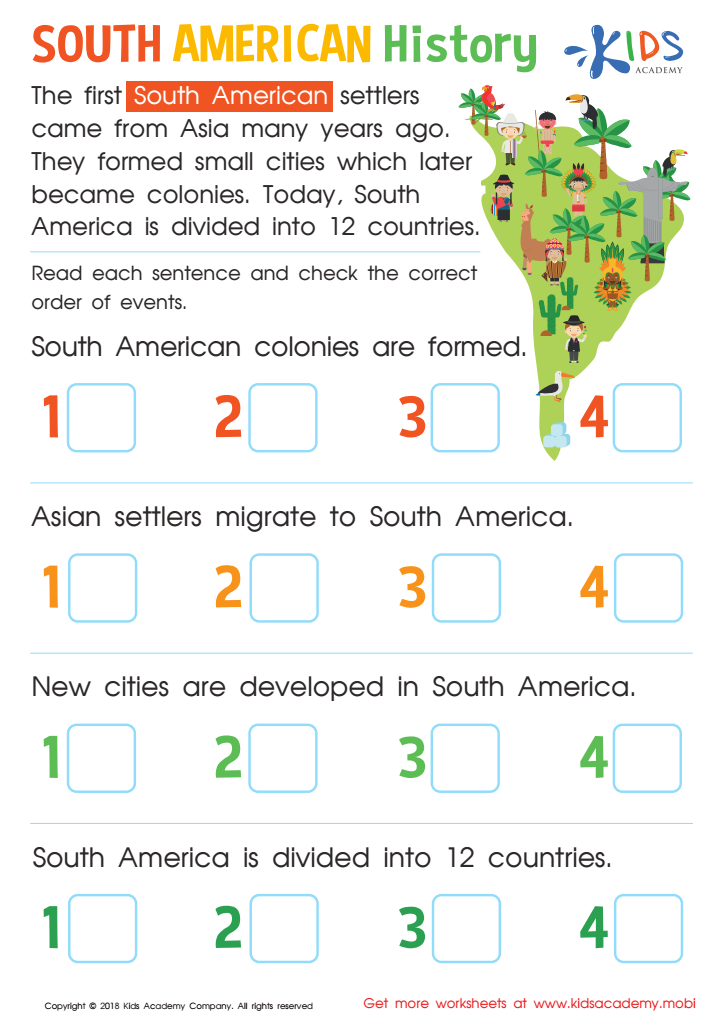
South American History Worksheet








Historical knowledge for children aged 4-8 is essential as it lays the foundation for understanding the world they live in. Introducing young students to history helps them grasp the concept of time, sequences of events, and the idea that actions have consequences. By learning about significant historical figures and events, children start to understand how societies have evolved, fostering a sense of context and continuity.
For parents and teachers, conveying history to these young minds also means instilling important values, such as empathy, justice, and cultural awareness. For example, learning about figures like Martin Luther King Jr. can teach children about fairness and kindness. Such knowledge nurtures their ability to appreciate diversity and develop respect for different perspectives.
Moreover, early exposure to history enhances critical thinking skills. When kids hear stories from the past, they learn to ask questions, make comparisons, and build narratives. These cognitive activities are crucial for their overall intellectual development.
Parents and teachers play a pivotal role in modeling curiosity and enthusiasm for learning about the past. This can inspire lifelong interest in history, making children more informed and socially responsible adults. Early exposure to historical knowledge is, therefore, vital in helping children understand their place in the world and shaping their future actions and interactions.








