Letter-sound association Normal Worksheets for Ages 4-8
7 filtered results
-
From - To
Discover our engaging Letter-Sound Association Worksheets designed for children aged 4-8. These expertly crafted resources are perfect for developing early reading skills by connecting letters with their corresponding sounds. Each worksheet offers fun, interactive exercises that make learning both enjoyable and effective. Ideal for teachers and parents, our worksheets help young learners enhance their phonemic awareness and build a strong foundation in literacy. Whether practicing at home or in the classroom, these materials support a dynamic learning experience, paving the way for confident readers. Start exploring now to boost your child’s reading proficiency and phonics skills!
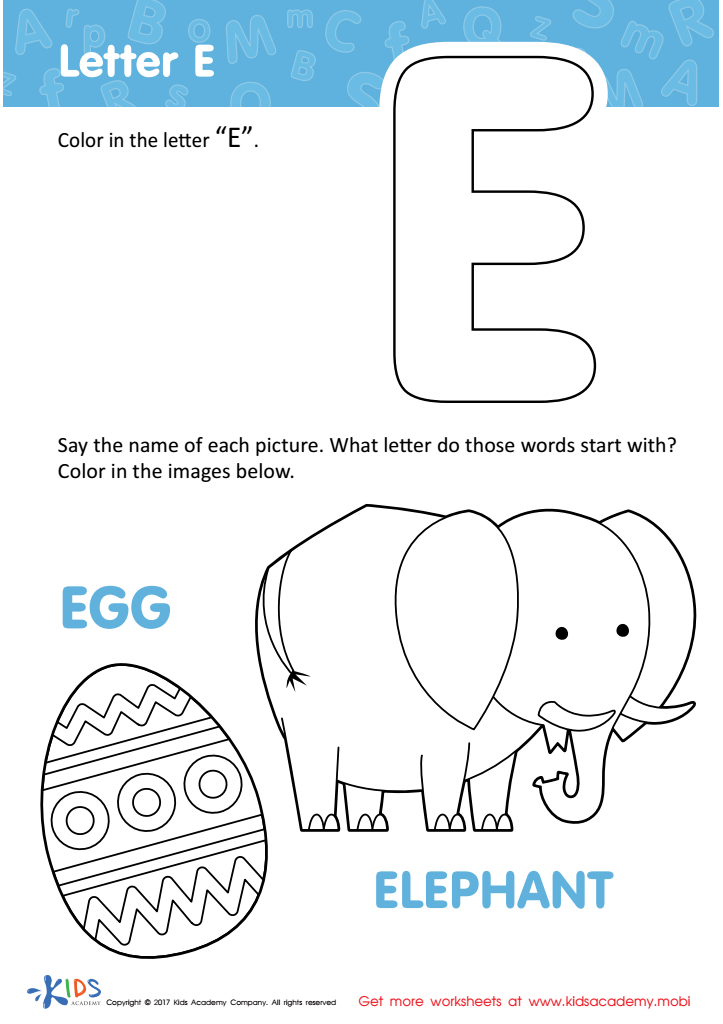
Letter E Coloring Sheet
 Assign to My Students
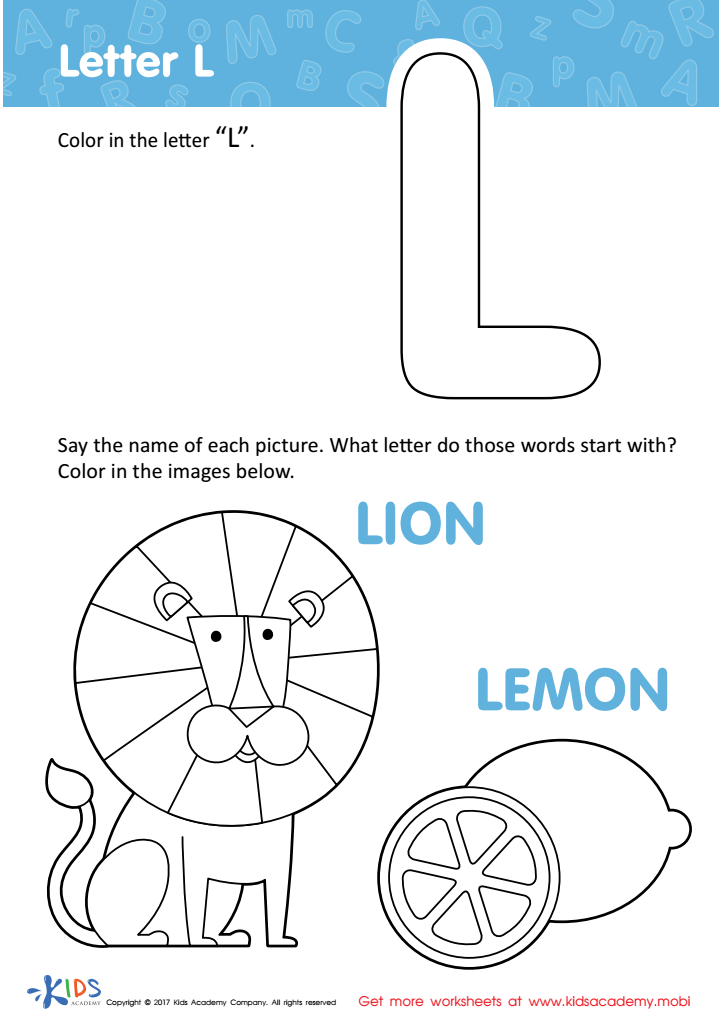
Letter L Coloring Sheet
Assign to My Students
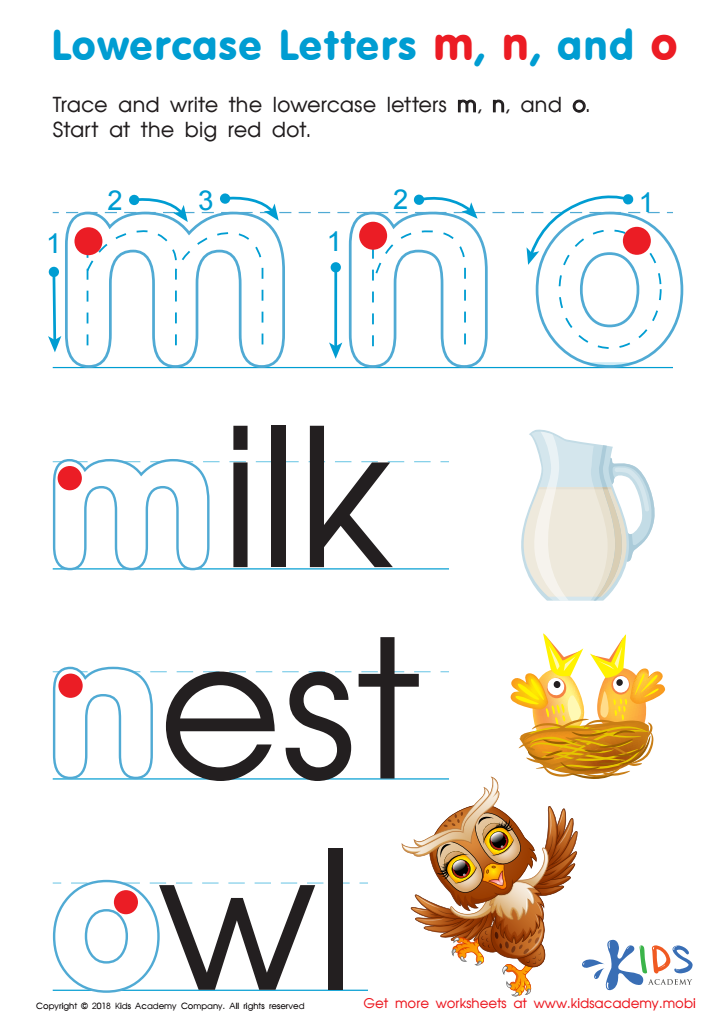
Lowercase Letters m n o Worksheet
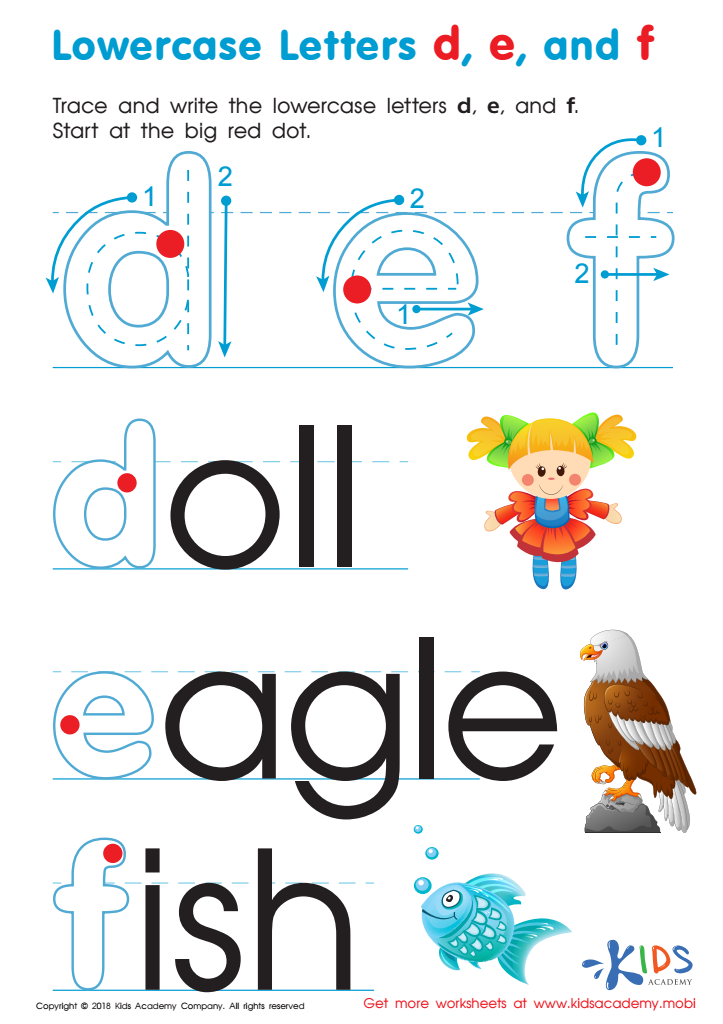
Lowercase Letters d e f Worksheet
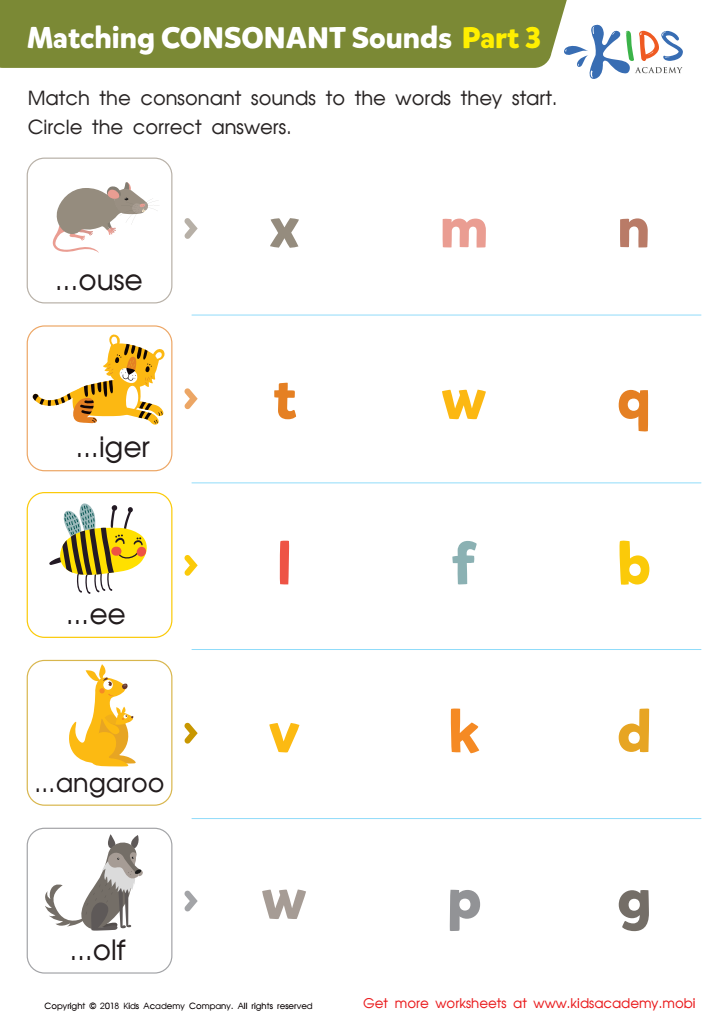
Matching Consonant Sounds: Part 3 Worksheet
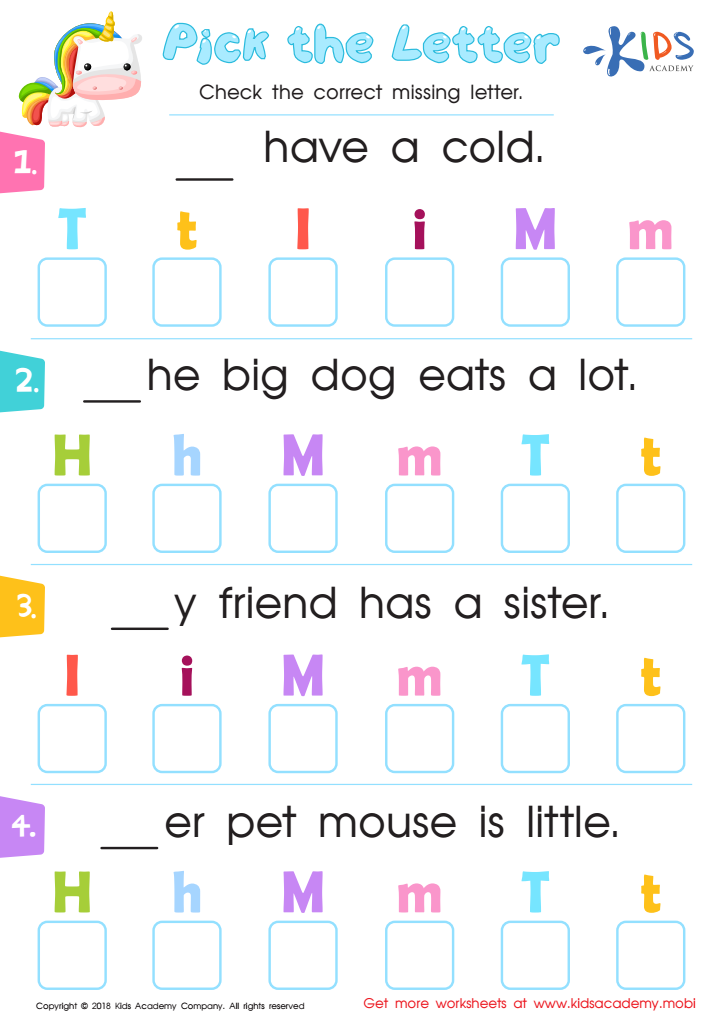
Pick the Letter Worksheet
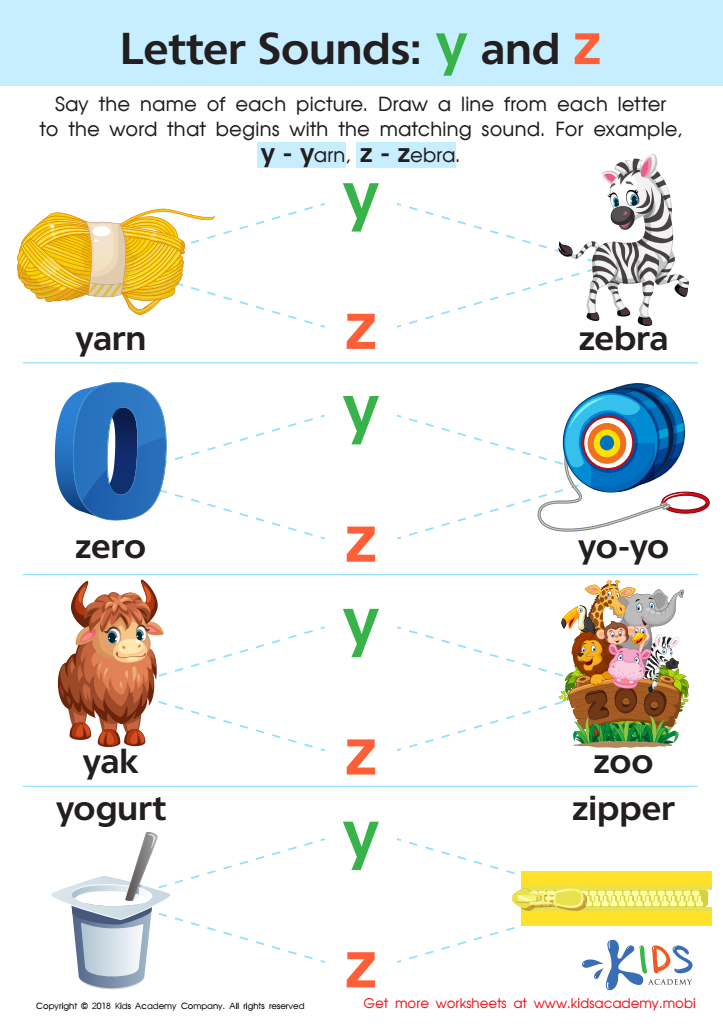
Letter Y and Z Sounds Worksheet







Caring about letter-sound associations for children ages 4-8 is crucial, as this skill forms the cornerstone of early literacy and language development. During these formative years, children transition from recognizing letters to understanding that letters represent specific sounds—a foundational concept that paves the way for reading and writing proficiency.
Firstly, mastering letter-sound association enables children to decode words, a critical skill for fluent reading. Without it, reading becomes memorization of whole words, which is cumbersome and limits vocabulary growth. Decoding allows children to approach unfamiliar words with confidence, enhancing their reading experience and comprehension.
Secondly, associating letters with sounds aids in spelling and writing. When children understand how letters combine to produce sounds, they can construct words accurately. This knowledge builds their ability to express themselves clearly and creatively in writing.
Moreover, phonetic awareness boosts cognitive skills like memory and attention span. It enhances how children process sounds and language, which has a broader impact on overall learning and communication skills.
Finally, early success in reading and writing contributes to a child's self-esteem and enthusiasm for learning. When children feel confident about their literacy skills, they are more likely to participate actively and positively in a wide range of educational activities, laying a foundation for lifelong learning and success.








