
Letter-sound correlation Normal Worksheets for Ages 4-8
5 filtered results
Difficulty Level
Grade
Age
-
From - To
Subject
Activity
Standards
Unlock your child’s reading potential with our Letter-Sound Correlation Normal Worksheets, designed for ages 4-8! These engaging, interactive worksheets help young learners connect letters with their corresponding sounds, enhancing phonemic awareness and paving the way for successful reading skills. Featuring colorful illustrations and fun exercises, children will enjoy identifying letters and sounds through a variety of activities. Perfect for homeschooling, classroom settings, or supplemental practice at home, our worksheets cater to diverse learning styles. Boost your child’s confidence in reading today and watch them thrive as they master this essential foundational skill. Enjoy a fun learning experience with Kids Academy!
Favorites
With answer key
Interactive
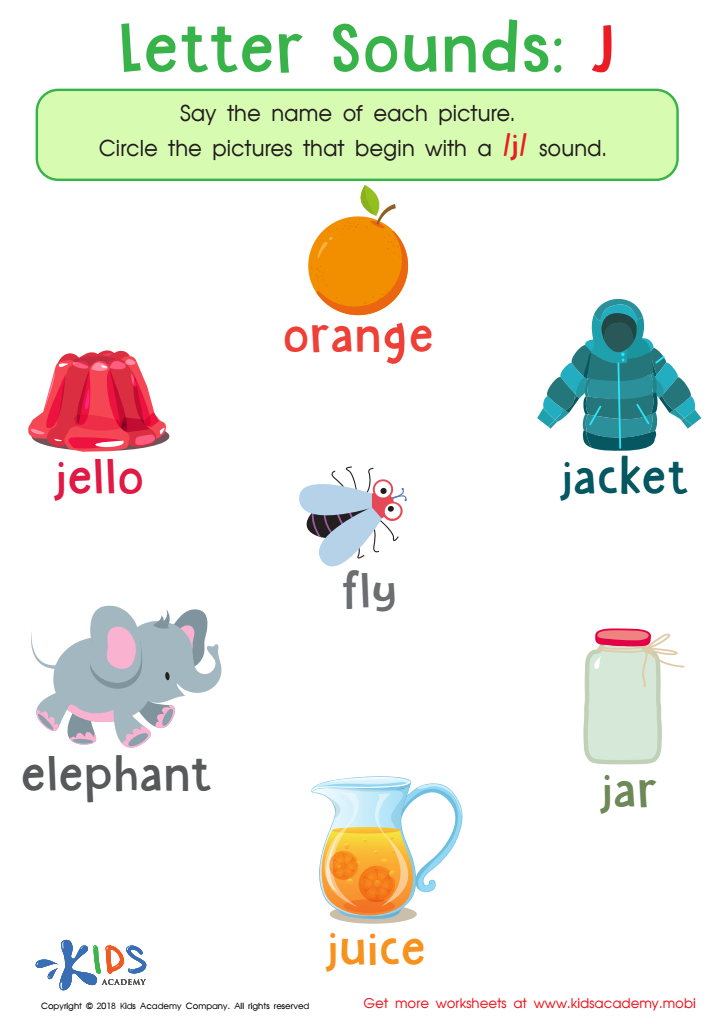
Letter Sounds: J Printable Worksheet
Preschoolers can learn to identify letter sounds by focusing on beginning sounds. This cute and colorful worksheet reviews the hard “j” sound. Kids can point it out by naming the words and circling only those starting with the “j” sound. Read the text out loud and listen closely!
 Assign to My Students
Letter Sounds: J Printable Worksheet
Worksheet
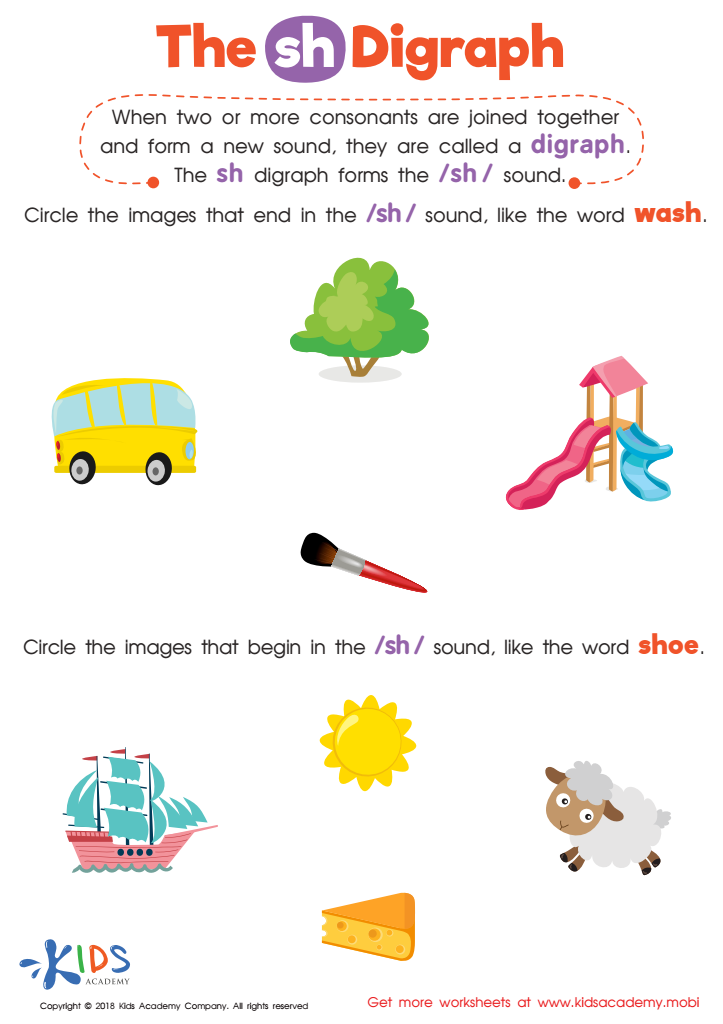
The SH Digraph Worksheet
There are many phonetic sounds, each with its own unique sound. When two or more consonants are combined to create a new sound, it's called a digraph. Example: the sh digraph creates the /sh/ sound. Have kids look at the pictures and say the words aloud. Help them circle the images ending with /sh/, like 'wash'.
The SH Digraph Worksheet
Worksheet
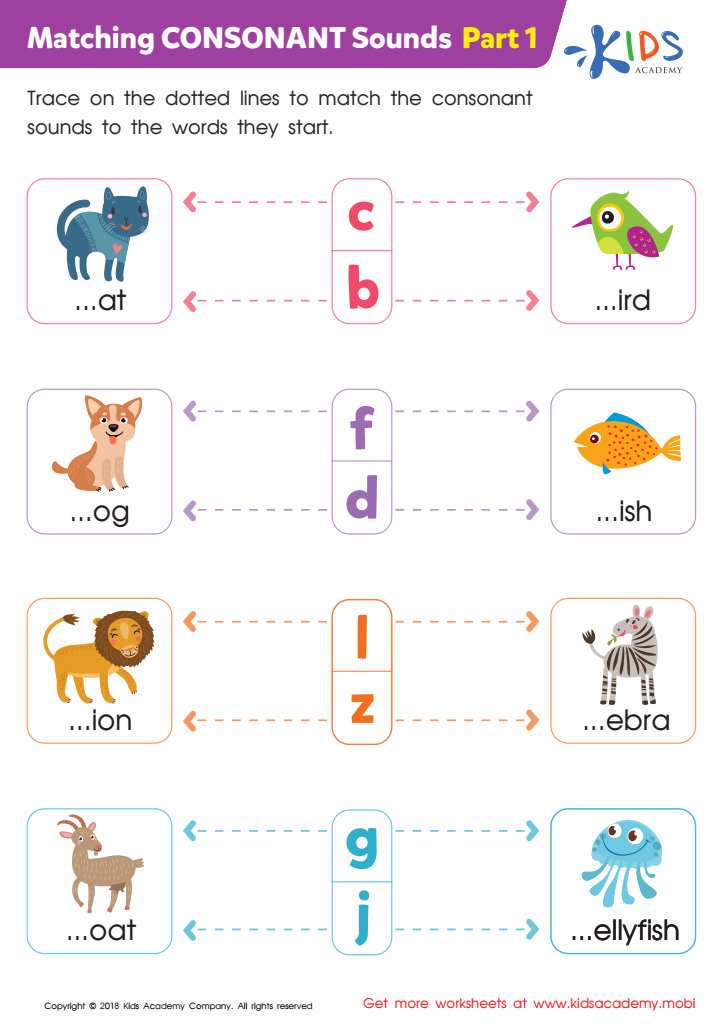
Matching Consonant Sounds: Part 1 Worksheet
Decide which letter matches each word and picture in this fun phonics worksheet. Slide your finger over each word, trying out each letter to check for matches. Once each pair is solved, trace the dotted lines with pencil to complete the printable. Who knew learning could be so enjoyable?
Matching Consonant Sounds: Part 1 Worksheet
Worksheet
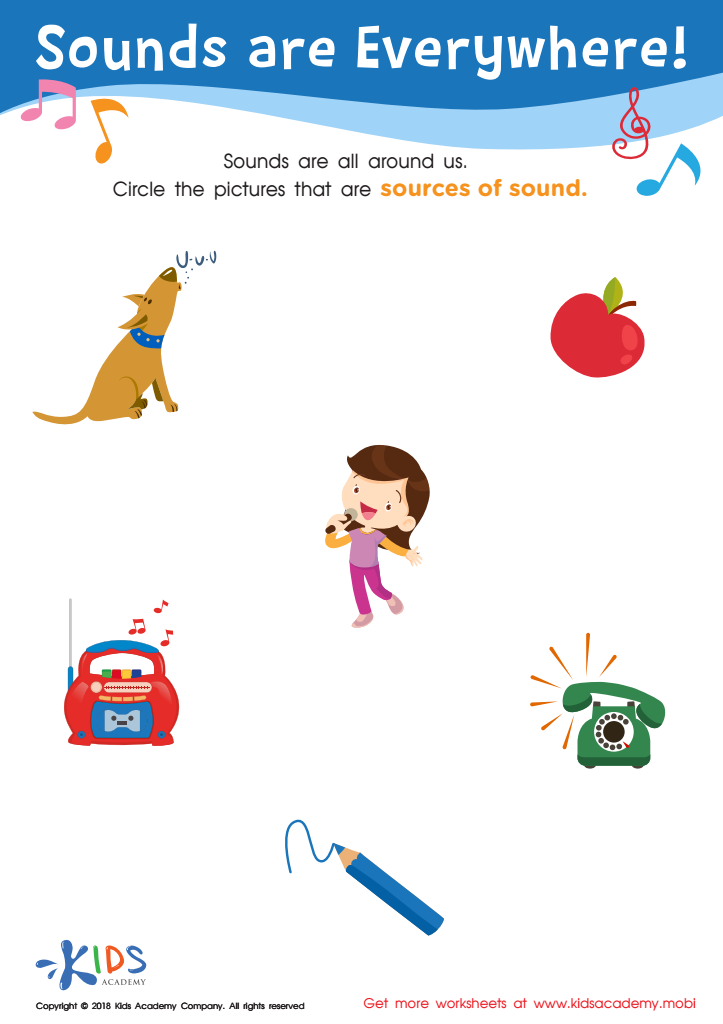
Sounds Are Everywhere! Worksheet
Ask your students to recall objects that make sound. Then, help them identify the sources of sound in the pictures of this worksheet.
Sounds Are Everywhere! Worksheet
Worksheet
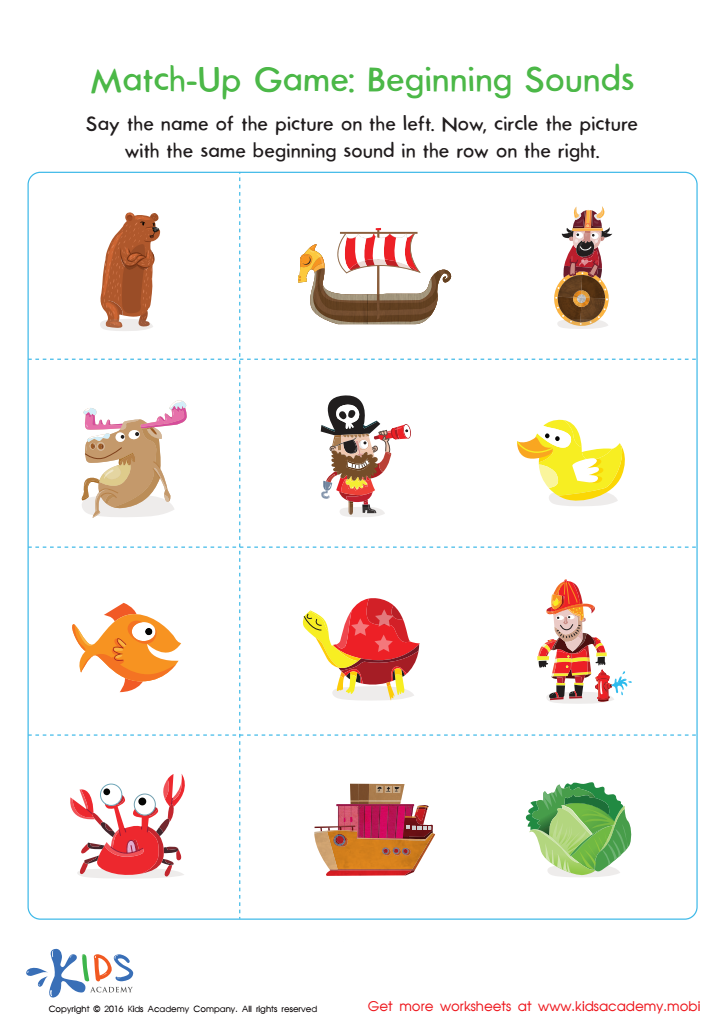
Match–Up Game: Beginning Sounds Worksheet
Start today with this beginning sounds match-up printable!
Teach your child to solve problems mentally with this beginning sounds match-up printable. They'll learn to categorize pictures based on phonics rules, developing mental stamina and focus. It's an important step for recognizing sounds and letters in print, building a foundation for reading and spelling. Start today and take your child's skills to the next level!
Match–Up Game: Beginning Sounds Worksheet
Worksheet
Join Kids Academy for Free
Who is primarily going to use this learning content?






Letter-sound correlation, or phonics, is crucial for children aged 4-8 as it forms the foundation for reading and writing skills. At this age, children are developing their literacy skills, and understanding how letters correspond to sounds helps them decode words effectively. This correlation allows young learners to read unfamiliar words by breaking them down into manageable sounds, facilitating greater independence in literacy.
Teachers and parents should care about this skill because proficiency in phonics enhances children's confidence in reading. When kids understand the relationship between letters and sounds, they are less intimidated by new text and more willing to tackle challenging reading material. Additionally, strong phonics skills contribute directly to improved comprehension and vocabulary development.
Moreover, early mastery of phonics can prevent reading difficulties later on, which often arise when phonemic awareness is lacking. These foundational skills are not just beneficial for academic success; they also foster a love for reading and learning, translating into lifelong benefits. By prioritizing letter-sound correlation, parents and educators can ensure that their children have the tools they need to become confident and competent readers, laying the groundwork for their future educational achievements and personal growth.








