Spatial Orientation Normal Worksheets for Ages 4-8
4 filtered results
-
From - To
Unlock your child's potential with our Spatial Orientation Worksheets, designed specifically for ages 4-8. These engaging printables help young learners develop crucial skills such as understanding directions, spatial awareness, and distance recognition through fun activities and exercises. Each worksheet is crafted to enhance cognitive development while keeping children entertained. From identifying shapes and patterns to navigating mazes, our worksheets are perfect for reinforcing classroom learning at home or in educational settings. Ideal for teachers and parents alike, these materials make learning spatial concepts enjoyable and accessible. Start discovering the world of spatial orientation with the perfect tools for young minds!
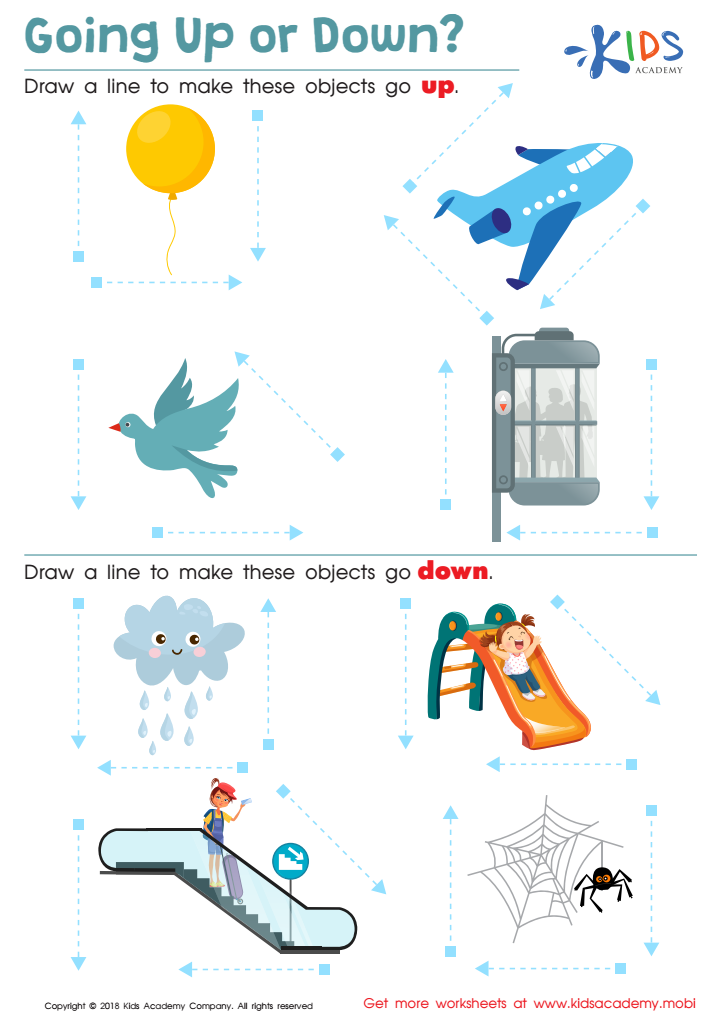
Going up or Down? Worksheet
 Assign to My Students
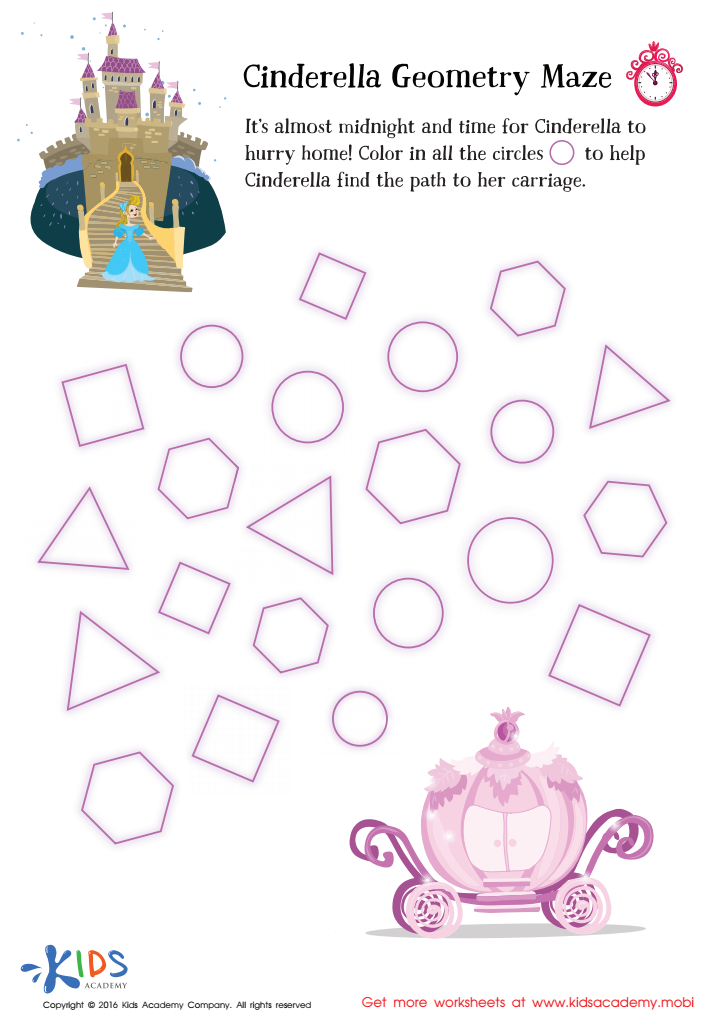
Cinderella Geometry Maze Worksheet
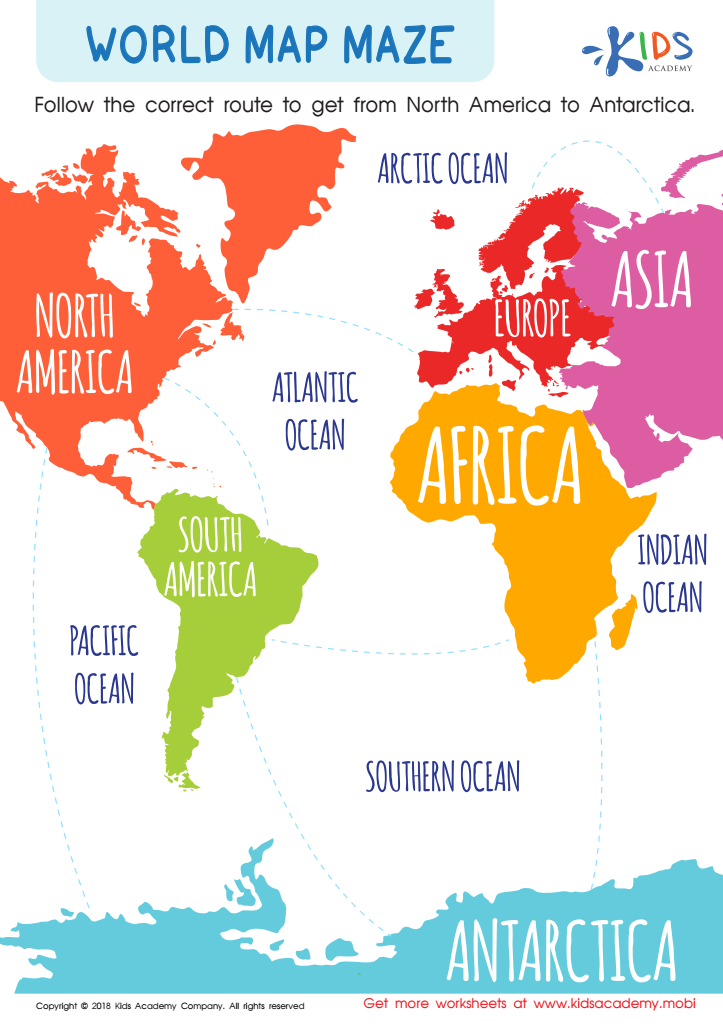
World Map Maze Worksheet
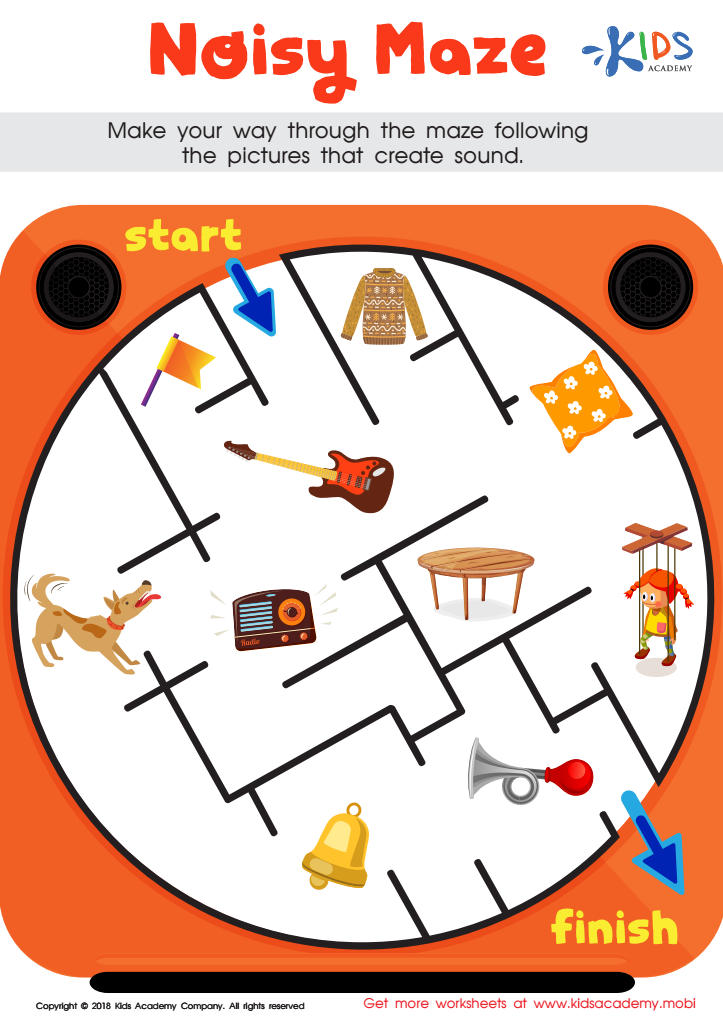
Noisy Maze Worksheet





.jpg)
.jpg)
Spatial orientation is a crucial developmental skill for children aged 4-8. It refers to the ability to understand one's position and relationship to their surroundings, including understanding directions and navigating spaces. Parents and teachers should care about spatial orientation because it foundationally supports cognitive, physical, and social development in young children.
Firstly, spatial orientation enhances problem-solving skills, as children learn to navigate through obstacles and understand spatial relationships in mathematics and science. This proficiency is critical as they progress through educational milestones.
Secondly, improved spatial awareness fosters greater physical coordination and motor skills. Activities that involve movement, such as sports and dance, require children to adeptly navigate their environment, boosting their confidence and promoting a healthy lifestyle.
Additionally, spatial orientation is linked to language development. Discussions about positions—like “in,” “on,” and “under”—help enrich vocabulary and comprehension.
Lastly, strong spatial skills contribute to social interactions. Children who can understand spatial dynamics often develop better communication strategies and teamwork skills during play.
In summary, nurturing spatial orientation skills in early childhood is essential not only for academic success but also for fostering overall wellbeing. Parents and teachers can play a pivotal role in guiding this crucial aspect of development.








