Understanding forces Normal Worksheets for Ages 4-8
6 filtered results
-
From - To
Explore our engaging "Understanding Forces Normal Worksheets" designed for children ages 4-8! These interactive worksheets introduce young learners to fundamental concepts of forces, making complex ideas accessible through fun activities. Perfect for enhancing fine motor skills and critical thinking, each worksheet includes colorful illustrations and hands-on exercises that captivate children's interest. The curriculum aligns with early learning standards, promoting an understanding of how forces affect everyday life. Foster curiosity and exploration in the world of physics with our easy-to-use worksheets, perfect for home or classroom settings. Start your child's journey into science with these enjoyable resources today!
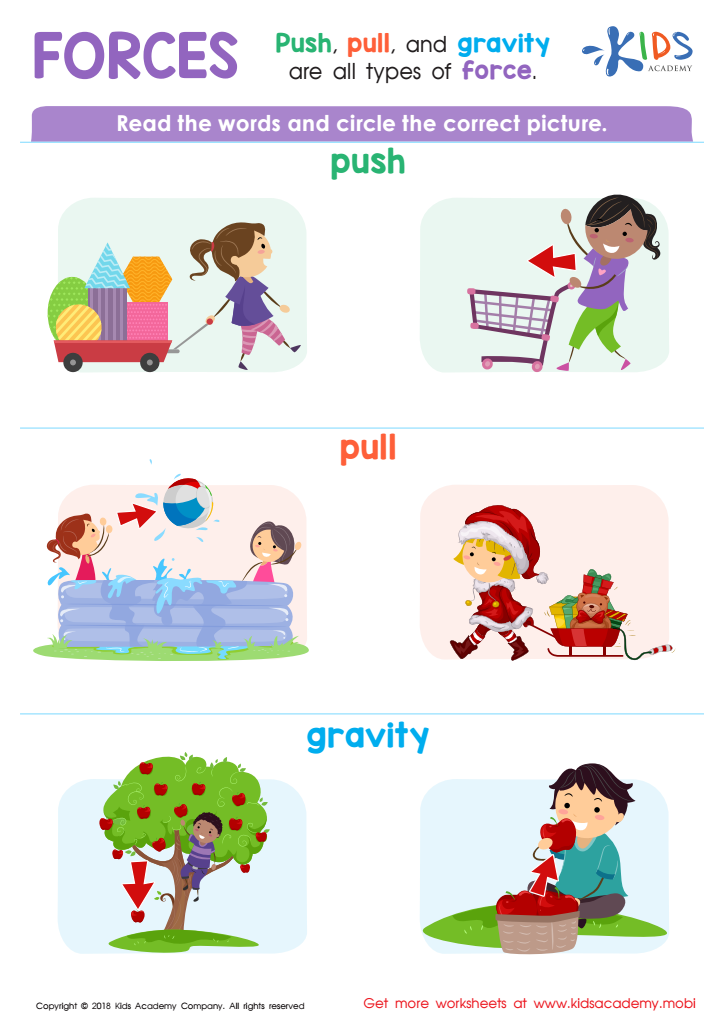
Forces Worksheet
 Assign to My Students
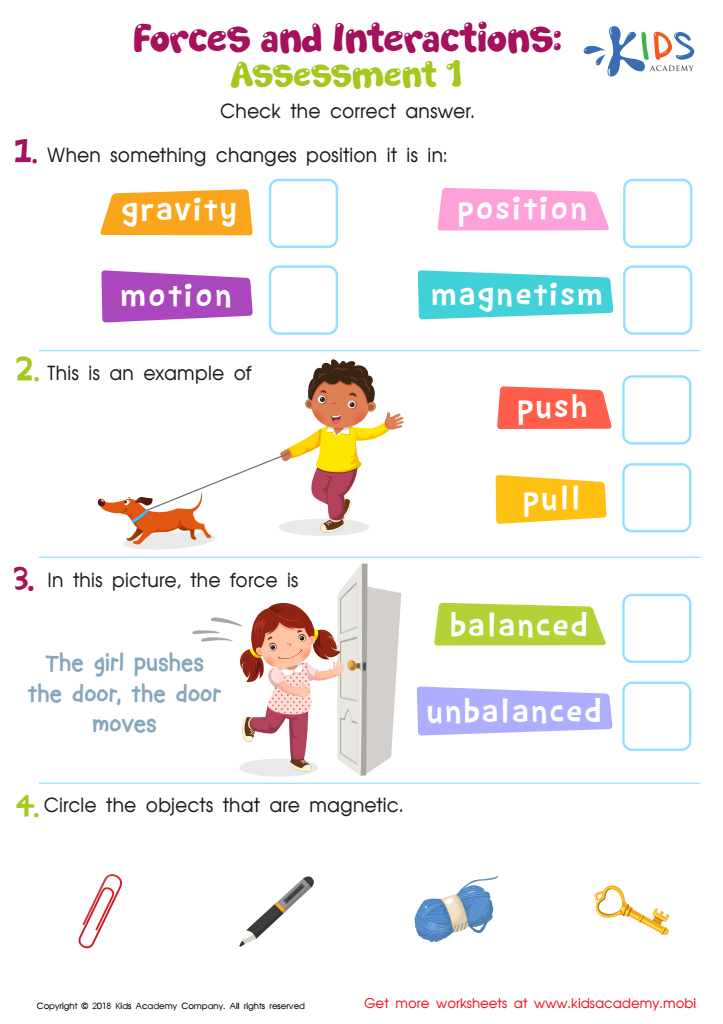
Forces and Interactions Printable
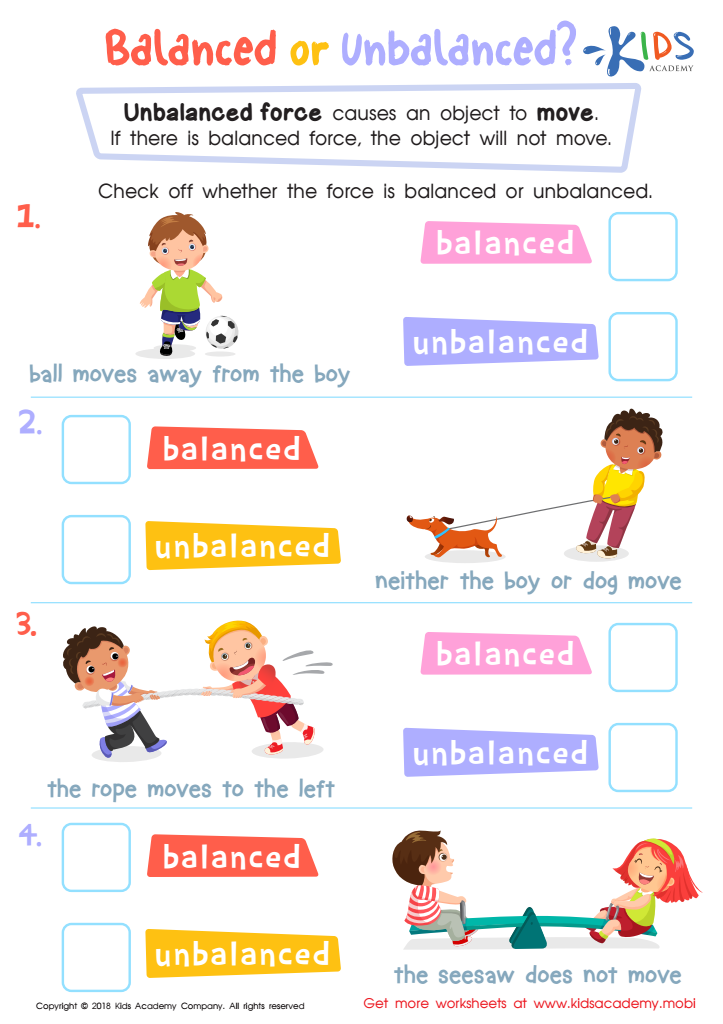
Balanced or Unbalanced Science Worksheet
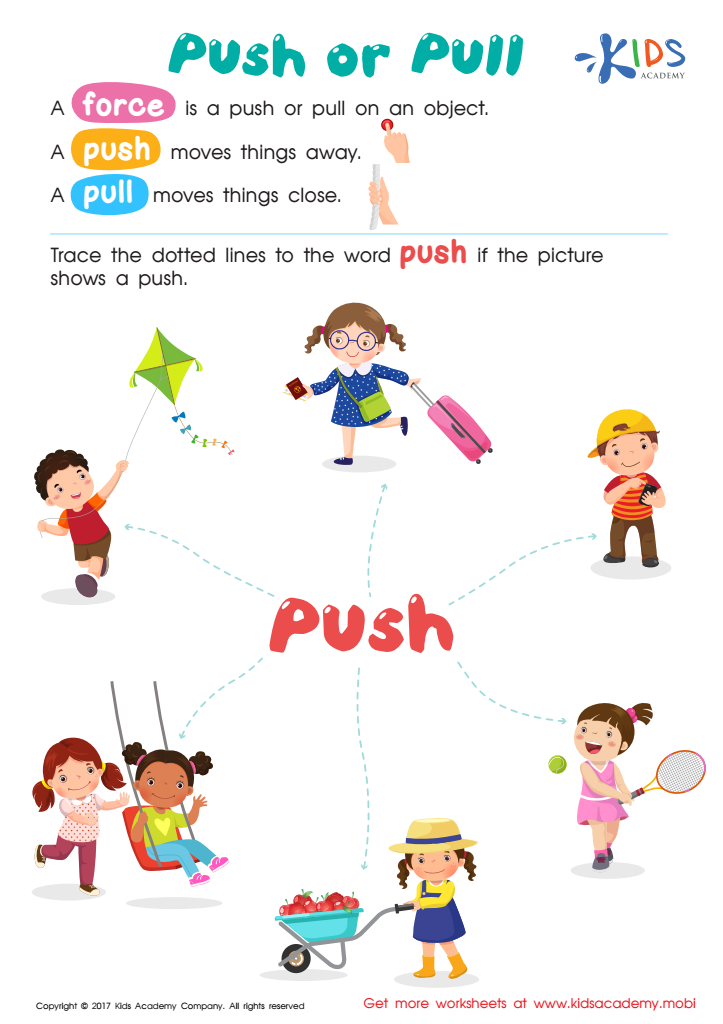
Push or Pull Worksheet
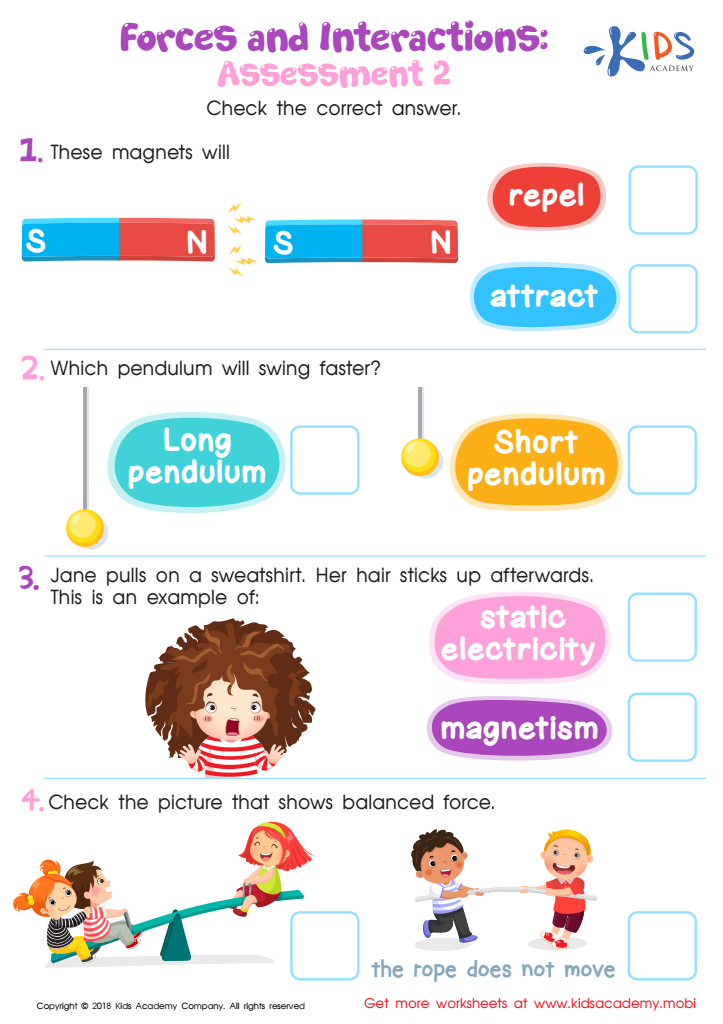
Forces and Interactions Worksheet For 3rd Grade
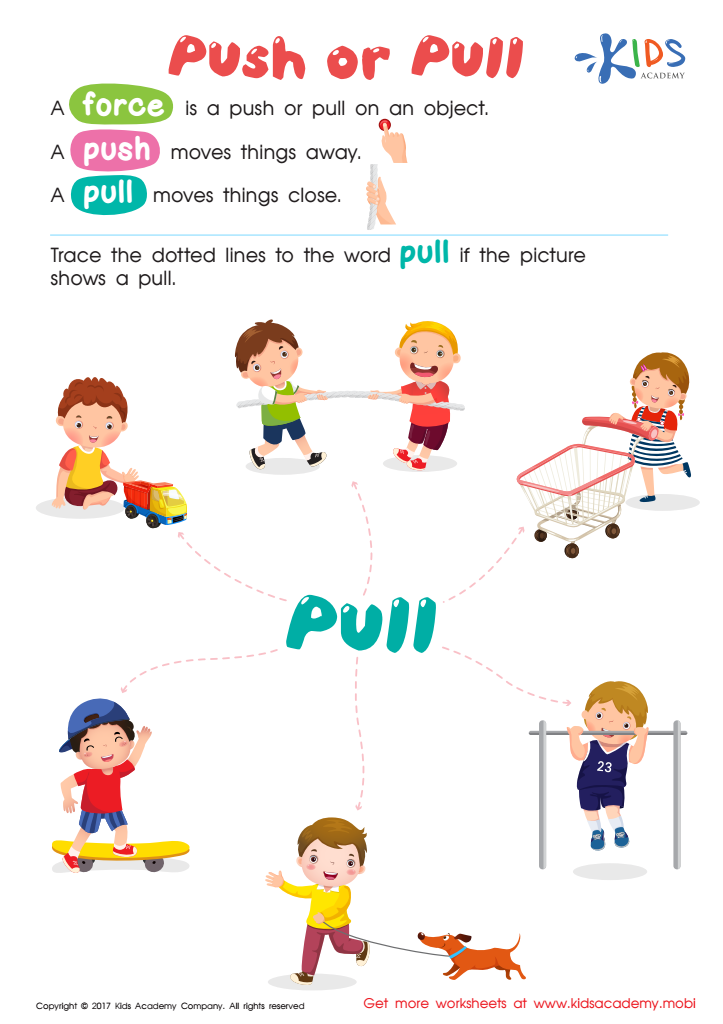
Pull or Push Worksheet








Understanding forces is crucial for the cognitive and physical development of children aged 4-8. At this stage, children are naturally curious about their surroundings, making it an ideal time to introduce basic scientific concepts, such as forces. Teaching them about normal forces, the support that surfaces exert to hold objects up, enhances their comprehension of everyday phenomena, from a resting book on a table to jumping on the ground.
Parents and teachers should care about this because it lays the groundwork for critical thinking and problem-solving skills. Engaging children with hands-on activities, like playing with blocks or observing how objects interact, promotes a richer understanding of physical principles. Additionally, such experiential learning fosters a love for science that can inspire future inquiries and academic pursuits.
Furthermore, introducing young learners to the concept of forces builds foundational knowledge for more complex topics they will encounter in later grades. This knowledge not only aligns with educational standards but also encourages children to explore and ask questions, cultivating a lifelong desire for learning. By placing emphasis on understanding forces, caregivers can nurture curious and knowledgeable individuals ready to engage with the world around them.








