Cognitive Development Normal 2D Shapes Worksheets for Ages 4-8
5 filtered results
-
From - To
Enhance your child's cognitive development with our engaging 2D shapes worksheets, specifically designed for ages 4-8. These worksheets feature a variety of fun activities that promote shape recognition, spatial awareness, and problem-solving skills. Children will explore circles, squares, triangles, and more through tracing, coloring, and matching exercises, ensuring they grasp essential concepts in an enjoyable way. Our resources encourage critical thinking and promote early math skills, providing a solid foundation for future learning. Perfect for home or classroom use, these cognitive development worksheets are an excellent tool for nurturing young minds while making learning about shapes exciting and interactive!
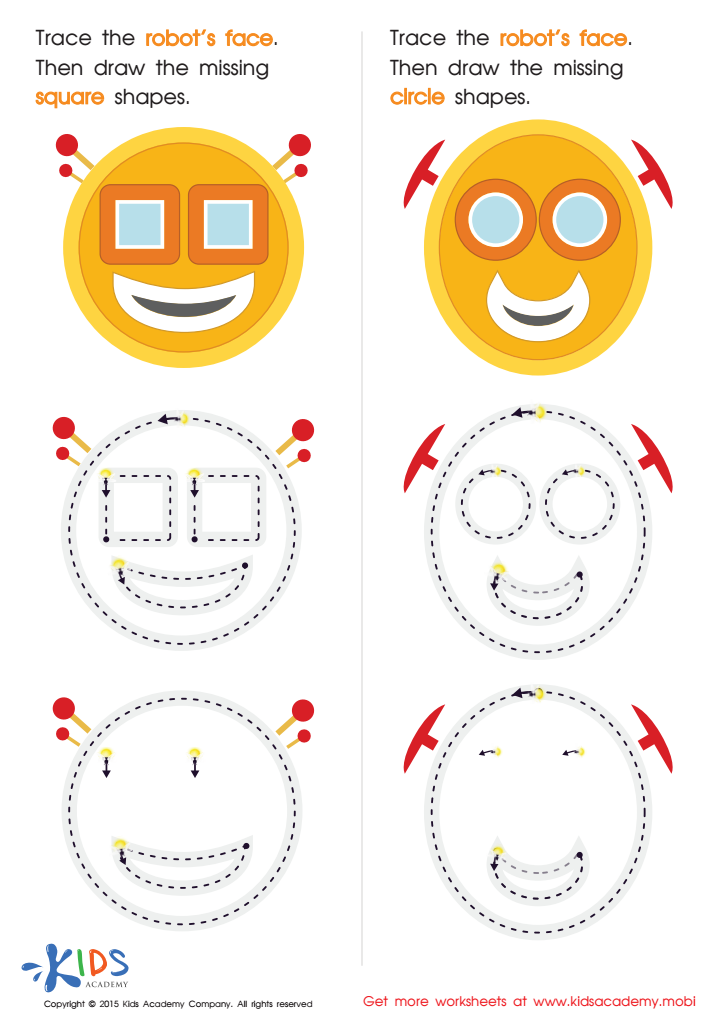
Practicing to Draw Circles And Squares Printable
 Assign to My Students











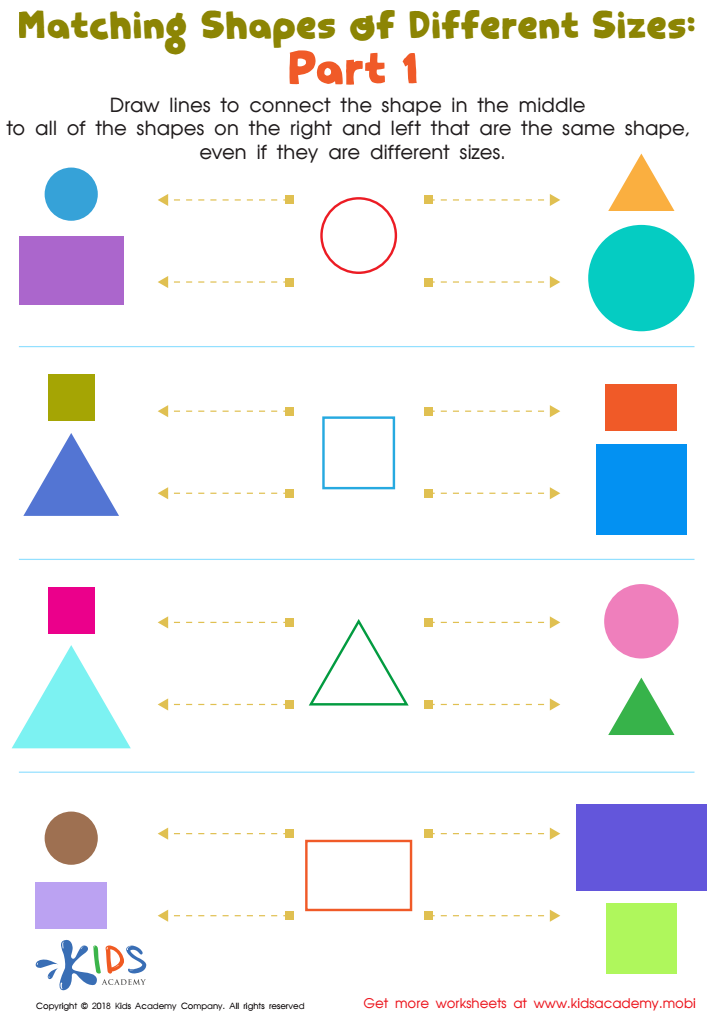
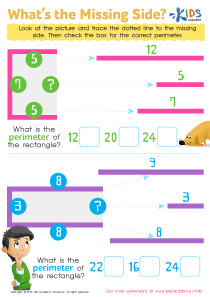
Geometry: part 1 Worksheet
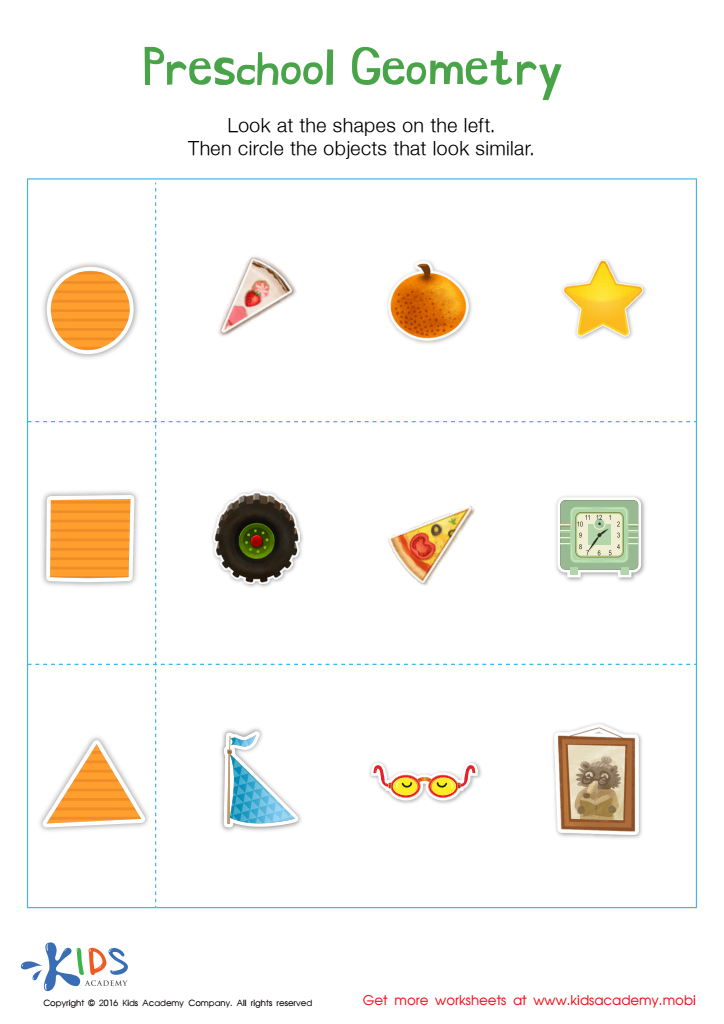
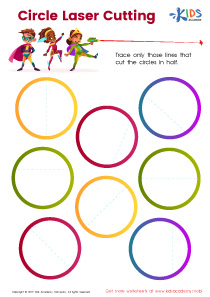
Preschool Geometry Match Up Worksheet
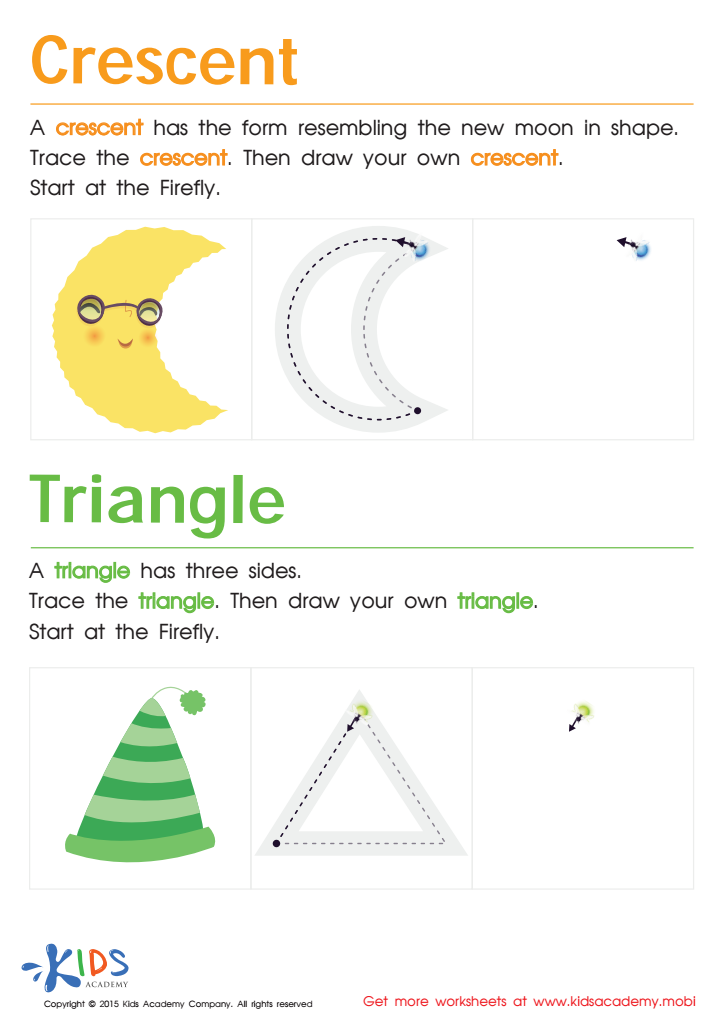
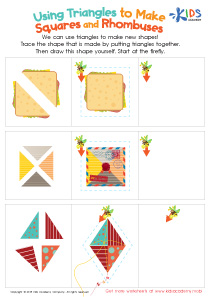
Learning to Draw Crescents And Triangles Worksheet

Matching Shapes Worksheet








Cognitive development in early childhood, particularly concerning understanding 2D shapes, is crucial for several reasons. First, recognizing and manipulating shapes forms the foundation for mathematical concepts, such as geometry and spatial awareness. Children aged 4-8 are at a pivotal stage in which they learn to categorize and differentiate between various shapes, honing their problem-solving skills.
Moreover, engaging with 2D shapes fosters critical thinking and encourages creativity as children learn to see their environment through a geometric lens. For instance, recognizing shapes in everyday objects enhances their observational skills and vocabulary. This awareness is not only beneficial for mathematics but also strengthens their ability to understand and create art and design.
Additionally, mastering 2D shapes lays the groundwork for future learning in more complex subjects, such as science and technology, where spatial reasoning plays a significant role. By supporting this aspect of cognitive development, parents and teachers can empower children to enhance their analytical abilities.
Ultimately, an early understanding of shapes aids in building confidence and competence in academic pursuits, setting the stage for successful learning experiences as children progress through school. By prioritizing shape recognition, adults can significantly influence a child's overall cognitive growth and enthusiasm for learning.