Basic Addition Skills Normal Addition & Subtraction Worksheets for Ages 4-8
8 filtered results
-
From - To
Enhance your child's mathematical foundation with our Basic Addition Skills worksheets designed specifically for ages 4-8. These engaging normal addition and subtraction worksheets help young learners practice essential math concepts in a fun and interactive way. Each worksheet encourages the development of crucial skills through colorful illustrations and age-appropriate challenges. Watch your child build confidence and competence as they master basic addition and subtraction. Ideal for classroom use or at-home practice, our worksheets provide valuable learning opportunities that support early math education, fostering a love for numbers and problem-solving. Start your educational journey today with our printable resources!
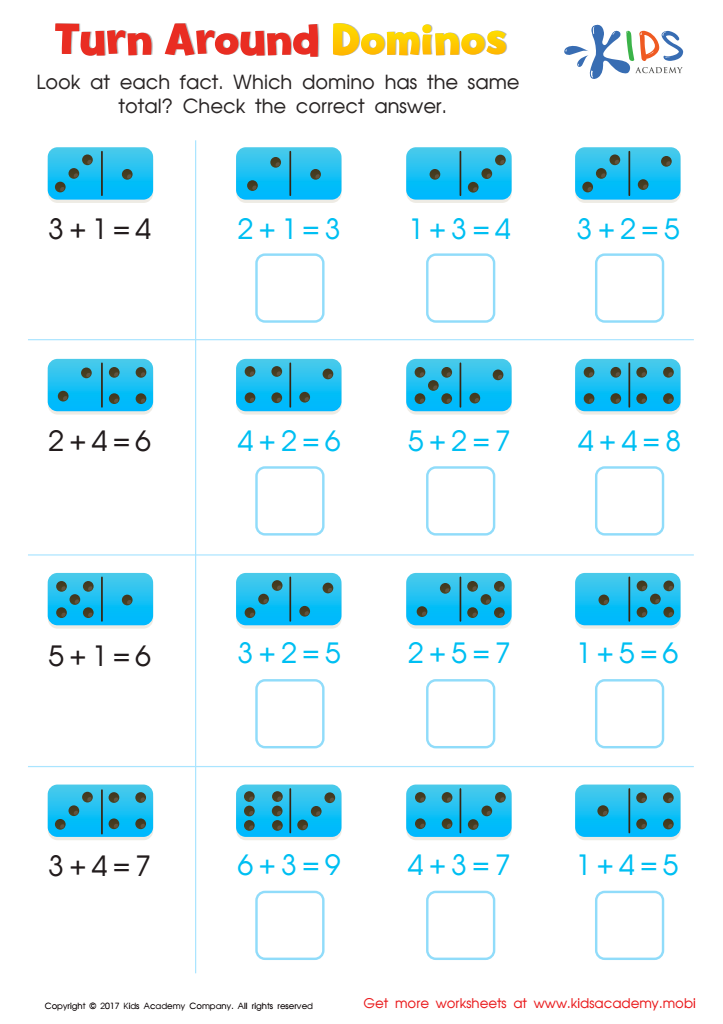
Turn Around Dominos Worksheet
 Assign to My Students
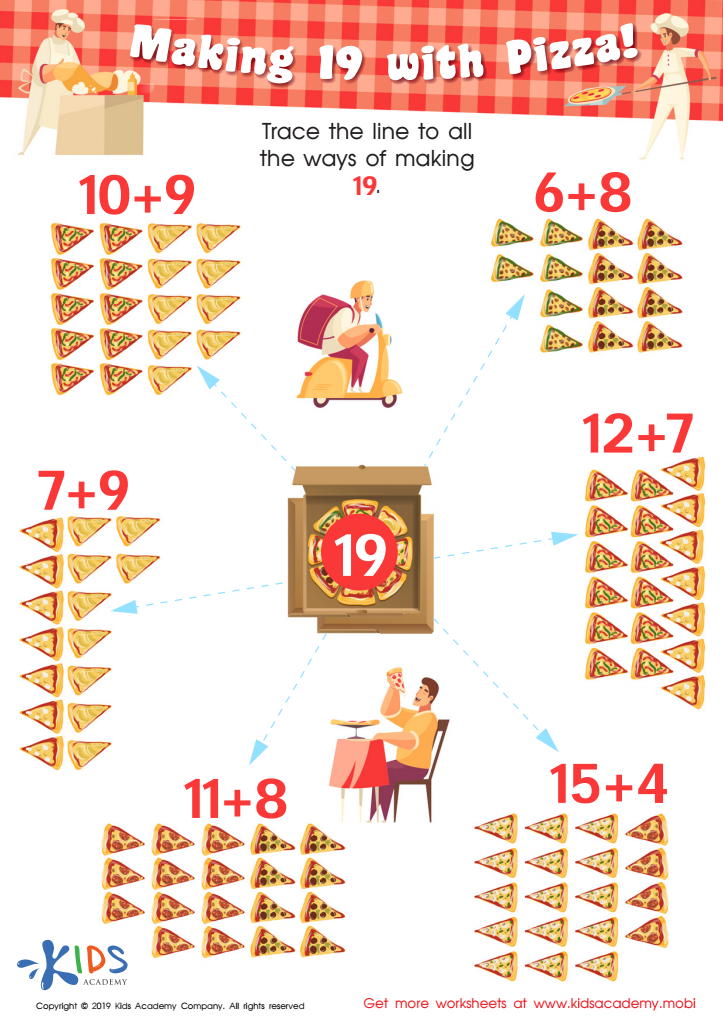
Making 19 with Pizza! Worksheet
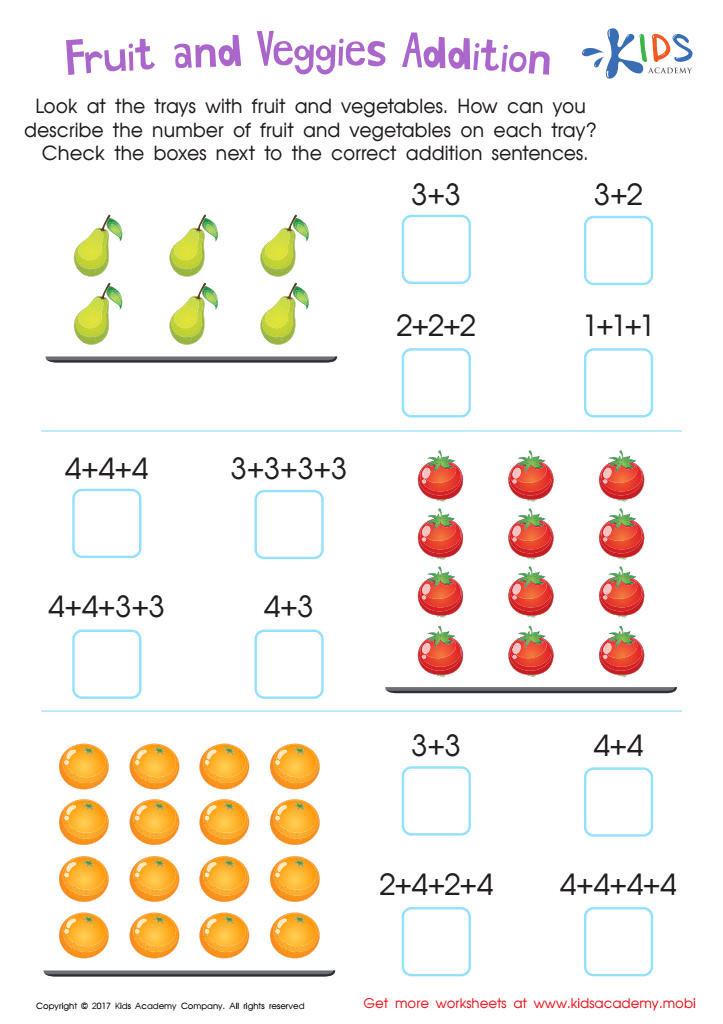
Fruit and Veggies Worksheet
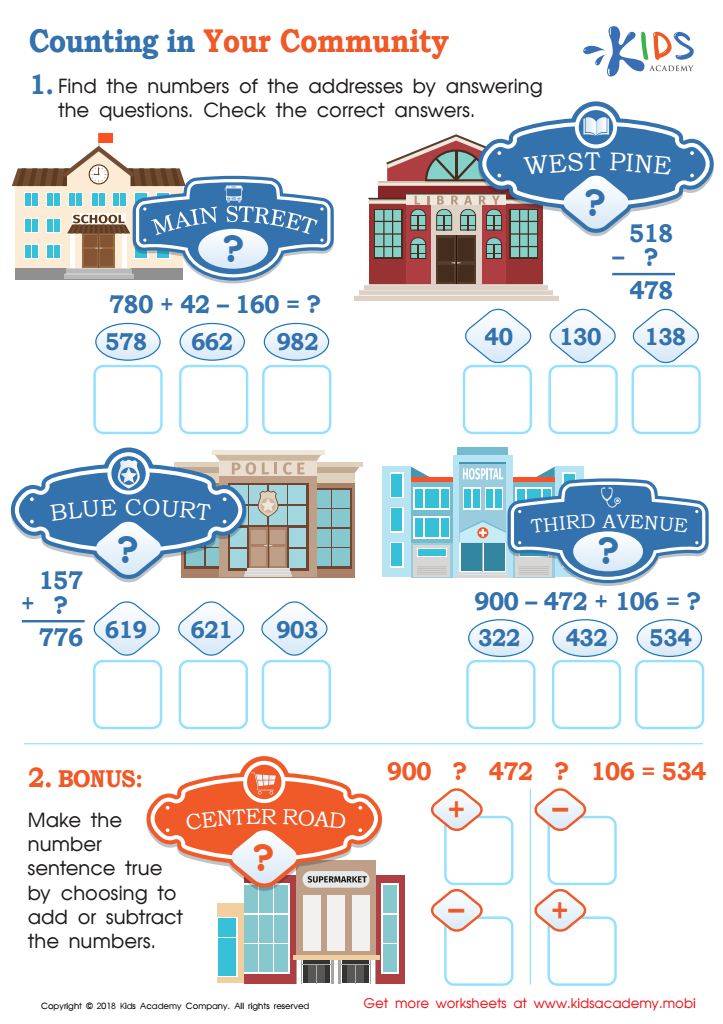
Counting in Your Community Worksheet
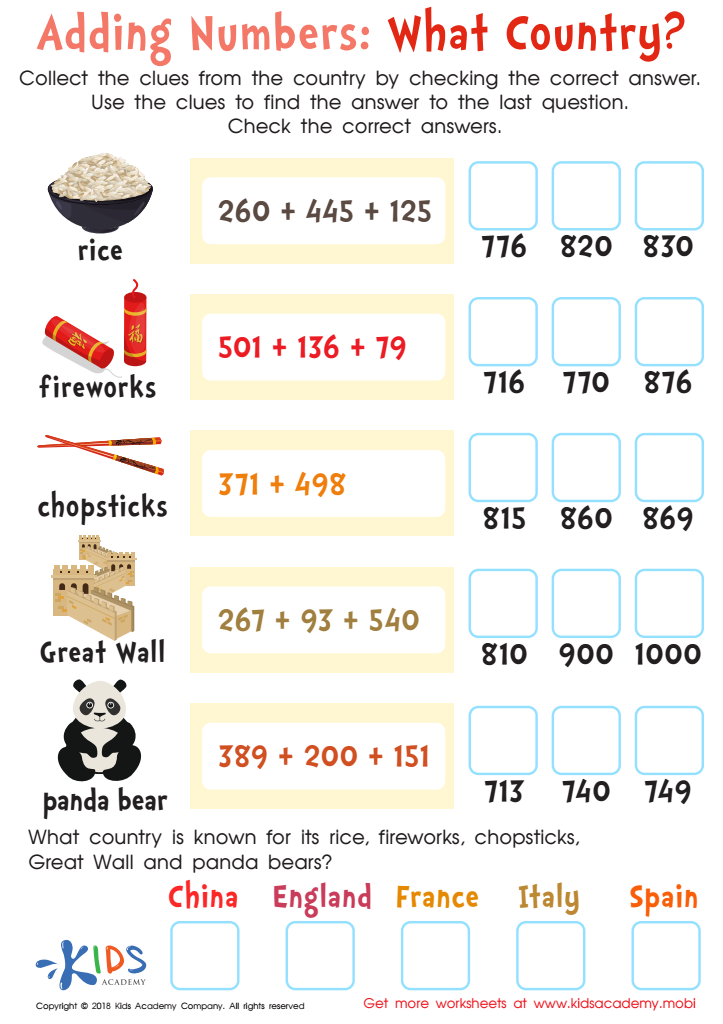
Adding Numbers: What Country Worksheet
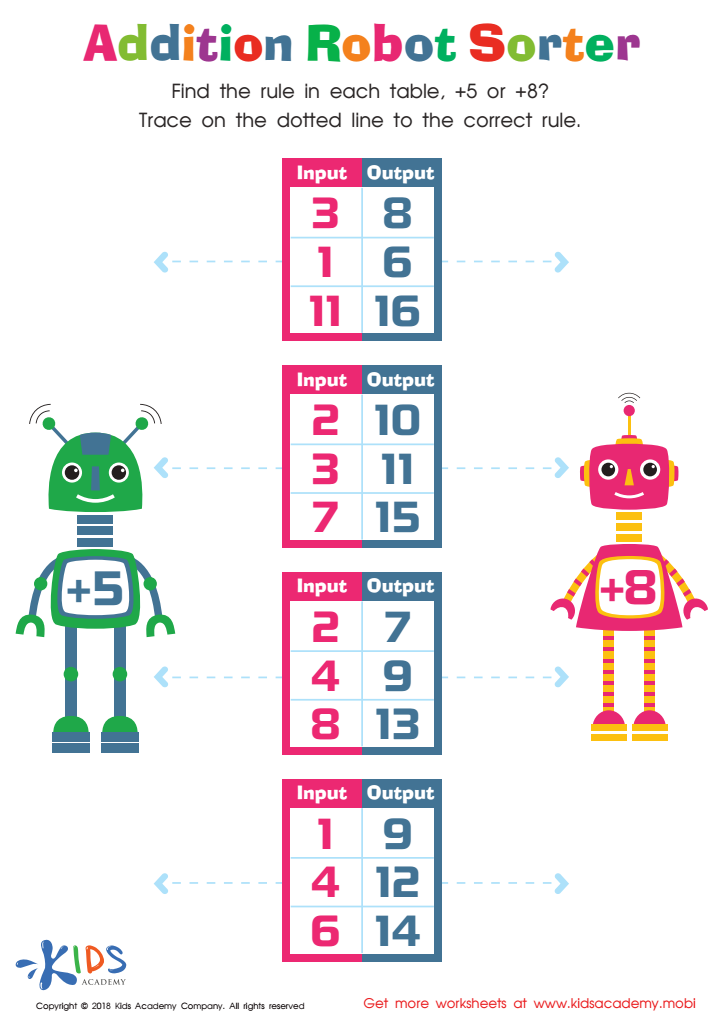
Addition Robot Sorter Worksheet
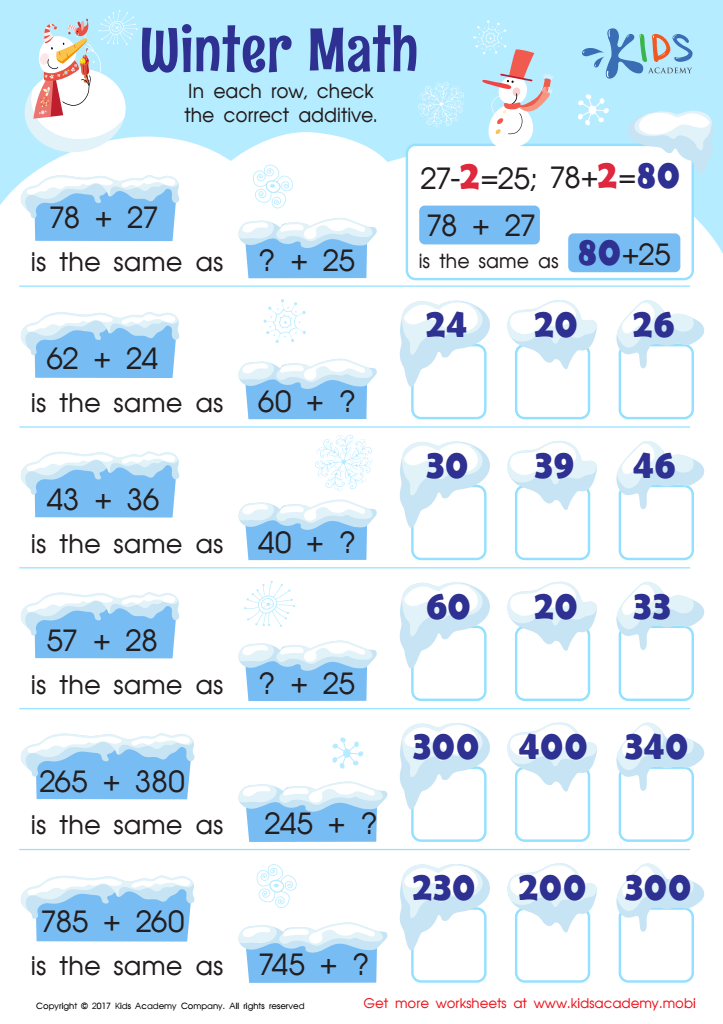
Free Addition Worksheet
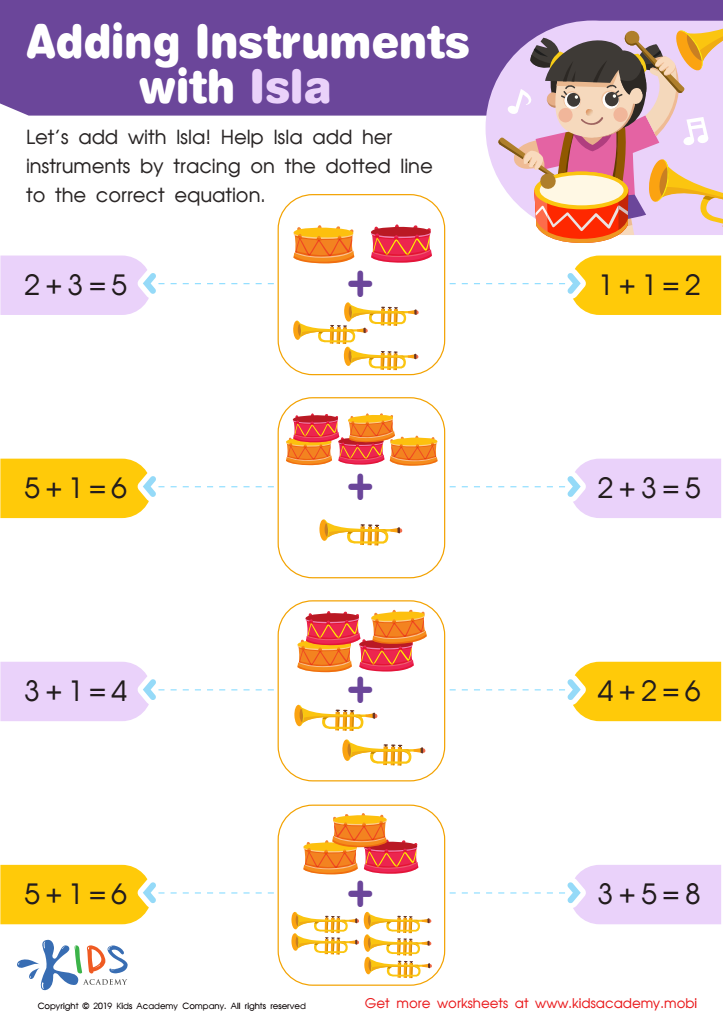
Adding Instruments with Isla Worksheet








Basic addition and subtraction skills are essential for young learners aged 4-8 as they form the foundation for future mathematical understanding. Parents and teachers should care about these skills because they support cognitive development, critical thinking, and problem-solving abilities. Early mastery of addition and subtraction fosters confidence in children's mathematical abilities, encouraging a positive attitude towards math as they progress through their education.
Additionally, these skills are crucial for developing numeracy, which is necessary for everyday tasks like counting, budgeting, or measuring. Moreover, children with a solid grasp of basic arithmetic often perform better in later grades, as these skills link to more complex mathematical concepts such as multiplication, division, and fractions.
Understanding normal addition and subtraction also enhances communication skills, as children learn to articulate their thought processes when solving problems. Engaging in activities that promote these skills—like counting objects or playing math games—creates a fun learning environment that reinforces engagement and collaboration. Ultimately, supporting children as they build these foundational skills not only benefits their academic growth but also equips them with the tools necessary for real-life applications, laying the groundwork for lifelong learning and confidence in math.








