Mathematical operations Normal Addition & Subtraction Worksheets for Ages 4-8
3 filtered results
-
From - To
Discover our engaging "Normal Addition & Subtraction Worksheets" designed specifically for children ages 4-8. These worksheets offer a range of fun and interactive activities that help young learners master the fundamental mathematical operations of addition and subtraction. Perfect for boosting early math skills, each worksheet focuses on developing number recognition, problem-solving abilities, and mathematical reasoning. Tailored to meet educational standards, our resources not only enhance your child’s learning experience but also make math enjoyable. Download and print our worksheets today to inspire a love for math in your little ones! Suitable for homeschooling or classroom use. Start learning now!
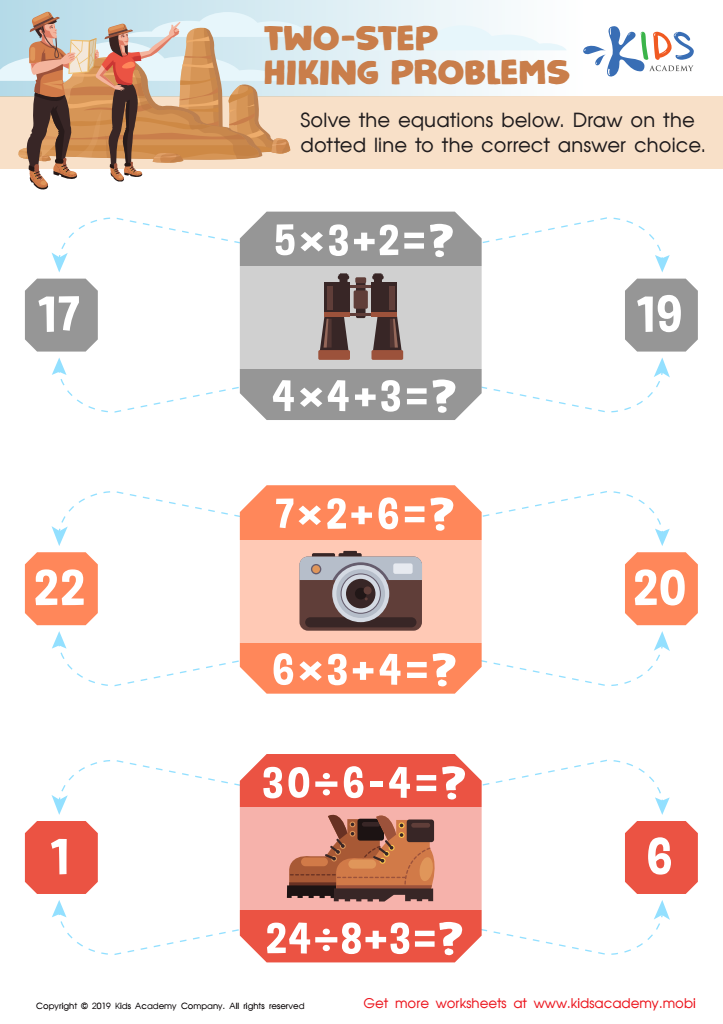
Two-Step Hiking Problems Worksheet
 Assign to My Students
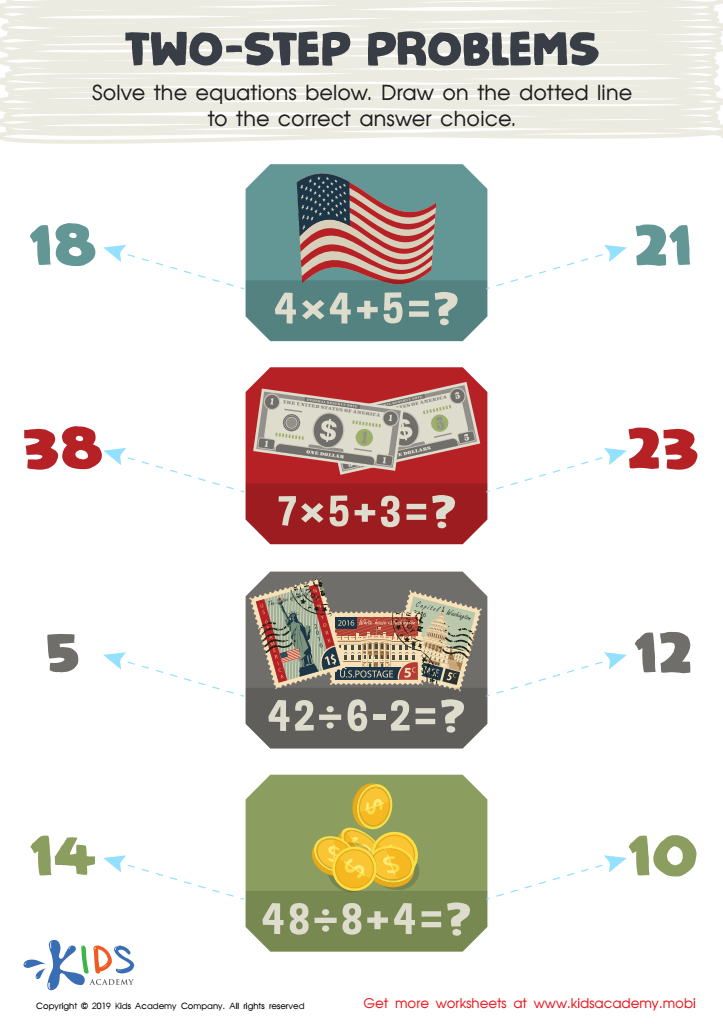
Two-Step Problems Worksheet
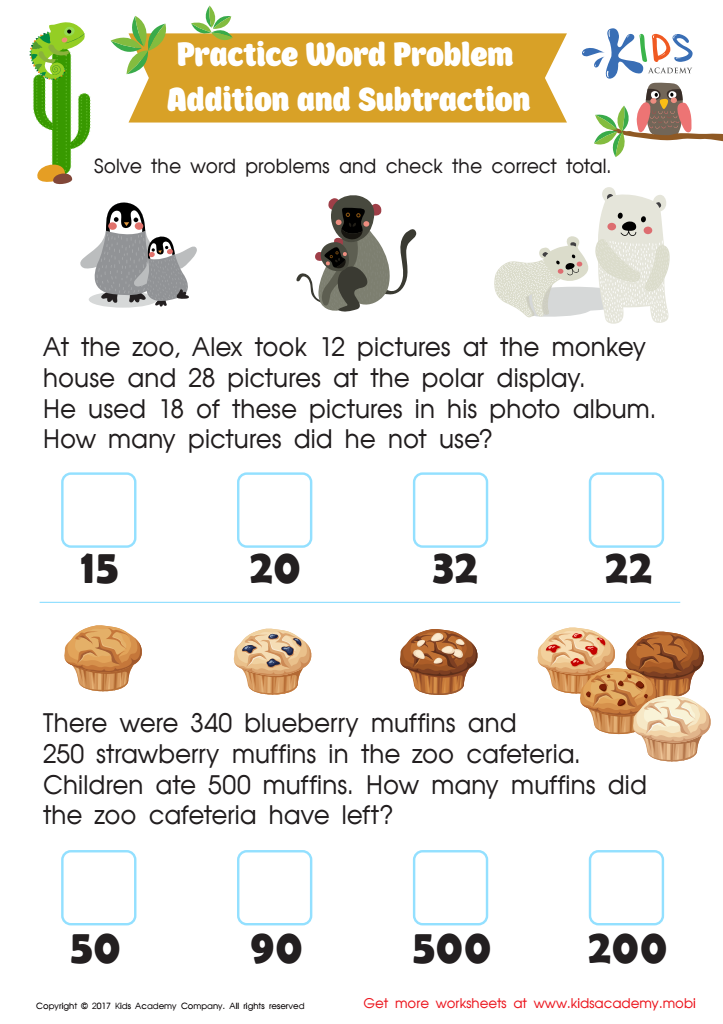
Addition and Subtraction: Word Problems Worksheet








Parents and teachers should prioritize normal addition and subtraction for children ages 4-8 because these foundational mathematical operations significantly influence cognitive development and future academic success. At this age, children are developing critical thinking skills and the ability to solve problems. Mastering addition and subtraction helps enhance their numeracy skills, allowing them to understand more complex mathematical concepts later on.
Furthermore, normal addition and subtraction serve as building blocks for other disciplines. Learning these operations helps children grasp concepts like time, money, measurement, and data analysis. By engaging in activities that incorporate addition and subtraction, children also develop their reasoning skills and boost their confidence in handling numbers.
Additionally, early age exposure to math fosters a positive attitude toward learning and helps mitigate math anxiety. Parents and teachers can use playful methods—through games and interactive storytelling—to cultivate a love for math. As children internalize addition and subtraction, they enhance their cognitive ability to see patterns and relationships in the world around them. Thus, grounding children in these operations not only equips them with essential skills but also empowers them for lifelong learning and problem-solving. Engaging in mathematical concepts at this foundational stage sets a strong precedent for future academic achievement.








